Thomas Tiemann

This article is for general information, not medical advice.
The most direct way to breathe through your nose while sleeping is to address whatever is blocking or bypassing nasal airflow - congestion, sleep position, airway narrowing, or habitual mouth breathing - then use practical tools and techniques to reinforce the habit while you sleep. Most people can make meaningful progress by working on two or three factors at once rather than hunting for a single fix. This guide covers every major approach, from bedtime routines and sleeping positions to external nasal support, and tells you when to get a professional assessment.
- Nasal breathing filters, humidifies, and warms incoming air in ways mouth breathing cannot replicate.
- The most common nighttime triggers are congestion, sleeping on your back, and an ingrained mouth-breathing habit.
- Side sleeping, pre-bed saline rinses, and nasal strips each target a different piece of the problem.
- External nasal strips support the nasal opening mechanically - they help when the bottleneck is at the nasal valve or bridge, not deeper in the throat.
- Mouth tape should only be used when nasal breathing is already possible; it is not a substitute for clearing a blocked airway.
- Persistent symptoms - especially gasping, choking, or daytime exhaustion - warrant a medical evaluation before relying on any self-help approach.
Why Nasal Breathing During Sleep Matters
Nasal breathing during sleep is not just a preference - the nose does physical work that the mouth simply cannot do. As air passes through the nasal passages, tiny hairs and mucous membranes filter out dust, allergens, and pathogens. The nasal lining also warms and humidifies each breath before it reaches the lungs, reducing airway irritation and overnight dehydration. And the nasal passages produce nitric oxide, a molecule that supports blood vessel dilation and efficient oxygen exchange. None of that happens when you breathe through your mouth.
For a deeper look at the full range of physiological and long-term benefits, the benefits of nasal breathing guide covers why the nose's role extends well beyond sleep.
The practical consequences of switching to mouth breathing at night range from a dry, scratchy throat in the morning to more fragmented, less restorative sleep. For many people, the goal of learning how to breathe through their nose while sleeping is ultimately about waking up feeling rested - and that starts with understanding what is redirecting airflow through the mouth in the first place.
Why You Switch to Mouth Breathing at Night
Your body defaults to whatever path gets air in fastest. When nasal resistance rises - because of congestion, a narrow nasal valve, a structural issue, or the relaxation of throat and jaw muscles that comes with sleep - the mouth fills in automatically. That switch can happen dozens of times a night without you ever waking fully.
The full picture of why you breathe through your mouth when you sleep involves several overlapping causes, from allergic inflammation to positional jaw drop. Here is a quick reference across the most common triggers:
| Cause | What happens at night | Primary fix category |
|---|---|---|
| Congestion (cold, allergy, irritants) | Swollen nasal lining blocks airflow, forcing the mouth open | Decongest: saline, antihistamine, strips |
| Nasal valve narrowing | Nasal walls collapse slightly inward under breathing effort | External nasal strip or dilator |
| Deviated or irregular septum | Reduced airflow through one or both sides even when clear | Medical evaluation; strips for comfort |
| Sleeping on your back | Jaw relaxes open; tongue can fall back, increasing resistance | Side sleeping, positional therapy |
| Dry air | Nasal lining dries and swells, raising resistance | Humidifier, nasal saline spray |
| Habitual mouth breathing | Persists even when the airway is structurally clear | Retraining exercises, mouth tape (if airway is open) |
Most people have more than one cause operating at the same time. Treating just one will help, but addressing two or three together tends to produce a more reliable shift.
How to Retrain Yourself to Nose-Breathe While Sleeping
Changing a breathing pattern that happens while you are unconscious requires setting up the right conditions before you fall asleep, not simply trying harder in the moment. The goal is to lower nasal resistance enough that your body chooses nasal airflow by default, then reinforce that path through daytime practice so the pattern carries into sleep.
For a structured program of exercises and techniques, the how to train yourself to breathe through your nose guide goes into the full detail. The foundational steps below give you a practical starting point tonight.
- Practice nasal breathing during the day first. Keeping your mouth closed during calm, seated activity trains your respiratory system to tolerate nasal resistance before the demands of sleep make it harder. Start with ten-minute windows and build up.
- Do a pre-bed nasal rinse or saline spray. Rinsing with sterile or distilled water (or water that has been boiled and cooled) clears mucus and reduces inflammatory swelling so nasal passages are as open as possible at lights-out. Follow the neti pot or rinse bottle instructions and always use the correct water type to avoid infection risk.
- Set up your sleep environment. Cool (roughly 60–67 °F ), humidified air reduces nasal lining swelling. Keep allergen levels low - wash bedding regularly and consider an air purifier if dust or pet dander is a trigger.
- Choose a nasal-friendly sleep position. Side sleeping keeps the jaw from falling fully open and reduces the tongue's tendency to narrow the airway. See the sleeping positions section below for specifics.
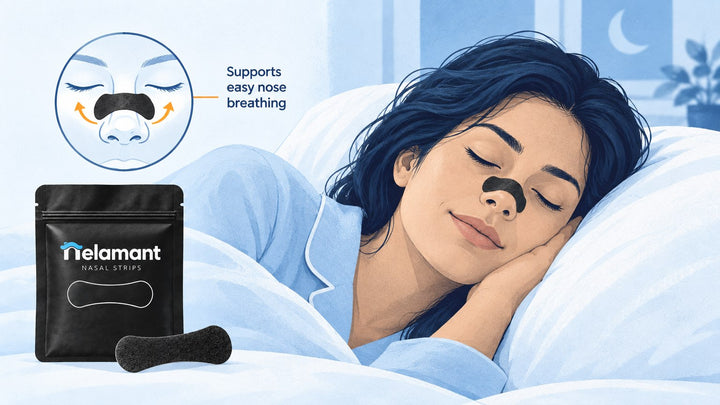
- Apply an external nasal strip at bedtime. A strip gently lifts the sides of the nose to widen the nasal valve opening, making nasal airflow easier to maintain through the night - especially helpful if your nose feels clear but still feels narrow or restricted.
- Be consistent for at least two to three weeks. Habitual mouth breathing can persist for weeks after the original trigger (say, a cold) is gone. Consistent nightly conditions accelerate the reset.
Best Sleeping Positions for Nose Breathing
Sleep position has a direct mechanical effect on nasal airflow. The best sleeping position for breathing breaks down the evidence in full; the essentials are straightforward.
- Side sleeping (either side) keeps the jaw naturally more closed, reduces gravity's pull on the tongue toward the back of the airway, and tends to produce lower nasal resistance than back sleeping for most people.
- Left-side sleeping is sometimes recommended for people with acid reflux, which can irritate the throat at night.
- Back sleeping is the position most associated with open-mouth breathing, jaw drop, and increased snoring, because the jaw and tongue relax directly rearward. If you tend to roll onto your back during the night, a body pillow along your side can discourage the roll.
- Head elevation (a slightly higher pillow or an adjustable base) can reduce nasal congestion by encouraging drainage and reducing vascular pooling in the nasal lining.
- Stomach sleeping is generally not recommended - it strains the neck and can still leave the mouth pressed against a pillow, forcing mouth breathing.
Clear the Airway First - Treating Nighttime Congestion
No amount of habit retraining overcomes a physically blocked nose. If congestion is your main obstacle, clearing it is step one. The how to unblock your nose guide covers the full range of approaches; the most practical pre-bed options are:
- Saline nasal rinse or spray used 15–30 minutes before bed to flush allergens, thin mucus, and reduce swelling. Use sterile, distilled, or properly boiled-and-cooled water - never tap water directly.
- Topical decongestant sprays (used according to label directions and not for more than the manufacturer-specified duration, typically three days, to avoid rebound congestion).
- Antihistamines taken in the evening for allergy-driven congestion - check whether a particular antihistamine causes drowsiness and plan accordingly.
- Nasal corticosteroid sprays for persistent allergic inflammation - follow prescribing guidance and do not stop a prescribed treatment without speaking to your doctor first.
- Head-of-bed elevation as described in the position section above.
The how to sleep with a stuffy nose guide gives a full step-by-step approach for nights when congestion is your dominant problem, including what to try in what order.
Humidifiers and Dry Air
Indoor heating and air conditioning both reduce air humidity, which dries the nasal lining, causes it to swell, and raises breathing resistance through the night. A bedroom humidifier set to roughly 40–50% relative humidity can make a noticeable difference for people whose nose feels clear during the day but congested by morning. The humidifier for stuffy nose guide explains how to choose a unit and - critically - how to keep it clean so it does not introduce mold or bacteria into the air.
Nasal Strips - External Support for the Nasal Opening
External nasal strips work by physically lifting the sides of the nose outward, widening the nasal valve - the narrowest part of the nasal passage - so less effort is needed to pull air through. The mechanism is purely mechanical and drug-free: the strip's spring-like band applies a gentle outward force that holds the nasal walls apart as you inhale. This can make the difference between nasal airflow that is just barely sustainable and nasal airflow that is comfortable enough to maintain all night.
Strips help most when the bottleneck is at the nasal valve or the outer nasal passage. They support the nasal opening; they do not open a blocked or obstructed throat, and they do not fix a structural deviation inside the nose. If your nose feels physically open but still seems narrow or collapses inward when you breathe in deeply, that is the scenario where an external strip is most useful.
For a detailed look at how strips perform specifically during sleep, do nasal strips help you sleep walks through the mechanisms and realistic expectations. If you are choosing between options, the best nasal strips for sleeping guide compares the field.
Nelamant Air nasal strips are designed with a wider, more balanced lift across the bridge of the nose - a broader distribution of outward force rather than a single sharp pull point. The extra-hold adhesive is formulated to resist sweat and overnight movement, and the hypoallergenic materials are gentle enough for nightly use, peeling off cleanly without sticky residue. They are drug-free and work the same way whether you are dealing with congestion, a narrow nasal valve, or simply the reduced muscle tone that comes with deep sleep.
Mouth Tape and Nasal Strips Together
Some people use a small piece of mouth tape alongside a nasal strip - the strip keeps nasal airflow comfortable while the tape acts as a physical reminder to keep the lips together. The mouth tape and nasal strips together guide explains how the two can work in combination and how to layer them safely.
One firm rule: mouth tape should only ever be used when nasal breathing is already confirmed to be possible. Using tape when the nose is blocked - or when sleep apnea is undiagnosed - creates an unsafe situation where the airway has no backup. Before using any mouth tape, read is mouth taping safe for a clear-eyed look at who it is and is not appropriate for.
Waking Up with Dry Mouth or Sore Throat
A parched mouth or raw throat in the morning is one of the clearest signals that your mouth was open and breathing during the night. Both symptoms follow the same basic mechanism: unhumidified room air drying out the oral and pharyngeal mucosa for hours at a stretch.
The waking up with dry mouth guide covers what causes it and how to relieve it, including the distinction between mouth breathing and other causes like medications or salivary gland issues. If you are consistently waking with a sore throat in the morning, that guide looks at whether nasal strips, humidification, or a different intervention is the right fit for your specific pattern.
Both symptoms tend to improve noticeably once nighttime nasal breathing is restored and bedroom humidity is corrected - they are useful feedback signals that your overnight breathing habit is shifting in the right direction.
Nasal Strips with CPAP
If you have been diagnosed with obstructive sleep apnea and are on CPAP therapy, nasal strips are not a replacement for your device. Nasal strips support the nasal opening; they do not address the collapse of the upper airway that defines obstructive sleep apnea, and they must never be used instead of prescribed treatment. The nasal strips with CPAP guide explains where strips may help as a comfort addition - for example, when nasal congestion makes wearing a CPAP mask uncomfortable - always alongside, never instead of, your prescribed therapy.
If you are unsure whether your snoring involves apnea, the snoring vs sleep apnea guide is a useful starting point before drawing any conclusions. Loud, frequent snoring with daytime sleepiness or witnessed breathing pauses are reasons to seek a formal sleep evaluation.
Why You Still Wake Up Tired
If you have started nose-breathing more consistently but still wake up exhausted, the issue may be sleep fragmentation caused by the cumulative effects of months or years of mouth breathing - or it may point to an underlying sleep disorder. The why do I wake up tired guide walks through the most common explanations. And for the specific connection between airway habits and sleep architecture, does mouth breathing affect sleep quality explains how even mild airway resistance can push sleep into lighter, less restorative stages without causing full awakenings you would remember.
Give any new nighttime breathing strategy at least two to three weeks before expecting to feel a consistent difference in morning energy. Restorative sleep takes time to rebuild.

Upper Airway Resistance and Gasping
Some people experience a subtler but more disruptive pattern: the airway does not fully close (as in obstructive apnea), but increased resistance causes the brain to rouse slightly - often dozens of times a night - without producing memorable awakenings. This is sometimes described as upper airway resistance syndrome, and it can cause significant daytime fatigue even when a standard overnight sleep test appears normal.
Distinct from this, if you regularly wake up gasping for air, that is a symptom that warrants prompt medical attention rather than self-directed nasal retraining. Gasping is a recognized sign of obstructive sleep apnea events and should not be attributed to a habit or nasal congestion alone.
Breathing Exercises That Support Nasal Breathing at Night
Deliberate breathing practice during the day makes nasal breathing at night easier by training your respiratory system to tolerate higher levels of carbon dioxide - the main driver of the urge to breathe through the mouth when nasal resistance rises. The nasal breathing exercises guide details specific techniques, including breath-hold drills and diaphragmatic work.
A few foundational approaches worth knowing:
- Reduced breathing / Buteyko-style practice: Gentle, slow, reduced-volume nasal breathing for short sessions during the day reduces the perceived effort of nasal breathing over time. The how to stop snoring guide also covers breathing-based interventions in the context of nighttime noise.
- Diaphragmatic breathing: Practicing belly-led breathing through the nose during calm activity reinforces the nasal breathing pattern and uses the diaphragm more efficiently than shallow chest breathing.
- Pre-sleep wind-down breathing: Five minutes of slow nasal breathing before bed - inhale for four counts through the nose, exhale for six - lowers respiratory rate and makes it easier to maintain nasal breathing as you fall asleep.
When to See a Doctor
Self-help strategies work well for many people, but some causes of nighttime mouth breathing need professional assessment. See a doctor if:
- Your nose is persistently blocked on one or both sides without an obvious temporary cause (cold, allergy season) - this can indicate a deviated septum, polyps, enlarged turbinates, or another structural issue.
- You or a bed partner notice breathing pauses, choking sounds, or gasping during sleep - these are potential signs of obstructive sleep apnea that require a formal sleep study, not nasal strips.
- You consistently wake exhausted despite adequate sleep time and no obvious mouth-breathing trigger.
- Over-the-counter decongestants are the only thing keeping your nose open, and you have been using them for more than three days - rebound congestion may be a factor and a clinician can help you break the cycle safely.
For guidance on persistent nasal congestion and when it crosses into something that needs clinical attention, see when to see a doctor for nasal congestion. For the snoring and sleep-disorder side, snoring vs sleep apnea helps clarify the difference between a noise issue and a breathing-safety issue.
Frequently Asked Questions
Why do I automatically switch to mouth breathing when I sleep?
When nasal resistance rises above a certain threshold - because of congestion, airway narrowing, or the general muscle relaxation of sleep - your body takes the lower-resistance path automatically. You do not choose to switch; your respiratory reflex does. Reducing nasal resistance (through congestion treatment, sleep position changes, or an external nasal strip) is what keeps the nose as the preferred route once you are unconscious.
Can nasal strips really help me breathe through my nose all night?
They can be effective when the limiting factor is at the nasal valve or outer nasal passage. The strip lifts the nasal walls outward, widening the opening and reducing how hard you have to work to pull air through. They work best alongside good sleep position and a clear nasal lining - not in isolation when the nose is heavily congested or when a deeper airway issue is involved.
What is the fastest way to stop mouth breathing at night?
There is no single fastest fix, but the combination most likely to produce an immediate difference is: (1) a saline rinse 20–30 minutes before bed to clear the nasal lining, (2) side sleeping, and (3) an external nasal strip applied to dry skin at bedtime. If those three changes do not produce a noticeable improvement within a week or two, a more specific cause - allergy, structural issue, or sleep disorder - should be investigated.
Is mouth breathing at night bad for your health?
Chronic nighttime mouth breathing bypasses the nose's filtering, humidifying, and warming functions, and is associated with dry mouth, morning throat irritation, and potentially less restorative sleep. Whether it causes harm beyond those symptoms depends on the underlying cause and how long it has been occurring. The does mouth breathing affect sleep quality guide covers what the evidence currently shows.
Can I use mouth tape and a nasal strip at the same time?
Yes, and some people find the combination more effective than either alone - the strip keeps nasal airflow comfortable and the tape provides a physical cue to keep the lips together. The important rule is that mouth tape must only be used when you have already confirmed that nasal breathing is fully possible. If nasal airflow is restricted or if sleep apnea is undiagnosed, taping the mouth can be unsafe. See mouth tape and nasal strips together for safe use guidance.
Does sleeping position affect whether I breathe through my nose?
Significantly. Back sleeping allows the jaw to relax fully open and the tongue to fall rearward, both of which increase airway resistance and encourage mouth breathing. Side sleeping naturally keeps the jaw in a more closed position and reduces gravitational effects on the tongue. Switching to side sleeping is one of the most accessible changes you can make without any product or prescription. The best sleeping position for breathing guide has full detail.
When should I see a doctor about mouth breathing during sleep?
If your nose is persistently blocked on one or both sides, if you or a partner notice breathing pauses or gasping during sleep, or if you wake consistently exhausted despite addressing the obvious causes, those are signals to get a professional evaluation rather than continuing with self-directed approaches. Structural issues (like a deviated septum or nasal polyps) and sleep-disordered breathing (like obstructive sleep apnea) are not problems that nasal strips or position changes will resolve. See when to see a doctor for nasal congestion and snoring vs sleep apnea for guidance on next steps.

Learning to Breathe Through Your Nose While Sleeping Takes a Few Consistent Moves
Switching from mouth breathing to reliable nasal breathing at night rarely comes down to a single change. The most effective approach pairs a clear nasal passage (through pre-bed rinsing, humidity, and allergy management) with a nose-friendly sleep position, builds the habit through daytime practice, and uses mechanical support - like an external nasal strip - to lower resistance during the hours when you cannot consciously control it.
Most people notice a difference within one to two weeks when those elements are in place together. If symptoms persist or worsen, particularly gasping or severe morning fatigue, that is the moment to move from self-help to a clinical evaluation rather than adding more layers to a routine that is not resolving the root cause.
Support Nasal Breathing Tonight with Nelamant Air
$14.99 for 30 strips · 30-day returns
Shop Nelamant Air