Thomas Tiemann

Snoring affects a significant share of the adult population worldwide - one UK population survey found that 40% of respondents reported regular snoring, while estimates vary by definition and population. Understanding the scale of the problem matters because snoring is not just a noise; it is a signal about airway mechanics, sleep quality, and sometimes underlying health. The benefits of nasal breathing become especially clear when you see how widely disrupted breathing during sleep actually is.
- A UK population survey found regular snoring reported by 40% of respondents; this is not a global prevalence estimate.
- Men snore more frequently than women across most age groups, with the size of the sex difference varying by age.
- A population study identified ages 40–64 as a risk factor for snoring.
- Bed partners of frequent snorers can lose a meaningful amount of sleep each night.
- Habitual snoring can be a symptom of obstructive sleep apnea - snoring alone does not confirm it.
- Lifestyle factors including excess weight, alcohol use, and smoking are among the most consistently cited contributors to snoring risk.
How Many People Snore?
Global estimates of snoring prevalence vary widely because studies use different definitions - occasional snoring, habitual snoring (most nights), and loud habitual snoring are all measured differently. In a 1997 UK telephone survey, 40% of respondents reported regular snoring..
These numbers carry real implications. If you are trying to understand how to stop snoring, knowing that you are far from alone is a starting point - but the more useful question is what is driving the snoring and which approaches have evidence behind them.
Snoring prevalence by sex
Men are consistently more likely to be habitual snorers than women. A meta-analysis of 63 studies found higher odds of snoring in men than women, with a pooled odds ratio of 1.89. The gap is attributed to differences in upper airway anatomy, fat distribution around the neck, and hormonal factors. Age partly explains differences between studies in the size of that gap.

Snoring by age group
A Tucson population study identified ages 40–64, male sex, obesity, and current smoking as independent risk factors for snoring. The increase with age is partly explained by loss of muscle tone in the upper airway, weight gain over time, and increasing rates of nasal congestion and other anatomical changes. Younger adults who snore regularly are more likely to have identifiable contributing factors such as excess weight, nasal obstruction, or alcohol use.
Snoring and Sleep Disruption: The Partner Effect
The impact of snoring extends beyond the snorer. A small study of 10 couples found that treating the affected partner's snoring and sleep apnea with CPAP improved spouses' sleep efficiency; the authors calculated an equivalent gain of 62 minutes over eight hours in bed. Over weeks and months, that accumulates into a substantial sleep debt - and a substantial source of household friction.
Snoring can be a source of nighttime conflict. A growing body of research examines so-called "sleep divorce" - couples choosing to sleep in separate rooms - and snoring can be one reason. The knock-on effects include daytime fatigue, mood disruption, and reduced relationship satisfaction reported by both the snorer and the partner.
For the snorer themselves, heavy snoring is associated with more fragmented sleep architecture even when the snorer is unaware of waking, contributing to daytime sleepiness.
Snoring and Health: What the Numbers Suggest
Population-level data consistently show associations between habitual snoring and several health indicators, though the strength and direction of causation varies and is complicated by confounding factors like obesity, age, and alcohol use. Habitual snoring has been associated with elevated cardiovascular risk markers in several observational studies. It is also associated with daytime sleepiness, reduced quality of life scores.
It is worth being clear about what associations mean: a statistical link between snoring and a health outcome does not mean snoring directly causes that outcome. Many of the shared risk factors - obesity, sedentary lifestyle, alcohol - independently affect both snoring and cardiovascular health.
How often does snoring signal sleep apnea?
Snoring and obstructive sleep apnea (OSA) overlap substantially, but they are not the same thing. Loud snoring is a common OSA symptom, but snoring also occurs without OSA.. Snoring alone is not a reliable diagnostic indicator - loudness and frequency correlate only loosely with apnea severity.
If you are trying to work out whether snoring is something else, understanding the difference between snoring and sleep apnea is an important next step. Sleep apnea requires clinical diagnosis and, where indicated, treatment - nasal strips and other mechanical aids address nasal airflow, not airway obstruction in the throat.
Economic and Productivity Cost of Snoring
Snoring carries measurable economic costs, though precise figures vary widely by methodology and population. Care for people with sleep-disordered breathing can include primary care visits, specialist referrals, and diagnostic testing related to fatigue, cardiovascular symptoms, and sleep complaints.
Productivity estimates are harder to pin down, but poor sleep can interfere with concentration and work. Snoring as an isolated contributor is difficult to separate from broader sleep-disorder costs.

Lifestyle Factors: Stats on What Makes Snoring Worse
Research consistently identifies a cluster of modifiable risk factors that increase snoring frequency and severity.
Excess weight and obesity. Obesity is a recognized contributor to the risk of habitual snoring.. Fat deposition around the neck and throat narrows the upper airway and increases the likelihood of soft-tissue vibration during breathing.
Alcohol consumption. Alcohol intake in the hours before sleep can worsen snoring by relaxing upper-airway musculature. Data from sleep laboratory studies show more frequent or longer obstructive breathing events after alcohol consumption compared with sober nights in the same participants.
Smoking. Current smokers show elevated snoring prevalence compared with non-smokers and ex-smokers across multiple cross-sectional studies. The proposed mechanism involves airway mucosal inflammation and increased secretions, which reduce nasal airflow and promote mouth breathing.
Sleep position. Supine (back) sleeping is associated with significantly higher snoring rates than side sleeping in both self-report and objective monitoring studies. Gravity allows the tongue and soft palate to fall backward, narrowing the pharyngeal airspace.
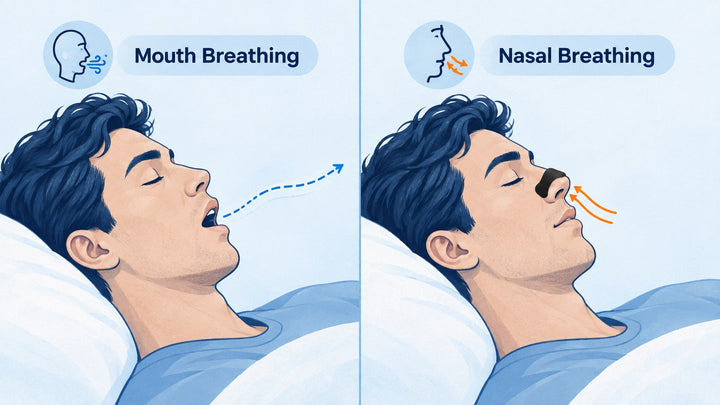
Nasal congestion. Chronic nasal obstruction - from allergies, structural issues, or persistent congestion - forces mouth breathing, which bypasses the nasal airway and substantially increases soft-palate vibration.
What People Do About Snoring
Snoring is common, but that alone does not tell us how many people seek help.. Among those who do seek solutions, possible first steps include positional changes, weight-loss attempts, and over-the-counter mechanical aids.
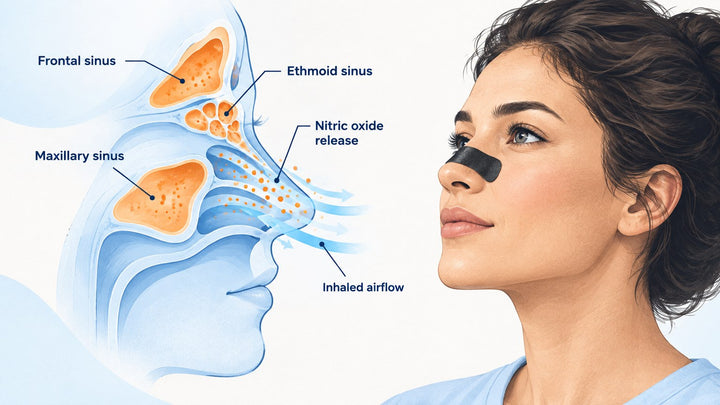
Nasal strips are among the most widely used non-prescription options, particularly when snoring is linked to nasal congestion, a narrow nasal valve, or nighttime nasal obstruction. They work mechanically - gently lifting the sides of the nose to widen the nasal passage and support easier airflow - without drugs or internal devices. Nelamant Air nasal strips are designed with a wider lift profile to distribute opening force across the nasal bridge rather than concentrating it at a single point, and the extra-hold adhesive is formulated to stay in place through the night. For snoring that originates in nasal obstruction specifically, that kind of consistent overnight support is what the mechanism depends on.
For snoring with a suspected airway or apnea component, clinical evaluation is the appropriate path. Strips support nasal breathing; they do not address obstructions in the throat or treat sleep apnea.
Frequently Asked Questions
What percentage of adults snore regularly?
Estimates vary by study design and how "regularly" is defined, but one UK population survey reported regular snoring in 40% of respondents. That result should not be treated as a current global prevalence estimate. Methodological differences between studies mean exact figures should be read as ranges rather than precise counts.
Is snoring more common in men or women?
Yes, consistently. Men have higher rates of habitual snoring across virtually all age groups studied, although the size of the difference varies across studies and ages. Age partly explains variation in that sex difference across studies.
Does snoring always mean sleep apnea?
No. Snoring is a feature of sleep apnea, but snoring also occurs without clinically significant apnea. The overlap is meaningful but snoring alone does not confirm a diagnosis. Distinguishing between the two requires a sleep study or clinical evaluation. See snoring vs. sleep apnea for a closer look at how the two conditions differ.
How many people seek treatment for snoring?
There is no single reliable help-seeking rate for all habitual snorers.. Barriers include stigma, the perception that snoring is normal, and uncertainty about what options exist. Awareness that effective non-prescription options and clinical evaluations are available tends to increase the likelihood of taking action.
Conclusion
Snoring statistics make one thing clear: this is not a niche problem. Tens of millions of adults snore regularly, their partners lose sleep over it, and the downstream effects on health and daily life are measurable. The data also point toward a set of well-defined risk factors - excess weight, alcohol, smoking, sleep position, and nasal obstruction - that are at least partly modifiable. Where nasal congestion or a narrow nasal opening is contributing, mechanical support for the nasal airway is a practical, drug-free first step. For anyone concerned that snoring may reflect something more serious, the distinction between snoring and sleep apnea is worth understanding, and clinical evaluation is the right call. For a broader look at what drives these patterns, the science of nasal breathing provides useful context - and for practical approaches to reducing snoring, how to stop snoring covers the options in detail.