Thomas Tiemann

This article is for general information, not medical advice.
Snoring and sleep apnea are not the same thing, even though they often sound alike. Snoring is turbulent airflow through a narrowed but open airway; sleep apnea involves the airway repeatedly collapsing and cutting off breathing entirely. Knowing the difference matters because sleep apnea carries real health risks that simple snoring does not, and the two conditions need very different responses. If you are already working through the broader question of how to stop snoring, this guide will help you figure out whether what you are dealing with is straightforward snoring or something that needs a doctor's attention.
- Snoring is sound; sleep apnea is repeated breathing stoppage. One can exist without the other.
- The most reliable warning signs of sleep apnea are witnessed pauses in breathing, gasping or choking awake, and significant daytime sleepiness - not snoring volume alone.
- A formal diagnosis requires a sleep study; you cannot self-diagnose sleep apnea.
- Simple snoring that stems from nasal congestion or a narrow nasal passage can often be reduced with lifestyle changes and nasal support. Sleep apnea requires prescribed treatment.
- If a bed partner says you stop breathing in your sleep, see a doctor - that observation alone is enough to warrant evaluation.
What Is Snoring - and What Causes It?
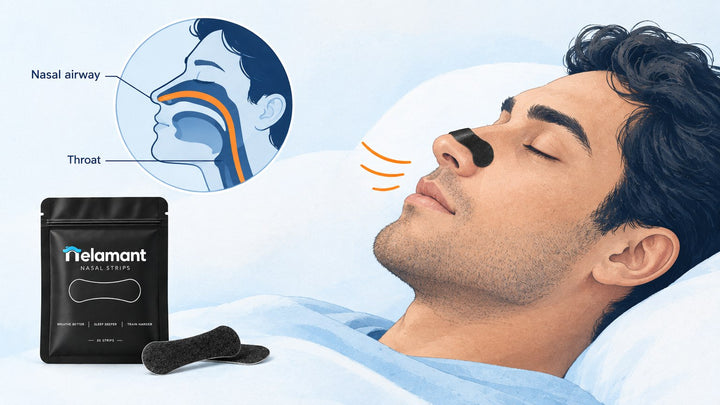
Snoring is the sound produced when soft tissues in the upper airway - the soft palate, uvula, tongue base, and throat walls - vibrate as air moves past them during sleep. When you relax into sleep, the muscles holding these structures firm up slightly less than when you are awake. If the airway becomes narrow enough, passing air sets those tissues rattling.
Common contributors include nasal congestion, the anatomy of the soft palate or jaw, sleeping on your back, alcohol before bed, and excess soft tissue around the throat. In straightforward snoring the airway stays open throughout - it is just narrower than ideal. Breathing continues uninterrupted. The noise can be significant, but the oxygen supply is not compromised in the way it is with sleep apnea.
Snoring is extremely common. Not everyone who snores has a problem that needs treatment, but snoring is also a strong risk factor for obstructive sleep apnea, so it is worth paying attention to rather than dismissing.
What Is Sleep Apnea?
Sleep apnea means the airway does not just narrow - it collapses partially or fully, stopping airflow for ten seconds or more at a time. Each collapse is an apnea event. The brain eventually detects the drop in oxygen or the build-up of carbon dioxide and triggers a micro-arousal, the airway reopens with a snort or gasp, and the cycle starts again. This can happen dozens or even hundreds of times a night, fragmenting sleep severely even when the person has no memory of waking up.
One of the most unsettling symptoms is waking up gasping for air - a direct result of the brain forcing an arousal to restart breathing. Not every person with sleep apnea experiences this dramatically, but when it happens regularly it is a strong signal to seek evaluation.
Obstructive Sleep Apnea vs Central Sleep Apnea
Most sleep apnea is obstructive sleep apnea (OSA), where the physical airway collapses. This is the type most linked to snoring, excess weight, jaw structure, and nasal obstruction. Central sleep apnea (CSA) is less common and involves the brain failing to send the correct signal to the breathing muscles - the airway itself may be open, but breathing simply stops. CSA typically requires different treatment from OSA and is not addressed by nasal or oral devices.
When people ask "is snoring sleep apnea?", they are usually thinking about obstructive sleep apnea, which is the form discussed throughout the rest of this guide.
Snoring vs Sleep Apnea: Key Differences at a Glance
| Feature | Simple Snoring | Obstructive Sleep Apnea |
|---|---|---|
| Breathing pauses during sleep | No | Yes - defining feature |
| Gasping or choking awake | Uncommon | Common |
| Excessive daytime sleepiness | Mild or absent | Often marked |
| Morning headaches | Uncommon | More frequent |
| Witnessed apneas by bed partner | No | Yes - a key red flag |
| Oxygen desaturation overnight | No | Yes, repeatedly |
| Formal diagnosis required | No | Yes - sleep study |
| Typical first-line treatment | Lifestyle changes, positional sleep, nasal support | CPAP, oral appliance, or surgery depending on severity |
Warning Signs That Snoring May Be Sleep Apnea
Volume alone is a poor indicator. Some people with severe OSA are relatively quiet sleepers; some very loud snorers have no apnea at all. These are the signs that warrant evaluation beyond simply assuming it is harmless snoring:
- Your bed partner witnesses you stop breathing. This is the single most reliable red flag. Pauses of ten seconds or more, followed by a snort or gasp, are the defining signature of obstructive sleep apnea.
- You regularly wake gasping or choking. Not just a dry throat - a sensation of being unable to breathe that startles you awake.
- You wake feeling unrefreshed regardless of how long you slept. Repeated micro-arousals prevent the deep, restorative sleep stages even when total time in bed is adequate.
- Significant daytime sleepiness. Nodding off during reading, watching television, or in meetings is different from ordinary tiredness after a short night. Excessive daytime sleepiness is one of the most consistent OSA symptoms.
- Frequent morning headaches. Overnight drops in oxygen and rises in carbon dioxide can produce a dull headache on waking that clears within a couple of hours.
- Memory, concentration or mood problems that have no other clear explanation and that improve on days after better sleep.
If any of these are present alongside snoring, the next step is a conversation with a doctor - not a louder fan or a different pillow. For context on what nasal strips can and cannot do for sleep apnea specifically, see nasal strips for sleep apnea.
Can You Have Sleep Apnea Without Loud Snoring?
Yes - and this catches many people off guard. Central sleep apnea in particular can occur with minimal noise. Even obstructive sleep apnea can be relatively quiet if the apnea events are brief or the individual sleeps alone and has no one to report symptoms. Women are more likely than men to present with atypical OSA symptoms - fatigue, insomnia, and mood disturbance rather than loud snoring and obvious gasping - which has historically led to underdiagnosis.
The inverse question - does snoring automatically mean sleep apnea - is equally worth clearing up. It does not. Many people snore throughout their lives without ever developing OSA. The presence of the warning signs listed above, not snoring itself, is what distinguishes the two.
How a Sleep Study Confirms the Diagnosis
Sleep apnea cannot be diagnosed by symptoms alone. The standard diagnostic tool is polysomnography (PSG) - an overnight sleep study, either in a lab or at home with a portable monitor. The study records breathing effort, airflow, oxygen levels, heart rate, and sleep stages. The result is expressed as an Apnea-Hypopnea Index (AHI): the average number of apnea and hypopnea events per hour of sleep.
- Fewer than 5 events per hour - normal
- 5–14 events per hour - mild OSA
- 15–29 events per hour - moderate OSA
- 30 or more events per hour - severe OSA
Home sleep apnea tests (HSATs) are now widely used for straightforward suspected OSA in otherwise healthy adults and are considerably more accessible than in-lab studies. Your doctor will advise which is appropriate.
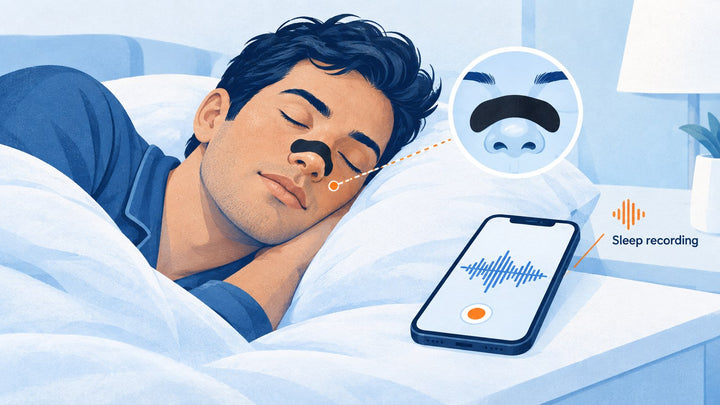
There is no at-home workaround that replaces a sleep study. Smartphone snoring apps and fitness trackers can flag patterns worth discussing with a doctor, but they do not produce a diagnosis.

When to See a Doctor
See a doctor if:
- A bed partner has witnessed you pause breathing or gasp in your sleep
- You regularly wake gasping or choking
- You experience significant daytime sleepiness that affects your daily functioning
- You have frequent morning headaches without another explanation
- Your snoring has appeared or worsened suddenly without an obvious trigger like a cold
- You have risk factors for OSA - excess weight, a large neck circumference, a recessed jaw, or a family history of sleep apnea
Do not delay evaluation because you sleep alone and cannot confirm whether pauses occur - daytime symptoms are sufficient grounds to ask for a referral.
For questions about nasal congestion that may be contributing to your breathing difficulties at night, when to see a doctor for nasal congestion covers what warrants a clinical visit on that front specifically.
What Helps Simple Snoring (and What Doesn't Help Apnea)

If your snoring is not accompanied by the warning signs above - no witnessed pauses, no gasping awake, no meaningful daytime sleepiness - there are practical steps worth trying. A full breakdown is in how to stop snoring, but the main levers are:
- Sleep position. Back sleeping puts gravity to work against you, pushing the tongue and soft palate rearward. Side sleeping reduces this.
- Alcohol and sedatives before bed. Both relax airway muscles more than normal and reliably worsen snoring in people already prone to it.
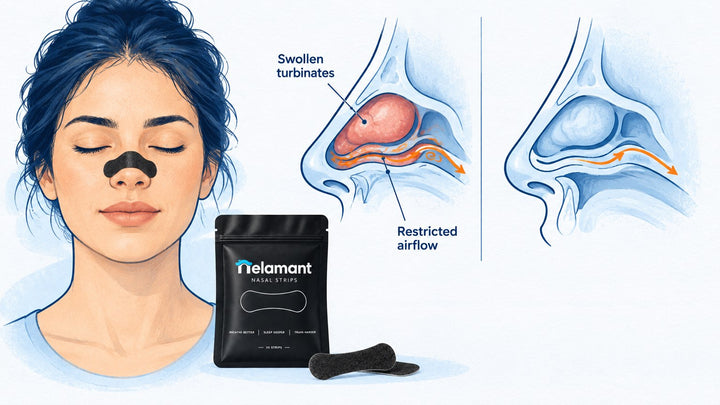
- Nasal congestion. When the nose is blocked, the mouth takes over breathing, and mouth breathing is strongly associated with snoring. Addressing congestion - whether from allergies, a cold, or anatomy - often reduces or eliminates the snoring.
- Weight. Excess soft tissue around the throat narrows the airway.
Nasal strips work by gently lifting the sides of the nose outward, widening the nasal passage and reducing the resistance that drives mouth breathing and, in many cases, the turbulent flow that causes snoring. Nelamant Air uses a wider lift design to distribute that support evenly across the bridge rather than pulling from one point. It is a practical, drug-free option for snoring that originates from nasal obstruction or narrow nasal passages - worn at night, it stays on through sleep without leaving sticky residue.
It is worth being direct here: nasal strips do not treat sleep apnea. They cannot hold a collapsed throat open. If OSA is confirmed, the prescribed treatment - most often CPAP - is what addresses the obstruction, and nasal strips may help with nasal comfort alongside that treatment. For more on that combination, see nasal strips with CPAP.
Frequently Asked Questions
Can snoring cause sleep apnea, or does snoring mean you already have it?
Snoring does not cause sleep apnea, and having snoring does not mean you have sleep apnea. They share some underlying anatomy - a narrow airway, soft palate laxity, nasal obstruction - and snoring is a risk factor for OSA, but they are distinct conditions. Many habitual snorers never develop obstructive sleep apnea. The key distinction is whether breathing actually stops, not whether the noise is present.
What are the most common signs of sleep apnea in adults?
The most clinically significant signs are witnessed apneas (pauses in breathing observed by a partner), waking gasping or choking, and excessive daytime sleepiness. Morning headaches, difficulty concentrating, and waking unrefreshed despite sufficient time in bed are also common. Snoring is frequently present but is neither sufficient nor required for diagnosis.
Is it possible to have sleep apnea and not snore loudly?
Yes. Central sleep apnea, in particular, can occur with little or no snoring. Obstructive sleep apnea can also present quietly, especially in women, where atypical symptoms like fatigue, insomnia, and mood changes are more common than dramatic gasping. If you have daytime symptoms consistent with poor sleep quality and no obvious explanation, that alone is worth discussing with a doctor regardless of how loud you snore.
Do nasal strips help with sleep apnea?
Nasal strips support the nasal opening and can help reduce nasal congestion and nose-based snoring, but they do not treat obstructive sleep apnea. OSA involves collapse of the throat, not just the nose. Nasal strips may help with nasal comfort alongside CPAP therapy, but they are not a substitute for prescribed treatment. See nasal strips for sleep apnea for a full explanation of where they fit.
How is sleep apnea diagnosed - do I need an in-lab study?
Diagnosis requires a sleep study that measures airflow, breathing effort, and oxygen levels overnight. For straightforward suspected OSA in healthy adults, a home sleep apnea test is often sufficient and is far more accessible than a full lab polysomnography. Your doctor will advise which is appropriate based on your symptoms and medical history. No app, wearable, or symptom checklist replaces a formal sleep study.
Should I see a doctor if my partner says I stop breathing in my sleep?
Yes - that observation on its own is grounds for a medical evaluation. Witnessed apneas are the most reliable external indicator of obstructive sleep apnea. You do not need to experience dramatic daytime sleepiness or any other symptom for that report to be taken seriously. A referral for a sleep study is the appropriate next step.
Putting It Together
The core distinction in snoring vs sleep apnea comes down to whether breathing stops. Snoring is a sound produced by a narrow but open airway; sleep apnea is repeated breathing cessation with real downstream effects on oxygen, sleep quality, and long-term health. Volume, frequency, and how long you have snored are all poor proxies for whether apnea is present. The warning signs that matter - witnessed pauses, gasping awake, significant daytime sleepiness - are what point toward evaluation.
If the signs above are not present and your snoring is nasal in origin, practical measures including sleep position, congestion management, and nasal support can make a meaningful difference. If they are present, or if you are in any doubt, the right move is a conversation with your doctor before experimenting with remedies. Getting the diagnosis right is what makes everything that follows actually useful.