Thomas Tiemann

This article is for general information, not medical advice.
Most children breathe through their nose without thinking about it. When you notice your child's mouth hanging open during sleep, or their lips parted throughout the day, it is worth paying attention. Mouth breathing in children is sometimes a harmless response to a stuffy nose, but when it becomes a consistent pattern, it can affect sleep quality, dental development, and daytime behavior. Knowing the signs early gives you the best chance to act before the habit becomes entrenched. Understanding why nasal breathing matters for health and development is a useful starting point for any parent working through this.
- Occasional mouth breathing during illness or heavy exercise is normal; persistent mouth breathing at rest is not.
- Nighttime signs - open mouth, snoring, restless sleep - are often the first clues parents notice.
- Common causes include enlarged adenoids or tonsils, nasal congestion, and allergies.
- Chronic mouth breathing can affect sleep, dental alignment, and facial development over time.
- A pediatrician or ENT specialist should evaluate any child who consistently breathes through their mouth.
- Some home measures can support nasal breathing, but they do not replace a medical assessment.
What Is Mouth Breathing in Children?
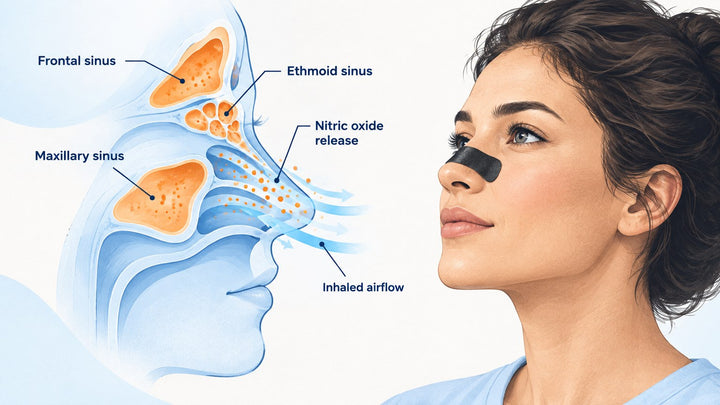
Nasal breathing is the default setting for the human airway from birth. The nose filters, warms, and humidifies incoming air before it reaches the lungs. Mouth breathing bypasses all of that, delivering cooler, drier, unfiltered air directly to the throat and airways. For children, whose tissues and bones are still developing, the difference matters more than it does for adults.
For a fuller picture of what the body loses when nasal breathing is disrupted, see the guide to the benefits of nasal breathing.
Occasional vs. Habitual Mouth Breathing
Opening the mouth to breathe when a cold blocks both nostrils, or during a hard sprint on the football pitch, is completely normal. The airway needs more oxygen, or the nose is temporarily obstructed, and the mouth fills in. That is not a problem.
Habitual mouth breathing is different. It happens at rest, during sleep, and even when the child is not sick or exercising. The mouth stays open as a default rather than as a backup. That pattern - especially when it persists for weeks or months - is what warrants attention.
Signs Your Child Breathes Through Their Mouth
Children rarely complain about how they breathe. Parents usually notice the signs before the child does. Some are visible during the day; others only appear once the child is asleep.
Daytime signs to look for:
- Lips consistently parted at rest, even when calm and quiet
- Dry, chapped lips despite adequate hydration
- Mouth open during focused activities like reading or screen time
- Nasal voice or speaking as though the nose is always blocked
- Frequent throat clearing or a dry, scratchy morning voice
- Tiredness or difficulty concentrating that seems out of proportion to sleep time
Nighttime Signs: When Your Child Breathes Through Their Mouth at Night
The nighttime picture is often clearer because muscle tone drops during sleep and compensatory habits relax. If your child breathes through their mouth at night, you may observe:
- Audible mouth breathing or snoring sounds
- Restless sleep, frequent repositioning, or waking during the night
- Pillow or sheets damp from drooling
- Mouth wide open when you check on them
- Complaints of dry mouth or thirst first thing in the morning
- Dark circles under the eyes despite apparently adequate sleep hours
Snoring is one of the most common nighttime signs. If the snoring is frequent, loud, or accompanied by pauses in breathing, read the detailed guide to child snoring: causes, signs, and when to act for more on what to watch for and when to escalate.
What Causes Mouth Breathing in Children?
In most cases, a child breathes through their mouth because nasal breathing has become difficult or obstructed. The most common structural and physiological reasons include:
- Enlarged adenoids or tonsils. These are the most frequent cause in young children. When adenoid tissue at the back of the nasal cavity grows large, it partially or fully blocks nasal airflow, pushing the child to breathe through the mouth instead.
- Chronic nasal congestion. Persistent stuffiness from repeated colds, allergies, or environmental irritants keeps nasal resistance high enough that mouth breathing becomes the easier path.
- Allergic rhinitis. Year-round or seasonal allergies cause ongoing nasal swelling that makes the nose feel perpetually blocked.
- Nasal obstruction or structural factors. A deviated septum, enlarged turbinates, or other anatomical variations can restrict airflow on one or both sides.
- Habit. Once a child learns to breathe through the mouth - even after the original obstruction has resolved - the pattern can persist as a learned behavior.
In a smaller number of cases, neurological differences affecting muscle tone or coordination of the airway can also contribute. A clinician can help distinguish structural from non-structural causes.
Effects of Mouth Breathing on a Child's Health
When mouth breathing becomes the dominant pattern, the downstream effects touch multiple body systems. These are not inevitable consequences for every child, and severity varies - but they are consistent enough to justify early assessment.
Sleep quality. Mouth breathing during sleep is less efficient than nasal breathing. It increases airway resistance, promotes snoring, and in some cases is associated with fragmented sleep or night waking. A child who appears to sleep long hours but wakes tired, irritable, or inattentive may not be reaching restorative sleep stages.
Dental and facial development. The palate narrows when the tongue rests on the floor of the mouth rather than pressing upward against it - a change that can affect how the upper jaw and teeth develop over time. The long-term physical changes sometimes associated with persistent childhood mouth breathing are covered in more detail in the article on mouth breathing face: what it is and what the research says.
Oral health. Saliva normally buffers the mouth's pH and washes away bacteria. Mouth breathing dries the oral mucosa, reducing this protection and increasing the risk of dental caries and gum inflammation.
Behavior and attention. Poor sleep quality is well-linked to inattention, hyperactivity, and mood dysregulation in children. Some children assessed for attention difficulties turn out to have an underlying sleep-breathing problem once the right questions are asked.
When to See a Doctor
Not every open-mouthed sleeper needs urgent medical attention, but certain patterns should prompt a visit to your pediatrician or a referral to a pediatric ENT (ear, nose, and throat) specialist.
Seek a medical evaluation if your child:
- Breathes through their mouth consistently at rest, not just when congested
- Snores regularly or loudly, particularly if the snoring is accompanied by gasping, pausing, or labored breathing
- Has disrupted or restless sleep most nights
- Seems chronically tired, inattentive, or irritable in ways that do not improve with more sleep time
- Has had persistent nasal congestion for more than several weeks
- Shows signs of dental crowding or changes in bite that your dentist has flagged
- Is under two years old and consistently breathing through the mouth - infants are obligate nasal breathers, and mouth breathing at this age should be evaluated promptly
For guidance on when nasal congestion in particular warrants a clinical visit, see when to see a doctor for nasal congestion. If snoring is the main concern and you want to understand how it relates to sleep-disordered breathing, the overview of snoring vs. sleep apnea explains the key distinctions.
What Parents Can Do at Home
While a clinician should evaluate any persistent pattern, there are practical steps parents can take to support nasal breathing at home - particularly when the cause is congestion or environmental irritants.
Address nasal congestion promptly. Saline nasal rinses or sprays appropriate for children's age can reduce swelling and clear mucus. Follow product label age guidance carefully. Do not use nasal decongestant sprays for extended periods in children without medical direction, as rebound congestion is a real risk.
Manage the sleep environment. Keep the bedroom free of dust mites, pet dander, and other allergens where possible. Mattress and pillow covers and regular washing of bedding at appropriate temperatures help reduce allergen load.
Use a humidifier carefully. A cool-mist humidifier can reduce nasal dryness in low-humidity environments. Clean the humidifier thoroughly and regularly following the manufacturer's instructions; a humidifier with standing water that is not maintained can harbor mold and bacteria.
Encourage upright posture. During waking hours, slouched posture with the chin dropped forward tends to encourage mouth breathing. Gentle reminders and appropriate seating can help, though habit change is gradual.
Sleep position. Side sleeping generally keeps the airway more open than back sleeping, and some children breathe more easily on their side.

For adults dealing with nasal congestion that drives mouth breathing at night, a nasal strip can provide mechanical support to open the nasal passages and make nose breathing easier. Nelamant Air's wider lift profile is designed to support both sides of the nasal bridge evenly, and the extra-hold adhesive is built to stay on through a full night. For information on nasal strips suitable for children specifically - including age considerations and size guidance - see the guide to the best nasal strips for children.
Support Nasal Breathing Tonight
Nelamant Air Nasal Strips - extra-hold adhesive, drug-free.
$14.99 for 30 strips · 30-day returns
Shop Nelamant Air
Nasal Strips for Children: What to Know
Nasal strips work by gently lifting the sides of the nasal bridge to widen the nasal opening, increasing airflow without any medication. They are a mechanical, drug-free tool. For adults and older adolescents with nasal congestion or narrowing, they can make nose breathing noticeably easier.
For children, the picture is more nuanced. Strip sizing, adhesive sensitivity, and age appropriateness all need to be confirmed before use on a child. The dedicated guide to best nasal strips for children covers what to look for in a pediatric context, how to assess fit, and which options are designed or confirmed for younger users. A product CTA for adult readers is not a recommendation to apply the product to a child without confirming age suitability.
It is also worth noting that nasal strips support the outer nasal opening and can help when the resistance is at the nasal valve level. They do not address enlarged adenoids, tonsils, or internal obstruction - so if those are the cause of your child's mouth breathing, a strip will not resolve it. A clinician can clarify where the obstruction lies.
Frequently Asked Questions
Is it normal for children to breathe through their mouth sometimes?
Yes. During a cold, after exercise, or when sleeping in an unusually dry environment, most children will mouth-breathe temporarily. That is a normal adaptive response. The concern arises when a child breathes through the mouth consistently at rest, during the day, and throughout sleep - regardless of whether they have a current illness. If the pattern is ongoing rather than situational, it is worth investigating.
What are the signs a child breathes through their mouth at night?
The most visible signs are an open mouth during sleep, audible breathing or snoring, restless movement, and a damp pillow from drooling. In the morning, the child may wake with a dry or sore throat, bad breath, or complaints of thirst. Daytime tiredness and dark circles under the eyes despite a full night in bed are also common. For a closer look at snoring as a related nighttime sign, the guide to child snoring covers the full picture.
Can mouth breathing affect my child's teeth or face shape?
Prolonged mouth breathing during the years when the face and jaw are developing can influence how the palate, teeth, and midface grow. The tongue's resting position changes when the mouth stays open, which can affect palatal width and tooth alignment over time. The article on mouth breathing face goes into more detail on what the research says about these developmental patterns and who is most likely to be affected.
What usually causes chronic mouth breathing in children?
The most common cause in young children is enlarged adenoids or tonsils, which physically block or reduce nasal airflow. Allergic rhinitis and chronic congestion are the next most frequent contributors. Structural factors such as a narrow nasal passage or deviated septum can also play a role. In some cases, mouth breathing persists as a habit even after the original obstruction has resolved. A pediatric ENT can identify which factor is driving the pattern in a specific child.
Should I use a nasal strip on my child to encourage nose breathing?
Nasal strips are a drug-free mechanical tool that can help open the nasal passages in adults and older users, but age suitability for children needs to be confirmed for any specific product before use. Even where a strip is age-appropriate, it supports the outer nasal opening and will not address adenoid or tonsil obstruction further inside the airway. If your child's mouth breathing has a structural or medical cause, a nasal strip is not a substitute for clinical evaluation. See the guide to best nasal strips for children for age-specific guidance.
Conclusion
Spotting mouth breathing in children early and understanding what is driving it puts parents in the best position to act. Occasional mouth breathing is normal; consistent, habitual mouth breathing - especially during sleep - can affect how a child sleeps, grows, and feels during the day. Start by watching for the signs, address any obvious congestion triggers at home, and bring a persistent pattern to your pediatrician. The earlier the underlying cause is identified, the more options there are to address it before development is affected.