Thomas Tiemann

This article is for general information, not medical advice.
Disclosure: Nelamant makes Nelamant Air; its suitability for children has not been established in this guide.
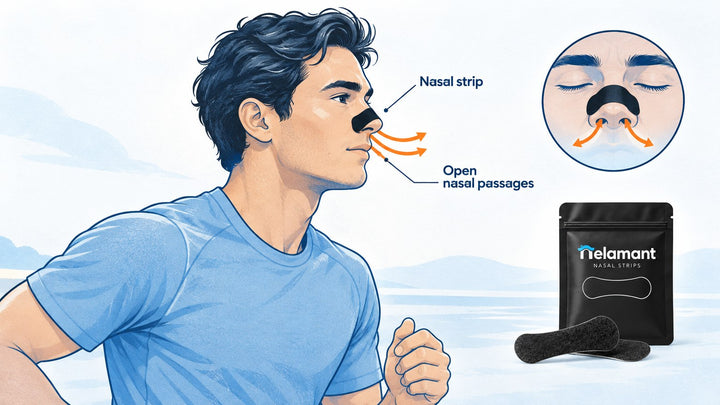
When your child can't breathe through their nose at night, you want something that works without exposing them to medication. A nasal strip is a drug-free option that physically opens the nasal passage by gently lifting the sides of the nose. The key differences that matter for kids are strip size, skin gentleness, and whether the product carries any age guidance. For a broader look at how these products compare across all ages, see our guide to the best nasal strips overall.
- Nasal strips are drug-free and work mechanically - no medication enters the body.
- Fit matters: an adult-sized strip on a small nose will not adhere correctly and may irritate the skin.
- Always check the manufacturer's age guidance before applying any strip to a child.
- A nasal strip opens the nasal valve; it does not treat the underlying cause of congestion, snoring, or mouth breathing.
- If your child snores regularly, breathes through their mouth habitually, or has persistent congestion, see a pediatrician before relying on any over-the-counter product.
Are Nasal Strips Safe for Kids?
Nasal strips themselves carry a straightforward risk profile: they are adhesive, drug-free, and work by applying gentle outward tension to the sides of the nose. The materials, the strength of the adhesive, and the size of the strip are all factors that become more important with smaller, more sensitive skin. For a full picture of general safety considerations, see our guide on whether nasal strips are safe for everyday use.
Age and size considerations
Most nasal strip manufacturers publish a minimum recommended age, and that guidance exists for practical reasons: children's nasal bridges are narrower and shorter than adults', so a strip sized for an adult will overhang onto soft tissue, fold unevenly, or peel away quickly. Skin is also more delicate, and adhesives designed for adult skin can cause irritation or leave residue when removed from a child's face.
Before using any nasal strip on a child, read the packaging age guidance carefully. If no age guidance is given, that is itself a reason to pause and consult a pediatrician. - until age suitability is confirmed for Nelamant Air, the product CTA in this guide is directed at adult readers, not as permission to use the product on a child.
When to see a doctor first
A nasal strip is a short-term comfort aid, not a diagnostic tool or treatment. Talk to your child's pediatrician before using nasal strips if:
- Your child snores regularly or seems to stop breathing during sleep - this may point to enlarged tonsils or adenoids, or pediatric obstructive sleep apnea. See our dedicated guide on child snoring for what to watch for.
- Congestion has lasted more than ten days, or is accompanied by fever, facial pain, or green discharge.
- Your child is a habitual mouth breather during the day as well as at night.
- Your child has known skin allergies or eczema on or near the face.
- Your child is very young or has a narrow nasal bridge that makes correct strip placement difficult.
For guidance on when congestion in children warrants a medical visit, see when to see a doctor for nasal congestion.
Nelamant Air: An Adult Option, Not a Pediatric Recommendation
Nelamant Air uses a wider, more balanced lift design that distributes tension evenly across the nasal bridge rather than pulling at a single point. The extra-hold adhesive is formulated to resist sweat and overnight movement, and the hypoallergenic materials are designed to peel off cleanly without leaving sticky residue - a meaningful advantage when skin sensitivity is a concern.
Nelamant Air is listed for adult readers only. We do not recommend it for children until its suitable age range is confirmed.
The purchase link below is for adults, not a recommendation to use Nelamant Air on a child.
Manufacturer-Labeled Options for Children
The products below represent the main options parents encounter when looking for nasal strips sized or recommended for children. Specifications and age guidance should be verified on current packaging before purchase.
Breathe Right Original Clear (Small/Medium)
Breathe Right no longer makes a child-specific strip and suggests its small/medium format for children aged 5 and up, with adult help applying and removing it. Follow the current package instructions; the manufacturer warns against use with latex allergies.
Breathe Right Original (Small Size)
Breathe Right no longer makes a child-specific strip and suggests its small/medium format for children aged 5 and up, with adult help applying and removing it. Follow the current package instructions; the manufacturer warns against use with latex allergies.
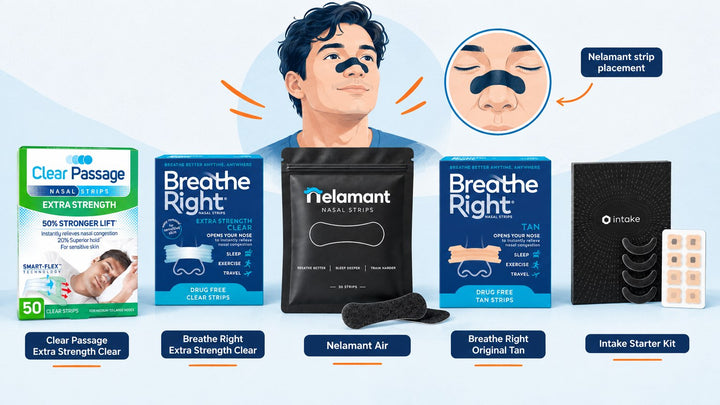
Age Guidance Comparison
| Product | Dedicated kids' size | Age guidance on label | Adhesive type | Price per strip (approx.) |
|---|---|---|---|---|
| Nelamant Air | Not established | Not recommended for children without confirmed age guidance | Extra-hold, hypoallergenic, clean peel | ~$0.50 (30 strips / $14.99) |
| Breathe Right Original Clear (Small/Medium) | Small/medium adult format | See manufacturer age directions | Spring-tab adhesive | Check current product details |
| Breathe Right Original Small | Small/medium format | See manufacturer age directions | Spring-tab adhesive | Check current product details |
How We Chose
This is a manufacturer-authored design and specification comparison, not an independent test or a customer-rating ranking. Products were selected based on the following criteria:
- Pediatric relevance: Does the product carry age guidance, pediatric-specific sizing, or labeling that addresses children's use?
- Strip dimensions: Does the strip footprint fit a smaller nose bridge without overhanging onto soft tissue?
- Adhesive gentleness: Is the adhesive designed or formulated to limit skin irritation and allow clean removal from sensitive skin?
- Material transparency: Are hypoallergenic or skin-safe claims stated by the manufacturer?
- Drug-free mechanism: All products in this list work mechanically, with no active pharmaceutical ingredient.

Buyer's Guide: What to Look for in Kids' Nasal Strips
Strip size and fit for smaller noses
A strip that extends past the edges of the nasal bone onto soft tissue will not adhere evenly and may pull uncomfortably. Look for products that state a strip length appropriate for a child's face, or a dedicated pediatric size. When in doubt, measure the distance across your child's nasal bridge and compare it to the published strip dimensions.
Adhesive gentleness and removal
Children's skin is thinner and more reactive than adult skin. An adhesive that performs well on adult oily skin may be too aggressive for a child's cheeks or nose bridge. Look for hypoallergenic labeling and, if possible, a gentle-removal or clean-peel claim from the manufacturer. Peeling slowly from one edge toward the center - rather than pulling straight up - minimizes discomfort on any skin type.
When a nasal strip won't solve the problem

A strip opens the nasal valve - the narrowest part of the nasal passage just inside the nostril. It does not shrink swollen turbinates, drain sinuses, treat enlarged adenoids, or keep a child's mouth closed. If your child's breathing difficulty stems from any of these causes, a strip addresses only one part of the picture at best, and nothing at all at worst. Two topics worth reading alongside this one:
- Habitual mouth breathing in children often has structural or developmental causes a strip cannot fix. See our full guide on mouth breathing in children for what drives the pattern and what actually helps.
- Childhood snoring can signal enlarged tonsils, adenoids, or pediatric sleep-disordered breathing. A nasal strip may reduce noise from nasal congestion but will not address throat-level obstruction. Read the full guide on child snoring causes and next steps before settling on a strip as the answer.
Try Nelamant Air - Drug-Free Nasal Support
Extra-hold adhesive, hypoallergenic materials, clean peel. For adult use - confirm age guidance before use on a child.
$14.99 for 30 strips · 30-day returnsFrequently Asked Questions
What age can kids use nasal strips?
Age guidance varies by manufacturer and is printed on the packaging. Breathe Right Original Clear (Small/Medium) carries explicit pediatric labeling. For products without pediatric labeling, adult age guidance applies by default. before using Nelamant Air on a child. When no age guidance is available and you are unsure, a pediatrician's input is the safest starting point.
Are nasal strips safe for kids with sensitive skin?
Hypoallergenic does not mean nobody can react - it means the materials are formulated to reduce the likelihood of a reaction. For children with eczema, known adhesive sensitivity, or a history of skin reactions, patch-test the strip on a less sensitive area of skin first, or ask a pediatrician before use. Remove slowly from one edge to minimize irritation. For a fuller look at nasal strip safety considerations in general, see that guide.
Can nasal strips help a child who snores?
If the snoring is caused by nasal congestion - a cold, allergies, or a temporarily blocked nose - a correctly sized strip may reduce the noise by opening the nasal passage. If the snoring comes from enlarged tonsils or adenoids, throat-level obstruction, or sleep-disordered breathing, a nasal strip will have little effect. Persistent or loud snoring in a child should be evaluated by a pediatrician. See child snoring for a fuller breakdown of causes.
My child keeps pulling the strip off - what should I do?
Children often pull strips off because they are uncomfortable or unfamiliar. Make sure the nose bridge is clean and dry before applying - oil, moisturizer, or water prevent adhesion and make the strip easier to dislodge. An ill-fitting strip that extends onto soft tissue will also feel strange and invite removal. If the child finds the sensation intolerable, that is a signal to discontinue and discuss alternatives with a pediatrician rather than persisting.
Should I use nasal strips instead of seeing a doctor for my child's stuffy nose?
A nasal strip is a comfort aid, not a treatment. It opens the nasal valve mechanically and does not address the cause of congestion - whether that is a virus, allergy, structural issue, or swollen tissue. If congestion lasts more than ten days, is accompanied by fever or facial pain, or your child is struggling to breathe, see a doctor rather than managing it with strips alone. For guidance on when nasal congestion requires medical attention, see when to see a doctor for nasal congestion.
Conclusion
The best nasal strips for kids are those sized to fit a child's narrower nose bridge, formulated with gentle adhesives, and carrying clear age guidance from the manufacturer. No strip substitutes for a pediatrician's assessment when snoring, habitual mouth breathing, or persistent congestion is the concern - but for short-term nasal comfort from a cold or mild congestion, a correctly chosen strip can help a child breathe more easily through the night. Adults looking for their own option will find Nelamant Air - with its balanced lift and hypoallergenic clean-peel adhesive - a strong starting point; this is not a recommendation for children.