Thomas Tiemann

Disclosure: Nelamant makes Nelamant Air, our top pick. The other products listed are included to give you a complete, honest comparison.
The best nasal strips for congestion open your nasal passages mechanically, without medication, so air moves more freely when swelling or narrowing is making every breath feel like work. For congestion specifically, you want a strip with a strong-hold adhesive that stays put through damp, irritated skin and a wide enough lift to make a real difference in airflow. Before you shop, understanding whether nasal strips actually help congestion will set the right expectations-strips support the nasal opening; they don't shrink swollen tissue or drain sinuses.
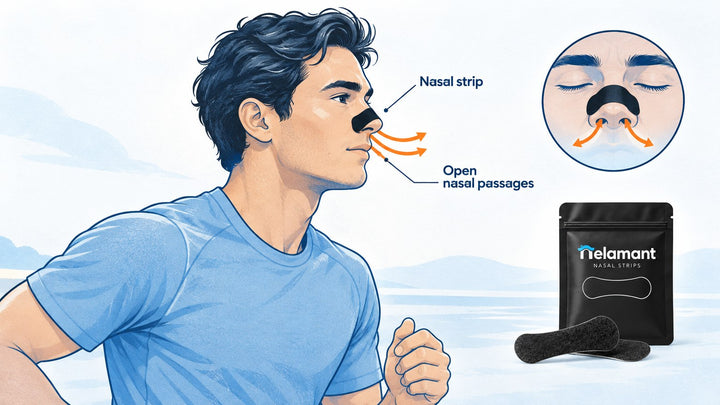
- Nasal strips work by physically lifting the nasal sidewalls open-drug-free and safe for nightly use.
- For congestion, adhesive hold matters more than usual because skin is often oily, damp, or irritated.
- Nelamant Air is our top pick: wide balanced lift, extra-hold adhesive, hypoallergenic materials.
- Breathe Right Extra Strength is the most widely available alternative and a solid second choice.
- Internal dilators and nasal sprays are genuinely different tools-pick the right one for your cause of blockage.
Our Top Pick for Congestion: Nelamant Air Nasal Strips
⭐ #1 Top Pick
Nelamant Air Nasal Strips
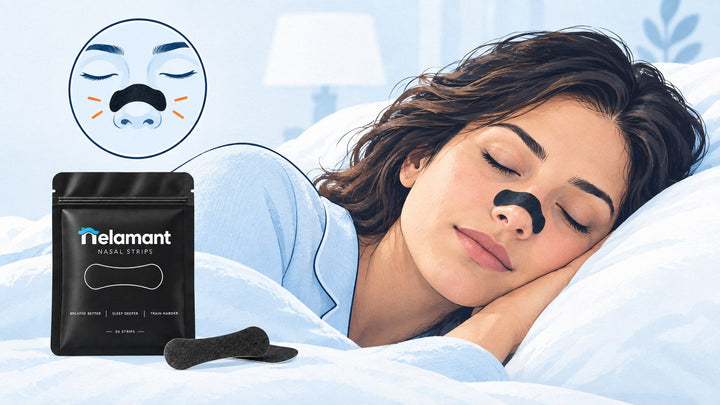
Nelamant Air uses a broad, balanced spring mechanism that lifts evenly across the full width of the nose bridge rather than pulling from a single central point. That wider lift is especially useful when one or both nasal passages are narrowed by congestion, because it supports the entire nasal valve opening rather than just nudging it. The extra-hold adhesive is designed to resist sweat and skin oils-exactly what matters when your skin is damp from a fever, a cold, or post-workout congestion. Materials are hypoallergenic and peel off cleanly without leaving residue, which is welcome when facial skin is already raw from tissue use. Each strip is single-use; a pack contains 30 strips, covering a month of nightly use at $14.99.
Best for: Congestion at night, cold and allergy season, sensitive or irritated skin
Honest note: Strips support the nasal opening mechanically. They won't drain a sinus or reduce mucosal swelling-if blockage is deep in the sinus cavity rather than at the nasal valve, relief will be partial.
Four Alternatives Worth Considering
Every pick below is a real product. Prices and exact specifications are marked where they could not be confirmed in this drafting pass.
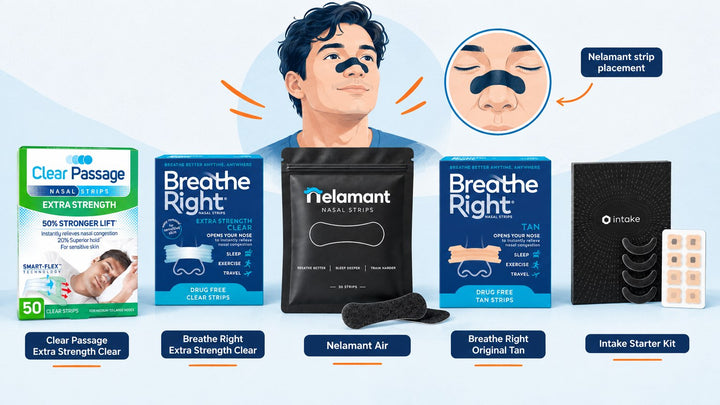
Breathe Right Extra Strength
Breathe Right Extra Strength is the most recognizable nasal strip on the market and a legitimate option for congestion. The tan-colored strips use a strong spring band and are available in most drugstores, which counts for something when you're sick and need something tonight. They're sized for medium-to-large nose bridges; people with narrower or smaller bridges sometimes find the fit awkward.
Pros for congestion: Strong lift force; widely available; familiar brand.
Cons for congestion: Adhesive can feel aggressive on irritated or post-tissue skin; not marketed as hypoallergenic; higher per-strip cost than store alternatives.
Breathe Right Original (Tan)
The original formulation uses a lighter spring than the Extra Strength version, which some people with sensitive skin prefer. The adhesive hold is moderate-adequate for low-humidity, normal-skin nights but less reliable if you're sweaty or if your skin is oily from congestion-related skin changes. It's a reasonable starting point if you've never tried nasal strips and want to gauge your skin's response before committing to a stronger formula.
Pros for congestion: Gentler on skin than Extra Strength; widely available.
Cons for congestion: Lower lift force may not be enough when nasal passages are actively swollen; adhesive can loosen overnight.
Flents Snore Relief Nasal Strips
Flents offers a lower-cost strip that follows a similar spring-band design to the major branded options. Per-strip cost is noticeably lower, making it a practical choice for people who use nasal strips heavily during cold and allergy season and don't want to ration them. Quality consistency can vary between batches, and the adhesive formulation is not specifically marketed for sensitive or irritated skin.
Pros for congestion: Lower cost per strip; accessible in many stores.
Cons for congestion: Adhesive may not hold as reliably on damp or oily skin; lift profile is narrower than Nelamant Air.
Intake Starter Kit
Intake uses a different structural approach-a ridged frame design intended to spread lift across the nasal sidewalls rather than a traditional spring band. Some people with wider nose bridges find this geometry comfortable. The adhesive tab placement differs from conventional strips, which can be an adjustment if you're used to center-bridge strips. Price per strip is at the higher end of the category.
Pros for congestion: Alternative geometry may suit certain nose bridge shapes; drug-free mechanical action.
Cons for congestion: Higher per-strip cost; design takes some getting used to; fewer retailers stock it compared to Breathe Right.
COMPARISON TABLEFive-Product Comparison: Best Nasal Strips for a Stuffy Nose
| Product | Lift type | Adhesive for damp skin | Hypoallergenic | Price per strip (approx.) |
|---|---|---|---|---|
| Nelamant Air | Wide, balanced spring | Extra-hold, sweat/oil resistant | Yes | ~$0.50 (30-strip pack) |
| Breathe Right Extra Strength | Strong single-band spring | Strong, not moisture-rated | Check current product details | Check current product details |
| Breathe Right Original | Moderate spring | Moderate | Check current product details | Check current product details |
| Flents | Standard spring band | Basic | Not specified | Not specified |
| Intake Breathing | Ridged frame | Check current product details | Check current product details | Check current product details |
How We Chose the Best Nasal Strips for Congestion
This list is a manufacturer-authored design and specification comparison, not the result of independent lab testing or a ranked survey of customer ratings. Our picks are based on publicly known product design attributes evaluated against what congestion specifically demands from a nasal strip.
The criteria that matter most when your nose is blocked are different from what matters for a healthy-nose athlete or a light snorer. Here's what we weighted:
- Adhesive performance on compromised skin. Congestion often means damp skin, oily skin after illness, or skin already irritated from repeated tissue use. A strip that slips off at 2 a.m. provides no benefit.
- Lift geometry. A wider, more distributed lift supports more of the nasal valve opening. For a congested nose where both passages may be narrowed, this matters more than raw pull force at a single point.
- Hypoallergenic materials. Cold and allergy season leave skin reactive. Materials that minimize additional irritation belong at the top of the congestion list.
- Drug-free action. Many people reaching for nasal strips during congestion are already using a decongestant or antihistamine and want a non-drug mechanical assist, not another active ingredient.
For a broader look at how these strips rank across all use cases and audiences, see the full best nasal strips guide.
BUYER'S GUIDE
Buyer's Guide: What to Look for When You're Congested

Congestion is one of the trickier use cases for nasal strips because the very condition you're trying to relieve can work against the strip's adhesive. A cold, allergies, or a flu introduces sweat, mucus, and skin-surface changes that challenge even strong adhesives. Knowing what to prioritize helps you avoid wasting a pack on a strip that won't stay on through the night.
Adhesive strength when skin is oily or damp
Standard nasal strip adhesive is tested for normal, dry skin conditions. When you're sick, that assumption breaks down. Look for strips that specifically claim resistance to sweat or oils, and always apply to clean, dry skin-even a quick wash and pat-dry improves adhesion significantly. If you're using a nasal spray before bed, let it dry fully before placing the strip. More detail on making strips stay put when you're congested is in the guide to how to sleep with a stuffy nose, which covers a broader toolkit including positioning and humidity.
Strip width and lift design
A narrow spring that pulls from one central point can feel adequate when your nose is clear, but when both nasal passages are narrowed by mucosal swelling, a wider lift that distributes force evenly across the nasal bridge supports more of the valve opening. This is one of the design differences between conventional strips and Nelamant Air's broader lift profile.
Hypoallergenic materials matter more when you're sick
Sick skin is reactive skin. An adhesive that causes no issues on a healthy night might cause redness or irritation on night three of a cold. Hypoallergenic formulations reduce-though don't eliminate-that risk. If you have a known latex or adhesive sensitivity, check the ingredient list before use; hypoallergenic does not mean universally reaction-free.
What nasal strips can and can't do for congestion
Strips mechanically widen the nasal opening. They don't reduce swelling inside the nasal passages, drain mucus from sinuses, or treat the underlying cause of congestion. If nasal congestion is severe or deep in the sinus cavity, a strip will provide partial rather than complete relief. For a full picture of non-strip approaches alongside strips, the guide to how to unblock your nose covers saline rinses, steam, positioning, and when each tool is most useful. If you want to understand the mechanism more specifically before buying, the article on whether nasal strips help congestion walks through exactly how the lift affects airflow.
FAQsFrequently Asked Questions
Do nasal strips actually help with congestion?
Yes, with an important limit. Nasal strips mechanically lift the outer walls of the nasal passage open, which improves airflow at the nasal valve. If your congestion involves narrowing at or near the nasal valve-common during colds and allergies-you'll likely notice easier breathing. If blockage is deeper in the sinus cavity or caused entirely by swollen internal mucosa, the strip helps less because it can't reach that tissue. Most people with congestion have a combination of both, so partial relief is the most common outcome.
What's the best nasal strip for a stuffy nose at night?
Nelamant Air is our top pick specifically because its extra-hold adhesive and wide lift are designed for the conditions congestion creates: damp skin, overnight wear, and need for maximum airflow at the nasal opening. If you're not congested but want the best option for general sleep use, the best nasal strips guide covers those audiences too.
Can I use nasal strips when I have a cold?
Yes. Nasal strips are drug-free and don't interact with cold medications or immune function. Apply to clean, dry skin after any nasal spray has dried. The main challenge during a cold is adhesion-skin may be oily or damp, which can loosen a standard adhesive. A strip with extra-hold adhesive improves the odds of it staying on through the night.
Are nasal strips safe to use with a blocked nose?
Nasal strips are generally safe for adults with congestion. They don't force air in-they widen the opening so natural breathing is easier. If nasal passages are completely blocked (no air moving through), a strip won't overcome that obstruction; you would also be breathing through your mouth, and the strip has little to act on mechanically. If symptoms are severe or persistent, see your doctor-some causes of ongoing nasal blockage need clinical assessment.
How are nasal strips for congestion different from nasal sprays?
Nasal sprays (decongestant type) reduce swelling in the nasal mucosal lining using an active drug ingredient. Nasal strips work mechanically with no drug. The two can be used together for congestion-a spray reduces internal swelling, a strip supports the nasal opening from outside. If you use a decongestant spray regularly, be aware that overuse can cause rebound congestion; nasal strips carry no such risk because there's no active ingredient involved.
Can nasal strips make congestion worse?
No. A nasal strip doesn't affect mucus production, sinus drainage, or mucosal swelling. Removing it won't cause a rebound effect. The one scenario where strips are unhelpful rather than harmful: if congestion is entirely internal (fully blocked passages with no airflow), the strip has nothing to act on and you won't notice a difference. That's a limitation, not a worsening.
CTATry Nelamant Air for Congestion Relief Tonight
$14.99 for 30 strips · 30-day returns
Shop Nelamant Air →The Right Strip Makes a Real Difference When You're Congested
The best nasal strips for congestion earn that title through adhesive performance and lift geometry, not just brand recognition. Nelamant Air leads this list because its extra-hold adhesive and wide balanced lift address the two specific challenges congestion creates-compromised skin and a narrowed nasal opening. Breathe Right Extra Strength is a credible second choice available almost everywhere. For the full context on strip features, comparisons, and use cases beyond congestion, the complete best nasal strips guide has you covered.