Thomas Tiemann

Yes, nasal strips can expire - or more precisely, their adhesive and spring band can degrade over time even when the strip looks intact. Most brands print a shelf-life date on the packaging, and strips stored poorly can lose effectiveness well before that date. Understanding what actually breaks down, and how to store nasal strips correctly, helps you get a reliable hold every night.
- Most nasal strips carry a printed expiration or best-by date - check the box or foil packet.
- Heat, humidity, and direct light are the main things that degrade adhesive before that date.
- A strip that peels, won't stick, or feels brittle has likely degraded regardless of the printed date.
- Store strips in a cool, dry place away from bathrooms and car gloveboxes.
- Original sealed packaging is the best storage - don't open a packet until you're ready to use it.
To understand why storage conditions matter so much, it helps to know how nasal strips work and why their design matters - the spring band and adhesive layer have to cooperate every time you apply one.
Do Nasal Strips Have an Expiration Date?
Most nasal strip manufacturers print an expiration or "use by" date on the outer box and sometimes on individual foil packets. This date is based on stability testing of the adhesive under controlled conditions. It is not a safety expiry in the pharmaceutical sense - there is no drug ingredient that becomes harmful - but it is a functional one: after that date, the manufacturer cannot guarantee the adhesive will bond reliably or the spring band will provide its intended lift.
If there is no printed date on your box, a reasonable working assumption is that strips stored properly remain functional for roughly two to three years from the manufacture date. The manufacture date is often encoded in a lot number on the base of the box. When in doubt, check with the brand directly.
For everyday purposes, the printed date is the clearest signal you have. A strip used a few weeks past its date in ideal storage is a different situation from one that has spent two summers in a gym bag - which brings us to what actually degrades.
What Actually Degrades on a Nasal Strip
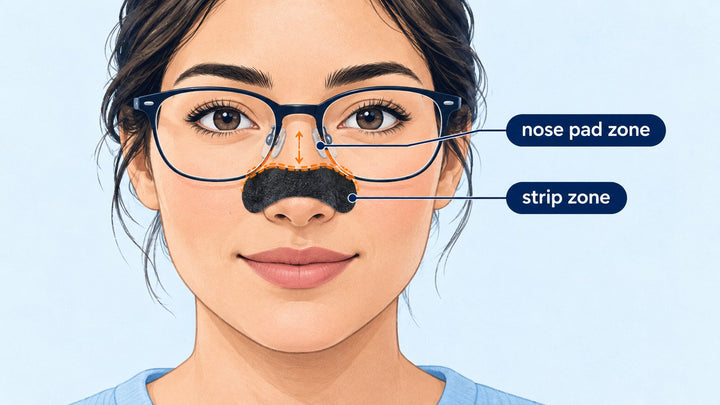
A nasal strip has two functional components: the adhesive layer on the underside, and the spring band embedded in the strip body. Both can degrade, though at different rates and for different reasons.
The adhesive is the most vulnerable element. Pressure-sensitive adhesives are designed to bond to clean, dry skin and release cleanly. Prolonged exposure to heat softens the adhesive matrix and can cause it to flow or become tacky in the wrong way - either too aggressive to remove comfortably or too weak to stay on through the night. Humidity introduces moisture into the adhesive even through packaging seals over time, which can break down the bond chemistry.
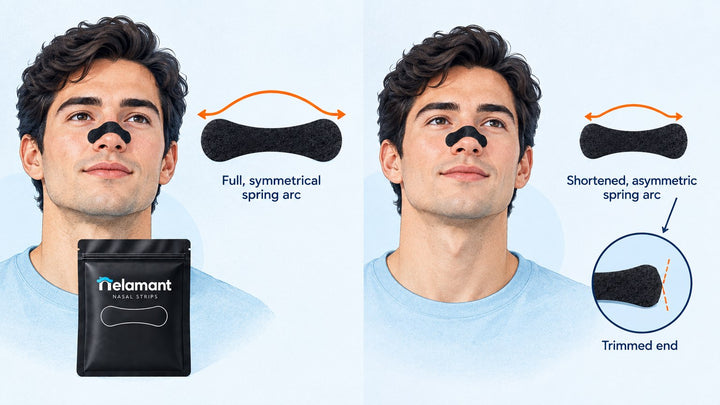
The spring band is more stable but not immune. The band provides the outward spring force that gently holds your nasal passages open. Extreme heat cycling - hot in a car, cool indoors, hot again - can stress the material and reduce its resilience. A strip that feels unusually stiff or, conversely, too limp when you flex it before applying, may have seen temperature extremes.
The net result in both cases is the same: a strip that either fails to stick through the night or fails to open your nasal passages effectively. If you have been having adhesion problems with a recent pack, the nasal strips not sticking guide covers application technique as well - but if the pack is old or has been stored badly, degradation is the more likely culprit.
Signs Your Strips May Have Degraded
You do not need to test every strip. A quick check before you apply one will tell you most of what you need to know:
- The adhesive liner peels away unevenly or the adhesive looks discolored, stringy, or has dried patches.
- The strip feels brittle or cracks when you flex it gently between two fingers.
- It won't lie flat against clean, dry skin within a few seconds of application.
- It slides or lifts at the edges within the first ten minutes of wearing, even on well-prepped skin.
- There is a noticeable smell from the adhesive - a sign the polymer has broken down or picked up moisture.
Any of these signals means the strip will likely underperform. Using a degraded strip is not dangerous, but it will not do what it is supposed to do.
How to Store Nasal Strips Properly
The single most effective thing you can do is keep strips in their original sealed packaging until the moment you use one. The individual foil or paper packets most strips come in are designed to slow moisture ingress and protect the adhesive from light and air. Once the pack is opened or the outer box is unsealed, that protection is reduced.
Beyond that, location matters. A bedroom nightstand drawer is close to ideal: it is typically cool, dry, and away from direct sunlight. That is the same environment where Nelamant Air strips will hold their adhesive strength right through the night - the extra-hold adhesive is formulated to resist sweat and oil during wear, but it needs to arrive at your nose in good condition, which means protecting it beforehand.

Room temperature storage - roughly 59–77 °F / 15–25 °C - is sufficient for most people in most climates. If you live somewhere hot and humid, a bedroom with air conditioning is better than a bathroom cabinet or a kitchen shelf near the stove.
Storage Conditions to Avoid
- Bathrooms: Steam from showers raises both heat and humidity repeatedly - exactly the conditions that degrade adhesive fastest.
- Cars and gym bags: Temperatures inside a parked car can far exceed safe storage ranges even on mild days, and gym bags cycle between warm and damp environments.
- Windowsills or anywhere with direct sunlight: UV light can degrade adhesive polymers and packaging materials over time.
- Freezers or refrigerators: Cold storage is not recommended unless the manufacturer specifically states otherwise; condensation when the strip warms to room temperature can damage the adhesive.
- Near heating vents or radiators: Consistent dry heat ages adhesive faster than ambient room conditions.

Frequently Asked Questions
Do nasal strips expire if they have never been opened?
An unopened box of nasal strips will last longest, but it can still expire. The packaging slows adhesive degradation; it does not stop it entirely. The printed expiration date applies to unopened stock stored under the conditions specified on the label. If you have had a sealed box in ideal storage - cool, dry, out of sunlight - for less than the printed shelf life, the strips should still perform as expected.
Can I use a nasal strip past its printed date?
There is no safety risk from using a strip past its date, since there is no drug ingredient involved. The practical concern is performance: the adhesive may not bond well enough to stay on through the night or through a workout, and the spring band may have lost some of its lift. If a strip passes the visual and flex check described above and sticks reliably when you apply it, you can make your own judgment - but a pack that is significantly past its date is more likely to disappoint.
Does storing nasal strips in a bathroom cabinet hurt them?
Yes, it is one of the worst places to store them. Bathrooms cycle through high heat and humidity every time someone showers, which is precisely what breaks down pressure-sensitive adhesive over time. Even if the box looks fine from the outside, the adhesive inside the packets may have been compromised. Move them to a bedroom drawer or linen closet instead.
How long do Nelamant Air nasal strips last in the packet?
Check the printed date on your Nelamant Air box for the specific shelf life. Stored in a cool, dry drawer away from sunlight and humidity, individual foil-sealed strips should hold their adhesive integrity up to that date. Once you open the outer box, keeping it closed between uses and away from bathroom humidity gives you the best chance of every strip performing consistently.
Conclusion
Nasal strips do expire - functionally if not always in a safety sense - and how you store them determines whether they reach that printed date in working condition or fall short of it long before. Keep strips in their original packaging, in a cool dry drawer, away from bathrooms, cars, and direct light. Check for the signs of adhesive breakdown before you apply one, and replace a pack that consistently fails the flex and stick test. For a deeper look at the mechanics behind why adhesive quality matters so much to how a strip performs, revisit how nasal strips work and why the design matters.