Thomas Tiemann

Nasal strips not sticking usually comes down to one thing: skin condition at the moment of application, not a defective strip. Oil, moisture, residue from a moisturizer, or even a few fine hairs on the bridge are enough to stop the adhesive from bonding. Fix the surface, and the strip stays put.
- The most common cause of nasal strips falling off is skin that is oily, damp, or has product residue on it.
- Washing, drying completely, and letting your skin cool after a shower solves the problem for most people.
- Hair on the nose bridge, wrong placement, and insufficient press time are the next most common culprits.
- A strip with a stronger-hold adhesive can help if your skin is naturally oily or you sweat at night.
- Storage matters - heat and humidity degrade the adhesive before you even open the pack.
Why Nasal Strips Fall Off
To understand why a strip fails, it helps to know how it works. A nasal strip is a spring-loaded band coated with a pressure-sensitive adhesive. When it bonds to clean, dry skin, the band's outward spring gently lifts the sides of the nasal passage open. If the adhesive can't grip the skin fully, the band's own tension pulls the edges free. Understanding how nasal strips work and why the design matters makes it easier to see why skin prep is non-negotiable.
The main reasons a nasal strip falls off - or why your nasal strip falls off at night when you're sweating into a pillow - break down into four categories:
- Excess oil or sebum on the skin surface, which acts as a release layer between the adhesive and skin.
- Moisture from a recent shower, sweating, or a humid room.
- Skin-care products - moisturizers, sunscreen, primer - left on the bridge area.
- Application errors - wrong position, insufficient press time, or a strip that doesn't match your nose width.
9 Fixes for Nasal Strips That Won't Stay On
Work through these in order. Most people find one or two fixes that solve their problem entirely.
1. Wash the Nose Bridge Before Applying
Use a gentle facial cleanser or even plain soap and water, focused on the bridge area. This removes the top layer of sebum and any environmental residue. Pat - don't rub - dry with a clean towel or tissue. Rubbing stimulates oil production and leaves lint behind. This single step resolves the issue for a large share of people who say their strip won't stick.
2. Remove Fine Hairs From the Bridge
Even very fine, nearly invisible hairs on the nose bridge create tiny gaps between the adhesive and the skin surface. The adhesive bonds to the hair shaft rather than the skin, and the strip peels away from the edges inward. If you notice the strip lifting from one side consistently, check whether hair is the culprit before blaming the product.
3. Wipe With a Gentle Toner or Isopropyl Alcohol
If washing alone doesn't solve the problem, follow up with a cotton pad lightly dampened with an alcohol-based toner or 70% isopropyl alcohol. Let it evaporate fully - roughly 30 to 60 seconds - before applying the strip. This step cuts through oil that plain water can't lift. Avoid witch hazel formulas that contain added glycerin or oils, as those can leave a film that counteracts the whole exercise.
4. Let Your Skin Cool After a Shower
Hot water opens pores and triggers sweating, and steam leaves a fine moisture layer on skin that can persist for several minutes after you step out. Applying a strip within five minutes of a hot shower is one of the most reliable ways to guarantee it falls off. Wait at least ten to fifteen minutes, allow your body temperature to settle, and apply to fully cool, dry skin.
5. Check Your Placement
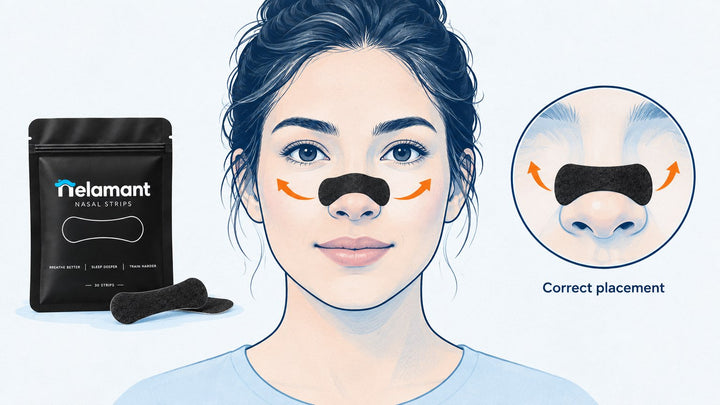
A strip applied too high sits partly on cartilage where skin is thinner and more mobile; too low and you're losing adhesive area to the tip of the nose where the skin curves away. The correct position is across the flare of the nostrils, just over the bridge - flat against the skin with the center tab sitting above the widest part of the nostrils. How to apply nasal strips covers exact placement step by step, including how to smooth out the tabs without trapping air bubbles under the strip.
6. Press and Hold for the Full Recommended Time
Pressure-sensitive adhesives need sustained pressure to activate the bond. Most strips require you to press firmly across the entire strip for at least ten to fifteen seconds. A quick press-and-go leaves sections of the adhesive incompletely bonded, and those sections lift first. Run your fingertip back and forth across the strip with firm, even pressure from one end to the other before letting go.
7. Try a Larger or Stronger-Hold Strip
If the strip fits the bridge but still lifts from the ends, the strip may be slightly too narrow for your nose width, leaving the tab ends unsupported. A wider size adds more adhesive coverage at the corners. Alternatively, if your skin type tends to produce more oil even on a clean surface, a strip formulated with a stronger-hold adhesive makes a real difference. The guide to the strongest nasal strips compares hold-level options for people whose standard strips consistently fail.
8. Skip Lotions, Sunscreen and Moisturizer on the Bridge
Even a small amount of facial moisturizer or SPF product that migrated from your forehead to the bridge area will compromise adhesion. If you use a full-face moisturizer in your morning routine, apply the strip first and let it bond before applying moisturizer to the rest of your face - and keep the moisturizer well clear of the bridge. At night, if you use a face oil or night cream, apply it after the strip is on and already seated.
9. Store Strips Away From Heat and Humidity
Pressure-sensitive adhesives degrade when stored in warm, humid environments - exactly the conditions of a bathroom cabinet above a running shower. If your strips have been sitting in the bathroom for weeks, the adhesive may have already lost a portion of its tackiness before you open the packet. Store strips in a cool, dry drawer, and close the pack properly between uses if it's resealable.
Oily Skin and Sweating: Special Considerations
If you have naturally oily skin, or if you run warm at night and sweat through your sleep, standard adhesive strips will always be harder to keep in place. The oil and moisture cycle works continuously against the bond throughout the night, even when you applied the strip correctly at bedtime.
The alcohol wipe step (Fix 3 above) is more important for oily skin types than for dry or normal skin. Some people with oily skin also find that applying the strip slightly earlier in the evening - before skin warms up from being under a duvet - gives the adhesive more time to cure before the challenging conditions kick in.
For persistent oily-skin adhesion problems, a strip specifically chosen for that skin type makes the biggest difference. The roundup of the best nasal strips for oily skin goes into more detail on what adhesive characteristics to look for and which strips are best suited to higher-sebum skin.
Does Strip Design Matter?
Yes, meaningfully. Not all adhesive formulations are the same, and the width and shape of the strip affect how much contact area you get with the skin. A narrower strip has less margin for error in placement; a strip with a lower-quality adhesive requires near-perfect skin prep every time to compensate.
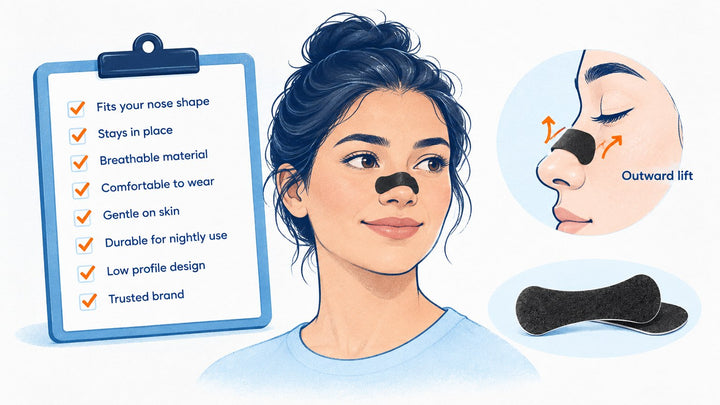
Nelamant Air Nasal Strips use an extra-hold adhesive designed to resist sweat, oil and overnight movement - which directly addresses the two conditions that most often cause a strip to fail mid-sleep. The wider lift footprint also means more adhesive surface is in contact with the nose bridge, which distributes the holding force rather than concentrating it at two small tab points. For people who've cycled through standard strips and consistently find them on their pillow by morning, a strip engineered for overnight hold is a more practical solution than increasingly elaborate skin prep.

Try Nelamant Air - Built to Stay On All Night
$14.99 for 30 strips · 30-day returns
Shop Nelamant Air
Frequently Asked Questions
Why does my nasal strip fall off after only an hour or two?
A strip that fails within the first couple of hours almost always points to incomplete skin prep - residual moisture, oil or product still on the bridge when you applied it. If you applied right after a shower or after moisturizing, that's the likely cause. Work through Fixes 1 through 4 first. If the strip fails consistently even with thorough prep, the adhesive strength of the strip you're using may not be sufficient for your skin type.
Can I use extra adhesive or tape to keep a nasal strip on?
It's not recommended. Adding medical tape or skin adhesive around a nasal strip creates an uneven surface, can irritate skin, and makes removal more difficult. The better path is addressing why the strip isn't sticking - skin prep or strip selection - rather than applying a secondary fix on top of a failing one.
Do nasal strips fall off more in summer or humid climates?
Yes. Warm, humid conditions increase baseline skin moisture and oil production and mean you're more likely to sweat during sleep. The alcohol-wipe step (Fix 3) and allowing skin to cool fully before applying (Fix 4) both become more important in summer. Choosing a strip with an extra-hold adhesive also makes a bigger practical difference in hot and humid conditions.
Why do my nasal strips fall off at night but not during the day?
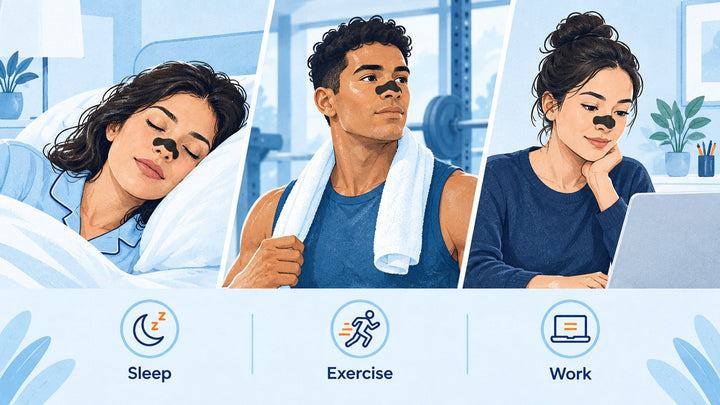
During sleep your body temperature rises, you may sweat, and your face is in contact with a pillow for hours - all of which work against adhesion in a way that brief daytime wear doesn't replicate. Strips that hold fine for a workout or an afternoon of congestion may not have the holding power for eight hours overnight. An overnight-rated adhesive and the skin prep steps above close most of that gap. See the full guide to applying nasal strips for additional tips on nighttime use.
Does the type of nasal strip affect how well it stays on?
Significantly. Adhesive formulation, strip width, and the stiffness of the lifting band all interact with how well the strip holds. A stiffer band exerts more outward force, which puts more stress on the adhesive bond. If the adhesive isn't rated for that tension plus overnight conditions, the edges lift. The guide to the strongest nasal strips breaks down how hold levels compare across options if you want to dig into the differences.
The Short Version
Nasal strips not sticking is almost always a solvable skin-prep or strip-selection problem, not a reason to give up on nasal strips altogether. Clean, dry, product-free skin and a firm press are the foundation. If those steps still leave you finding the strip on your pillow, moving to a strip with a stronger-hold adhesive - one built for sweat, oil and overnight movement - is the practical next step. Fix the surface or fix the strip, and the issue goes away.