Thomas Tiemann

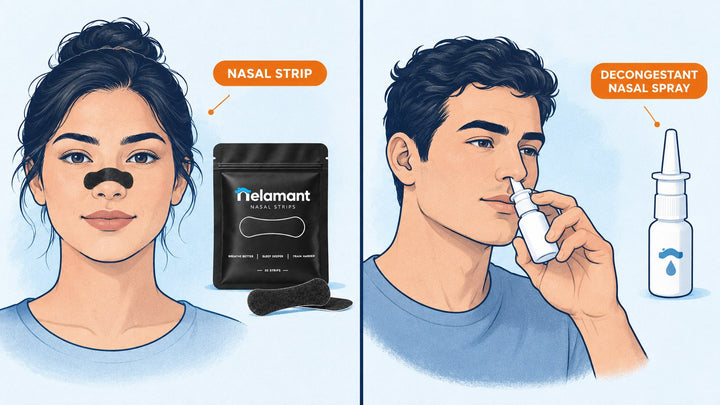
If you are looking for an intake breathing alternative, the core question is whether a reusable magnetic clip or a single-use adhesive spring strip better fits how you sleep, train, and care for your skin. Nelamant Air uses a flexible adhesive band that lifts the nasal bridge from the outside; Intake Breathing uses a magnet-based external clip that grips the nose without any adhesive. Both aim to open nasal passages mechanically, but they work quite differently and suit different users.
- Nelamant Air is an adhesive strip with a spring-band that provides a wider, balanced lift across the nasal bridge; Intake Breathing is a reusable magnetic external dilator with no adhesive.
- Adhesive strips stay in place through sweat, oil, and overnight movement; magnetic devices rely on fit and nose geometry rather than skin contact.
- Nelamant Air's adhesive peels off cleanly with no residue - a practical advantage for sensitive skin and nightly use.
- Intake Breathing has a higher upfront cost but is reusable; Nelamant Air costs $14.99 for 30 strips, roughly $0.50 per use.
- Neither device treats sleep apnea or corrects a deviated septum; both support the nasal opening externally.
For a broader look at how different nasal strips compare across brands and designs, see the full nasal strip reviews hub - this article focuses specifically on the Nelamant Air vs Intake Breathing comparison.
What Each Product Is: An Intake Breathing Review
These two devices occupy different corners of the external nasal dilator market. Understanding the mechanism behind each helps you decide which is more likely to stay put and feel right for your use case.
How Intake Breathing works: magnetic external dilator
Intake Breathing is a reusable external nasal dilator that uses small embedded magnets to grip the outside of the nostrils and hold the nasal walls apart. Because it attaches by pinching rather than by sticking, there is no adhesive layer touching your skin. The device clips onto the nose and relies on the magnets' attraction to maintain its position. This makes it a genuinely adhesive-free option, which appeals to people who dislike removing sticky strips each morning.
It is worth distinguishing this from internal magnetic dilators and from traditional adhesive strips - the mechanics are meaningfully different. For a full breakdown of how magnetic devices compare to adhesive strips as a category, the guide to magnetic vs adhesive nasal strips covers the tradeoffs in detail.
How Nelamant Air works: adhesive spring-lift strip
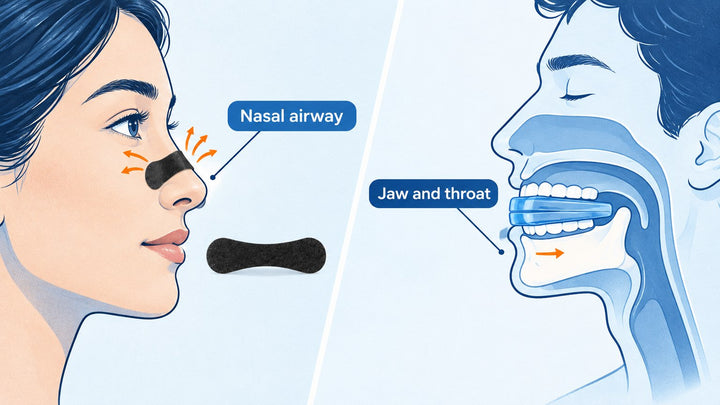
Nelamant Air is a single-use external nasal strip with a flexible spring band inside an adhesive backing. When you press it across the bridge of your nose, the spring tries to return to its flat position and gently lifts the sides of the nose outward. The design is engineered for a wider, more balanced lift across the bridge rather than a single sharp pull point, which distributes the opening force more evenly. The adhesive is formulated to be and to resist sweat and oil, so it stays in place through a full night's sleep or a workout. At removal, it peels off cleanly without sticky residue.
Head-to-Head Intake Nasal Strip Review: Comparison Table
The table below compares the two products across the criteria that matter most to buyers choosing between them.
| Criterion | Nelamant Air | Intake Breathing |
|---|---|---|
| Lift mechanism | Flexible spring band, adhesive-backed | Magnetic external clip, no adhesive |
| Attachment method | Adheres to skin across nasal bridge | Clips to nostrils via magnet tension |
| Reusability | Single-use | Reusable |
| Skin contact / materials | adhesive, gentle removal | No adhesive; clip material |
| Sweat/oil resistance | Extra-hold adhesive resists sweat and oil | No adhesive to fail; fit depends on nose shape |
| Cost per use | ~$0.50 ($14.99 / 30 strips) | |
| Best use case | Sleep, workouts, congestion, sensitive skin | Adhesive-averse users, reusable preference |
Lift and Airflow: Adhesive Spring vs Magnetic Clip
The goal of both products is to open the nasal passages by pulling the outer nasal wall away from the center - but they go about it differently, and that matters for how the lift feels and how well it holds through the night.
Nelamant Air's spring band sits across the full width of the nasal bridge. As the spring flattens, it pulls both sides of the nose outward simultaneously, distributing the lift across a wider area rather than concentrating force at one point. This broader contact zone is the design intention behind Nelamant Air's shape - a more balanced opening rather than a single sharp tug at the alar rim.
Intake Breathing's magnetic clip applies tension at the outer nostrils via the attraction between two magnetic elements. This creates a different lift geometry: the force is concentrated at specific grip points rather than spread across the bridge. Whether that feels comfortable or effective depends partly on individual nose anatomy and on how securely the clip seats on your particular nose shape.
For nose-based snoring or congestion, the key question is whether the nasal valve area - the narrowest functional point inside the nose - is being adequately supported. Both devices work from the outside and neither corrects internal anatomy such as a deviated septum or turbinate enlargement. They support the nasal opening; they do not reshape it.
Adhesion and Stay-On Performance
This is where the two product types diverge most practically, especially for sleep and high-output activity.
Nelamant Air's extra-hold adhesive is designed to resist the combination of sweat, skin oil, and overnight movement that causes ordinary strips to slip or peel. Because the adhesive bonds to the skin surface across the bridge, the strip has a stable anchor regardless of the position you sleep in. You apply it once to clean, dry skin and it stays until you remove it.
Intake Breathing's clip holds by magnetic tension rather than by skin bond, which means its position stability depends on the fit between the device geometry and your nose shape. For some users this is a genuine advantage - no adhesive to fail, no skin prep required. For others, particularly side sleepers or people who move significantly during the night, a clip that is not bonded to the skin may shift position.
If you have oily skin or tend to sweat at night, an adhesive strip engineered for those conditions is more predictable than a clip-based system. For a full picture of how Nelamant Air specifically performs as a product, the Nelamant Air review covers adhesion, comfort, and removal in detail.
Skin Comfort and Materials
Any adhesive can cause skin irritation. It peels off cleanly in the morning without leaving a sticky film or pulling at skin. Any adhesive can cause skin irritation.
Because Intake Breathing does not use adhesive at all, skin-adhesive sensitivity is a non-issue with that device. The comfort question for Intake instead centers on the clip material and the pressure it applies at the nostrils. Some users find a non-adhesive clip more comfortable; others find overnight pressure from a clipped device less comfortable than a bonded strip. This is genuinely individual and worth factoring into your choice.
Neither product should be used over broken or irritated skin.
Cost and Value
Nelamant Air costs $14.99 for 30 strips - roughly $0.50 per night for daily use. Two-pack and three-pack bundles bring the per-strip cost down further. Because the strips are single-use, your ongoing spend is predictable: one strip per session, every session. For context on how this pricing sits within the wider market, the best nasal strips roundup compares several brands across price tiers.
Intake Breathing has a higher upfront purchase price and is designed to be reused across many nights. If the device lasts long enough, the amortized cost per use can fall below that of disposable strips - but that arithmetic depends on how long the device maintains its magnetic strength and fit, and how often you actually use it.
The practical comparison: Nelamant Air requires no upfront investment beyond a single pack and carries no risk of the device wearing out or losing effectiveness over time. Intake Breathing asks for more money upfront in exchange for reusability. Which model is better value depends on your usage frequency and how long the device actually holds up.

Who Should Choose Intake Breathing
Intake Breathing is worth considering if:
- You strongly prefer not to use adhesive on your skin and find removing strips each morning inconvenient.
- You want a reusable device and are comfortable with the upfront cost.
- Your nose shape is compatible with the clip's fit geometry.
- You are not primarily a side sleeper or heavy overnight mover where clip displacement is more likely.
- You are looking for an occasional-use device rather than a nightly consumable routine.
Intake Breathing is a legitimate option in the external dilator space. The decision to choose it over an adhesive strip is a design and lifestyle preference, not a clinical one.
Who Should Choose Nelamant Air
Nelamant Air is likely the better fit if:
- You want something that reliably stays on through the night, including if you move around or run warm.
- You have sensitive skin and need an adhesive that removes cleanly without irritation.
- You use nasal strips most nights and want a straightforward, predictable per-use cost.
- You plan to use strips during workouts or other activity where sweat resistance matters.
- You want to open your nasal passages for congestion relief without any drug component.
- You prefer not to clean and store a device between uses.
As an intake breathing alternative, Nelamant Air offers the established advantages of the adhesive spring-strip format - broad lift, secure hold, gentle removal - at a cost that makes nightly use sustainable.

Frequently Asked Questions
Is Intake Breathing the same as an adhesive nasal strip?
No. Intake Breathing is a magnetic external dilator - a reusable clip that attaches to the nose without adhesive. Adhesive nasal strips like Nelamant Air use a flexible spring band bonded to an acrylic resin adhesive backing that sticks to the skin. The two products use different mechanisms to achieve a similar goal: opening the nasal passages externally. For a full comparison of how these two formats differ as categories, see the guide to magnetic vs adhesive nasal strips.
Can I switch between Intake Breathing and Nelamant Air on different nights?
Yes. They are both single-session external devices with no cumulative dosing or dependency. Some people keep an adhesive strip option on hand for nights when they know they will be sweating more or moving around, and a clip-style device for calmer nights. There is no interaction between the two products.
Does Nelamant Air work as an intake breathing alternative for workouts?
Nelamant Air is designed for both sleep and physical activity. Its extra-hold adhesive resists sweat and movement, so it is a practical option for training sessions where you want to support nasal breathing. Whether it is a suitable intake breathing alternative for your specific workout type depends on the intensity and duration involved, but the adhesive formulation is built for active use, not just overnight wear.
How long does an Intake Breathing device last before it needs replacing?
The reusable design means cost per use decreases over time, but magnetic clip devices can wear or lose consistent fit - check the manufacturer's guidance for how to assess when replacement is warranted.
Which is better for sensitive skin: magnetic or adhesive nasal strips?
A magnetic clip avoids adhesive contact entirely, which removes adhesive-related sensitivity as a concern. Any adhesive can cause skin irritation. If you have a documented adhesive sensitivity, a non-adhesive device like Intake Breathing sidesteps that issue. If your sensitivity is to rough or residue-leaving adhesives specifically, Nelamant Air's gentle-removal formulation may be sufficient - but only you can confirm that for your skin.
The Bottom Line
Nelamant Air and Intake Breathing solve the same problem - narrow nasal passages - from two different design philosophies. If you want a reliable adhesive spring-lift strip that stays put overnight, works through sweat, peels off cleanly, and costs about fifty cents a night, Nelamant Air is the stronger intake breathing alternative. If you actively want to avoid adhesive and are willing to pay more upfront for a reusable clip, Intake Breathing deserves a look - with the caveat that fit geometry and overnight stability are more variable.
Neither device is a treatment for sleep apnea or a fix for structural nasal issues. Both open the nasal passages externally and can support easier nose breathing during sleep or exercise. The right choice comes down to how you sleep, what your skin tolerates, and how you prefer to manage cost and convenience.