Thomas Tiemann

Nasal strips and anti-snoring mouthguards both claim to reduce snoring, but they work on completely different parts of your airway and suit different causes of snoring. Nasal strips open the nasal passages to improve airflow through the nose; mouthguards reposition the lower jaw to keep the throat more open. Choosing between them comes down to where your snoring originates.
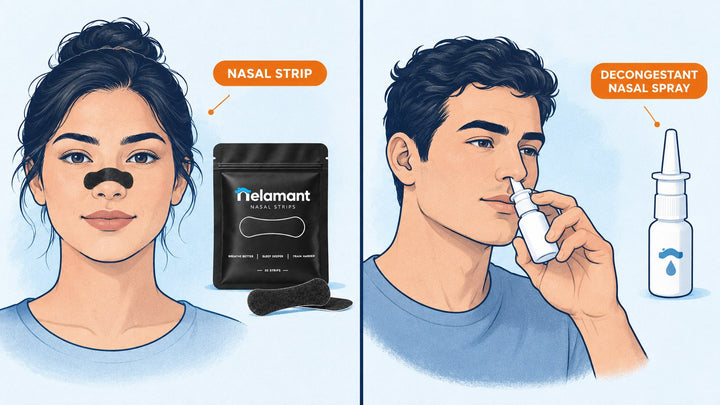
- Nasal strips are an external, adhesive device that gently widen the nasal opening - no fitting, no prescription.
- Anti-snoring mouthguards (MADs) hold the lower jaw slightly forward to reduce throat-level vibration.
- The right choice depends on whether your snoring comes from a restricted nose or a relaxed jaw and soft palate.
- Some people need both, or neither - if you suspect sleep apnea, a doctor visit comes first.
- For nose-based snoring, nasal strips are the lower-cost, zero-setup option to try first.
How Each Device Works
Before comparing them head to head, it helps to understand the mechanism behind each one. A device that works brilliantly for one type of snorer can do almost nothing for another. For a broader look at how these and other devices stack up, see the full overview of nasal strip reviews and comparisons.
How Nasal Strips Open the Airway
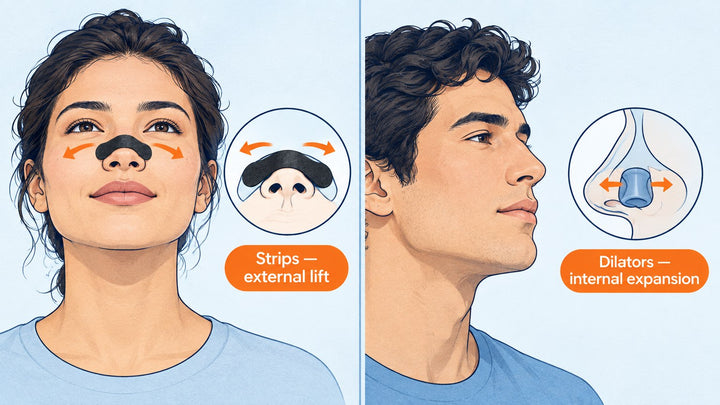
A nasal strip is a stiff, spring-like band with an adhesive underside. You press it across the bridge of your nose, and the band's natural tendency to straighten gently lifts the sides of the nostrils outward. This widens the nasal valve - the narrowest part of the nasal passage - so air flows in more easily and with less turbulence. The action is entirely mechanical and drug-free; nothing enters your body.
Because the strip acts at the nose, it is most effective when restricted nasal airflow is the primary driver of your snoring. If your nasal passages are already clear and the obstruction is lower down in your throat, a nasal strip has little leverage on the problem.
How a Mouthguard (MAD) Repositions the Jaw
An anti-snoring mouthguard is more precisely called a mandibular advancement device, or MAD. It fits over your upper and lower teeth and holds the lower jaw a few millimetres forward of its resting position. That forward shift tensions the soft tissues at the back of the throat - the soft palate and the base of the tongue - which reduces how much they can sag and vibrate during sleep. The vibration of those tissues is the main source of the classic snoring sound.
MADs come in over-the-counter boil-and-bite versions and custom-fitted devices made by a dentist. Fit quality varies considerably between the two, and some people find any mouthguard uncomfortable for the first few nights while the jaw adjusts. In a mandibular advancement device vs nasal strips comparison, the MAD addresses a deeper anatomical cause - but it also carries more setup complexity and a higher price.

Comparison Table: Nasal Strips vs Mouthguard
| Feature | Nasal Strip | Anti-Snoring Mouthguard (MAD) |
|---|---|---|
| Mechanism | Widens nasal passage mechanically | Advances lower jaw to open throat |
| Target cause | Nasal congestion or narrow nasal valve | Soft palate / tongue vibration in throat |
| Fitting / setup | Peel and press - no fitting required | Boil-and-bite or custom dental fitting |
| Nightly comfort | Low profile, worn externally on nose | Sits inside mouth; adjustment period common |
| Typical cost | $10–$20 per 30-strip pack | ; custom devices cost significantly more |
| Prescription needed | No | OTC versions no; custom dental MADs yes |
| Drug-free | Yes | Yes |
| Best suited for | Nose snorers, congestion, nasal valve narrowing | Mouth/throat snorers, tongue-based obstruction |
What Kind of Snoring Does Each One Address?
The single most useful thing you can do before buying any anti-snoring device is figure out where in your airway the noise is coming from. Nasal snoring and mouth or throat snoring feel and sound different, and they respond to different solutions. The full breakdown is in this guide to nose snoring vs mouth snoring.
Choose a Nasal Strip If Your Snoring Starts in the Nose
If you tend to snore more when you have a cold, during allergy season, or when you're lying on your back with a blocked nose, nasal airflow restriction is likely part of the picture. Other signs include waking with a dry mouth (suggesting you switched to mouth breathing because the nose wasn't keeping up), or a noticeably stuffy or tight feeling at night even when you're not ill.
A nasal strip addresses exactly this: it widens the nasal opening so air moves through with less resistance. Less resistance means less turbulence, and less turbulence means less vibration of the nasal tissues. The fix is direct and immediate - you apply it, and either it helps that night or it doesn't. There's no multi-week adjustment period.
Nasal strips do not move the jaw, affect the soft palate, or address throat-level snoring. If your nose is clear but snoring persists, the noise is almost certainly coming from somewhere else.
Choose a Mouthguard If Your Snoring Starts in the Throat or Mouth
Throat-based snoring typically involves the soft palate, uvula, or the base of the tongue vibrating as you breathe. It tends to be louder and more consistent regardless of nasal congestion, and it often happens whether you breathe through your nose or your mouth. Sleeping on your back makes it worse because the tongue falls backward under gravity.
A MAD pulls the lower jaw - and with it the base of the tongue - slightly forward, tightening the tissues enough to reduce the flutter. This is a well-established mechanical approach for this type of snoring. Custom-fitted MADs are adjusted to your bite by a dentist, though the cost difference can be substantial.
The trade-off: MADs can cause jaw soreness, tooth sensitivity, or excess salivation, particularly in the first few weeks. Some users never fully adapt to sleeping with something in their mouth.
Where Nasal Strips Fit in the Broader Anti-Snoring Picture
Nasal strips are one tool in a larger toolkit. If you're comparing several approaches at once, here's a quick summary of the main categories - the full rankings and details are in the guide to best anti-snoring devices:
- External nasal strips - widen the nasal valve from outside; no insertion, no prescription; best for nasal-origin snoring.
- Internal nasal dilators - small inserts that sit just inside the nostrils; similar nasal-valve target to strips but worn internally; a matter of personal preference.
- Mandibular advancement devices (mouthguards) - reposition the jaw; effective for soft palate and tongue-based snoring; higher setup effort.
- Chin straps - keep the mouth closed to encourage nasal breathing; less effective as a standalone if the nose itself is restricted.
- Positional aids and pillows - reduce back-sleeping, which worsens most types of snoring; useful as a complement rather than a primary fix.
If you're dealing with occasional snoring tied to congestion or a narrow nasal passage, nasal strips are typically the lowest-friction starting point. If snoring is loud, persistent regardless of congestion, or involves witnessed pauses in breathing, a medical evaluation takes priority before any device purchase.
Honest Pros and Cons
Nasal Strips: Pros and Cons
| Pros | Cons |
|---|---|
| No fitting, moulding or adjustment period | Single-use; ongoing cost per night |
| Works from the first night - you know quickly if it helps | No effect on throat-level snoring |
| Drug-free, external mechanical action | Can lose adhesion on oily or sweaty skin if not dried properly |
| Low cost to try; widely available without prescription | Any adhesive can cause skin irritation. |
| Works for sleep, congestion, workouts - day or night use | Not suitable as the primary intervention when snoring has a throat or airway cause |
Mouthguards: Pros and Cons
| Pros | Cons |
|---|---|
| Addresses a different and often more significant cause of snoring | Requires fitting; custom versions need a dentist |
| Reusable - lower long-term cost if it works for you | Higher upfront cost, especially for custom devices |
| Drug-free mechanical action, same as nasal strips | Jaw soreness, tooth sensitivity and excess saliva are common early side effects |
| Can be combined with a nasal strip for mixed-origin snoring | Not appropriate if you have certain dental work, TMJ issues, or untreated sleep apnea |
Can You Use Both at the Same Time?
Yes - for people whose snoring has both a nasal and a throat component, using a nasal strip and a mouthguard together is a reasonable approach. The two devices work on different parts of the airway and don't interfere with each other mechanically. A strip opens the nose; a MAD stabilises the jaw and throat. If mouth breathing through the night is also part of the pattern, some people add a chin strap or mouth tape to the combination, though that's a conversation to have with a clinician if the snoring is severe.
One important caveat applies here: if your snoring is loud, happens regardless of position or congestion, or anyone has noticed you stop breathing during sleep, those are possible signs of sleep apnea rather than simple snoring. No combination of over-the-counter devices is a substitute for a proper sleep assessment in that case. The guide to snoring vs sleep apnea lays out the key differences clearly and explains when to seek an evaluation.

Nelamant Air for Nose-Based Snoring
If nasal restriction is your main issue, Nelamant Air is worth considering before committing to a mouthguard. The strip uses a wider, more evenly distributed lift across the bridge of the nose - rather than a single pull point - to open the nasal valve. The extra-hold adhesive is designed to stay in place through the night even with movement or light sweating, and the materials peel off cleanly without leaving residue.
At $14.99 for 30 strips - a month of nightly use - it's a low-cost way to test whether nasal airflow is a meaningful factor in your snoring before investing in a mouthguard. If a strip makes a noticeable difference, you've identified the problem. If it doesn't move the needle at all, that's also useful information pointing you toward a throat-focused solution instead.
Try Nelamant Air - Simple, Drug-Free Nose Support
$14.99 for 30 strips · 30-day returns
Shop Nelamant AirFrequently Asked Questions
Does a mouthguard work better than nasal strips for snoring?
Neither is universally better - they target different causes. A mouthguard outperforms nasal strips when snoring comes from the soft palate or tongue. Nasal strips outperform mouthguards when snoring is driven by restricted nasal airflow. Identifying your snoring type first makes the choice much clearer. See the guide to nose snoring vs mouth snoring for help distinguishing them.
Can nasal strips replace a mandibular advancement device?
No, not if your snoring is throat-based. In a mandibular advancement device vs nasal strips comparison, the two devices act on completely separate structures. A nasal strip cannot move the jaw or tighten the soft palate - and a MAD cannot widen a narrow nasal valve. They solve different problems and can in fact be used together when both issues are present.
Are mouthguards safe to use every night?
OTC boil-and-bite mouthguards are generally considered safe for regular use, but they're not appropriate for everyone. People with significant dental restorations, TMJ disorders, or untreated sleep apnea should get professional guidance before using one nightly. Jaw soreness is common early on and often settles; persistent discomfort warrants a dental check.
What if I snore through both my nose and mouth?
Mixed-origin snoring is common. Addressing nasal congestion or restriction first - with a nasal strip - sometimes reduces mouth-breathing enough that throat snoring also lessens. If both components remain significant, a combination of a nasal strip and a MAD may be warranted. For a full overview of device options across all snoring types, the guide to best anti-snoring devices covers each category.
Will nasal strips help if I have sleep apnea?
Nasal strips support nasal breathing and may ease congestion-related discomfort, but they are not a treatment for sleep apnea and should never replace CPAP or any prescribed therapy. If you have diagnosed sleep apnea, discuss any additional device with your care provider. If you're unsure whether your snoring is simple snoring or something more serious, the guide to snoring vs sleep apnea explains the key warning signs to watch for.
How long does it take to know if a nasal strip is helping?
You typically know within the first night or two. Because nasal strips act immediately and mechanically, there's no build-up period. If nasal restriction is contributing to your snoring, you'll notice easier breathing through the nose right away. A partner's feedback over two or three nights is the most reliable signal. If there's no change, the snoring likely originates below the nose.
The Bottom Line on Nasal Strips vs Mouthguard for Snoring
The nasal strips vs mouthguard for snoring question has a practical answer: start by figuring out where your snoring starts. Nasal strips are the lower-cost, zero-setup option for nose-based snoring and give you a clear result within days. A mouthguard takes more commitment but works where nasal strips simply can't - at the level of the jaw and soft palate. For many people, the two are complements rather than competitors. And if snoring is severe, disruptive or paired with daytime fatigue, a sleep assessment belongs ahead of any device decision.