Thomas Tiemann

The best sleeping position for snoring is on your side. Side sleeping keeps your tongue and soft palate from falling backward into your airway, which is the most common mechanical reason snoring gets louder at night. Switching from your back to your side is one of the fastest, zero-cost changes you can make.
- Side sleeping reduces snoring for most people by keeping the airway open.
- Back sleeping lets gravity pull soft tissue down onto the airway - the main driver of position-related snoring.
- Left side vs. right side makes little difference for snoring specifically; choose whichever is more comfortable.
- A body pillow or the tennis-ball trick can help you stay on your side through the night.
- If nasal congestion makes every position feel stuffy, opening your nasal passages can help any position work better.
Why Your Sleeping Position Affects Snoring
Snoring happens when the soft tissues at the back of your throat - the soft palate, uvula, and base of the tongue - vibrate as air squeezes through a narrowed passage. The position you sleep in directly controls how much gravity pulls those tissues into that passage.
When you lie flat on your back, everything relaxes and drops. Muscles that hold your tongue and jaw forward lose tension during sleep, and gravity does the rest. The result is a narrower airway and more turbulent airflow - which means louder, more frequent snoring.
Position is one of the most controllable factors in snoring, though it is not the only one. For a broader look at what causes snoring and what you can do about it, see the full guide to how to stop snoring.
Why Sleeping on Your Back Makes Snoring Worse
Sleeping on your back - the supine position - is the single biggest positional contributor to snoring. Here is what happens:
- Tongue base drops. With no lateral support, the tongue falls straight back toward the throat, reducing the space air has to move through.
- Soft palate sags. The soft tissue at the roof of the rear mouth relaxes and descends, further narrowing the passage.
- Jaw may drift open. An open mouth shifts even more of the breathing load to the throat, increasing vibration.
- Gravity works against you all night. Unlike a brief positional issue, this effect is continuous as long as you stay on your back.
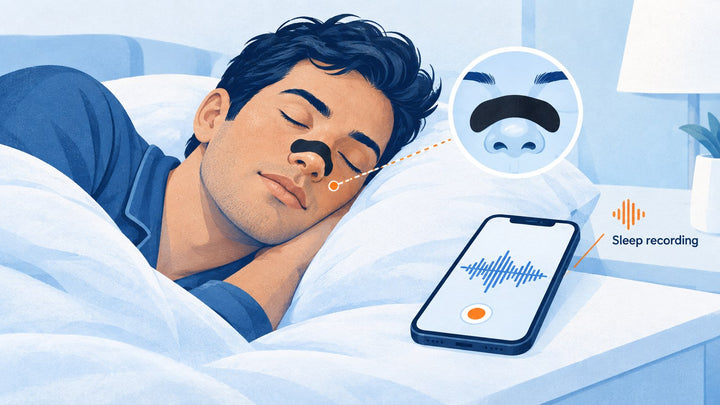
Many people who consider themselves occasional snorers find they snore almost exclusively when they roll onto their backs. If a partner or a recording app consistently captures snoring only after you shift to your back, positional therapy - simply learning to stay on your side - is likely to produce a noticeable improvement.
Why Side Sleeping Is the Best Position for Snoring
On your side, gravity pulls your tongue and jaw forward and downward, away from the back wall of your throat. The airway stays wider, airflow is smoother, and soft tissue has less opportunity to flutter. That is why side sleeping is the standard first recommendation for positional snoring.
Left side vs. right side: For snoring specifically, there is no meaningful difference. Left-side sleeping is often recommended for acid reflux and late-pregnancy comfort, so if either of those applies to you, the left side is a practical default. Otherwise, whichever side lets you sleep more comfortably is the right answer.
How much improvement can you expect? That depends on how much of your snoring is driven by position versus other factors - nasal congestion, airway anatomy, weight, or alcohol use. For people with purely positional snoring, the improvement can be dramatic. For others, it is one useful piece of a larger picture.
If snoring and sleep quality are your main concern, the guide to best sleeping position for breathing covers the overlap between airway mechanics and sleep quality in more detail.
How to Train Yourself to Sleep on Your Side
Knowing you should sleep on your side and actually staying there all night are different challenges. Most people shift positions several times without waking. These approaches make it more likely you will stay on your side:
- Use a full-length body pillow. Hugging a body pillow in front of you and tucking one between your knees makes the side position feel supported and stable - and makes rolling onto your back less natural.
- Try the tennis-ball trick. Sew or safety-pin a tennis ball to the back of a fitted sleep shirt. The mild discomfort when you roll onto it trains your body to return to your side over days to weeks. Specialty positional sleep devices work on the same principle.
- Adjust your pillow height. A pillow that is too flat or too high puts strain on your neck when you are on your side, which makes you more likely to roll over for comfort. A pillow that keeps your neck aligned with your spine makes side sleeping easier to maintain.
- Position yourself deliberately before sleep. Simply starting on your side rather than drifting there increases the time you spend in that position.
- Move your bed against a wall on one side. This removes the option to roll in one direction, which is a low-effort nudge toward staying on your side.
Other Positions Worth Knowing
Stomach sleeping does reduce back-of-throat obstruction in the same way side sleeping does, because your face is turned to one side. However, it puts significant rotational strain on your neck and lower back, and most sleep specialists do not recommend it as a long-term solution for this reason.
Head elevation is a useful supplement to side sleeping. Raising the head of your bed by a few inches - or using a wedge pillow - uses gravity to keep tissues from settling quite as far back. It is not a substitute for side sleeping, but it can add a small benefit on top of it.
The pillow you sleep on can also play a role. Contoured and wedge designs are made specifically to support side-sleeping posture and maintain head elevation at the same time. For more on how the pillow itself factors in, see the comparison guide on anti-snoring pillows.

When Changing Position Isn't Enough
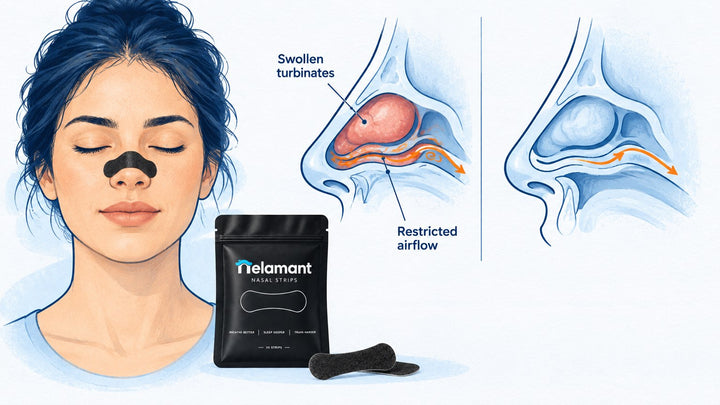
Position helps most when snoring is driven by soft-tissue obstruction in the throat. But snoring can also come from the nose - congestion, a narrow nasal passage, or swollen turbinates that force you to breathe through your mouth no matter what position you are in. When nasal airflow is restricted, even a perfect side-sleeping posture may not stop snoring, because the obstruction is upstream.
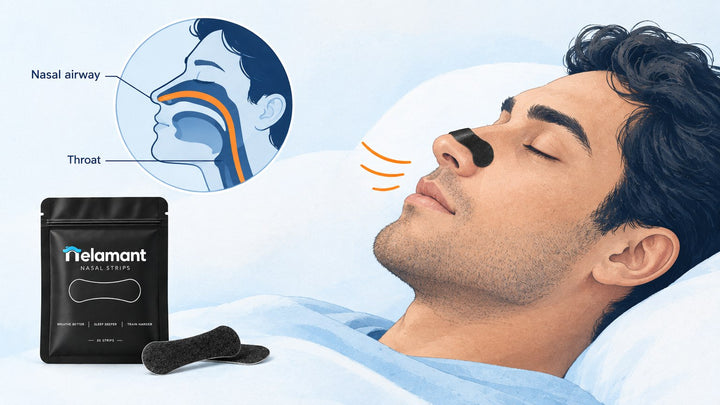
Opening your nasal passages before bed can make a meaningful difference here. An external nasal strip lifts the sides of the nose gently outward, widening the nasal valve and reducing the resistance that leads to mouth breathing and throat vibration. Nelamant Air nasal strips use a wider lift design intended to spread support across the bridge rather than concentrate it at a single point, and the extra-hold adhesive is made to stay on through the night. If nasal restriction is part of what disrupts your sleep, a strip is a simple, drug-free way to address that alongside better sleep positioning.
If you want the full picture of snoring causes and the range of approaches - positional, nasal, lifestyle, and medical - the guide to how to stop snoring covers all of them in one place.

Frequently Asked Questions
Is side sleeping always the best position to reduce snoring?
For most people, yes. Side sleeping prevents gravity from collapsing the tongue and soft palate into the airway, which is the most common positional cause of snoring. It does not address snoring that comes from nasal congestion, structural anatomy, or conditions like sleep apnea, but it is the right starting point for the majority of positional snorers.
Does sleeping on your left side vs. your right side make a difference for snoring?
Not meaningfully, for snoring specifically. Either side keeps the airway more open than lying on your back. Left-side sleeping has separate benefits for acid reflux, so if that is also a concern, it is a reasonable default - but for snoring alone, the side that lets you sleep comfortably and stay put is the better choice.
Can elevating your head help with snoring?
It can help modestly. Raising your head slightly - with a wedge pillow or by elevating the head of the bed - reduces how far soft tissues settle backward under gravity. It works best as a complement to side sleeping rather than a standalone fix. A flat pillow that lets your neck drop can partially offset the benefit of side sleeping, so pillow height matters too.
Why does sleeping on your back cause snoring?
In the supine position, your tongue base and soft palate are pulled directly backward and downward by gravity into the airway. Muscles that normally keep these structures forward lose tension during sleep, so there is nothing holding them out of the way. The narrowed space creates turbulent, high-velocity airflow, which makes the relaxed tissue vibrate - and that vibration is what you hear as snoring.
What if I keep rolling onto my back during the night?
This is common. A full-length body pillow is the most effective low-cost tool - it provides something to brace against so rolling becomes less natural. The tennis-ball technique (a ball pinned to the back of your sleep shirt) creates mild discomfort when you roll over, which trains positional awareness over time. Dedicated positional sleep devices work on the same principle with more refined designs. Consistency over a few weeks usually produces noticeable improvement in how long you stay on your side.
The Bottom Line
The best sleeping position for snoring is on your side. It is free, requires no equipment, and works by using gravity in your favor rather than against you. Start there: add a body pillow, adjust your pillow height, and give yourself a few nights to adapt. If nasal congestion is making any position feel like a struggle to breathe through, addressing that directly - with a nasal strip or other congestion relief - gives positional changes the best chance of working. Small adjustments, applied consistently, add up.