Thomas Tiemann

The simplest way to tell if you snore is to record yourself sleeping-a smartphone placed on your nightstand and a free audio or sleep-tracking app is all it takes. If you live alone or sleep solo, that one step gives you a real answer. If someone shares your home, asking them directly and noting your morning symptoms together fills in the rest of the picture.
- A free smartphone app left recording overnight is the most accessible self-test for snoring.
- Morning clues-dry mouth, sore throat, feeling unrefreshed-can all point to nighttime snoring.
- Apps detect sound events but cannot diagnose sleep apnea; a recording is a starting point, not a verdict.
- Once you confirm you snore, identifying whether it comes from your nose or your throat shapes which fixes to try first-see how to stop snoring for a full breakdown of options.
Signs You May Snore Without Knowing It
Snoring happens during sleep, so most people only find out about it secondhand or by noticing indirect clues. The signs below don't confirm snoring on their own, but several together make it likely enough to warrant a recording test.
Morning Clues
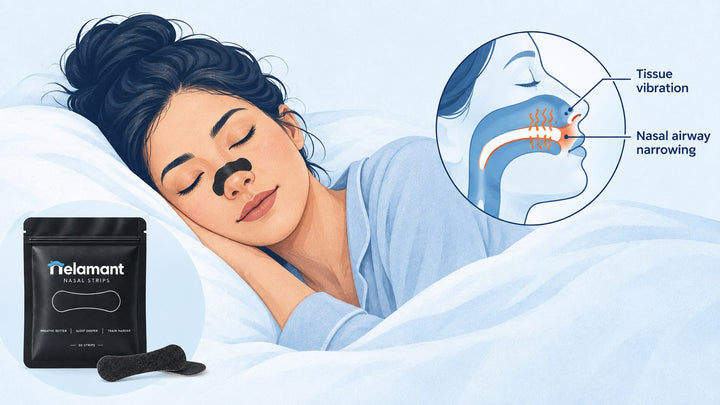
Waking up with a dry or slightly sore throat is one of the more consistent indicators. Snoring involves turbulent airflow through a partially narrowed airway, and that airflow dries out the tissues of the mouth and throat. Other morning signals include:
- Feeling tired despite a full night in bed
- A dull headache first thing in the morning
- A noticeably dry mouth, even if you went to sleep well-hydrated
- Waking up once or more during the night without an obvious reason
None of these are exclusive to snoring-they have other causes too-but they're worth logging alongside any recording data you collect.
Partner or Household Reports
A bed partner, roommate, or anyone sleeping near you is often the first to know. If someone has mentioned hearing sounds from your room, or if a partner has nudged you awake, that report is direct evidence. It's also worth asking specifically: not just "do I snore?" but "does it sound like it comes through my nose, or more like a low rumble from my throat?" That distinction matters when you're deciding what to do about it. Nose-based and throat-based snoring respond to different approaches-the guide on nose snoring vs. mouth snoring explains the difference and what each type usually signals.
How to Record Yourself Snoring
Recording is the most reliable self-test available. The setup takes under two minutes, and you'll have usable data by morning.
Built-In Phone Recording
Every smartphone has a voice memo or audio recorder app included. Place your phone on your nightstand or on the mattress a few inches from your pillow, open the recorder, hit record, and go to sleep. In the morning, scrub through the audio at high speed-most built-in recorders show a waveform, so loud sound events are easy to spot visually as spikes. This method captures raw audio without any analysis layer, which means you have to do the reviewing yourself, but it works even without an internet connection or account setup.
A few practical notes: make sure your phone is plugged in or has sufficient battery to last the night, disable notifications to avoid false spikes in the recording, and record in a room as quiet as possible so ambient noise doesn't bury quieter sounds.
Dedicated Sleep-Recording Apps
Sleep-tracking and snoring-detection apps automate the review step. Rather than recording continuously, most use sound-activation: they record only when the microphone detects noise above a set threshold, then tag and timestamp each event. By morning you typically get a log of sound clips, a rough estimate of how often snoring occurred, and sometimes a graph of your sleep stages estimated from movement data if your phone sits on the mattress.
The sound-activation approach saves storage and makes review faster. The trade-off is that the threshold setting matters: too sensitive and the app logs every passing car; too low and quiet snoring goes undetected. Start with the default sensitivity and adjust after your first night if needed.
Audio Recorder or Smart Speaker
A standalone digital audio recorder works the same way as a phone voice memo and may offer better microphone sensitivity. If you have a smart speaker in your bedroom that supports routines or drop-in audio monitoring, that's another option, though storage and playback are more limited. Any device with a microphone, placed within roughly a meter of where you sleep, will do the job.
Best Snoring Apps to Try
The apps below are commonly used for snoring detection. Feature sets and pricing change; confirm current details before downloading.
| App | Platform | Key feature | Free tier |
|---|---|---|---|
| SnoreLab | iOS, Android | Snore intensity score, sound clips, factor tracking | Limited nights free |
| Sleep Cycle | iOS, Android | Sleep stage estimates, snore detection, smart alarm | Yes, with feature limits |
| ShutEye | iOS, Android | Snore recording, sound tagging, sleep report | Free with ads |
| Pillow | iOS, Apple Watch | Wearable integration, snore detection, audio clips | Limited free tier |
Any of these will give you more structured data than a raw voice memo. Pick one, run it for at least three nights before drawing conclusions-snoring frequency varies night to night depending on sleep position, alcohol, congestion, and fatigue-and look for patterns rather than judging a single recording.
Non-App Tests and Household Methods
Not everyone wants to use an app, and low-tech approaches still produce useful information.
Asking Someone Who Shares Your Home
If a partner, family member, or housemate is within earshot at night, a direct conversation is the fastest test. Ask them to note roughly when they hear sounds, how loud, and whether it stops and starts (intermittent) or continues for long stretches. A short written log over three or four nights is more useful than a single impression. You're looking for frequency and character of the sound, not just a yes or no.
Checking Your Throat and Mouth in the Morning
Keep a simple morning log alongside your recording tests. Each morning, before eating or drinking, note: Is your throat dry or slightly raw? Is your mouth drier than usual? Do you feel rested? A five-point scale or simple yes/no for each question works fine. After a week, correlate your morning symptom scores with your recording data. On nights where the app flagged more sound events, do your morning symptoms score worse? If yes, that pattern adds confidence to the recording findings.
What Your Recordings Can Tell You
A recording tells you whether audible snoring occurred and gives you a rough sense of how often. It does not diagnose anything. Use the signals below as prompts for what to investigate next, not as conclusions.
| What you hear | What it may indicate | Useful next step |
|---|---|---|
| Rhythmic nasal whistling or higher-pitched sounds | Nasal airflow restriction | Try nasal breathing support; check for congestion |
| Low rumbling throughout the night | Throat/soft palate vibration | Review sleep position, alcohol timing, weight |
| Loud snoring with audible gasping or pauses | Possible obstructive sleep apnea pattern | See a doctor; do not rely on strips or apps alone |
| Occasional, quiet sounds on specific nights | Situational snoring (alcohol, illness, congestion) | Track contributing factors; likely manageable |
If your recordings show snoring with what sounds like pauses in breathing or sudden gasping, that pattern warrants a conversation with a doctor rather than a self-directed fix. The guide on snoring vs. sleep apnea explains what distinguishes ordinary snoring from a sleep disorder and what the clinical evaluation process involves.

What to Do Once You Confirm You Snore
Confirming that you snore is the starting point. The next question is what's driving it, because that shapes which interventions are worth trying. How to stop snoring covers the full range-sleep position, lifestyle changes, nasal support, and when professional evaluation makes sense-but a useful first filter is whether your snoring is nasal or throat-based.
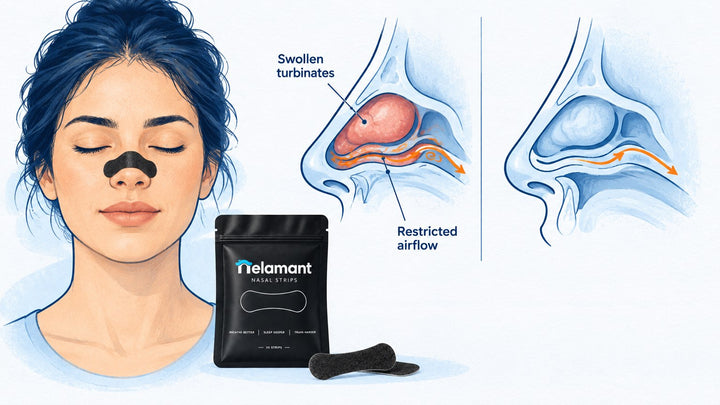
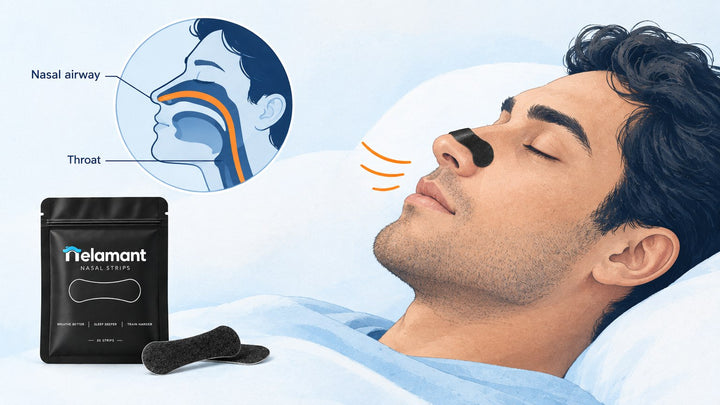
If your recordings sound nasal-higher-pitched, variable with congestion, worse when you're stuffed up-opening the nasal passages is a logical first step. An external nasal strip lifts the sides of the nose to widen the nasal valve and support easier airflow through the nose, which reduces the turbulence that produces nasal snoring sounds.

Nelamant Air uses a wider adhesive design that distributes lift across more of the nose bridge rather than pulling from a single point, and its extra-hold adhesive is built to stay on through a full night of sleep. If nasal airflow restriction is contributing to your snoring, it's a practical first thing to test.
Frequently Asked Questions
Can a snoring app tell me if I have sleep apnea?
No. Snoring apps detect and record sound events; they are not medical diagnostic tools and cannot evaluate the physiological signs that define obstructive sleep apnea. If your recordings feature loud snoring alongside apparent breathing pauses or gasping sounds, that's a reason to speak with a doctor rather than rely on app output. A formal sleep study is required to diagnose sleep apnea.
What is the most accurate free snoring app?
Accuracy varies between apps and between phone models, since microphone sensitivity and placement both affect detection. Running the same app for multiple nights and cross-referencing results with your morning symptom log gives more reliable information than trusting a single night's output from any app.
How do I record myself snoring without a smartphone?
A standalone digital audio recorder, a tablet with a recording app, or any device with a microphone and sufficient storage will work. Place it within about a meter of your head, start a long recording before you sleep, and review the audio in the morning. The method is identical to using a phone voice memo app.
Will I always wake up if I snore loudly?
Not necessarily. Most snorers sleep through their own snoring entirely. The noise that wakes a bed partner may not disturb the snorer at all. Some people do rouse briefly when their airway narrows significantly, but these micro-arousals are often too short to remember. Feeling unrefreshed in the morning despite a full night in bed can be a sign that your sleep quality was disrupted even if you didn't notice waking.
Is snoring every night a problem I should see a doctor about?
Regular, frequent snoring is worth mentioning to a doctor, particularly if it's accompanied by morning fatigue, observed breathing pauses, or waking unrefreshed. On its own, snoring is very common and not always medically significant, but it can be a symptom of an underlying condition. A recording that captures consistent, loud snoring across multiple nights gives a doctor useful context when you do have that conversation.
Knowing Whether You Snore Is Step One
The most direct way to find out how to tell if you snore is to record yourself-three nights of data from a free app will tell you more than any symptom checklist alone. From there, your recording can point you toward what kind of snoring you're dealing with and what practical steps make sense. If the pattern looks nasal, nasal airflow support is a reasonable place to start. If it looks more complex, your recording becomes useful evidence to bring to a healthcare provider.