Thomas Tiemann

This article is for general information, not medical advice.
Child snoring is surprisingly common-many children snore occasionally, especially during a cold or allergy season, and it passes without any problem. But persistent or loud snoring in kids, particularly when paired with breathing pauses or restless sleep, can be a sign that something needs a closer look. Knowing the difference between harmless noise and a red flag is the most useful thing a parent can have. If you're also researching adult snoring solutions, the full guide to how to stop snoring covers the broader picture.
- Occasional mild child snoring-especially during illness-is common and usually harmless.
- Enlarged tonsils and adenoids, nasal congestion, and allergies are the most frequent causes of kids snoring.
- Breathing pauses, gasping, restless sleep, and daytime tiredness or behavior changes are warning signs that warrant a doctor visit.
- Pediatric obstructive sleep apnea is different from simple snoring and needs professional evaluation.
- Mild congestion-related snoring may improve with position changes, allergen reduction, and humidity; more structural causes need medical assessment.
Why Children Snore: The Basic Mechanics
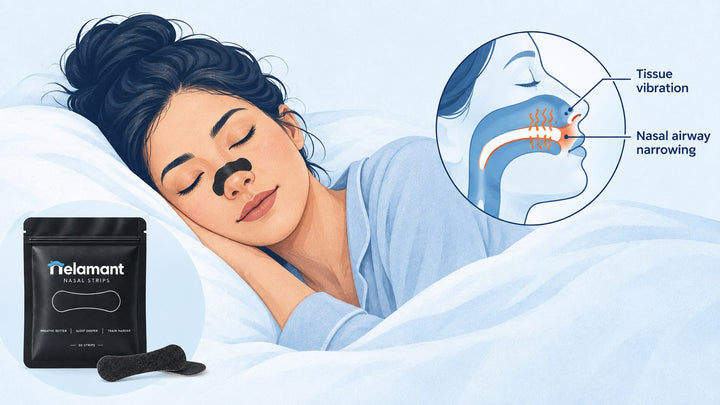
Snoring happens when airflow through the upper airway becomes turbulent enough to make the surrounding soft tissue vibrate. In children, the airway is narrower relative to body size than in adults, which means even modest swelling or soft-tissue enlargement can generate significant noise. The nose, the back of the throat, the tonsils, and the adenoids all contribute to how freely air moves during sleep.
When a child breathes through a partially blocked or narrowed airway at night, the walls of the throat flutter-and that flutter is what you hear as snoring. It can be faint and intermittent, or loud and consistent, depending on the underlying cause and the child's sleep position.
Common Causes of Kids Snoring
Several distinct factors can trigger or worsen snoring in children:
- Enlarged tonsils and adenoids. The most frequent structural cause in children. The adenoids sit at the back of the nasal cavity and can narrow the airway significantly when swollen.
- Nasal congestion. A blocked nose from a cold, sinus infection, or chronic allergies forces mouth breathing, which changes airflow mechanics and increases vibration in the throat.
- Allergies. Seasonal or year-round allergens cause ongoing mucosal swelling that narrows the nasal passages night after night.
- Upper respiratory infections. Temporary swelling during a cold is the most common reason a child who never snored suddenly does.
- Mouth breathing habits. Children who habitually breathe through their mouths-for any reason-are more prone to snoring during sleep. The full guide to mouth breathing in children explains how this habit develops and what it can mean long-term.
- Obesity. Excess soft tissue around the airway increases the tendency to snore.
When Child Snoring Is Normal
Not every snoring child needs a referral. Occasional, mild snoring is considered a normal variant, particularly when it coincides with an obvious cause like a cold or seasonal congestion peak.
Signs that snoring is likely in the "normal" range:
- It started with an illness and resolves when the illness clears.
- The sound is relatively soft and rhythmic, without gasping or choking sounds.
- Your child doesn't appear to struggle or stop breathing during sleep.
- Sleep looks restful-the child stays in a comfortable position and wakes rested.
- Daytime mood, energy, and behavior are normal for their age.
Brief snoring episodes a few nights a month in an otherwise healthy child who sleeps well and functions well during the day are rarely cause for alarm. The concern arises when snoring is frequent, loud, or accompanied by any of the warning signs below.

Warning Signs That Snoring Needs Attention
Certain patterns suggest that kids snoring has crossed from benign noise into a potential sleep-disordered breathing problem. The most serious of these is pediatric obstructive sleep apnea (OSA)-a condition where the airway partially or fully collapses repeatedly during sleep, briefly interrupting breathing.
Contact your child's pediatrician if you observe any of the following:
- Pauses in breathing. Visible moments where the chest is still and no air moves-even briefly. This is the clearest red flag.
- Gasping, snorting, or choking sounds. These often signal the airway reopening after a partial obstruction.
- Restless sleep. Frequent position changes, kicking, or waking up in a dramatically different spot from where they started.
- Mouth breathing throughout the night. Not just occasionally but as the default, even when the child has no active cold.
- Sweating during sleep despite a comfortable room temperature-a sign of increased respiratory effort.
- Bedwetting beyond the typical age, which can be associated with disrupted sleep architecture.
- Daytime sleepiness, irritability, or hyperactivity. Children with poor overnight sleep quality don't always look tired-they often present as hyperactive or inattentive, which is sometimes misattributed to behavioral issues.
- Difficulty concentrating or declining school performance.
It's worth knowing that simple primary snoring and obstructive sleep apnea sit on a spectrum. A child can have frequent loud snoring without sleep apnea, but loud frequent snoring is still a reason to investigate. For a detailed look at how to distinguish snoring from sleep apnea, see the guide to snoring vs sleep apnea-though the linked article focuses on adults, the core physiological distinction applies and your pediatrician can confirm whether formal testing is needed for your child.
When to See a Doctor
Book an appointment with your child's pediatrician if:
- Snoring happens most nights, regardless of whether the child has a cold.
- You've observed any breathing pauses, gasping, or choking sounds.
- Your child wakes frequently, snores loudly enough to hear from another room, or seems exhausted despite a full night in bed.
- Daytime behavior, attention, or mood has noticeably changed.
- Snoring has continued for more than a few weeks without any obvious temporary cause.
The pediatrician will typically assess the tonsils and adenoids, ask about sleep patterns and daytime function, and decide whether a referral to a pediatric ENT or a sleep study is appropriate. A sleep study (polysomnography) is the definitive way to diagnose or rule out pediatric OSA. Do not delay this evaluation if any red-flag signs are present-early identification matters for a child's development and quality of life.
For guidance on what happens after an evaluation and how breathing-related sleep issues are managed, the article on snoring vs sleep apnea provides a useful framework, and your clinician can direct you to pediatric-specific resources.

What Helps Reduce Mild Child Snoring
When snoring is clearly tied to congestion, allergies, or mild nasal airway narrowing-and your pediatrician has ruled out anything requiring treatment-these practical steps often make a noticeable difference:
- Manage nasal congestion. Saline nasal spray before bed can help clear the passages without medication. Use sterile saline or a commercially prepared pediatric saline solution; do not use homemade solutions with untreated tap water.
- Reduce allergens in the bedroom. Dust-mite covers on pillows and mattresses, no pets in the room, and regular washing of bedding in hot water can reduce the mucosal swelling that drives congestion-related snoring.
- Adjust sleep position. Side sleeping tends to reduce the tendency for the tongue and soft palate to fall back into the airway. A body pillow or rolled towel can help keep a child on their side.
- Add humidity. A clean cool-mist humidifier in a dry bedroom can ease nasal passage irritation. Clean the humidifier regularly per the manufacturer's instructions to prevent mold buildup.
- Address allergies. If seasonal or perennial allergies are a known driver, talk to your pediatrician about appropriate antihistamine or nasal corticosteroid options. Follow medication label durations and do not exceed recommended use periods without guidance.
- Maintain a healthy weight. If excess weight is a contributing factor, the pediatrician can advise on age-appropriate approaches.
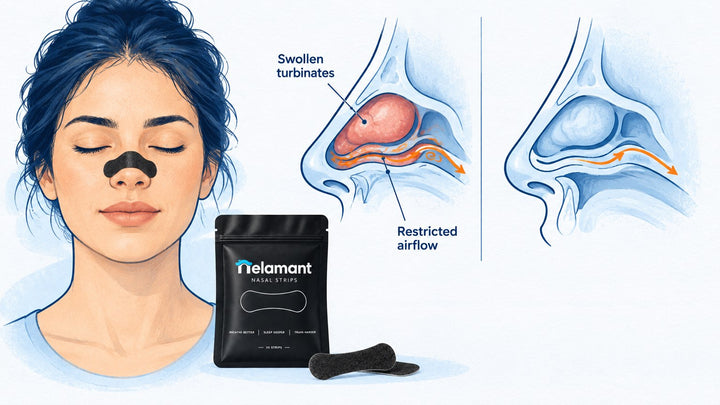
On the question of nasal strips: external adhesive nasal strips work by gently lifting and widening the outer nasal valve to reduce airflow resistance at the bridge of the nose. They're a drug-free mechanical option used by adults for congestion-related nasal snoring. - until that is confirmed, Nelamant Air nasal strips should not be used on children without explicit guidance from the child's doctor. If you're an adult with nasal congestion-related snoring, the guide to best nasal strips for children covers what to look for when a pediatrician has cleared strip use for a child, and includes important sizing and adhesive considerations.
External nasal strips support the nasal opening only; they do not address enlarged tonsils or adenoids, and they cannot treat obstructive sleep apnea. If your child's snoring has a structural or airway cause, strips are not a solution.
Mouth Breathing and Snoring in Children
Mouth breathing and child snoring are closely connected. When a child's nasal airway is partially blocked-by enlarged adenoids, chronic congestion, or structural narrowing-they instinctively shift to breathing through their mouth during sleep. Mouth breathing changes the position of the jaw and tongue, increases throat vibration, and can perpetuate the snoring cycle. Beyond the nightly noise, habitual mouth breathing in children is associated with changes in facial development, dental alignment, and sleep quality over time. The full guide to mouth breathing in children explains the causes, what to watch for, and when to involve an orthodontist or ENT alongside the pediatrician.
Nelamant Air Nasal Strips - For Adults With Nasal Congestion
$14.99 for 30 strips · 30-day returns
Shop Nelamant AirFrequently Asked Questions
Is it normal for toddlers and young children to snore?
Yes, occasional mild snoring is common in toddlers and young children, particularly during or after a respiratory infection. Their airways are small, so even minor congestion or swelling can produce noticeable noise. If snoring is frequent, loud, or accompanied by breathing pauses or daytime tiredness, it's worth mentioning to your pediatrician at the next visit-or sooner if the signs are significant.
What's the difference between normal child snoring and pediatric sleep apnea?
Primary snoring produces sound but doesn't measurably disrupt sleep or oxygen levels. Pediatric obstructive sleep apnea involves repeated partial or complete airway obstruction that interrupts breathing and fragments sleep, even if the child doesn't fully wake. The distinction matters because OSA has documented effects on behavior, attention, and development. A sleep study is the only reliable way to tell the two apart. See the guide to snoring vs sleep apnea for the core physiological explanation.
Can nasal congestion cause my child to snore?
Absolutely. When the nasal passages are swollen or blocked, airflow resistance rises and the child shifts to mouth breathing, which changes airway geometry and increases soft-tissue vibration. Addressing the congestion-with saline spray, allergen control, or appropriate medication under a doctor's guidance-often reduces or eliminates the snoring. Kids snoring that disappears after a cold resolves is a classic example of congestion-driven snoring with no underlying structural problem.
Should I wake my child up if they stop breathing briefly while snoring?
Waking them is not typically necessary in the moment, but a visible pause in breathing-where the chest is still and no air moves-is a sign you should report to your pediatrician as soon as possible, ideally the next day. If the pauses are prolonged, frequent, or your child seems difficult to rouse or distressed, contact a medical professional right away. Don't wait for a routine checkup if you're witnessing repeated breathing pauses.
The Bottom Line on Child Snoring
Most child snoring is occasional, tied to a temporary cause, and resolves on its own. The cases that matter are the ones where snoring is frequent, loud, or paired with signs of disrupted breathing-pauses, gasping, restless sleep, and daytime problems are the signals to act on. Getting a pediatrician involved early, when those signs appear, is the right move. For adults dealing with nasal congestion-related snoring alongside a snoring child in the household, the guide to how to stop snoring covers the full range of approaches, and Nelamant Air is a drug-free option worth considering for the adults in the room.