Thomas Tiemann

The best sleeping position for breathing is on your side with your head slightly elevated. That single adjustment keeps your tongue and jaw from falling back into your airway, uses gravity to drain congestion away from your nasal passages, and lets your chest expand more freely than lying flat on your back.
- Side sleeping - especially on your left side - is consistently better for nighttime breathing than back or stomach sleeping.
- Elevating your head 4–6 inches reduces postnasal drip and eases nasal congestion.
- Flat back sleeping is the position most likely to narrow your airway and worsen congestion.
- Stomach sleeping relieves snoring in some people but strains the neck and limits full chest expansion.
- When position alone isn't enough, opening the nasal passages mechanically can make a real difference.
Why Your Sleep Position Affects Breathing
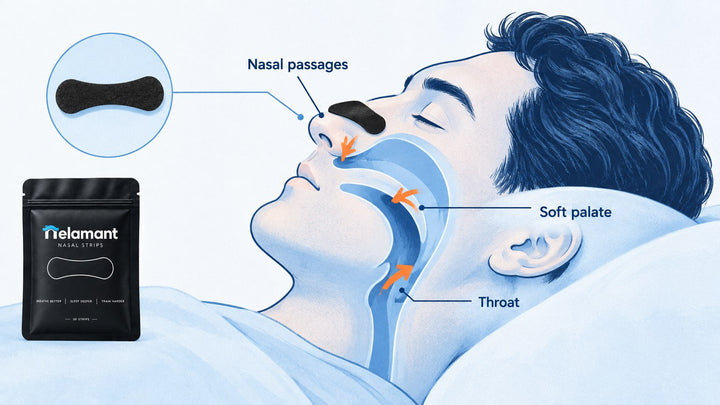
Gravity is the main variable. When you lie flat on your back, the soft tissue at the back of your throat - including the tongue base and soft palate - sags toward your airway. That narrowing increases airflow resistance, which makes breathing noisier and harder. The same gravitational pull causes mucus to pool rather than drain, which explains why congestion often feels worse at night than during the day.
Your body's natural nasal cycle also plays a role. Throughout the day and night, one nostril is slightly more open than the other, alternating on a roughly 2–4 hour schedule. Whichever side you sleep on tends to become the more congested side, which is why switching sides can briefly relieve a blocked nose.
For a broader look at the mechanics of nose breathing during sleep, see the full guide on how to breathe through your nose while sleeping, which covers mouth-breathing patterns, tongue posture, and habit-building strategies.
The Best Sleeping Positions for Easier Breathing
Side Sleeping: The Clear Winner
Sleeping on your side keeps the tongue and jaw in a more forward position, reducing the chance they'll partially block the throat. Side sleeping is a common first step for snoring that is worse on your back.
Left side versus right side is a secondary question. Left-side sleeping is often recommended for people with acid reflux, since stomach anatomy makes regurgitation slightly less likely in that position. For pure airway mechanics, either side is significantly better than lying flat on your back. If one nostril is consistently more congested, try starting the night on the opposite side so the more open nostril faces down.
Head Elevation: Why It Helps
Raising the head of your bed or using a wedge pillow by 4–6 inches encourages mucus to drain toward the back of the throat rather than pooling in the nasal cavity. It also reduces the gravitational force pulling soft tissue into the airway. A wedge pillow works better than stacking standard pillows, which tend to shift during the night and can push the chin toward the chest, actually compressing the airway.
Back Sleeping: When It Works and When It Doesn't
Sleeping on your back with your head clearly elevated - not flat - can be a reasonable position if you have lower back discomfort that makes side sleeping difficult. The elevation does most of the work. Flat back sleeping, however, is the configuration most likely to increase snoring and make congestion worse. If you tend to roll onto your back during the night, a body pillow behind you can act as a physical cue to stay on your side.
Best Sleeping Position for Congestion
When congestion is the main problem, the sleeping position for congestion that works best combines two things: sleeping on your side and elevating your head.
Lying on your back while congested means mucus collects directly over the nasal passages with nowhere to go. Gravity pools it there. On your side, drainage shifts away from the upper nasal cavity and toward your throat, where it can be swallowed or cleared much more easily.
A few practical adjustments specifically for congestion nights:
- Start on the less-blocked side. The nostril facing up tends to open up slightly during sleep.
- Use a wedge or two firm pillows under your head and upper back. The goal is angling your torso, not just tilting your head forward.
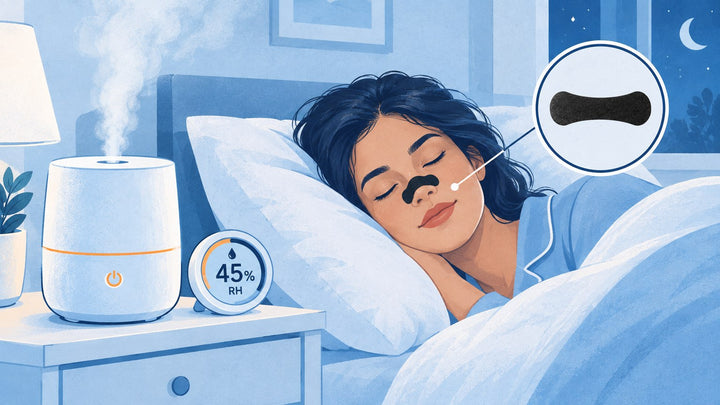
- Keep a humidifier running. Dry air thickens mucus; moisture keeps it moving.
- Avoid sleeping on your stomach. The rotated neck position can add sinus pressure rather than relieve it.
For more strategies when congestion is severe - including saline rinse timing and what to try before bed - the full guide on how to sleep with a stuffy nose covers those steps in detail.
Positions That Make Breathing Worse
Flat on your back is the most problematic position for breathing. With no elevation, the tongue base drops, the soft palate relaxes downward, and mucus has nowhere to drain. If you regularly wake with a very dry mouth or feel like you barely slept, your back-sleeping position is worth addressing first.
Stomach sleeping forces your head to one side, which compresses the neck and can restrict blood flow and airway diameter on that side. Some stomach sleepers find their snoring actually improves - because the face-down position does stop the tongue from falling back - but the neck strain and pressure on the chest make it a poor long-term choice for breathing comfort.
What to Do When Position Alone Isn't Enough
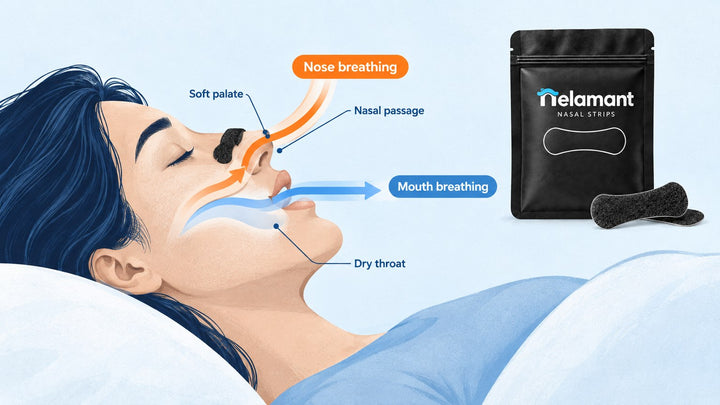
Position changes help most when the airway problem is gravitational: soft-tissue relaxation or mucus pooling. When the issue is structural narrowing at the nose itself - nasal valve collapse, mild congestion, or simply narrow nasal passages - no amount of pillow adjustment fully compensates.
That's where a nasal strip can fill the gap. Nelamant Air nasal strips use a spring-action band to gently widen the nostrils from the outside, supporting the nasal valve and increasing airflow without any drug. The extra-hold adhesive is designed to stay in place through the night even if you move between side sleeping and back sleeping. Used alongside a good sleep position, a strip addresses the nasal passage directly while your posture handles the throat and drainage angles.
If snoring is part of the picture along with breathing difficulty, the guides on nose breathing during sleep and the best sleeping position for snoring both explore how these issues overlap and which adjustments to prioritize first.


Quick Setup: Adjusting Your Sleep Position Tonight
You don't need new equipment to start. Here's a simple sequence to put these ideas into practice:
- Identify your current default position. Note whether you typically start on your back, stomach, or side. If you're a back sleeper, place a firm body pillow along one side before you lie down.
- Set your head height first. If you have a wedge pillow, position it so your head and upper back are elevated, not just your head. If you're using standard pillows, use two firm ones and check that your chin isn't tucked toward your chest.
- Choose your starting side. If you're congested, start on the side where breathing feels freer. If you're not congested, the left side is a reliable default.
- If nasal narrowing is the issue, apply a nasal strip before lying down. Clean and dry the bridge of your nose, center the strip over the flare of your nostrils, and press firmly along both ends. See the full walkthrough on how to breathe through your nose while sleeping for technique details.
- Manage the room environment. A cool room (around 65–68°F ) and adequate humidity reduce the drying effect that makes congestion worse overnight.
- Give it three to four nights. Position habits take time to reset. Using a body pillow as a physical barrier is the most reliable way to stay on your side without consciously trying.
Frequently Asked Questions
What is the best sleeping position for breathing at night?
Side sleeping with your head elevated 4–6 inches is the best sleeping position for breathing. It keeps soft tissue from collapsing into the throat, reduces gravitational pressure on the airway, and helps mucus drain rather than pool. Back sleeping with good elevation is a workable alternative; flat back sleeping and stomach sleeping are the least favorable for most people.
Does sleeping on your left or right side make a bigger difference for congestion?
Either side is substantially better than back sleeping for congestion. The left side has a secondary advantage for people who also experience acid reflux, since stomach anatomy makes regurgitation less likely. For pure nasal congestion without reflux, start on whichever side feels more open, and switch if you wake up congested during the night.
Can raising my head really help with a stuffy nose at night?
Yes. Elevating the head and upper back shifts the drainage angle so mucus moves toward the throat rather than sitting over the nasal passages. A wedge pillow is more effective than stacked pillows because it supports your entire upper body and doesn't shift position during the night. The elevation doesn't need to be steep - choose a gentle incline that supports your head and upper back.
What else can I do if my position doesn't stop nighttime mouth breathing?
If you wake consistently with a dry mouth despite sleeping on your side with your head elevated, the problem is likely structural narrowing at the nose rather than a postural one. A nasal strip that widens the nostrils mechanically can address that directly. If mouth breathing persists even with positional and mechanical support, it's worth reading about how to sleep with a stuffy nose for additional options, or discussing the pattern with a clinician to rule out a structural issue like a deviated septum or enlarged turbinates.
The Bottom Line
The best sleeping position for breathing is side sleeping with a slight head elevation - a combination that uses gravity in your favor rather than against you. For congestion specifically, starting on the less-blocked side and elevating your upper body helps mucus drain and keeps nasal passages from closing further. When position alone doesn't resolve the problem, mechanical nasal support can fill in where posture leaves off. Small, consistent adjustments to how you set up your sleep environment tend to compound over time into noticeably easier breathing by morning.