Thomas Tiemann

This article is for general information, not medical advice.
Losing weight can reduce or stop snoring for many people, but it depends on whether excess weight around your neck and throat is the main reason your airway narrows during sleep. Does losing weight stop snoring entirely? Sometimes yes, sometimes only partially - because weight is one contributing factor among several, not always the whole picture. If snoring is driven largely by excess soft tissue pressing on your airway, meaningful weight loss often brings real improvement. If anatomy, nasal congestion, or other factors are also in play, you may need to address those too.
For a broader look at every available approach, see the full guide to how to stop snoring.
How Weight Affects Your Airway and Snoring
Snoring happens when airflow through your upper airway is restricted enough that the surrounding soft tissue vibrates. Understanding what causes snoring in more detail helps clarify exactly where weight fits in - but the core mechanism here is straightforward: fat deposited around the neck and throat adds bulk that presses inward on the airway when your muscles relax during sleep. A narrower passage means faster, more turbulent airflow and a greater chance that soft tissue will flutter and produce sound.
This is not purely a question of being overweight in general. People who carry fat in their legs or abdomen may snore less than someone with significant neck fat at a similar overall weight. The airway is a local structure, and it is the tissue immediately surrounding it that does the most to change its diameter during sleep.
Where fat is stored matters
Neck circumference is one of the more practical measurements clinicians look at when assessing snoring risk. A larger neck circumference is associated with a higher likelihood of upper airway narrowing during sleep. This means two people with the same BMI can have very different snoring profiles based on where their body tends to store fat.
The practical takeaway: if weight loss reduces fat around your neck and throat specifically, your airway has more room, and snoring often improves.
What the Evidence Says About Weight Loss and Snoring
The relationship between losing weight and snoring has been studied alongside research into obstructive sleep apnea, which shares the same basic airway-narrowing mechanism. Losing excess weight can help reduce snoring in people for whom excess weight is a primary driver.
How much improvement you see depends on how much of your snoring is weight-driven, how much weight you lose, and whether other anatomical or lifestyle factors are also contributing.
When weight loss helps the most
Weight loss tends to produce the clearest snoring benefit when:
- You have gained weight over the same period snoring developed or worsened.
- You carry noticeable fat around your neck and jaw.
- Your snoring is positional - louder on your back, less so on your side - which often reflects airway collapse partly driven by soft tissue bulk.
- You have no significant structural issue such as a deviated septum or nasal valve narrowing.
In these cases, people sometimes report a meaningful reduction in snoring before they reach their goal weight, because even modest fat loss around the neck can widen the airway slightly.
When snoring persists after weight loss
It is common to lose a significant amount of weight and still snore. The airway is influenced by several factors that weight loss does not change: the shape and length of your soft palate, the size of your tonsils or adenoids, nasal anatomy, sleep position habits, alcohol use before bed, and age-related loss of muscle tone in the throat. If any of these are major contributors, you may need to address them alongside - or instead of - weight.
Persistent snoring after weight loss also raises the question of whether an underlying sleep-breathing disorder is involved. The guide to snoring vs. sleep apnea explains the key differences and when a sleep study is worth pursuing.
Other Lifestyle Changes That Work Alongside Weight Loss
Weight loss is rarely a single-variable fix, and it takes time. While you are working on it - or if it turns out not to be enough on its own - several other adjustments address snoring through different mechanisms:
- Sleep position: Side sleeping reduces how much soft tissue falls toward the back of the throat compared with sleeping on your back. Many people notice an immediate difference.
- Alcohol timing: Alcohol relaxes throat muscles more than usual and consistently worsens snoring. Cutting back, particularly in the two to three hours before bed, often produces a noticeable improvement.
- Nasal congestion: A blocked nose forces mouth breathing, which makes snoring worse. Treating congestion - through allergies, a cold, or structural causes - can reduce snoring independently of weight.
- Throat and tongue exercises: Some evidence suggests targeted myofunctional exercises can reduce snoring by improving muscle tone in the upper airway.
The complete guide to how to stop snoring covers all of these approaches in detail, including which ones work best for which causes.
Supporting Nasal Airflow While You Work on Weight
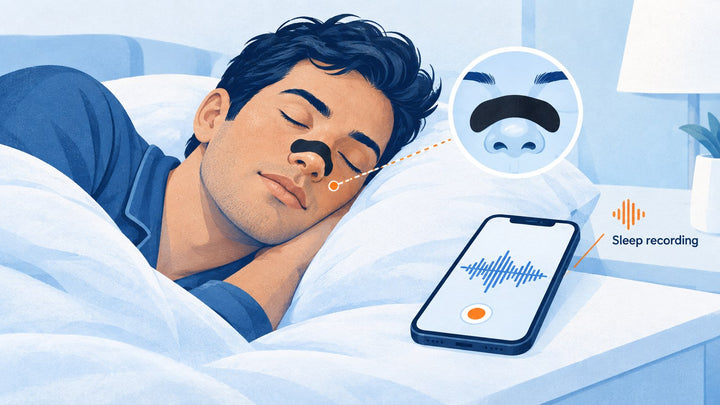
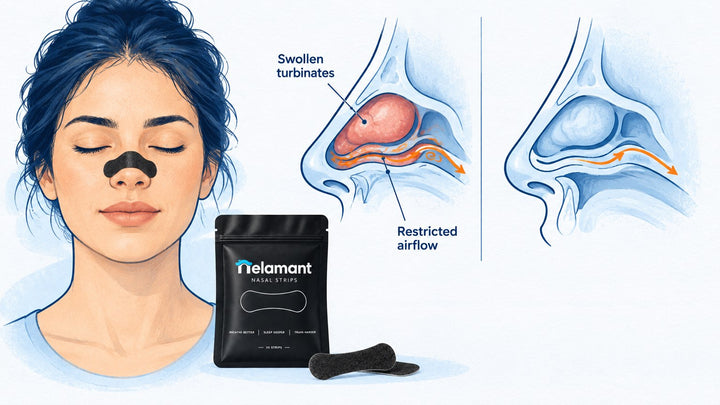
One practical step you can take right now - while any longer-term weight or lifestyle changes are underway - is to address nasal airflow. Snoring that originates in or is worsened by nasal obstruction responds well to mechanical support at the nose. When your nasal passages are narrowed or congested, your body compensates by breathing through your mouth, and mouth breathing dramatically increases the chance of airway vibration and audible snoring.
An external nasal strip like Nelamant Air gently lifts the sides of the nose to widen the nasal passages, supporting easier airflow without any drug involvement. It does not fix the underlying cause of snoring and is not a treatment for sleep apnea - but for snoring that has a nasal component, or when congestion is making things worse, it can make a meaningful difference on any given night while you work on the factors that take longer to change.
Try Nelamant Air Tonight
Drug-free nasal support for easier breathing through the night.
$14.99 for 30 strips · 30-day returns
Shop Nelamant Air
When to See a Doctor
Snoring is sometimes a symptom of obstructive sleep apnea, a condition in which breathing repeatedly stops and restarts during sleep. Weight is a major risk factor for sleep apnea, so if your snoring is weight-related, this connection is worth knowing. See a doctor if you notice any of the following:
- Gasping, choking, or observed pauses in breathing during sleep
- Waking unrefreshed despite adequate sleep time
- Significant daytime sleepiness or difficulty concentrating
- Snoring that is very loud, frequent, or that your bed partner describes as irregular
- Morning headaches on a regular basis
These are not guaranteed signs of sleep apnea, but they are signals worth investigating with a clinician. For a clear explanation of how snoring and sleep apnea differ and overlap, the guide to snoring vs. sleep apnea is a useful starting point before your appointment.

Frequently Asked Questions
How much weight do you need to lose to stop snoring?
There is no universal threshold. Some people notice improvement after losing a modest amount of weight if it reduces fat specifically around the neck. Others need more substantial, sustained loss. The key variable is how much of your snoring is driven by airway narrowing from soft tissue around the throat, which is different for every person.
Can snoring come back if you regain weight?
Yes. If weight loss improved your snoring by reducing tissue pressure around the airway, regaining that weight tends to bring snoring back, often to the same degree or worse. This is one reason clinicians emphasize sustained lifestyle change rather than short-term weight loss for snoring linked to body weight.
Does snoring and weight gain always go together?
Not always. Snoring and weight gain are associated, particularly when weight accumulates around the neck and upper body, but many people at a healthy weight snore due to anatomy, nasal obstruction, sleep position, or alcohol use. Conversely, some people carry excess weight without snoring significantly. Snoring reflects airway shape and muscle tone as much as body composition.
Is snoring after weight loss a sign of sleep apnea?
Not automatically, but it is a reason to pay attention. If you have lost weight and still snore - especially if you also feel unrefreshed in the morning, experience daytime sleepiness, or have been told you stop breathing briefly during sleep - it is worth discussing with a doctor. Weight loss reduces sleep apnea risk but does not eliminate it, particularly when there are anatomical contributors. The guide to snoring vs. sleep apnea explains the distinction in practical terms.
Putting It Together
Does losing weight stop snoring? It genuinely can - and for many people it is the single most effective long-term change they can make, especially when excess neck and throat tissue is narrowing the airway. The more realistic framing is that weight loss reduces the severity and frequency of snoring when weight is a significant contributing factor, while other causes - anatomy, congestion, sleep position, alcohol - may need separate attention. A layered approach, addressing snoring and weight together with any other relevant factors, tends to work better than waiting for one fix to solve everything.
Support Nasal Breathing Tonight
Nelamant Air nasal strips open your nasal passages mechanically - no drugs, no residue, stays on through the night.
$14.99 for 30 strips · 30-day returns
Shop Nelamant Air