Thomas Tiemann

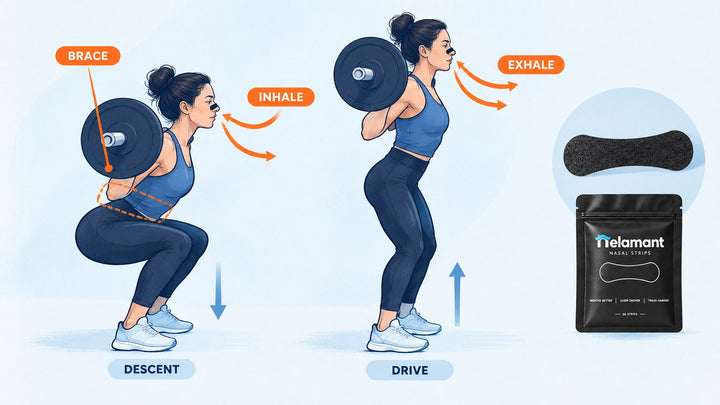
Nasal strips can help some athletes breathe more comfortably through the nose by reducing resistance at the nasal valve - the narrowest point of the airway. Whether that translates into measurable performance gains depends on who you are, how hard you're working, and whether nasal obstruction is actually limiting your breathing in the first place. For athletes who train with a congested nose, breathe nasally at moderate intensities, or simply want their airway to feel more open during effort, the case is reasonable. For elite athletes breathing through their mouths at maximum intensity, the effect is less clear.
- Nasal strips work mechanically - they lift the sides of the nose to reduce airflow resistance at the nasal valve. No drugs, no stimulants.
- Benefits are most plausible for nose-breathing athletes, congested athletes, and endurance training at sub-maximal intensities.
- At high effort levels most people naturally shift to mouth breathing, which limits how much a nasal strip can do for peak output.
- A strip that stays put through sweat is essential for sport; adhesive quality matters as much as lift.
- Nasal strips are not a substitute for breathing technique training, and they don't treat structural nasal problems.
How Nasal Strips Work During Exercise
To understand what a nasal strip can and can't do in a workout, it helps to understand the mechanism. For a fuller explanation of the mechanics and why strip design matters, see the guide to nasal breathing during exercise and why athletes use nasal strips.
What the Strip Actually Does to Airflow
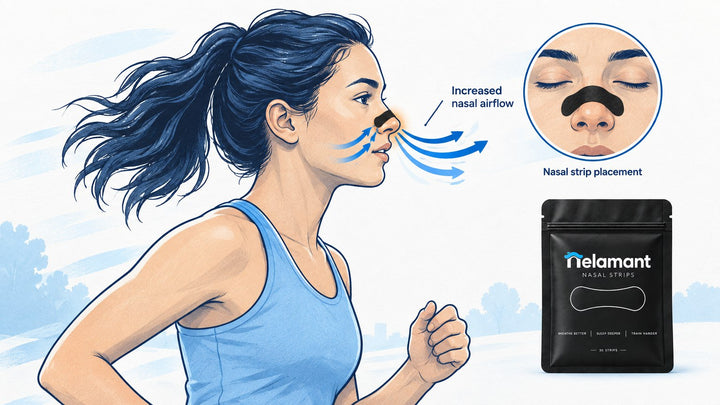
A nasal strip is a spring-loaded adhesive band that sits across the bridge of the nose. When it tries to return to its flat shape, it gently lifts the lateral walls of the nose outward. That lift acts on the nasal valve - the narrow triangular area just inside the nostril where airflow resistance is highest. By widening that opening slightly, the strip reduces the effort required to pull air through with each breath.
This is a purely mechanical action. There are no drugs, no vasoconstrictors, and no stimulants involved. The strip doesn't increase the oxygen content of the air, widen the throat, or change lung capacity. It simply makes the front door of the airway a little less narrow.
Why Resistance Matters at Exercise Intensity
At rest, nasal breathing accounts for most of the work of moving air, and resistance at the nasal valve is manageable. As exercise intensity rises, ventilation demand increases sharply. The respiratory muscles have to work harder to move more air through the same fixed opening. For athletes who commit to nasal breathing during training - a practice associated with certain endurance and breathing-focused disciplines - even a modest reduction in that resistance can reduce the perceived effort of breathing and delay the point at which the nose feels like a bottleneck.
At very high intensities, most people abandon nasal breathing entirely and switch to mouth breathing, which bypasses the nasal valve altogether. At that point a nasal strip's direct contribution to airflow is minimal.
What the Evidence Says About Nasal Strips and Oxygen
Research into nasal strips and athletic performance has generally focused on two questions: does a strip increase measurable airflow, and does increased airflow translate into better performance outcomes? The answer to the first question is more consistently supported than the answer to the second.

Where Performance Benefits Are Plausible
Several studies have examined whether nasal strips affect airflow resistance and the perceived effort of breathing during exercise. The general finding is that strips reduce nasal resistance and that some athletes report easier breathing, particularly at moderate exercise intensities where nasal breathing is still the dominant route.
Nasal strips and oxygen delivery is a more contested area. The nasal passages filter, humidify, and warm incoming air, and nasal breathing is associated with nitric oxide production in the sinuses, which has vasodilatory properties. Whether the marginal airflow gain from a strip is large enough to meaningfully affect oxygen delivery during sport is not firmly established.
The plausible performance benefit sits in a specific zone: athletes training at zone 2 or moderate aerobic intensities who are committed to nose breathing, and any athlete dealing with congestion that narrows the nasal valve further than normal. In those scenarios, reducing resistance is doing real work.
Where Benefits Are Less Clear
At maximal effort - sprinting, high-intensity intervals, competitive racing - ventilation rate climbs steeply and mouth breathing becomes dominant regardless of whether a strip is worn. In that context, the strip may contribute little to airflow volume, and studies looking at VO₂ max or peak power output have not consistently shown statistically significant gains. The strip isn't harmful at high intensity; it just isn't doing much mechanical work when the mouth is already open wide.
It's also worth noting that the psychological effect of feeling like your airway is more open is real and shouldn't be dismissed - but it's different from a measurable physiological change, and good evidence-based writing should keep the two distinct.
Who Is Most Likely to Notice a Difference?
The honest answer to whether nasal strips help athletic performance is: it depends on the athlete. Three profiles stand out where the case is strongest.
Congested and Sick Athletes
When you're training through a cold, seasonal allergies, or general congestion, your nasal valve is already partially obstructed by swollen tissue or mucus. A nasal strip can't clear mucus or reduce inflammation, but it can provide additional mechanical support to the nasal walls and partially compensate for the narrowing. For many athletes this is the most immediately felt benefit - workouts feel less suffocating when congested. For a broader look at whether strips work for nasal obstruction in general, see whether nasal strips actually work.

Nose Breathers vs. Mouth Breathers at Effort
Athletes who deliberately train using nasal-only breathing - a practice popularized by several endurance and breathwork communities - place a higher demand on nasal airflow capacity than athletes who shift to mouth breathing freely. For a dedicated nasal breather, the nasal valve is the primary throttle for every breath taken during a workout, so reducing resistance there has a larger proportional effect than it does for someone who regularly opens their mouth.
Mouth breathers who never close their lips during exercise bypass the nasal valve for most of the session. A strip may still provide some benefit in the warm-up or cool-down phases, but it's not going to transform a workout structure built around mouth breathing.
Endurance vs. High-Intensity Scenarios
Longer, moderate-intensity sessions - long runs, cycling base miles, rowing steady-state - are the environment where nasal breathing is most sustainable and where strips are therefore most relevant. Short, high-intensity efforts are less likely to show benefit because the mouth takes over ventilation.
For a closer look at why professional and high-level athletes wear strips during competition, including in contact sports where mouth guards interfere with breathing, see the guide on why athletes and football players wear nasal strips.
Nasal Strips vs. Other Breathing Strategies for Athletes
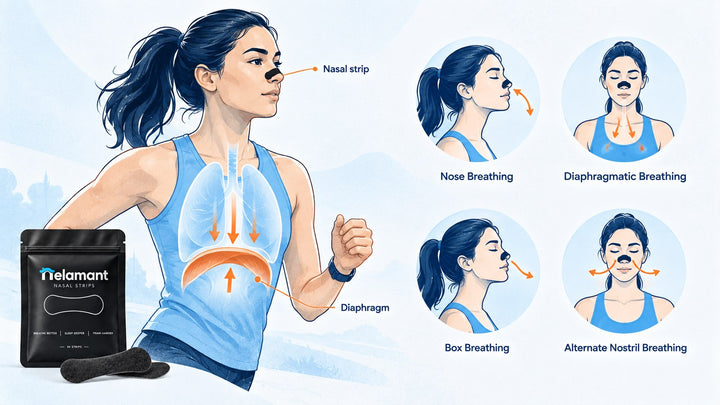
Nasal strips are one tool in a broader set of breathing strategies used by athletes. They address physical resistance at the nasal valve; they don't train the respiratory muscles, improve CO₂ tolerance, or build the habit of nasal breathing. Here's how they fit alongside complementary approaches:
- Nose breathing training during runs: Building the habit of breathing nasally at easy paces is its own skill. A strip can reduce the resistance that makes nose breathing feel harder than it needs to, which may help athletes sustain nasal breathing longer before hitting their limit. See the full guide on nose breathing while running for technique and progression.
- Zone 2 training: Low-intensity aerobic work is the natural home for nasal breathing, and many athletes use nasal-only breathing as a self-regulating intensity cap. Strips can support that practice by keeping the airway as open as possible during the session. The guide on zone 2 nasal breathing explains how this approach works.
- Breathing exercises: Techniques like CO₂ tolerance drills and breathwork protocols work at a different level - they change how you respond to the urge to breathe, not just the physical width of the airway. Strips and breathing exercises complement rather than replace each other.
How to Use a Nasal Strip for Sport
Applying a strip correctly before a workout takes under a minute. Getting the placement right - and making sure the adhesive bonds properly - is the difference between a strip that stays put for the whole session and one that peels off at mile two.
- Clean and dry your nose. Wash your face or at least rinse the bridge of the nose with water. Pat completely dry. Any oil, sunscreen, or sweat residue left on the skin will compromise adhesion before the workout even begins.
- Position the strip across the widest part of the bridge. The center of the strip should sit across the bridge, with the ends reaching the flared part of each nostril. The strip should not sit too high on the bony ridge or too low toward the tip.
- Press firmly along the full length. Run a finger along the strip from center outward, pressing the adhesive flat against the skin. Hold for 10–15 seconds to let the bond set.
- Test the lift before you start. You should feel a gentle outward pull on the sides of your nose. If the strip feels loose at the edges, press again.
- Remove gently after your workout. Wet the strip first if possible - this softens the adhesive and makes removal more comfortable on post-workout skin.
For a detailed application and removal walkthrough, the guide on best nasal strips for athletes covers sport-specific considerations including sizing, skin prep for different conditions, and what to do if strips won't stay on during outdoor training.
Why Adhesive Matters for Workouts
A nasal strip that falls off mid-run solves nothing. Sweat, humidity, sunscreen, and the natural oils that build up during effort are all enemies of adhesive performance. This is one of the most practical distinctions between strips designed primarily for overnight sleep use and those built to handle physical activity.
Nelamant Air uses an extra-hold adhesive formulated to resist sweat and oil, with materials that are gentle on skin - including skin that gets warm and flushed during exercise. The broader, more balanced lift distributes force evenly across the bridge rather than pulling from a single point, which also helps the strip maintain contact through movement. After your workout it peels off cleanly without leaving sticky residue on skin that may already be irritated from effort and sun.
Frequently Asked Questions
Do nasal strips actually improve athletic performance?
They can reduce nasal airflow resistance, which may make breathing feel easier and support nasal breathing at moderate intensities. Direct, statistically robust improvements to peak performance metrics like VO₂ max are not consistently demonstrated in the research. The clearest benefit is for athletes who are congested, committed to nose breathing, or training at sub-maximal intensities.
Can nasal strips increase oxygen intake during exercise?
Not directly. A strip widens the nasal valve opening and reduces resistance, but it doesn't change the oxygen content of the air or the lungs' capacity to absorb it. Nasal breathing is associated with nitric oxide production that may support vasodilation, but whether the incremental airflow gain from a strip is large enough to affect oxygen delivery in a meaningful way during sport is not firmly established.
Should I wear a nasal strip while running or cycling?
It's worth trying, particularly on longer moderate-intensity sessions where you aim to breathe nasally. Clean, dry skin is essential - apply the strip before you start warming up, not after you're already sweating. If you run outdoors and use sunscreen, clean the bridge of the nose before applying. For a technique-focused look at nose breathing on the run, see the guide on nose breathing while running.
Do nasal strips help if I'm congested during a workout?
Yes, this is one of the strongest use cases. When the nasal tissue is swollen from a cold, allergies, or exercise-induced rhinitis, the nasal valve is further restricted than normal. A strip provides additional mechanical support to the nasal walls and can partially compensate for that narrowing. It won't clear mucus or reduce inflammation, but it can make breathing through the nose feel noticeably less labored.
Why do professional athletes and football players wear nasal strips?
Several reasons converge: easier nasal breathing when wearing a mouth guard, perceived airflow benefit during sustained aerobic effort, possible support for nasal breathing-associated nitric oxide production, and the psychological benefit of a more open-feeling airway. Visibility on televised sports also drives widespread awareness. The full background is in the guide on why athletes and football players wear nasal strips.
Will a nasal strip stay on during a sweaty workout?
It depends on the strip. Many consumer strips designed primarily for sleep can lose adhesion quickly under sweat and oil. Starting with completely clean, dry skin is the single biggest factor. Strips with an extra-hold adhesive, like Nelamant Air, are formulated specifically to resist the conditions that make standard adhesives fail during physical activity. Applying the strip before warming up - rather than mid-workout - also gives the adhesive time to fully bond before sweat begins.
The Bottom Line
Whether nasal strips help athletic performance comes down to context. They reduce nasal airflow resistance in a real and measurable way; where that reduction matters most is for athletes who nose-breathe during training, for anyone exercising with a congested airway, and for moderate-intensity endurance work. At maximum effort where mouth breathing dominates, the mechanical effect is limited. Used in the right situation with an adhesive that holds through a workout, a strip is a low-effort, drug-free way to keep nasal resistance from being the thing that makes breathing harder than it needs to be.