Thomas Tiemann

Disclosure: Nelamant makes Nelamant Air, our top pick in this guide.
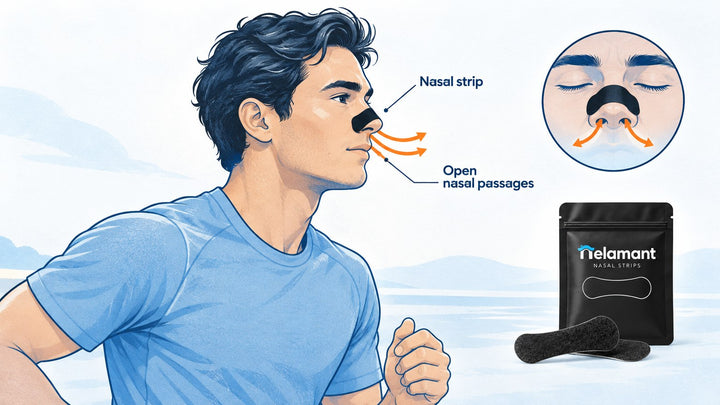
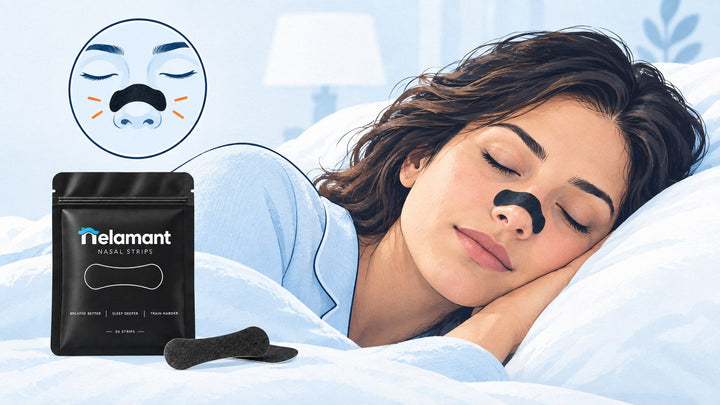
The best nasal strips for allergies physically hold your nasal passages open so you can breathe through your nose even when pollen counts are peaking and inflammation has narrowed the airway. They work mechanically - lifting the sides of the nose outward to reduce airflow resistance - which makes them a clean, drug-free complement to whatever antihistamine or nasal spray you already use. Here are the top options for allergy sufferers, compared honestly.
- Nasal strips are drug-free and can be worn alongside allergy medications without interaction concerns.
- For allergy season, prioritize hypoallergenic adhesive - skin irritated from constant nose-blowing is more reactive to standard adhesives.
- A wider, balanced lift spans more of the nasal bridge and handles congestion-related swelling on both sides better than a single narrow pull point.
- Overnight adhesion matters: thin mucus drainage during allergies can loosen strips not designed to hold through the night.
- Strips support the nasal opening; they don't treat the underlying allergic inflammation.
For a full comparison of nasal strip formats across every audience and use case, the best nasal strips guide is the place to start.
#1 Top Pick: Nelamant Air Nasal Strips
⭐ Top Pick for Allergies
Nelamant Air Nasal Strips
Nelamant Air uses a wider, more balanced lift across the nasal bridge rather than a single sharp pull point - a meaningful difference when allergy-driven swelling has narrowed both sides of the nose. The extra-hold adhesive is formulated to resist overnight movement, sweat and skin oils, which matters when thin post-nasal drainage is present throughout the night. Hypoallergenic materials keep the adhesive gentler on skin that is already raw from a full day of nose-blowing.
Each pack contains 30 single-use strips - a full month of nightly use - and because the action is entirely mechanical, there is nothing to interact with an antihistamine, intranasal steroid spray or decongestant you are already taking.
Best for: Nightly allergy congestion, hay fever season, sensitive or irritated skin around the nose.
Honest limitation: Strips support the nasal opening mechanically; they don't reduce the allergic inflammation causing the congestion. On heavy-pollen days you will still likely need your allergy medication.
Shop Nelamant AirThe Other Four Worth Considering
Breathe Right Extra Strength
Breathe Right Extra Strength is the most widely recognized adhesive nasal strip and is easy to find at any pharmacy. The stronger adhesive holds reasonably well through the night for most users, and the firm outward lift works well when congestion is moderate to significant.
Allergy-season pros: Available nearly everywhere for last-minute restocking during peak season; strong single lift for substantial congestion.
Allergy-season cons: The adhesive formulation is not marketed as hypoallergenic, which can be a concern when skin around the nose is already irritated. A single-point lift may feel less balanced over a full night when swelling is present on both sides of the bridge.
Breathe Right Original Clear
Breathe Right Original Clear uses a tan fabric backing and a gentler adhesive designed specifically for users with reactive skin. During allergy season, when repeated nose-blowing leaves the bridge and sides of the nose chafed, this variant is worth considering over the standard formulation. Lift performance is comparable to Breathe Right Original; the material and adhesive are the key differences.
Allergy-season pros: Gentler adhesive is less likely to aggravate already-sore skin; widely available at major pharmacies.
Allergy-season cons: Gentler adhesive may also mean slightly reduced overnight hold in some conditions; not available as an extra-strength variant.
Breathe Right Lavender Scented Extra Strength Tan
This scented variant adds a mild lavender fragrance intended to support sleep onset. If disrupted sleep is the main allergy-season complaint, the positioning is relevant. Mechanical lift performance is comparable to other Breathe Right formats. One caution for allergy sufferers specifically: added fragrance, even mild, is a potential irritant for people who also have scent sensitivities alongside their airborne allergen reactions.
Allergy-season pros: Sleep-focused positioning; familiar strip format at a comparable price point.
Allergy-season cons: Fragrance ingredient is a potential irritant for chemically sensitive users; hypoallergenic status not confirmed.
CVS Health Extra Strength Clear Nasal Strips
CVS sells a named extra-strength clear strip in a 50-count pack. Its listing describes a drug-free external strip and sensitive-skin testing; compare the current label and local price before buying.
Pros: A pharmacy-label alternative with a clearly identified pack size.
Cons: Retail availability and prices vary; extra strength does not establish better fit for your nose.
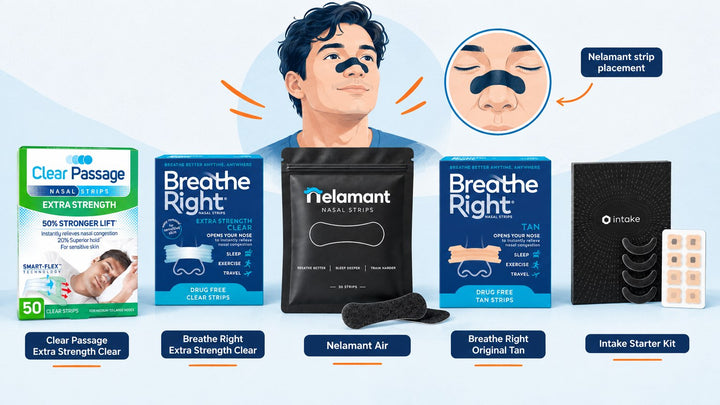
Five-Product Comparison
| Product | Adhesive claim | Hypoallergenic | Approx. cost/strip | Pack size |
|---|---|---|---|---|
| Nelamant Air | Extra-hold; sweat and oil resistant | Yes | ~$0.50 ($14.99 / 30) | 30 |
| Breathe Right Extra Strength | Extra-strength | Check current product details | Check current product details | Check current product details |
| Breathe Right Original Clear | Gentle / sensitive skin | Check current product details | Check current product details | Check current product details |
| Breathe Right Lavender Scented Extra Strength Tan | Standard | Check current product details | Check current product details | Check current product details |
| CVS Health Extra Strength Clear Nasal Strips | Standard | Check current product details | Check current product details | Check current product details |
How We Chose
This list was built around what allergy season specifically demands, not general nasal strip performance. Four criteria drove the selection:
- Hypoallergenic adhesive: Skin around the nose is often chafed and reactive during high-pollen periods. A gentler adhesive that doesn't aggravate inflamed skin is the first filter.
- Overnight adhesion: Allergy congestion produces thin drainage throughout the night. A strip that lifts off at 2 a.m. provides no sleep benefit.
- Lift width and balance: Allergy-related swelling tends to narrow both nasal passages. A wider, more balanced lift across the bridge addresses that more effectively than a single-point pull.
- Drug-free mechanical action: Strips should complement, not complicate, the allergy medications already in use.
This is a manufacturer-authored design and specification comparison, not an independent consumer test or customer-rating ranking.

Buyer's Guide: What Allergy Sufferers Actually Need in a Nasal Strip
Why allergy season makes nights harder to breathe
Airborne allergens - pollen, dust mites, pet dander - trigger inflammation in the nasal lining that narrows the passages and increases resistance to airflow. That narrowing gets worse at night when you are horizontal, drainage pools and indoor allergen concentrations can actually be higher than outside. The result is disrupted sleep, mouth breathing and, in many people, snoring that does not occur outside of allergy season at all.
Allergy-driven congestion is a well-established trigger for snoring in people who would not otherwise snore. The connection between allergies and snoring is worth understanding if your snoring tracks with pollen season - inflamed nasal tissue changes the whole upper-airway dynamic during sleep, not just how blocked you feel. For the full picture of why symptoms tend to peak at night and what you can do about the timing, see the guide on allergies at night.
If congestion persists beyond allergy season or doesn't respond well to standard treatments, the best nasal strips for congestion guide covers a broader set of causes and relevant options.
Nasal strips for hay fever: drug-free support alongside medication
Nasal strips work mechanically, not chemically. They don't reduce histamine, calm mast cells or shrink inflamed tissue - those are jobs for antihistamines and intranasal corticosteroid sprays. What nasal strips for hay fever provide is a physical hold on the nasal opening so that whatever airflow is possible gets through more easily while the medication does its work.
That makes strips a complementary layer, not a replacement. On a moderate-pollen day when your antihistamine is managing the inflammation reasonably well, a nasal strip at bedtime may be all the extra help you need to breathe well overnight. On a very high-pollen day when inflammation is severe, the strip helps at the margin but you'll still feel the congestion. The key advantage is that nasal strips contain no active pharmaceutical ingredients, so there are no dosing limits, no rebound effects and nothing to interact with other medications. You can wear one the same night you take an oral antihistamine, use a steroid spray or rinse with saline.
Skin irritation: the overlooked allergy-season problem
Constant nose-blowing during allergy season leaves the bridge and sides of the nose sore, chafed and sometimes visibly irritated. Applying a standard adhesive to already-inflamed skin can compound the problem - and peeling a strip off carelessly in the morning can pull the surface layer further. Prioritize a hypoallergenic adhesive and a strip that peels off cleanly without leaving sticky residue. If the skin is particularly raw, clean and gently pat the area dry before applying the strip, and on removal warm the adhesive edge with a fingertip for a few seconds before peeling slowly from one end.

Frequently Asked Questions
Do nasal strips actually help with allergy congestion?
Yes, within clear limits. Nasal strips open the nasal passage mechanically, reducing airflow resistance when swelling has narrowed it. They don't treat the underlying allergic inflammation - that still needs antihistamines or nasal sprays - but they make it physically easier to move air through the nose while the congestion is present. Most people find them most useful at night, when congestion typically worsens and mouth breathing becomes the default.
Is it safe to use nasal strips every night during allergy season?
Nasal strips are drug-free and single-use, so there is no chemical dependency or rebound congestion risk - a real concern with decongestant nasal sprays used too frequently. Nightly use is generally fine for adults as long as the adhesive isn't irritating the skin at the application site. If you notice persistent redness or sensitivity, try a sensitive-skin formulation or take a night off to let the skin settle. For a broader look at daily use across different needs, the best nasal strips guide covers that question in detail.
Can nasal strips reduce snoring caused by hay fever?
They can help when nasal obstruction is the primary driver. Allergy-driven congestion forces mouth breathing during sleep, which is one of the more common snoring triggers. By holding the nasal passage open, a strip can reduce the congestion-related airflow resistance enough to keep nose breathing viable through the night. This works best when the congestion - rather than throat anatomy, weight or other factors - is what's actually causing the snoring.
What is the difference between regular and sensitive nasal strips for allergy sufferers?
The main difference is in the adhesive and backing material. Sensitive variants use a gentler adhesive designed to minimize skin irritation, which is particularly relevant during allergy season when skin around the nose is already chafed from frequent nose-blowing. Standard or extra-strength strips use a stronger adhesive that may hold better overnight but can be harsher on reactive skin. Hypoallergenic strips go a step further by using materials less likely to trigger a contact reaction altogether.
Can I use nasal strips at the same time as allergy nasal sprays?
Yes. Apply your nasal spray first, allow a minute or two for it to absorb, then apply the strip. Because nasal strips work mechanically and contain no active ingredients, there is no interaction with intranasal corticosteroids, antihistamine sprays, decongestants or saline rinses. The strip holds the passage open while the medication continues to do its chemical work independently.
The best nasal strips for allergies combine a hypoallergenic adhesive, reliable overnight hold and a wider, balanced lift - the three things allergy season puts under the most pressure. Nelamant Air leads this list on all three counts. The alternatives above cover different priorities, from broader pharmacy availability to lower per-strip cost, and any of them beats going without when congestion is making sleep difficult. Used alongside your regular allergy treatment rather than instead of it, a nasal strip at bedtime is one of the simpler practical tools for getting through the season with your nose - and your sleep - intact.