Thomas Tiemann

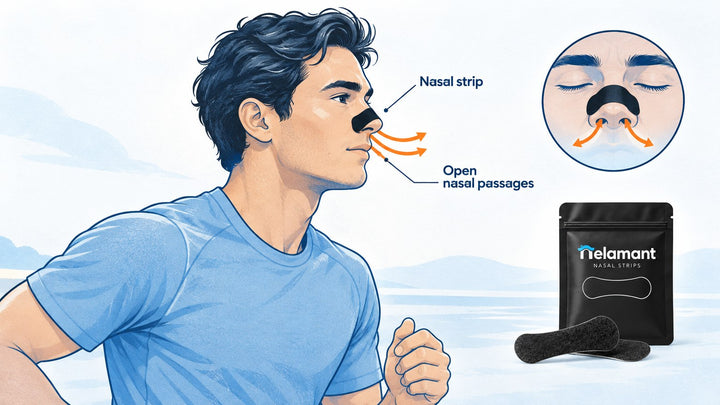
If you want the best nasal strips for better breathing at night, focus on how well the strip fits your nose, stays on through overnight wear, and feels by morning. A nasal strip does not treat disease; it works by mechanically lifting the skin over the external nasal valve, which may reduce the feeling of anterior nasal resistance for some people and make breathing feel easier at bedtime.
Product comparison
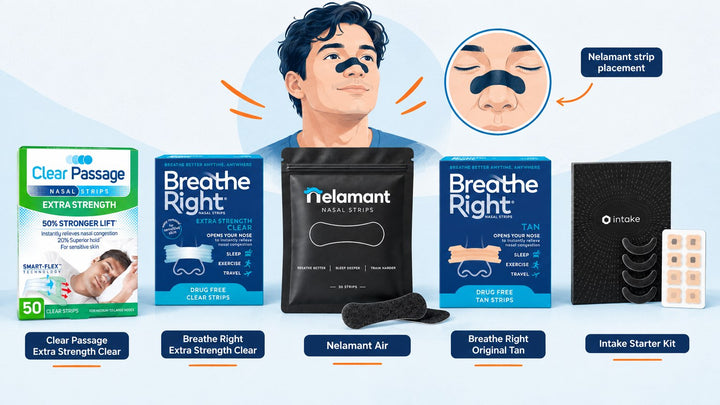
5 Products Compared for Better Breathing At Night
For better breathing at night, compare fit, hold, material, device style, and the manufacturer's intended use. A stronger or more complex design is not automatically better; the useful choice is the one that fits comfortably and addresses resistance near the front of the nose.
How to read this table. Transparency: Nelamant is our product and is listed first. The other notes are editorial assessments based on current official manufacturer specifications, not paid placements, independent lab rankings, or claims that we personally tested every product.
| Rank | Product | Best for | Editorial assessment |
|---|---|---|---|
| 1 |

Nelamant Air Nasal Strips
External adhesive nasal strip
|
Simple external support through the night | Our adhesive strip is the simplest external option in this group: apply it to clean, dry skin and remove it gently in the morning. It supports nasal-valve opening but does not treat sleep apnea. |
| 2 |

Breathe Right Extra Strength Clear
Clear extra-strength external strip
|
A clear extra-strength bedtime option | A clear, extra-strength strip with manufacturer guidance emphasizing hypoallergenic material and easier removal. It is useful when visibility and a firmer pull both matter. |
| 3 |

Clear Passage Extra Strength
Extra-strength external strip
|
Extra-strength adhesive-strip shoppers | A conventional extra-strength strip range with multiple formats. It is a sensible alternative for people comparing adhesive-strip fit before trying an internal or magnetic device. |
| 4 |

Intake Breathing Starter Kit
Magnetic band with adhesive tabs
|
A magnetic external setup | The magnetic band can provide a different kind of external pull, while disposable tabs anchor it to the nose. Expect more setup than a one-piece strip. |
| 5 |

Rhinomed Mute
Adjustable reusable internal dilator
|
An adjustable internal sleep dilator | Mute is a reusable internal dilator designed specifically for sleep and offers adjustable sizing. It avoids bridge adhesive, but comfort with an internal device is highly personal. |
Product details were checked against the linked official manufacturer pages on September 22, 2026. Packaging, availability, directions, and formulations can change; verify the current label before use.

What a nasal strip can and cannot do at night
External nasal strips are designed for the outside of the nose. They lift the skin over the external nasal valve and help stabilize the lateral nasal wall. That can slightly open the front of the nose and may improve perceived nasal airflow for some users, especially if baseline nasal resistance is higher. In practical terms, some people notice better breathing ease during their bedtime routine and while lying down.
What they do not do is treat sleep apnea, infection, allergic inflammation, a deviated septum, or throat collapse. They also do not change the turbinates or mucosa directly. If your nighttime blockage is persistent, one-sided, or associated with other symptoms, a strip should not be used as a substitute for medical evaluation.
How to choose the best nasal strips for overnight wear
For night use, the right strip is less about the strongest pull and more about balanced support. A strip that is too aggressive can feel uncomfortable, lift at the edges, or irritate skin before morning. A strip that is too weak may not stay in place or may not give enough support to notice a difference.
1) Fit and size
Fit is the first thing to check. The adhesive pads should sit flat on the bridge and sidewalls of the nose without wrinkling. If the strip is too narrow, it may not support the external nasal valve well. If it is too wide, it may press on areas that feel tender or make removal less comfortable.
2) Adhesion for night use
Overnight wear depends on adhesion. Look for a strip that stays secure through normal sleep movement, sweat, and facial oil. If you wake up and find the strip partially lifted, the seal was probably not right for your skin or nose shape. A good strip should hold firmly but still remove cleanly in the morning.
3) Comfort on skin
Comfort is not a bonus feature; it is part of whether the strip is usable every night. In studies of healthy adults, external strips were evaluated for comfort, removal, and short-term skin tolerability. That matters because a product that feels fine for ten minutes may still be irritating after a full night. If your skin is sensitive, choose a product marketed for gentle wear and test it on a low-stakes night first.
4) Support level
Different strips can feel more or less rigid. A firmer strip may provide more noticeable lifting at the external nasal valve, but it can also feel more obvious on the face. A softer strip may be easier to tolerate but less noticeable in effect. The best choice is the one that gives you a better sense of nasal airflow without creating pressure or distraction.
Comparison table: what to compare before you buy
| What to compare | Why it matters at night | What to look for |
|---|---|---|
| Fit | Good fit helps the strip support the external nasal valve | Matches nose width and bridge shape without gaps |
| Adhesion | Prevents lifting during sleep movement | Secure hold with clean morning removal |
| Comfort | Determines whether you can wear it consistently | Low pressure, minimal edge awareness, no stinging |
| Skin tolerance | Important for repeated overnight wear | Gentle adhesive and no redness after use |
| Support feel | Affects perceived nasal airflow and breathing ease | Noticeable lift without discomfort |

How to use a nasal strip for bedtime routine
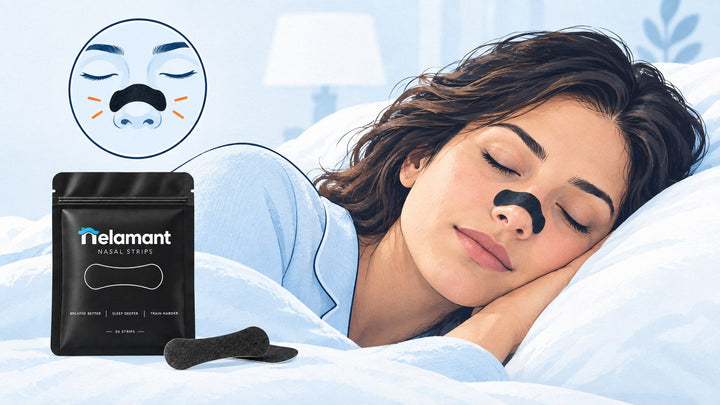
For the best chance of comfortable overnight wear, apply the strip to clean, dry skin. Oils, moisturizer, and sweat can reduce adhesion. Place it across the bridge and sidewalls as directed so it can lift the skin over the external nasal valve. Press it down firmly for a few seconds to help it bond before you lie down.
If you use a nighttime skincare routine, apply the strip after products have fully absorbed. If you shower before bed, wait until the skin is completely dry. Small details like these often matter more than brand claims when the goal is simple breathing comfort.
- Clean and dry the nose before application.
- Place the strip where it can support the front of the nose, not too high or too low.
- Press along the edges to improve adhesion.
- Remove slowly in the morning to protect skin.
- Stop using it if you get persistent redness, itching, or soreness.
Who may notice the most benefit
People who feel blocked at the front of the nose, especially when lying down, may be more likely to notice a difference. That is because the strip acts on the external nasal valve and lateral nasal wall, where small changes in support can alter the sensation of airflow. If your issue is mainly inside the nose, such as swelling from illness or allergies, the strip may feel less helpful.
Some adults with nighttime congestion report subjective improvement, but that is not the same as proving a medical outcome. The most useful question is simple: does the strip make breathing feel easier enough to improve comfort at bedtime and through the night?
When a strip is not the right answer
Use medical caution if symptoms suggest something beyond simple nighttime nasal comfort. A strip is not a fix for structural or medical problems that need evaluation.
- Children: do not use unsupervised product selection; ask a clinician first.
- Pregnancy: ask a clinician if nighttime blockage is new or worsening.
- Severe snoring or suspected apnea: seek medical assessment rather than relying on a strip.
- Persistent one-sided blockage: get checked for an underlying cause.
- Recurrent bleeding: stop use and ask for medical guidance.
- Chest symptoms or exercise dizziness: seek prompt evaluation.
If you have frequent congestion, facial pain, fever, or symptoms that keep returning, a nasal strip may be the wrong tool for the problem.
How to compare products without overbuying
For most shoppers, the best approach is to start with one product that balances comfort and adhesion rather than buying several at once. If the first strip feels too stiff, too weak, or irritating, adjust the fit or try a different support level. The goal is not maximum force; it is a comfortable, repeatable bedtime routine that supports nasal airflow without distraction.
It can also help to compare related options if you are deciding between use cases. For example, you may want to read Explore: Best Nasal Strips for Athletes: What to Look For Before You Buy for a different fit priority, or Explore: Best Nasal Strips for Breathing for Kids: Parent Checklist for Fit and Comfort if you are comparing age-specific guidance. If you are considering a different design, see Best Magnetic Nasal Strips for Breathing: What Buyers Should Compare.
Where Nelamant Air fits
Nelamant Air is a non-medicated, non-invasive external nasal-valve support option for people who want a simple night-use strip focused on comfort and overnight wear. It may be a good fit if you want a product that supports the front of the nose without drugs or internal devices. Its limits are the same as any external strip: it does not treat sleep apnea, infection, allergic inflammation, a deviated septum, or throat collapse, and results can vary based on anatomy and baseline nasal resistance.
Bottom line
The best nasal strips for better breathing at night are the ones that fit your nose well, stay on through sleep, and feel comfortable enough to use consistently. Look for reliable adhesion, gentle skin contact, and a design that supports the external nasal valve without over-tightening. If your symptoms are more than simple nighttime nasal discomfort, get medical guidance instead of trying to solve the problem with a strip alone.