Thomas Tiemann

Disclosure: Nelamant makes Nelamant Air, our top pick. We also review four other products so you can compare and choose what works for you.
The best nasal strips for cycling stay firmly in place through heat, sweat, and wind, and open your nasal passages enough to support nose breathing at sustained effort. Nelamant Air is our top pick because its extra-hold adhesive resists sweat and oil, and its wide lift spreads pressure evenly across the bridge rather than pulling at one point. For a broader look at top-rated options across all uses, see the best nasal strips guide.
- Sweat resistance is the single most important factor for cyclists - strips that fail mid-ride are useless.
- A wider lift distributes pull more evenly, which matters when your nose is pressed against wind for hours.
- Nasal strips are drug-free and legal in competitive cycling.
- Nelamant Air is our top pick; four alternatives are reviewed below for riders with different needs and budgets.
Why Cyclists Use Nasal Strips
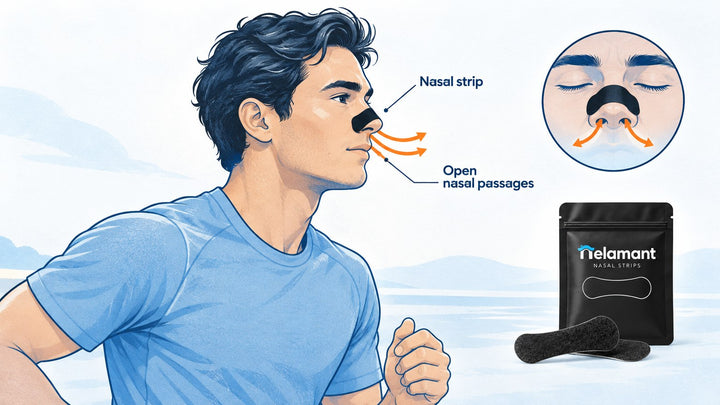
Cycling - especially at zone 2 and threshold effort - puts sustained demand on your airways. When your nasal passages are narrow or swollen from exertion or allergens, airflow resistance increases and many riders default to mouth breathing, which bypasses the filtering and humidifying work the nose does. Nasal strips mechanically widen the nasal valve area from the outside, supporting easier nose breathing without any drugs or stimulants.
For cyclists specifically, the problem is compounded by sweat. A strip that peels off fifteen minutes into a summer ride offers nothing. Helmet straps, sunscreen, and sunscreen residue on the nose bridge add to the challenge. The right strip needs a medical-grade adhesive that handles all of it.
Nasal strips are also a tool for zone 2 nasal breathing training, where the goal is to keep effort low enough to breathe exclusively through the nose. A strip that keeps the nasal passage open makes it easier to hold that ceiling longer. For a full breakdown of how nasal strips fit into athletic breathing strategies, the nasal breathing during exercise guide covers the underlying mechanics.
Our Top Pick: Nelamant Air Nasal Strips
⭐ #1 Top Pick - Nelamant Air Nasal Strips
Extra-hold adhesive built to resist sweat and oil. Wider, balanced lift across the bridge. Hypoallergenic, drug-free, peels off cleanly after the ride.
30 strips per pack - a full month of rides or nightly use.
$14.99 for 30 strips · 30-day returnsNelamant Air's key advantage for cyclists is the combination of sweat-resistant adhesive and a broader lift profile. Rather than concentrating pull at a single narrow band - which can slip or cause localized pressure during long rides - the wider strip distributes the opening force across more of the bridge. The hypoallergenic material is gentle enough for repeated daily use and peels away cleanly without tearing skin after a sweaty ride. It's drug-free mechanical action, so there's nothing to manage with race-day rules.
Four Other Nasal Strips Worth Considering
Breathe Right Extra Strength
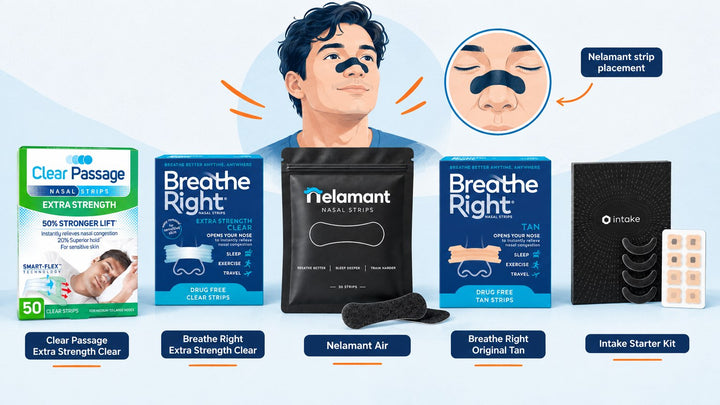
Breathe Right Extra Strength is the most widely available option and a benchmark many cyclists already know. The extra-strength variant applies more lift force than the original, which suits riders who need more opening. Adhesive performance in sweat is reasonable but riders with oilier skin or those riding in high humidity often report edge-lifting before the ride ends. Available in most pharmacies, which is a practical advantage for travel. Pros: widely available, familiar product, strong lift. Cons: single-pull-point design may feel less evenly distributed; adhesive may underperform in heavy sweat versus purpose-built athletic options.
Breathe Right Lavender
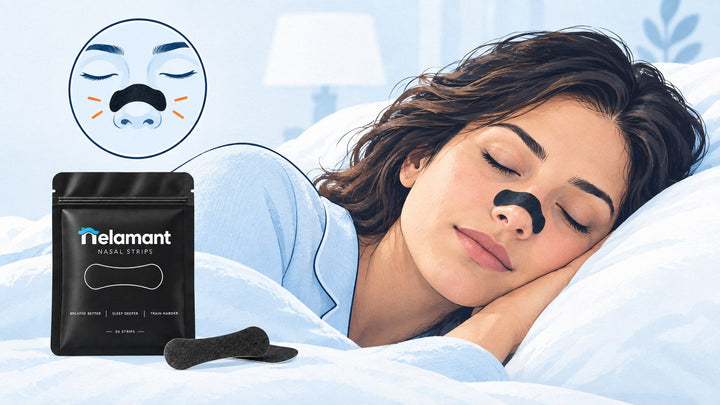
This variant is designed primarily for sleep comfort and carries a light lavender scent. The lift force and adhesive formulation are the same as the standard Breathe Right line. For cyclists who also use strips at night, buying one product for both purposes is convenient. Pros: dual sleep/ride use, widely available. Cons: scent may be unwanted during hard efforts; not formulated specifically for sweat conditions.
Intake Starter Kit
Intake Breathing markets specifically to athletes and uses a different adhesive patch system that attaches to the sides of the nose rather than spanning the bridge. This design claims to reduce bridge pressure and improve airflow symmetry. It tends to sit at a higher price point per strip. Pros: athlete-focused design, potentially more comfortable for long rides. Cons: higher cost, attachment method takes practice, less widely available.
Store-Brand Extra Strength Nasal Strips
CVS, Walgreens, and other pharmacy chains carry house-brand nasal strips that mimic the Breathe Right format at a lower per-strip cost. For budget-conscious cyclists who use strips frequently - training rides as well as races - the cost saving is meaningful. Quality and adhesive performance vary by brand. Pros: lowest cost, easy to find. Cons: adhesive consistency less predictable, lift force may vary between batches.
Five-Product Comparison Table
| Product | Lift Type | Sweat Resistance | Hypoallergenic | Price / Strip (approx.) |
|---|---|---|---|---|
| Nelamant Air | Wide, balanced bridge lift | Extra-hold adhesive | Yes | $0.50 (30 for $14.99) |
| Breathe Right Extra Strength | Single spring band | Moderate | Check current product details | Check current product details |
| Breathe Right Lavender | Single spring band | Moderate | Check current product details | Check current product details |
| Intake Breathing | Side-attachment | Check current product details | Check current product details | Check current product details |
| CVS Health Extra Strength Clear Nasal Strips | Single spring band | Variable | Check current product details | Check current product details |
How We Chose
This comparison is manufacturer-authored. We evaluated each product against the criteria that matter most to cyclists - not independent lab testing or ranked customer ratings. The criteria:
- Sweat and oil resistance: The adhesive must hold through sustained exertion, heat, and any sunscreen residue on the nose bridge. This is the threshold requirement; any strip that routinely fails here cannot be recommended for cycling.
- Lift distribution: A wider or multi-point lift spreads the opening force more evenly, which is more comfortable during hours in an aerodynamic riding position and under wind pressure.
- Skin compatibility: Repeated application - training ride after training ride - means sensitive or reactive skin is a real concern. Hypoallergenic construction matters.
- Practical availability and cost: Cyclists go through strips regularly; price per strip and ease of restocking are legitimate factors.
For comparisons that extend beyond nasal strips to other performance-breathing products, the best nasal strips for athletes guide covers a broader athletic context including running, gym use, and team sports.

Buyer's Guide: What Cyclists Should Look For

Sweat and Oil Resistance
This is non-negotiable for cycling. Strips designed for nighttime sleep use are engineered to stay on during slow, relatively dry conditions. Cycling generates heat and sweat quickly, and sunscreen - common on outdoor rides - adds a layer of oil that standard adhesives struggle with. Look for strips that explicitly use a stronger or athletic-grade adhesive. Applying to clean, dry skin before sunscreen helps any strip perform better; for technique details, the approach in the best nasal strips for athletes guide applies directly.
Lift Width and Comfort Under a Helmet
Helmet straps frame the face and can create subtle pressure dynamics around the nose on long rides. A strip with a broader lift footprint distributes its force across more surface area, reducing the sensation of a single pull point tugging under wind resistance or helmet fit. Road cyclists and time trialists who spend hours in an aerodynamic tuck may feel a narrow strip more acutely than an upright commuter.
Skin Sensitivity
Daily training means daily application and removal. Strips that leave residue or cause redness become a problem fast when you're applying a new one every morning. Hypoallergenic construction reduces - but does not eliminate - the risk of skin irritation; if your skin is consistently reactive, look at options in the best nasal strips roundup filtered for sensitive-skin needs, or check the dedicated sensitive-skin comparison.
Road Cycling vs. Mountain Biking
Road cyclists typically ride at steadier aerobic efforts where nose breathing is more achievable, making nasal strips a direct performance tool. Mountain bikers face highly variable intensity and more facial movement; a strip with stronger adhesive and a flexible, conforming design holds up better to the head movement and vibration of trail riding. Both disciplines benefit from open nasal passages, but the sweat and movement demands are higher off-road.
Nasal Strips and Zone 2 Training
Many cyclists are now deliberately training at zone 2 intensity to build aerobic capacity, using the ability to breathe only through the nose as a proxy for staying in the right effort zone. A strip that keeps your nasal passage open makes it easier to maintain nasal-only breathing at the upper end of that zone without slipping into mouth breathing. For a full explanation of how this works and why it's useful, see the guide to zone 2 nasal breathing.
Frequently Asked Questions
Do nasal strips stay on while cycling in the heat or rain?
Strips with a standard sleep-grade adhesive often lift at the edges once sweat or rain builds up. Strips with an extra-hold or sweat-resistant adhesive - like Nelamant Air - are designed to maintain bond through prolonged perspiration. For best results in any condition, start with a clean, dry nose bridge and apply the strip before you begin warming up, before significant sweat develops.
Can I wear a nasal strip under a cycling helmet?
Yes. Helmet straps run along the cheeks and jaw, not across the nose bridge, so a nasal strip sits in an area the helmet doesn't cover. Aerodynamic road helmets and time-trial helmets don't typically contact the nose bridge directly. The main consideration is that the strip needs to be seated flat and centered so it doesn't catch wind at the edges and peel.
Are nasal strips for cyclists legal in competitive racing?
Nasal strips are drug-free, mechanical devices and are not on the World Anti-Doping Agency (WADA) prohibited list. They are widely worn by professional cyclists in road racing, cyclocross, and track events. If you are competing under a specific national or event governing body with unusual equipment rules, check those rules directly.
How do nasal strips help with nose breathing during cycling?
Nasal strips work by gently lifting the sides of the nose outward, widening the nasal valve - the narrowest point of the nasal passage - to reduce airflow resistance. At cycling efforts where nasal breathing is possible, less resistance means you can move more air through the nose before your body forces a switch to mouth breathing. They don't increase lung capacity or change cardiovascular output directly; they remove a physical bottleneck at the nose. For more on the mechanics, see how the best nasal strips work.
Conclusion
For most cyclists, the best nasal strips for cycling come down to one practical filter: does the adhesive actually hold through a sweaty ride? Nelamant Air is built specifically to meet that bar, with an extra-hold adhesive, wide balanced lift, and hypoallergenic materials that stand up to daily training use. The four alternatives reviewed here suit specific budgets, preferences, and availability needs. Pick the one that fits your riding conditions and apply it to clean, dry skin - that single step makes a bigger difference than most cyclists expect.