Thomas Tiemann

Disclosure: Nelamant makes Nelamant Air, our top pick. The other four products are included to give you a complete, honest comparison for this use case.
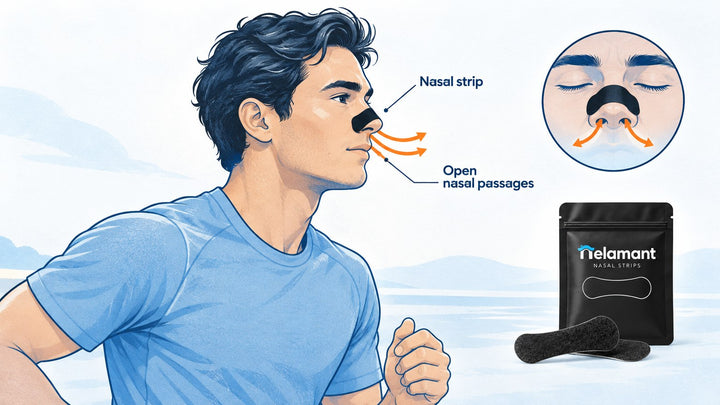
The best nasal strips for the gym are the ones that stay put through a full session - warmup, heavy sets, and a sweaty cooldown - and open your nasal passages wide enough to actually support easier nose breathing under load. Most strips designed for sleep are built for still, dry conditions; the gym demands more from the adhesive. If you want a broader overview of the category first, the best nasal strips guide covers all use cases side by side.
- Sweat-resistant adhesive is the single most important spec for gym use - a strip that peels mid-set is useless.
- A wider, more balanced lift distributes the opening force across the bridge rather than pulling from one point, which matters when you're moving dynamically.
- Hypoallergenic materials reduce the chance of post-workout skin irritation when you peel off after training.
- Nasal strips support easier nose breathing mechanically; they don't replace proper breathing technique during lifts.
- Nelamant Air is our top pick for gym use because of its extra-hold adhesive and broad lift design.
#1 Top Pick - Nelamant Air Nasal Strips
⭐ Top Pick for Gym & Lifting
Nelamant Air Nasal Strips
Nelamant Air's extra-hold adhesive is formulated to resist sweat and oil - two things a gym session produces in abundance. The strip uses a wider, more balanced lift across the bridge of the nose rather than a single pull point, so it moves with your head during squats, cleans, or box jumps without shearing off the skin. Materials are hypoallergenic, and the strip peels off cleanly after training without leaving sticky residue. Drug-free, single-use, 30 strips per pack.
Best for: Anyone who needs reliable all-session adhesion and a gentle post-workout peel - from casual gym-goers to CrossFit athletes.
Pros: Extra-hold adhesive resists sweat and oil; broader lift for more even airflow support; hypoallergenic and residue-free removal; drug-free.
Cons: Single-use only; adhesive strength means deliberate removal is best for sensitive skin.
$14.99 · 30 strips · 30-day returns
Shop Nelamant Air →#2 Breathe Right Extra Strength
Breathe Right Extra Strength is the most widely recognised nasal strip on the market and a common starting point for athletes curious about nasal strips for lifting. The spring-tension band is stiffer than the original version, which delivers a more forceful opening lift. Adhesive performance in sweaty conditions is; some users report edge lift during high-output sessions. The tan colour option blends reasonably well on most skin tones under gym lighting.
Best for: Anyone already familiar with Breathe Right who wants a stronger lift than the standard version.
Pros: Widely available; strong spring tension; established product with broad name recognition.
Cons: Adhesive not specifically marketed for sweat resistance; single-point lift design concentrates tension; price per strip.
#3 Intake Breathing
Intake Breathing takes a different structural approach: rather than a spring band running across the nose, the design uses to support the nasal walls from outside. This gives it a distinct feel compared with a traditional spring strip. For gym use, the key question is adhesive durability under movement and sweat, which is. Pricing runs.
Best for: Lifters who find standard spring-band strips uncomfortable or who want to try a structural alternative.
Pros: Different mechanical approach may suit users who dislike spring-band tension.
Cons: Less familiar format requires a short adjustment period; availability; cost per strip.
#4 Breathe Right Original (Standard)
The original Breathe Right strip uses a lighter spring tension than the Extra Strength version, making it a reasonable option for lower-intensity training days or for people who find stronger strips uncomfortable on their nose bridge. Adhesive hold is standard-grade, which may be adequate for moderate gym sessions but less reliable through prolonged high-sweat output. It's widely available and typically the lowest-priced Breathe Right option.
Best for: Light to moderate training sessions where adhesive demands are lower; first-time nasal strip users exploring fit before committing to a stronger option.
Pros: Accessible price point; easy to find; lighter tension for sensitive noses.
Cons: Lighter lift may underperform during heavy or high-intensity work; adhesive not rated for high-sweat use.
#5 Store-Brand or Generic Nasal Strips
Pharmacy own-brand strips (sold under store labels by major chains) are generally modelled on the basic spring-band format at a lower cost per strip. Quality varies by manufacturer, and adhesive performance in gym conditions has not been specifically confirmed for most store-brand options. For occasional or casual gym use where cost is the priority, they're worth considering - but for regular lifting sessions with heavy sweat output, adhesive reliability is the main risk.
Best for: Budget-conscious occasional gym users who want to try nasal strips before investing in a purpose-built option.
Pros: Lowest cost per strip; widely available; no commitment to a branded product.
Cons: Variable adhesive quality; not designed or marketed for sweat-heavy conditions; lift design varies.
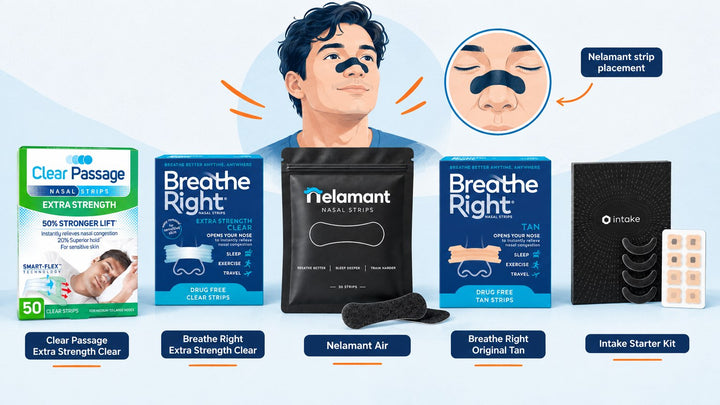
Five-Strip Comparison Table
| Strip | Adhesive Hold | Lift Style | Sweat Resistance | Best For | Price / Strip |
|---|---|---|---|---|---|
| Nelamant Air | Extra-hold; resists sweat & oil | Wide, balanced bridge lift | Designed for it | All gym sessions; lifting; CrossFit | ~$0.50 |
| Breathe Right Extra Strength | Standard+ | Single-point spring tension | Not specifically rated | General athletics; moderate sweat | Check current product details |
| Intake Breathing | Check current product details | Check current product details | Check current product details | Users wanting non-spring alternative | Check current product details |
| Breathe Right Original | Standard | Single-point spring tension (lighter) | Not specifically rated | Light training; first-time users | Check current product details |
| CVS Health Extra Strength Clear Nasal Strips | Variable | Basic spring band | Not rated | Casual/occasional gym use | Check current product details |

How We Chose
This is a manufacturer-authored comparison based on publicly available design and specification information, not independent lab testing or a ranked customer-rating system. The criteria used to evaluate each strip reflect what actually matters in a gym environment: adhesive formulation relative to sweat and oil exposure, lift geometry (how force is distributed across the nose bridge), skin compatibility after repeated use and warm-skin removal, and whether the product is marketed or designed for athletic conditions.
Nasal strips are an external, mechanical device - they open the nasal valve area by gently lifting the sides of the nose, which supports airflow. They don't increase lung capacity or affect cardiovascular output directly. If you train across multiple disciplines or want broader athletic context, the best nasal strips for athletes guide covers a wider range of sport types and conditions.
Buyer's Guide: What Gym-Goers Need in a Nasal Strip
A nasal strip that works well on a dry, still nose at bedtime faces completely different conditions during a lifting session. Skin temperature rises, sweat output increases, and the strip moves with every squat, press, and pull. Whether you're running through nasal strips for CrossFit WODs or steady strength work, three factors separate a strip that stays useful from one that becomes a distraction.
Understanding how breathing mechanics interact with weightlifting also helps: good nasal breathing during training supports a more controlled pressure cycle through your sets. The full guide to how to breathe while lifting weights covers technique in detail - nasal strips can support that process by keeping your airway open, but they work alongside technique, not instead of it.
Adhesion Under Sweat
Standard nasal strip adhesives are designed for clean, dry skin at rest. Once sweat and skin oils are involved, the bond weakens and edge lift begins - the strip stays attached at the centre but curls up on both ends, losing most of its structural effect. An adhesive specifically formulated to resist sweat and oil maintains its bond through longer and more intense sessions. Apply any strip to clean, dry skin before you start warming up rather than mid-session to give the adhesive time to seat properly.
Lift Width and Airflow
The geometry of the lift matters more during dynamic movement than it does during sleep. A narrow, single-point lift concentrates spring tension at one spot on the bridge; a wider strip distributes that opening force more evenly across the nasal sidewalls. During compound movements - deadlifts, overhead press, squat - your head position changes and your facial muscles engage, which can shift a narrow strip. A broader contact area is more stable under those conditions. If you want a direct comparison of the strongest lift options on the market, the strongest nasal strips guide breaks that down specifically.
Skin Comfort and Removal After Training
Post-workout skin is warmer, more sensitive, and more likely to be irritated by aggressive adhesive removal. Hypoallergenic materials reduce the base risk of a skin reaction, but no strip guarantees zero reaction for every person. Peeling slowly from one edge, working toward the other rather than pulling straight off, minimises friction on warm post-exercise skin. Residue-free removal is a practical advantage - you don't want to arrive at the office shower area still picking adhesive off your nose bridge.

Ready to train with a strip that stays on?
$14.99 for 30 strips · 30-day returns
Shop Nelamant Air →Frequently Asked Questions
Will nasal strips stay on while I'm sweating through a heavy workout?
It depends on the adhesive. Standard sleep-oriented strips often begin to edge-lift once sweat builds up, especially around the sides. Strips with an adhesive formulated to resist sweat and oil - like Nelamant Air - hold more reliably through a full gym session. Applying to clean, dry skin before you start (not once you're already warm) also makes a meaningful difference to how long the bond lasts.
Are nasal strips safe to wear during CrossFit or high-intensity training?
Yes, for most healthy adults. Nasal strips are drug-free external devices that mechanically support the nasal opening - there's nothing pharmacological happening. They don't restrict breathing, alter heart rate, or affect any physiological variable other than nasal airflow resistance. If you have a skin condition or nasal injury, check with a clinician before using any adhesive product on that area.
Can nasal strips actually improve my breathing during lifts?
They can support easier nose breathing by reducing the resistance at the nasal valve - the narrowest point of the nasal airway. If nasal resistance is what's pushing you to mouth-breathe during a set, a strip that opens the passage more fully can help you stay on nasal breathing longer. They don't increase lung capacity or change how much oxygen your muscles receive. Think of them as removing a partial blockage, not as a performance enhancer. The best nasal strips for athletes guide discusses the athletic use case in more depth.
How do I remove a nasal strip after a sweaty gym session without irritating my skin?
Wet the strip edges gently with warm water first - this softens the adhesive bond significantly. Then peel slowly from one side toward the other, keeping the strip close to flat against your skin rather than pulling upward at an angle. Post-workout skin is warmer and slightly more sensitive, so a slower peel is worth the extra ten seconds. A strip with a residue-free adhesive, like Nelamant Air, leaves nothing behind to scrub at afterward.
The Bottom Line
For gym use and lifting, the best nasal strips for gym sessions are the ones built around adhesive performance in sweaty conditions - everything else is secondary. A strip that peels off at rep five of your working set solves nothing. Nelamant Air's extra-hold adhesive, wider bridge lift, and hypoallergenic materials make it the most purpose-aligned option in this comparison for regular training. The four alternatives are worth knowing, and Breathe Right Extra Strength in particular is a solid widely-available fallback if Nelamant Air isn't immediately accessible. For a complete look at the full market across all use cases, the best nasal strips overview is the place to start.