Thomas Tiemann

Disclosure: Nelamant makes Nelamant Air, our top pick.
The best nasal strips for oily skin use a strong, skin-tolerant adhesive that resists the oil barrier your skin naturally produces - because a strip with an average adhesive simply won't last the night. Oily skin creates a layer between the adhesive and your skin that breaks the bond within hours, or even minutes. The picks below are chosen specifically for that challenge. For a broader look at the full category, see the best nasal strips overall.
- Oily skin disrupts the adhesive bond - skin prep and adhesive strength both matter.
- Extra-hold adhesives and wider lift designs perform better on oily skin than standard strips.
- Washing and thoroughly drying your nose bridge before applying is the single biggest factor in how long a strip stays on.
- Nelamant Air's extra-hold adhesive is our top pick for overnight wear on oily skin.
- If strips still won't hold, a stronger-lift option may help - see the guide to the strongest nasal strips.
Why Oily Skin Makes Nasal Strips Fall Off
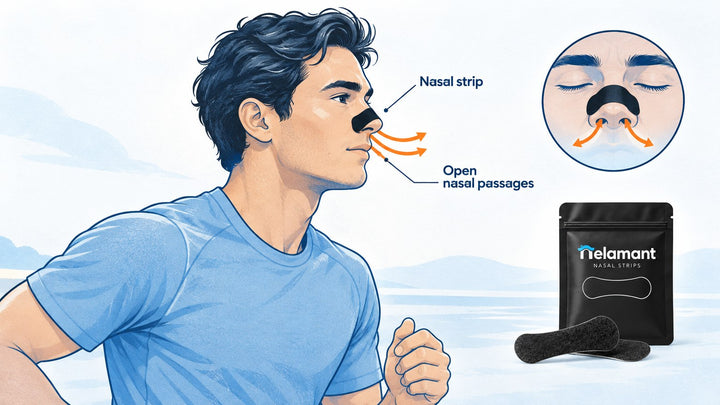
Nasal strips work by bonding to the surface of your skin and springing outward, physically pulling the sides of your nostrils apart to open the nasal passage. That bond is everything. When your skin produces excess sebum, or when sweat mixes with skin oils overnight, a thin film forms on the nose bridge. Standard adhesives struggle to grip through that film, and by 2 or 3 a.m. the strip has peeled back or shifted entirely.
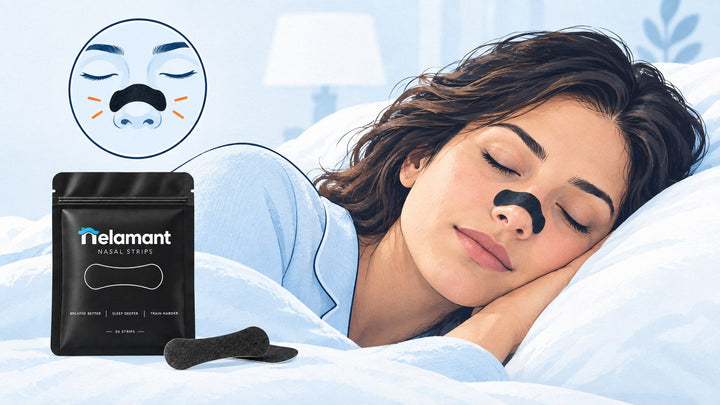
Heat makes it worse. Body warmth during sleep accelerates oil production, so a strip that feels secure at bedtime may be halfway off by morning. Humidity and sweat during workouts create the same effect faster. The fix is two-part: prepare the skin surface properly, and choose a strip with an adhesive rated for that condition. If you've already tried better skin prep and strips are still sliding, the full breakdown in why nasal strips stop sticking covers every mechanical reason and fix.
Our Top Pick for Oily Skin: Nelamant Air
Nelamant Air is built around two features that matter most for oily skin: an extra-hold adhesive formulated to resist sweat and oil through the night, and a wider, more balanced lift across the full bridge of the nose rather than a single pull point. That wider contact distributes the adhesive load, which means no single edge takes all the stress when your skin gets slick.
The materials are hypoallergenic and designed to peel off cleanly without sticky residue - useful for oily or acne-prone skin where harsh removal can aggravate the surface. Drug-free, single-use, 30 strips per pack.
Best for: Overnight wear on oily or combination skin, sweaty workouts, anyone who has had standard strips slide off before morning.
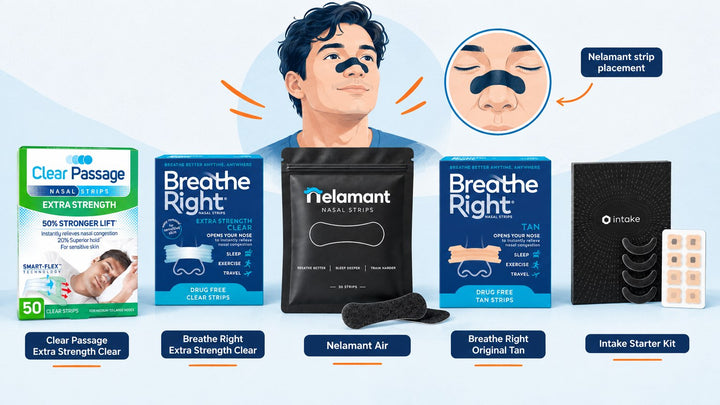
Four Alternatives Worth Considering
Breathe Right Extra Strength Tan
Breathe Right's extra-strength variant uses a stronger adhesive than the original and is one of the most widely available options for people whose skin has caused standard strips to fail. The spring band provides a firm lift, though the contact patch is narrower than Nelamant Air's wider-spread design, which can mean earlier edge lift on very oily skin.
Pros for oily skin: Widely available; stronger hold than original; established product.
Cons for oily skin: Narrower contact footprint; removal can leave residue.
Intake Starter Kit
Intake combines adhesive tabs on the sides of your nose with a reusable magnetic band. It is an external dilator, not a conventional one-piece nasal strip.
Pros: A reusable band offers a different external-support format.
Cons: The tabs are disposable, and the system involves more pieces than a single strip.
Breathe Right Sport
Breathe Right Sport is an external strip designed for sweaty activity. Its manufacturer describes moisture-channeling slits and sweat-resistant adhesive.
Pros: A sport-specific format to compare for training.
Cons: It still depends on skin adhesion and is single-use; it is not an adhesive-free alternative.
CVS Health Extra Strength Clear Nasal Strips
CVS sells a named extra-strength clear strip in a 50-count pack. Its listing describes a drug-free external strip and sensitive-skin testing; compare the current label and local price before buying.
Pros: A pharmacy-label alternative with a clearly identified pack size.
Cons: Retail availability and prices vary; extra strength does not establish better fit for your nose.
Five-Product Comparison
| Product | Lift style | Adhesive strength | Hypoallergenic | Pack size | Price |
|---|---|---|---|---|---|
| Nelamant Air | Wide, balanced bridge lift | Extra-hold (sweat & oil resistant) | Yes | 30 strips | $14.99 |
| Breathe Right Extra Strength Tan | Check current product details | Extra strength | Check current product details | Check current product details | Check current product details |
| Intake Starter Kit | Check current product details | Check current product details | Check current product details | Check current product details | Check current product details |
| Breathe Right Sport | Check current product details | Check current product details | Check current product details | Check current product details | Check current product details |
| CVS Health Extra Strength Clear Nasal Strips | Check current product details | Extra strength | Check current product details | Check current product details | Check current product details |
How We Chose
This list is a manufacturer-authored design and specification comparison, not independent lab testing or a customer-rating ranking. The selection criteria were chosen to reflect the specific problems oily skin creates for nasal strip users:
- Adhesive hold on oily and sweaty skin. Does the manufacturer publish an oily-skin or sweat-resistance claim? Does the adhesive formulation differ from a standard-strength version?
- Lift design. A wider contact footprint distributes adhesive load more evenly and reduces the chance of one edge peeling first when skin gets slick.
- Skin tolerance. Oily skin is often also acne-prone or reactive. Hypoallergenic materials and clean removal matter more here than for other skin types.
- Single-use hygiene. All strips reviewed are single-use. Reusing any nasal strip on oily skin re-introduces oil and bacteria to a used adhesive - the bond will be weaker and the hygiene risk higher.

Getting the Best Adhesion on Oily Skin
Even the strongest adhesive can fail if the skin surface isn't prepared. These steps make a measurable difference in how long nasal strips that stay on all night actually stay on:

- Wash the nose bridge with a mild, oil-removing cleanser. This removes the surface sebum film that breaks adhesive bonds. A full face wash works; a targeted wipe with a gentle cleanser also works.
- Dry completely - and wait. Patting dry is not enough on its own if your skin starts re-oiling quickly. Wait at least 60 seconds after drying before applying the strip. Some people with very oily skin find that applying right after a shower, once the initial post-wash oil has had no time to return, gives the best hold.
- Press the strip firmly across the full length, including the ends. The edges are the first place a strip lifts on oily skin. Spending five seconds pressing each end firmly after initial placement makes a real difference.
- Skip moisturizer, sunscreen and skincare products on the strip area. Any product between the adhesive and your skin weakens the bond significantly. Apply skincare everywhere except the nose bridge if you plan to wear a strip.
- Use a strip with extra-hold adhesive. Nelamant Air's adhesive is designed for overnight resistance to sweat and oil, which means the prep steps above compound with a stronger starting bond rather than working against an average one.
For a deeper look at every reason strips stop adhering - including humidity, product residue and skin type factors - the full guide to nasal strips not sticking covers each cause and fix.
If Adhesion Is Still the Problem, Check the Strip Strength
If you've tried proper skin prep and switched to an extra-hold strip and adhesion is still inconsistent, the issue may be lift strength rather than adhesive chemistry. A strip with more spring tension sometimes maintains contact better on difficult skin because the mechanical force is distributed differently. The guide to the strongest nasal strips compares high-lift options and explains when extra strength helps versus when it becomes uncomfortable.
Sensitive Skin and Oily Skin Overlap
Oily skin and sensitive or reactive skin often go together - particularly for people with acne-prone complexions or combination skin. If morning redness, irritation or adhesive residue is a concern alongside the adhesion problem, the picks and preparation tips in the guide to the best nasal strips for sensitive skin address that overlap directly, including what to look for in hypoallergenic materials and gentle removal.
$14.99 for 30 strips · 30-day returns
Shop Nelamant Air →Frequently Asked Questions
Why do nasal strips fall off oily skin overnight?
Sebum - the oil your skin naturally produces - creates a thin film on the nose bridge that adhesives struggle to grip through. Body heat during sleep accelerates oil production, so a strip that feels secure at bedtime may have lost its bond by early morning. Choosing an extra-hold adhesive and washing the skin before application are the two most effective countermeasures.
How should I prep my skin before applying a nasal strip so it stays on all night?
Wash the nose bridge with a mild cleanser to remove surface oil, then pat the skin completely dry and wait 60 seconds before applying. Skip any moisturizer, sunscreen or skincare product on that area. Press the strip firmly end-to-end after placing it, paying extra attention to the edges where lifting starts first. These steps give nasal strips that stay on all night the best chance of doing exactly that.
Are there nasal strips made specifically for oily or sweaty skin?
Some manufacturers formulate their adhesive to resist moisture and oil - Nelamant Air specifically describes its extra-hold adhesive as designed to resist sweat and oil through the night. Most standard nasal strips do not publish this kind of claim. When comparing options, look for explicit sweat-resistance or extra-hold language rather than assuming all strips perform equally on oily skin.
Can I use a nasal strip if I've applied moisturizer or sunscreen?
Applying a strip over moisturizer, sunscreen or any skin-care product significantly weakens adhesion - the product sits between the adhesive and your skin and prevents a clean bond. If you use skincare at night, apply it everywhere except the nose bridge, or use it earlier in the evening and allow it to fully absorb before applying the strip. Any visible product residue on the bridge should be gently removed and the skin dried before application.
Do stronger-adhesive strips irritate oily or acne-prone skin?
A stronger adhesive does not automatically mean more irritation - the material composition matters more than adhesive strength for skin reactivity. Hypoallergenic materials, like those used in Nelamant Air, are designed to be tolerated by reactive skin. That said, hypoallergenic does not mean nobody can react; if you notice consistent redness or irritation at the adhesive site, discontinue use. For options specifically evaluated for reactive skin, see the guide to the best nasal strips for sensitive skin.
The Bottom Line
Finding the best nasal strips for oily skin comes down to two things working together: a strip with an adhesive built to resist the oil and sweat your skin produces, and a skin-prep routine that gives that adhesive a clean surface to grip. Nelamant Air's extra-hold adhesive and wide-contact lift design address both sides of that equation. Prepare your skin, choose a strip rated for the condition, and overnight adhesion stops being a nightly lottery.