Thomas Tiemann

This article is for general information, not medical advice.
A deviated septum means the wall of cartilage and bone dividing your two nostrils sits off-center, narrowing one nasal passage and making it harder to breathe through that side. Many people live with a mild deviation without knowing it; others deal with persistent congestion, noisy breathing, or disrupted sleep because of it. The good news is that several non-surgical approaches can meaningfully ease symptoms before - or instead of - considering surgery.
- A deviated septum is a structural misalignment of the nasal wall; severity ranges from barely noticeable to significantly obstructive.
- The most common symptoms are one-sided nasal blockage, congestion that does not respond well to medication, and disrupted sleep or snoring.
- Non-surgical options - saline rinse, corticosteroid sprays, antihistamines, and external nasal dilator strips - can reduce symptom burden without correcting the deviation itself.
- Nasal strips support the nasal opening from outside; they ease airflow but do not straighten or reposition the septum.
- Surgery (septoplasty) is worth discussing with an ENT when symptoms remain disruptive despite conservative management.
What Is a Deviated Septum?
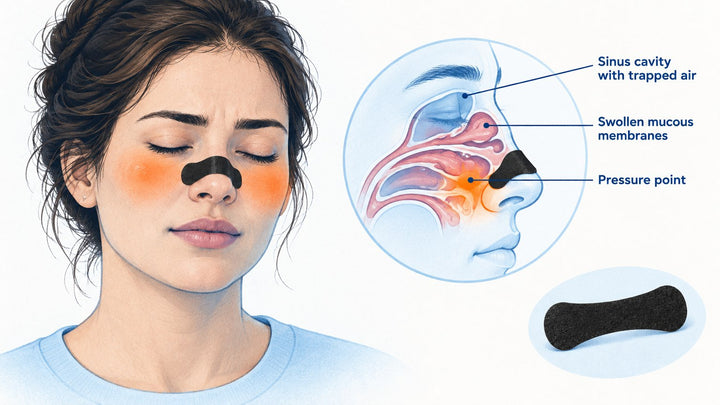
The nasal septum is the thin internal partition running down the center of your nose, made of cartilage at the front and bone toward the back. In an ideal arrangement it sits exactly on the midline, giving both nostrils roughly equal space. In a deviated septum, the partition leans or curves to one side - sometimes only slightly, sometimes enough to nearly block one nasal passage entirely.
The deviation can affect the lower cartilage, the upper bony portion, or both, and the shape of the obstruction varies: a smooth curve, a sharper bend, or a bony spur that juts into the airway. Because the nose is the primary filter and conditioner of the air you breathe, even a moderate narrowing can have a noticeable effect on day-to-day comfort. For a broader look at what can block nasal airflow and practical ways to address it, see the full guide to how to unblock your nose.
How common is a deviated septum?
Some degree of septal deviation is common. Most mild deviations cause no symptoms at all; it is the moderate-to-severe cases, or deviations combined with other nasal issues like swollen turbinates, that produce the congestion and breathing complaints people actually seek help for.
Deviated Septum Symptoms
Symptoms tend to be one-sided or asymmetric, which is a useful clue that structure - rather than allergy or infection alone - may be contributing.
- Persistent blockage in one nostril. The narrower side stays congested even when you are otherwise well.
- Congestion that shifts but never fully clears. You may find one side blocks when you lie on a particular side at night.
- Noisy or effortful breathing through the nose, especially during exercise or when lying down.
- Snoring. A restricted nasal passage increases airflow resistance, which can trigger or worsen snoring.
- Mouth breathing during sleep, because your nose cannot handle the required airflow comfortably.
- Recurrent or one-sided nosebleeds, often caused by a bony spur that dries out the mucous membrane on the narrow side.
- Facial pressure or headache, particularly around the bridge of the nose or sinuses on the affected side.
- Disrupted sleep from congestion and mouth breathing, leading to waking feeling unrefreshed.
Symptoms that overlap with other conditions
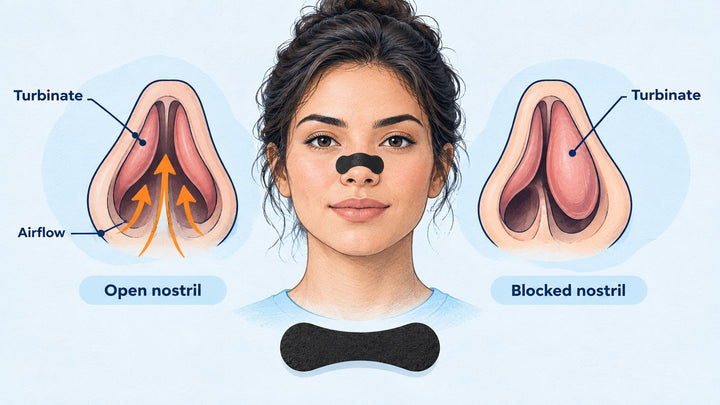
Persistent one-sided blockage is not always a deviated septum. Enlarged turbinates (the scroll-shaped bones that line the nasal walls) create very similar symptoms and often occur alongside a deviation. Nasal valve collapse - where the side wall of the nostril caves inward on inhale - is another structural cause that is frequently confused with, or coexists with, a deviated septum. Nasal polyps, chronic sinusitis, and allergic swelling can all produce overlapping congestion patterns. If you cannot identify which is driving your symptoms, an ENT evaluation is the most reliable path to a clear answer.
What Causes a Deviated Septum?
There are two broad origins: you were born with it, or something moved it.
- Congenital. The septum can develop asymmetrically during fetal growth or shift slightly during the pressure of birth. Many people never know.
- Injury. A broken nose from sport, a fall, or a direct blow is the most common acquired cause. Even impacts that do not fracture the nasal bones can displace the softer cartilage.
- Gradual change over time. Cartilage is not static; it can shift, bow, or develop spurs as you age, sometimes worsening a deviation that was previously mild.
There is no lifestyle factor known to cause a deviated septum, and there is nothing you did - or failed to do - that produced it.
How a Deviated Septum Affects Breathing
Airflow through the nose behaves like water through a pipe: narrow the channel and resistance increases, requiring more effort to pull the same volume of air through. On the deviated side, that narrowing forces air to travel a tighter, more turbulent path. The result is the sensation of working harder to breathe through the nose, which your body often solves by switching to the mouth - particularly during sleep or exercise when demand rises.
The increased resistance on one side can also set up the conditions for snoring. When nasal airflow is restricted, the soft tissues of the throat and palate are more likely to vibrate under the lower-pressure airstream your lungs must generate to compensate. This is why snoring and deviated septum often go together, even though the deviation is in the nose, not the throat.
One important clarification: external nasal strips support the soft outer wall of the nostril to reduce collapse on inhalation - they work at the nasal valve, not on the septum itself. They cannot reposition cartilage or bone. What they can do is help open the nasal passage enough to ease the overall effort of nose breathing, which matters if the valve area is adding to the obstruction created by the deviated septum.
Non-Surgical Options for a Deviated Septum
Surgery corrects the deviation. Non-surgical options manage the symptoms it causes. That distinction is worth keeping in mind: the approaches below will not move your septum back to the midline, but they can make breathing noticeably more comfortable on a daily basis - and for many people that is enough.
- Saline nasal rinse. Rinsing once or twice daily with a saline solution thins and clears mucus, reduces mucosal swelling, and removes allergens and irritants that compound the blockage. Always use sterile, distilled, or previously boiled and cooled water - never tap water directly - to avoid introducing pathogens into the sinuses.
- Nasal corticosteroid sprays. These prescription-strength or over-the-counter sprays reduce inflammation in the nasal lining, which can partially open the narrower side even when the septum itself has not moved. They work best with consistent daily use. Follow the product label for duration; prolonged use beyond recommended periods can have side effects and should be discussed with a clinician.
- Antihistamines (if there is an allergy component). When allergic rhinitis is adding mucosal swelling on top of a structural narrowing, antihistamines can remove that additional layer of congestion. They do not help if allergy is not involved.
- Oral or topical decongestants - with caution. Short-term use can open a blocked side noticeably. Topical decongestant sprays (oxymetazoline and similar) should not be used for more than a few days consecutively; longer use can cause rebound congestion that leaves you worse off than you started.
- External nasal dilator strips. Strips applied across the bridge of the nose lift the nasal sidewalls outward, reducing collapse at the nasal valve on inhalation. This reduces total nasal resistance - the combined effect of the deviated septum and any valve narrowing - and can make nose breathing easier, especially at night and during exercise. Nelamant Air nasal strips use a broader, more even lift across the bridge rather than a single pull point, which can help when one side of the nasal passage is already working harder. They stay on through the night with an extra-hold adhesive formulated to resist sweat and overnight movement, and the materials peel off cleanly. For a detailed look at which strips perform best with structural nasal issues, see the guide to best nasal strips for a deviated septum.
What nasal strips can and cannot do
External nasal strips act only on the outside of the nasal opening. They lift the soft lateral wall of the nostril to reduce inward collapse during inhalation - a mechanical assist for a structural bottleneck. They do not reposition cartilage, shrink swollen tissue, or treat the septum in any way. Think of them as reducing one part of the total resistance so breathing through the nose feels easier, not as a correction of the underlying anatomy.
Nelamant Air Nasal Strips
Broader lift, extra-hold adhesive, - for easier nose breathing day and night.
$14.99 for 30 strips · 30-day returns
Shop Nelamant AirSeptoplasty: When Surgery Is the Right Path
Septoplasty is the surgical procedure that repositions or removes the displaced portions of cartilage and bone to restore a more central partition. It is performed under general or local anesthesia, typically as an outpatient procedure, and recovery usually involves several days of congestion and swelling before a gradual improvement in airflow.
Surgery becomes worth a serious conversation when:
- Symptoms are severe enough to disrupt sleep, exercise, or daily function consistently.
- Conservative management - corticosteroids, rinses, strips - provides inadequate relief over time.
- Recurring sinus infections appear to be driven by poor drainage related to the septal position.
- An ENT has confirmed that the deviation is the primary anatomical cause of symptoms.
Septoplasty specifically addresses the septum. If other structural issues - turbinate enlargement, nasal valve weakness - are present, those may be addressed at the same time or separately. This is a conversation to have with a board-certified otolaryngologist who can examine your specific anatomy.

When to See a Doctor for Nasal Symptoms
Most deviated septum symptoms are a quality-of-life issue rather than a medical emergency, but some signs warrant a prompt appointment rather than continued self-management. See the detailed guide to when to see a doctor for nasal congestion for a full breakdown, and book an appointment if you notice any of the following:

| Symptom or sign | Why it matters |
|---|---|
| Severe or recurrent nosebleeds | May indicate mucosal damage or a bony spur causing repeated trauma |
| Complete blockage of one nostril | Warrants structural evaluation; may not respond to medication alone |
| Recurring sinus infections (more than 2–3 per year) | Poor drainage from structural obstruction can create a cycle of infections |
| Symptoms unresponsive to 4–6 weeks of conservative care | Signals that medical or surgical evaluation may be the next appropriate step |
| Loud snoring with witnessed pauses in breathing or gasping | May indicate obstructive sleep apnea, which requires separate diagnosis and treatment |
| Facial pain, swelling around the eye, or fever with sinus symptoms | Can indicate a sinus infection spreading beyond the sinuses - seek prompt care |
Do not stop a prescribed medication based on this article. If you are already being treated by a clinician for nasal or sinus conditions, discuss any changes to your management with them first.
Frequently Asked Questions
Can a deviated septum fix itself without surgery?
No. Once cartilage or bone has shifted off-center, it does not migrate back on its own. What can improve without surgery is the symptom burden: reducing mucosal swelling through sprays or rinses, and reducing nasal resistance with dilator strips, can make breathing feel considerably easier even though the underlying anatomy has not changed. For many people, this level of management is sufficient long-term.
What are the most common deviated septum symptoms?
The hallmark symptom is asymmetric nasal blockage - one nostril that consistently feels more congested than the other, regardless of whether you have a cold or allergies. Other common deviated septum symptoms include noisy nose breathing, waking with a dry mouth from defaulting to mouth breathing during sleep, recurrent one-sided nosebleeds, and snoring that originates or worsens from restricted nasal airflow.
Can nasal strips help a deviated septum?
Nasal strips can help manage the breathing difficulty that comes with a deviated septum, but they do not correct the septum itself. They work by lifting the nasal sidewall outward at the nostril opening, reducing the resistance your lungs have to overcome on each breath. If nasal valve narrowing is compounding the obstruction from your deviation, that additional resistance is where strips make the most practical difference. See the full guide to best nasal strips for a deviated septum for product-specific guidance.
How do I know if my blocked nose is a deviated septum or something else?
A useful rule of thumb: if your congestion is consistently worse on the same side, does not fully clear with antihistamines or decongestants, and has been present most of your adult life rather than appearing seasonally, structural anatomy is a likely contributor. Conditions like enlarged turbinates and nasal valve collapse can produce very similar one-sided symptoms, and they often coexist with a deviated septum. A nasal endoscopy by an ENT is the definitive way to distinguish between them.
Is it possible to manage a deviated septum without surgery long-term?
For mild-to-moderate deviations, yes - many people manage symptoms effectively for years with a combination of saline rinse, a nasal corticosteroid spray during higher-symptom periods, and a nasal dilator strip at night or during exercise. The limitation is that non-surgical options address the consequences of the deviation, not the deviation itself, so they need to be used consistently rather than as a one-time fix. If symptoms escalate or begin to significantly affect sleep quality or sinus health, revisiting the surgical option with an ENT is reasonable.
Conclusion
A deviated septum is a structural reality for a significant portion of the population, and it does not automatically mean surgery is necessary. Understanding the specific symptoms it causes - asymmetric blockage, effortful nose breathing, disrupted sleep, snoring - helps you target the right combination of non-surgical tools. Saline rinse, corticosteroid sprays, antihistamines where relevant, and external nasal dilator strips each address a different part of the problem. When those measures are not enough, an ENT can assess whether septoplasty is the right next step. For more on managing nasal congestion broadly, the pillar guide to how to unblock your nose covers the full range of causes and solutions; and for when symptoms warrant professional assessment, see when to see a doctor for nasal congestion.
Breathe More Easily Tonight
Nelamant Air nasal strips provide broader nasal support with an extra-hold adhesive that stays on all night - drug-free and gentle to remove.
$14.99 for 30 strips · 30-day returns
Shop Nelamant Air