Thomas Tiemann

This article is for general information, not medical advice.
The fastest way to relieve congestion from a cold is to thin the mucus and reduce the swelling in your nasal lining - using steam, saline rinses, fluids, and smart sleep positioning. Most cold congestion eases within seven to ten days, but you do not have to suffer through it passively. The methods below work on the underlying mechanisms, so you get real relief rather than just masking symptoms. For a broader look at clearing a blocked nose from any cause, the full guide to how to unblock your nose covers the complete picture.
- Cold congestion is caused by inflamed, swollen nasal tissue and excess mucus - not just blockage you can blow out.
- Drug-free approaches (steam, saline, humidity, elevation) are effective first-line options with minimal side-effect risk.
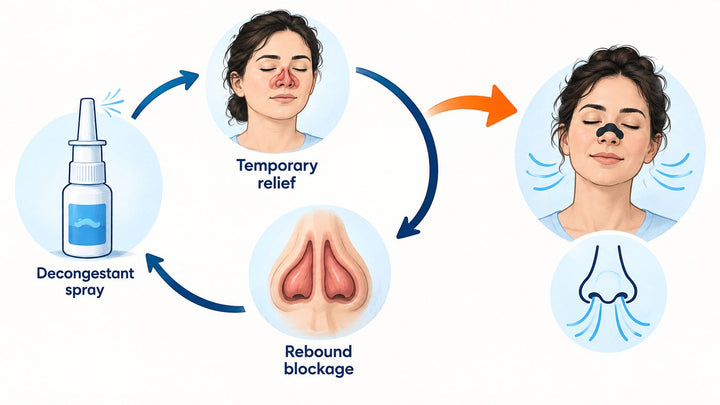
- OTC decongestant sprays work fast but should not be used for more than three consecutive days - see the rebound congestion warning below.
- A nasal strip can mechanically widen the nasal passage to improve airflow when the lining is swollen, without any medication.
- See a doctor if symptoms persist beyond ten days, worsen after initial improvement, or include high fever, severe facial pain, or green/yellow discharge.
Why a Cold Makes Your Nose Stuffy
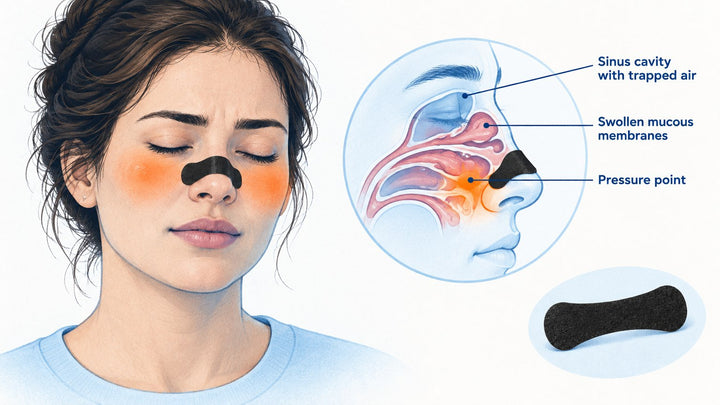
Cold viruses trigger an immune response in the mucous membranes lining your nasal passages. Blood vessels dilate, tissue swells, and mucus production increases - all part of your body trying to trap and flush out the virus. The physical narrowing of already-small nasal passages is what creates that familiar feeling of pressure and restricted airflow. Treating congestion well means addressing both the swelling and the mucus, not just one or the other.
8 Ways to Relieve Congestion From a Cold
1. Stay Hydrated
Drinking plenty of fluids - water, herbal tea, or warm broth - keeps your mucus thin and easier to clear. Thick, sticky mucus is harder to drain and prolongs the feeling of blockage. There is no precise daily volume that applies to everyone, but drinking enough that your urine stays pale is a practical benchmark. Warm liquids have the added benefit of mild steam inhalation with every sip.
2. Steam Inhalation and Warm Showers
Inhaling warm, moist air softens mucus and temporarily reduces swelling in the nasal lining. A warm shower with the bathroom door closed is the simplest method - breathe slowly through your nose for several minutes. A bowl of hot water with a towel tent is a common alternative, but exercise caution: the water does not need to be boiling, and keeping your face at a safe distance prevents burns. Avoid placing your face directly over very hot steam.
3. Saline Nasal Rinse
A saline rinse physically flushes mucus, debris, and inflammatory mediators from the nasal passages. This is one of the most consistently recommended drug-free options for cold congestion. Use only sterile, distilled, or previously boiled and cooled water when preparing a saline solution - tap water is not safe for nasal rinsing. Pre-mixed sterile saline sprays are a simpler alternative if you prefer not to prepare your own solution. Rinse gently; forceful rinsing can push fluid toward the sinuses. For a full step-by-step on neti pot use, see how to use a neti pot.
4. Humidifier in Your Room
Dry indoor air - especially common in winter when heating runs constantly - thickens mucus and irritates already-inflamed nasal tissue. A cool-mist or warm-mist humidifier in the bedroom keeps ambient moisture at a level that supports comfortable breathing. Keep the humidifier clean according to its manual; a dirty tank can aerosolize bacteria or mold, which makes congestion worse rather than better. Aim for indoor humidity between 40 and 50 percent.
5. Sleep Position and Head Elevation
Lying completely flat allows mucus to pool in the back of the nasal passages, which increases congestion and can trigger post-nasal drip. Propping your head and upper body up by 30 to 45 degrees - with an extra pillow or an adjustable wedge - encourages mucus to drain downward instead of backward. Side sleeping can also reduce congestion compared to lying on your back. For a complete guide to positioning when you are blocked, see how to sleep with a stuffy nose.
6. Nasal Strips for Mechanical Airflow Support
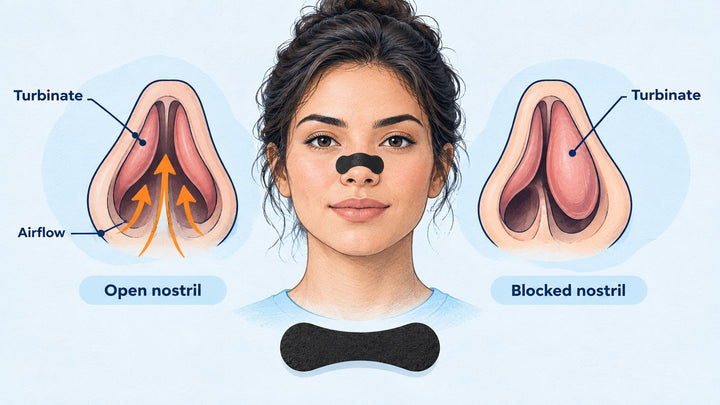
When swelling narrows your nasal passages, a nasal strip works by gently lifting the sides of your nose outward, widening the opening without any drug or spray. This mechanical support does not reduce the swelling itself, but it helps maintain airflow through a narrowed passage - which is particularly useful at night when you cannot actively clear your nose. Nelamant Air uses a wider lift design that spreads the opening force across the nasal bridge more evenly, and its extra-hold adhesive is built to stay on through a night of restless, congested sleep. Because the strips are drug-free and they can be used alongside any of the other methods on this list without interaction concerns. They are single-use, so each strip is clean and fresh.
Note that nasal strips support the external nasal opening - they do not unblock an obstructed throat or treat all causes of nasal stuffiness. If your congestion is severe or your nasal passages feel fully closed, strips work best combined with saline and steam rather than as a standalone fix.
7. OTC Decongestants and Antihistamines
Oral decongestants (such as pseudoephedrine or phenylephrine) constrict blood vessels in the nasal lining to reduce swelling quickly. Decongestant nasal sprays (oxymetazoline, xylometazoline) work faster and stay more localized, but must not be used for more than three consecutive days - using them longer triggers rebound congestion, a cycle where the passages become more blocked when the medication wears off. Antihistamines are more useful when congestion has an allergic component; for a straightforward cold virus, their benefit is mainly drying excess mucus. Always follow label directions and check for interactions with other medications you take. Do not stop a prescribed treatment because of a cold without speaking to your prescriber.
8. Nasal Corticosteroid Sprays
Low-dose nasal steroid sprays (fluticasone, budesonide) reduce nasal inflammation over time rather than instantly. Some are available over the counter; others require a prescription. For a typical short cold, the anti-inflammatory effect may take a few days to build, so these sprays are more commonly used for ongoing nasal inflammation than for acute cold relief - though they can help if significant inflammation is a component. Follow the label or prescriber guidance on duration of use.
Quick Comparison: Drug-Free vs. OTC Options
| Method | How it works | Rebound risk | Good to combine with strips? |
|---|---|---|---|
| Hydration | Thins mucus | None | Yes |
| Steam / warm shower | Loosens mucus, mild swelling relief | None | Yes |
| Saline rinse | Physically clears mucus and irritants | None | Yes - rinse first, then apply strip |
| Humidifier | Prevents mucus thickening | None | Yes |
| Head elevation | Promotes drainage by gravity | None | Yes |
| Nasal strips | Widens nasal opening mechanically | None | Yes (combine freely) |
| OTC decongestant spray | Constricts blood vessels rapidly | Yes - max 3 days | Yes, but respect label limits |
| Nasal steroid spray | Reduces inflammation over time | Low | Yes |
Does Cold Congestion Make Snoring Worse?
Yes - swollen nasal tissue reduces airflow through the nose, which often pushes nighttime breathing to the mouth. Mouth breathing during sleep increases the vibration of soft tissues in the throat that causes snoring. A blocked nose from a cold can turn a mild snorer into a loud one, and someone who does not normally snore at all into someone who keeps their partner awake. For a closer look at why this happens and what to do about it, see the full guide to snoring when you are sick.

When to See a Doctor
Most cold congestion resolves on its own within seven to ten days. See a doctor if:
- Symptoms have not improved after ten days, or they improve and then worsen again.
- You have a high fever (above 103 °F / 39.4 °C) or a fever that returns after going away.
- You have severe or one-sided facial pain or pressure, which can indicate a sinus infection.
- Nasal discharge is thick and green or yellow and persists beyond the first few days - or worsens.
- You have significant ear pain, hearing changes, or eye swelling.
- You are pregnant, immunocompromised, or managing a condition that complicates respiratory illness.
For a detailed breakdown of which nasal and sinus symptoms warrant professional evaluation, see the guide to when to see a doctor for nasal congestion.

Breathe more freely tonight - drug-free, no spray needed.
$14.99 for 30 strips · 30-day returns
Shop Nelamant Air Nasal StripsFrequently Asked Questions
How long does cold congestion typically last?
Cold congestion usually peaks around days two to four and begins to ease by day seven to ten for most adults. If it persists beyond ten days without improvement, that can signal a secondary sinus infection rather than the original cold virus, and a doctor visit is worthwhile.
What is the fastest way to relieve congestion from a cold at home?
A combination approach works fastest: take a warm shower to inhale steam, follow with a saline rinse (using sterile or distilled water) to physically clear mucus, and then use a nasal strip to keep the passage open while you rest. If you need quicker relief, an OTC decongestant spray can help acutely - but remember the three-day limit to avoid rebound congestion.
Is drug-free cold congestion relief actually effective, or do I need medication?
For most mild to moderate cold congestion, drug-free methods - hydration, steam, saline, humidity, and positioning - provide meaningful and sustained relief without side effects or rebound risk. Medication adds faster or stronger acute action but is not always necessary. The best approach depends on your symptom severity and how quickly you need relief.
Can a nasal strip help when I'm congested from a cold?
A nasal strip gently lifts the sides of the nose outward, widening the external nasal opening. It does not reduce tissue swelling or thin mucus, but it counteracts some of the physical narrowing caused by inflammation - which is particularly useful at night when other methods are harder to apply. It works best used after a saline rinse, when some mucus has already been cleared.
When should I use a decongestant spray instead of trying home remedies?
Decongestant sprays are a reasonable choice when congestion is severe enough to prevent sleep or meaningful comfort, or when drug-free methods alone are not providing enough relief. Use them only for short bursts - no more than three consecutive days - and return to drug-free approaches as soon as the acute phase eases. Longer use creates rebound congestion that is harder to manage than the original cold congestion.
Conclusion
Knowing how to relieve congestion from a cold comes down to targeting both the swelling and the mucus - and layering methods that address each. Steam, saline rinses, and hydration work on the mucus. Elevation, humidity, and nasal strips work on airflow mechanics. OTC options step in when you need faster relief, but require attention to label limits. Start with the drug-free steps, keep them consistent, and bring in other tools as needed. If your symptoms last longer than ten days, worsen, or come with signs of a secondary infection, get a professional evaluation rather than continuing to manage at home.