Thomas Tiemann

This article is for general information, not medical advice.
Most nasal congestion clears on its own within a week to ten days, and home remedies are often all you need. When to see a doctor for nasal congestion comes down to a handful of clear signals: symptoms lasting beyond ten days, pain or pressure that worsens instead of improves, one-sided blockage with no obvious cause, or nighttime breathing problems that go beyond a stuffy nose.
- Congestion that hasn't improved after 10 days, or any symptoms lasting 12 weeks or more, warrants a doctor visit.
- Severe facial pain, swelling around the eye, high fever, stiff neck, or vision changes are urgent red flags-seek care the same day.
- Persistent blockage in only one nostril, with no obvious trigger, should be evaluated for a structural or other cause.
- Nighttime breathing problems that include gasping, witnessed pauses in breathing, or extreme daytime tiredness may point to something beyond congestion.
- Mild, seasonal, or cold-related stuffiness that responds to saline and resolves on schedule usually doesn't need a visit.
How Long Is Too Long? Duration Red Flags
A standard cold causes congestion that peaks around days two to three and typically clears within seven to ten days. If you're still equally or more congested at the ten-day mark with no sign of improvement, that threshold is widely used by clinicians as a reason to evaluate for bacterial sinusitis or another cause.
Chronic rhinosinusitis is generally defined as inflammation lasting twelve weeks or longer despite attempts at treatment. If your nose has felt blocked for months, on and off or continuously, that's chronic by definition and deserves a proper diagnosis rather than an indefinite cycle of over-the-counter remedies.
For a broader look at what's keeping your nose blocked in the first place, the guide to how to unblock your nose covers the full range of home strategies and when they stop being sufficient.
Congestion Red Flags That Need Same-Day or Urgent Care
Most congestion is uncomfortable but not dangerous. A smaller set of symptoms alongside a stuffy nose signals something more serious that should not wait for a scheduled appointment.
Seek same-day care or go to an emergency department if you have any of the following:
- Swelling, redness, or pain around one or both eyes - this can indicate the infection has spread to the orbital area.
- Sudden or severe headache unlike your usual pattern
- Stiff neck combined with fever - together these warrant immediate evaluation.
- High fever (above 103 °F / 39.4 °C) that accompanies facial pressure or congestion
- Changes in vision
- Altered mental status or confusion
- Facial swelling that spreads beyond the sinus area
These symptoms are uncommon but represent potential complications that need evaluation quickly, not a wait-and-see approach.
Symptoms That Suggest a Sinus Infection
Not every sinus infection is an emergency, but it does need treatment. Signs that your congestion has become a bacterial sinus infection rather than a straightforward cold include:
- Thick colored (yellow or green) nasal discharge lasting more than ten days with no improvement
- Symptoms that improved for a few days and then suddenly got worse again - sometimes called a "double worsening" pattern
- Pain or pressure concentrated around the cheeks, upper teeth, or forehead that worsens when you lean forward
- Postnasal drip causing a persistent bad taste or cough
A primary care doctor can usually evaluate and manage an acute sinus infection. Recurrent infections - four or more per year, for example - are a reason to ask for an ENT referral.
When One-Sided Blockage Needs Attention
Some natural variation in airflow between nostrils is normal - the nose has a cycle where one side dominates airflow for a few hours before switching. Persistent blockage that is always or almost always on the same side, and has no obvious trigger like a cold or allergy season, is worth investigating.
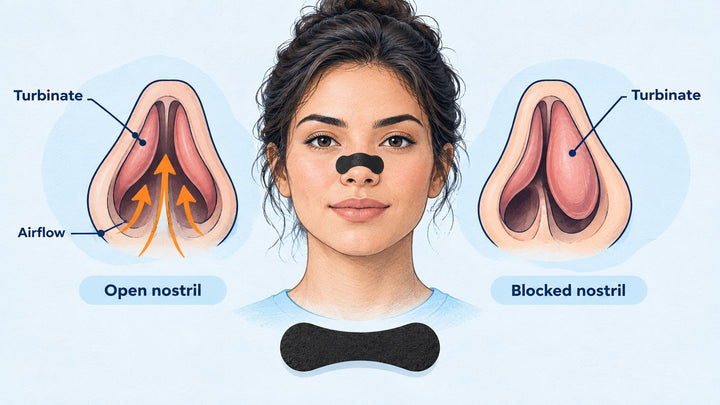
Causes range from a deviated septum or enlarged turbinate to nasal polyps or, rarely, other structural issues. None of these resolve on their own, and most have straightforward treatment options once diagnosed. The guide to what causes nasal congestion explains the full range of structural and inflammatory causes in more detail.
A good general rule: if you can't remember the last time both nostrils felt open at the same time, bring it up with a doctor.
When to See an ENT for a Stuffy Nose
Your primary care doctor handles most acute congestion well. An ear, nose, and throat specialist - an ENT, or otolaryngologist - becomes the right next step when:
- Congestion is chronic (12 weeks or more) and hasn't responded to standard treatment
- You've had recurrent sinus infections, especially if antibiotics keep being needed
- A structural cause is suspected or confirmed - deviated septum, nasal valve narrowing, nasal polyps, or enlarged turbinates - and you want to understand your options
- You've had prior nasal surgery and are experiencing ongoing symptoms
- Over-the-counter nasal decongestant sprays have been used beyond the labeled duration and rebound congestion is now part of the problem
- Your breathing feels restricted through the nose in a way that affects sleep, exercise, or daily function
An ENT can use nasal endoscopy and imaging to see what's actually going on structurally - something no amount of home management can diagnose. If you're unsure whether your symptoms are normal or worth addressing, erring toward a consultation is reasonable.
If you're weighing whether nasal strips are appropriate given your specific nasal anatomy, the overview of nasal strip safety covers who they are and are not well suited for.

Breathing Problems That Go Beyond Congestion
Congestion and breathing problems overlap, but they are not the same thing. A blocked nose makes breathing harder through the nose; a problem with the airway itself - particularly during sleep - is a different category with different implications.
Talk to a doctor if you or a bed partner have noticed:
- Gasping or choking sounds during sleep
- Witnessed pauses in breathing while asleep
- Waking up unrefreshed despite enough hours of sleep, consistently
- Significant daytime sleepiness that isn't explained by your schedule
- Waking with a headache most mornings
These may point to obstructive sleep apnea, which is a separate diagnosis from nasal congestion and requires its own evaluation - typically a sleep study. Nasal strips can help open nasal passages and support nose breathing, but they do not treat sleep apnea and should never replace a prescribed CPAP or other therapy.
Nasal Congestion vs. Sleep Apnea
It's easy to conflate heavy snoring from a blocked nose with sleep apnea, but they're not the same:
- Nasal congestion snoring often improves when the nose is clearer - during allergy season, for instance, it's worse; at other times it's minimal.
- Sleep apnea involves repeated partial or complete collapse of the upper airway, not just the nose - it persists regardless of nasal clearness.
- Snoring from nasal obstruction doesn't typically cause the daytime fatigue, gasping episodes, or oxygen changes associated with apnea.
- Only a sleep study can formally distinguish them.
The full breakdown of differences is in the guide to snoring vs. sleep apnea, which covers how each is diagnosed and what the treatment paths look like.
When Home Remedies Are Enough
Not every stuffy nose needs a doctor. Congestion is appropriate to manage at home when:
- It's clearly linked to a cold and improving, even slowly, within the expected window
- It's seasonal and responds to your usual allergy management
- It's mild, doesn't affect sleep significantly, and isn't accompanied by any of the red flags above
- Saline rinses, humidity, and positioning changes provide enough relief
For a full practical rundown of what actually works for home congestion relief, the guide to how to unblock your nose walks through each method and when to use it.
A Note on Nasal Strips for Congestion Comfort
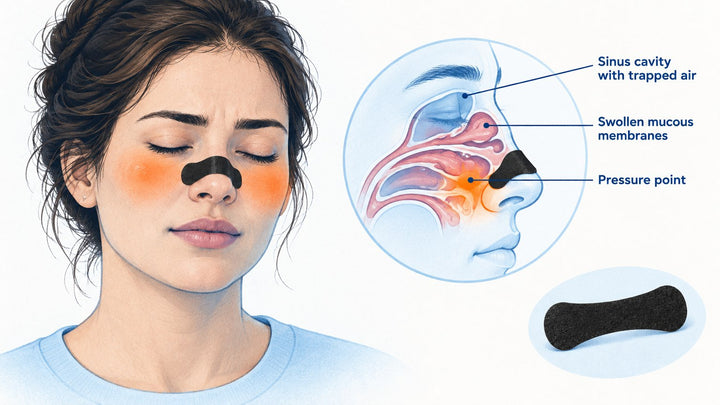
When congestion is mild to moderate and you need to sleep or breathe more comfortably through a temporarily blocked nose, a mechanical nasal strip can help open the nasal passages without medication. Nelamant Air Nasal Strips use a drug-free spring-tab design that lifts the sides of the nose to widen the nasal opening - they don't treat the underlying inflammation, but they can make breathing more manageable while your body clears the cause.
They're worth considering for nighttime cold congestion, allergy-related stuffiness, or any situation where you want to support nose breathing without reaching for a decongestant spray. They are not a substitute for medical evaluation if any of the red flags above apply to you.

When to See a Doctor: Quick Reference
| Symptom or Situation | See a Doctor If… | Urgency |
|---|---|---|
| Duration of congestion | No improvement after 10 days; or ongoing for 12+ weeks | Scheduled visit |
| Swelling or pain around the eye | Present at all | Same day / urgent |
| High fever with facial pressure | Above 103 °F / 39.4 °C | Same day / urgent |
| Stiff neck and fever together | Present together | Emergency |
| One-sided blockage | Persistent, with no obvious cause | Scheduled visit |
| Recurrent sinus infections | 4 or more per year | ENT referral |
| Gasping or pauses in breathing during sleep | Reported by self or bed partner | Scheduled visit / sleep study |
| Rebound congestion from nasal spray | Using decongestant spray beyond labeled duration | Scheduled visit |
Frequently Asked Questions
How long can nasal congestion last before it's a problem?
Cold-related congestion that shows no improvement at all after ten days is a widely used clinical flag for a possible bacterial sinus infection. Congestion that persists for twelve weeks or more, with or without intermittent improvement, meets the common definition of chronic and warrants a proper diagnosis.
What are the congestion red flags for a sinus infection versus a cold?
Colds generally improve steadily after the first few days. A bacterial sinus infection is more likely if thick colored discharge continues past ten days, if symptoms worsen after an initial period of improvement (double-worsening pattern), or if there is localized pain over the cheeks or forehead that intensifies when leaning forward. A cold does not typically cause that kind of facial pain.
When should I see an ENT for a stuffy nose instead of my primary care doctor?
Start with primary care for acute congestion. Ask for an ENT referral if you have chronic symptoms (12+ weeks), recurrent sinus infections, a suspected structural problem like a deviated septum or nasal valve narrowing, or if standard treatments haven't worked. An ENT can perform an endoscopic examination and imaging that primary care typically can't.
Can nasal congestion cause breathing problems at night?
Yes - a blocked nose shifts breathing toward the mouth and can make snoring worse. However, nighttime breathing problems that include gasping, choking sounds, or witnessed pauses in breathing are separate concerns that may indicate sleep apnea rather than congestion alone. The two often coexist, but sleep apnea requires its own evaluation. See the guide to snoring vs. sleep apnea for more on telling them apart.
The Bottom Line
Knowing when to see a doctor for nasal congestion means watching the clock and watching for warning signs. Ten days without improvement, twelve weeks of ongoing symptoms, one-sided blockage, severe facial symptoms, or nighttime breathing disturbances - any of these tips the balance toward getting a professional look. For everything that falls short of those thresholds, the guide to how to unblock your nose and the overview of what causes nasal congestion give you solid home-management ground to stand on.