Thomas Tiemann

Nasal strips are not FDA approved the way a prescription drug is - the current FDA nasal-dilator classification is Class I and generally 510(k)-exempt, subject to exemption limits. That distinction matters, because the word "approved" has a specific meaning in U.S. regulatory language that does not apply to most over-the-counter devices. If you want to understand what are nasal strips FDA approved actually means in practice, the short answer is: they are federally regulated, but through a different route than drugs. To understand how nasal strips work and why their design matters, that context helps too.
- Nasal dilators are Class I medical devices regulated by the FDA - not drugs, so not "approved" in the pharmaceutical sense.
- The current category is generally exempt from 510(k) premarket notification; older clearance records also exist.
- 510(k) clearance is not an independent efficacy trial or a guarantee of results for every user.
- Drug-free describes how a strip works; it does not establish FDA approval or clearance.
- Any adhesive can cause skin irritation.
What "FDA Approved" Actually Means
In U.S. federal law, "FDA approved" refers specifically to the premarket approval (PMA) process the agency uses for high-risk medical devices and the new drug application (NDA) process for pharmaceutical drugs. Both require the manufacturer to submit clinical evidence proving the product is safe and effective for its intended use. The FDA reviews that evidence before granting approval.
Nasal strips do not go through either of those processes. They are not drugs - there is no active pharmaceutical ingredient - and they are not high-risk devices. That puts them in a different regulatory lane entirely, one that still involves FDA oversight but uses a different standard and a different name.
Drug Approval vs. Device Clearance
When a company submits an NDA for a drug, the FDA evaluates clinical trial data on safety and efficacy before the product can be sold. "Approved" means that process concluded successfully. "Cleared," on the other hand, is the term used after a successful 510(k) submission for a medical device. The FDA is not confirming efficacy from its own trials - it is confirming the device is substantially equivalent in intended use and technology to a device already legally on the market. Both routes involve federal regulation; they are just different gates.
How Nasal Strips Are Regulated as Medical Devices
The FDA classifies medical devices into three classes based on risk. Class I covers low-risk items such as bandages. Class III covers high-risk implants and life-sustaining devices that require PMA. The current nasal-dilator category is Class I under 21 CFR 874.3900.
For FDA cleared nasal strips, a specific clearance record should support that description; clearance is not required for every exempt device. A manufacturer submits documentation showing that its new strip is substantially equivalent to a legally marketed predicate device in terms of intended use and technological characteristics. The FDA reviews that submission and, if it agrees, issues a clearance letter. The product can then be sold with appropriate labeling.
Class I Exemptions and Older 510(k) Clearances
Being cleared through 510(k) does not mean the FDA ran its own laboratory tests on that specific product. It means the agency reviewed the manufacturer's documentation and found sufficient equivalence to an existing cleared device. For the consumer, the practical takeaway is that the product has passed a federal regulatory review, its intended use is on record with the FDA, and the labeling is subject to oversight. It is not a free pass, but it is also not the same as a drug's clinical trial process.
What the Label Is and Isn't Telling You
Nasal strip packaging often carries several regulatory and marketing terms that can blur together. The table below breaks down the most common ones.
| Label term | What it means | What it does NOT mean |
|---|---|---|
| 510(k) cleared | Substantially equivalent to a legally marketed predicate device; FDA reviewed and cleared the submission | Independently tested for efficacy or "approved" by the FDA |
| Class I medical device | Low-risk nasal-dilator category under 21 CFR 874.3900 | Requires a prescription, or that clinical efficacy trials were run |
| Drug-free | No active pharmaceutical ingredient; works by mechanical action only | Unregulated, or exempt from any FDA oversight |
| OTC (over-the-counter) | Available without a prescription; regulated for safe general use | Appropriate for every individual or health condition without professional input |
The phrase "are nasal strips FDA approved" almost always comes up because shoppers want to know whether the product is federally regulated and safe to buy. The label terms above answer that - regulated, yes; "approved" in the drug sense, no.
Does FDA Regulation Mean a Nasal Strip Is Safe to Use?
For the overwhelming majority of adults, external adhesive nasal strips carry a low risk profile. They sit on the outside of the nose, use mechanical spring action to widen the nasal passages, and contain no drug ingredients. Exemption from premarket notification does not remove the applicable general controls.
That said, no regulatory clearance is a blanket guarantee. Any adhesive can cause skin irritation. Anyone with skin conditions affecting the nose bridge should proceed carefully. For a full picture of who should and shouldn't use them, the guide to whether nasal strips are safe covers specific contraindications and skin considerations in detail.
FDA clearance also does not speak to whether strips will work for a particular person's breathing pattern or anatomy. A category classification does not certify a particular product's clinical outcomes.
How Nelamant Air Fits Into This Picture
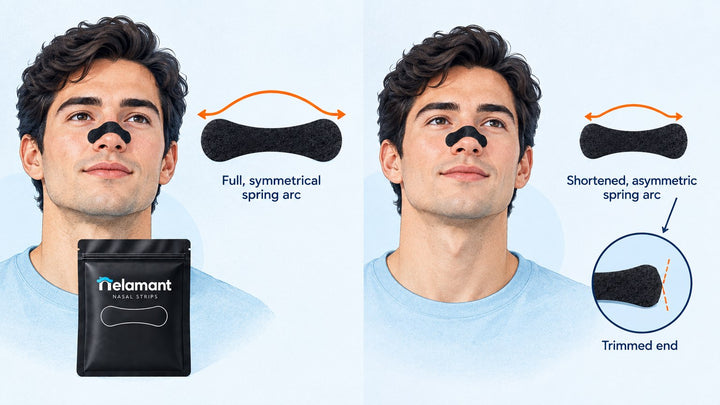
Nelamant Air is designed as an external adhesive nasal strip - a mechanically acting product format. It uses a spring-loaded band to provide a wider, more balanced lift across the nose bridge rather than a single pull point, which is a design approach aimed at keeping both sides of the nasal passage open more evenly. The adhesive is formulated for extra hold through sweat, oil, and overnight movement, and the materials It peels off cleanly without leaving sticky residue.
We do not claim FDA approval or clearance for Nelamant Air. See the FDA nasal-dilator classification for the category, which does not establish any individual brand's compliance.
Because it works by mechanical action only - no drugs, no active ingredients - that mechanism does not by itself establish the product's regulatory status.

Is Nelamant a Legitimate Brand?
If you have come across Nelamant for the first time and want to know whether the company is real and trustworthy before buying, that is a fair question to ask about any direct-to-consumer brand. The short answer is yes - Nelamant is a real brand selling an FDA-regulated device category through its own online store, with a stated 30-day return window. For a fuller look at the brand, its product, and what to expect from ordering, the guide to whether Nelamant is legit walks through the specifics.
Frequently Asked Questions
Are nasal strips FDA approved or FDA cleared?
Do not assume either approval or clearance from the fact that a product is a nasal strip. "Approved" is the term for drugs and high-risk devices that go through a full premarket approval process. The current nasal-dilator category is Class I and generally 510(k)-exempt.
What does "Class I medical device" mean on a nasal strip box?
Class I describes a lower-risk category subject to general controls. Check the current device classification and any exemption limits rather than assuming a clearance is required.
Do all nasal strips have to go through FDA clearance?
In the U.S., external nasal dilators that make medical claims about opening nasal passages are regulated as medical devices and generally must follow the applicable regulatory pathway. Strips making explicit claims about nasal airflow are subject to device regulations.
Does FDA clearance mean a nasal strip is proven to work?
Not in the sense of a randomized controlled trial reviewed by the FDA. The 510(k) process confirms the device is substantially equivalent to a cleared predicate in intended use and technology. Whether a strip produces a meaningful airflow improvement for a specific person depends on individual anatomy and the cause of their nasal narrowing.
Can I trust a nasal strip that doesn't display an FDA label claim?
In the U.S. market, the absence of visible FDA language on packaging is worth noting. Legitimate regulated products typically include device classification or drug-free language consistent with their regulatory status. If a product makes therapeutic claims about nasal breathing but shows no regulatory information, that is a reasonable prompt to check the FDA's device database or contact the manufacturer directly.
The Bottom Line
Asking whether nasal strips are FDA approved is the right instinct - it is how you verify a product is federally regulated rather than entirely unvetted. The current category is Class I and generally 510(k)-exempt, not blanket FDA approval. That regulatory status tells you the product category is on record with the FDA and subject to labeling rules; it does not guarantee that any given strip will work for your specific anatomy. Knowing what the label terms actually mean puts you in a much better position to choose confidently.