Thomas Tiemann

This article is for general information, not medical advice.
For most healthy adults, nasal strips are safe to use regularly. They work through a simple mechanical action - no drugs, no chemicals absorbed into the body - so the risk profile is narrow and well-defined. The side effects that do occur are almost always skin-related and tied to the adhesive, not the strip itself.
The short version: if your skin tolerates the adhesive and you remove the strip gently, problems are uncommon. A small group of people should avoid them or take extra care, and that list is covered in full below.
- Nasal strips are drug-free and work by mechanical lift, so systemic side effects are not a concern.
- The most common issues - redness, mild skin irritation, adhesive residue - are adhesive-related and usually avoidable.
- People with broken skin, active skin conditions on the nose, or recent nasal surgery should avoid strips until healed or cleared by a clinician.
- Nasal strips do not treat sleep apnea and are not a replacement for prescribed therapy.
- Gentle, warm-water removal is the single most effective way to prevent skin irritation.
How Nasal Strips Work - and Why Safety Follows the Mechanism
A nasal strip is a stiffened adhesive band placed across the bridge of the nose. When it dries to your skin, the band tries to return to its flat shape, which gently pulls the sides of the nose outward and widens the nasal passage. To understand why this matters for safety, it helps to read the full guide to how nasal strips work and why the design matters - but the key point here is that there is nothing pharmacological happening. No decongestant, no medicated coating, no ingredient crossing into your bloodstream.
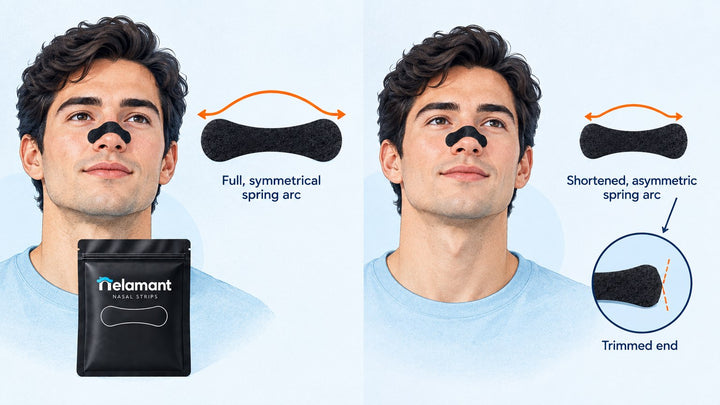
Because the mechanism is purely physical, the safety question comes down almost entirely to two things: what the adhesive is made of and how you take the strip off. Strip design does influence skin outcome - a wider, more evenly distributed lift puts less concentrated tension on any single point of skin, which matters if you wear one every night.
Common Nasal Strips Side Effects
Skin Redness and Mild Irritation
The most frequently reported nasal strips side effect is a patch of redness or mild irritation on the bridge and sides of the nose after the strip is removed. This is an irritant contact reaction, not an allergic one - the skin responds to repeated adhesive contact, pressure, or occlusion over several hours rather than to a specific ingredient your immune system has flagged.
For most people it fades within an hour or two. If it persists beyond a few hours or appears after just the first use, that is worth paying attention to, and the section on allergic reactions below is relevant.
Adhesive Residue and Pulling on Removal
Peeling a strip off too quickly, especially on dry skin or first thing in the morning before washing your face, is the most common cause of unnecessary skin stress. The adhesive stretches the skin briefly as it releases, and if the bond is strong you can feel a sharp pull. Residue - a faint tacky film - sometimes stays behind.
Both problems are largely preventable with the right removal technique. How to remove nasal strips without skin irritation covers this step by step, but the core principle is simple: a little warm water loosens the adhesive edge before you peel, which makes the whole thing come away cleanly rather than grabbing.
Breakouts or Clogged Pores
A small number of people notice minor breakouts along the nose bridge after regular strip use. The mechanism is likely occlusion - the strip sits over pores for hours, trapping skin oils underneath. Applying a strip to skin that was not fully cleaned and dried beforehand makes this more likely. Starting with a gentle cleanse and fully drying the skin before application keeps the area under the strip as clear as possible.
Rare Allergic Contact Reaction
True allergic contact dermatitis to nasal strip adhesive is uncommon, but it does happen. The distinction from ordinary irritant redness matters: an allergic reaction tends to appear as itching, swelling, or a spreading rash rather than simple redness confined to the strip footprint. It may also worsen with each exposure rather than staying the same or improving.
If you suspect a genuine allergic reaction, stop using the strips and speak with a clinician. - once confirmed, that information would help anyone with a known adhesive sensitivity decide whether the product is appropriate for them. Any adhesive can cause skin irritation.

Who Should Avoid Nasal Strips (or Use Caution)
Damaged, Sunburned, or Broken Skin
Do not apply a nasal strip over any area of broken, wounded, or severely sunburned skin. Adhesive on an open wound or compromised skin barrier increases the risk of pain, infection, and delayed healing. Wait until the skin has fully recovered before resuming use.
Active Skin Conditions on the Nose
Conditions such as eczema, rosacea, or severe cystic acne affecting the nose bridge make nasal strip use more complicated. Adhesive over an active flare can worsen inflammation, disrupt skin barrier function, or introduce bacteria into open lesions. If your condition is well-controlled and the nose bridge is not currently affected, you may be able to use strips cautiously - but it is worth a quick check with a dermatologist before starting regular use.
Children
- the minimum appropriate age for nasal strips has not been confirmed for this product. As a general principle, nasal strips are designed and sized for adult anatomy, and any use in children should involve a pediatrician. The product call to action on this page is directed at adult readers, not a recommendation for pediatric use.
After Rhinoplasty or Nasal Surgery
Applying adhesive over a post-surgical nose before the tissue has healed can interfere with recovery and may shift structures that are still stabilizing. Most surgeons give specific guidance on when external nasal devices can be worn again - follow that timeline. A dedicated guide to nasal strips after rhinoplasty covers the considerations in more detail if this applies to you.
Sleep Apnea
Nasal strips are not a treatment for obstructive sleep apnea and must not be used as a substitute for prescribed therapy such as CPAP. They open the nasal passage at the nose bridge level; they do not address the throat obstruction or airway collapse that drives sleep apnea. If you snore and are wondering whether a nasal strip is all you need, reading about the difference between snoring and sleep apnea first is a sensible step. Anyone already on prescribed sleep apnea therapy should continue it.
How to Reduce Skin Irritation from Nasal Strips
The steps below cover the most common causes of nasal strip skin irritation and how to address each one.
- Clean your skin before applying. Wash your face and rinse the nose bridge area. Oil, sunscreen, and moisturizer all reduce adhesion and can cause the strip to lift and re-adhere repeatedly through the night, increasing friction on the skin.
- Dry the skin completely. Pat the nose bridge dry and wait 30–60 seconds before applying. Even slight dampness weakens the bond and may cause the strip to peel during sleep.
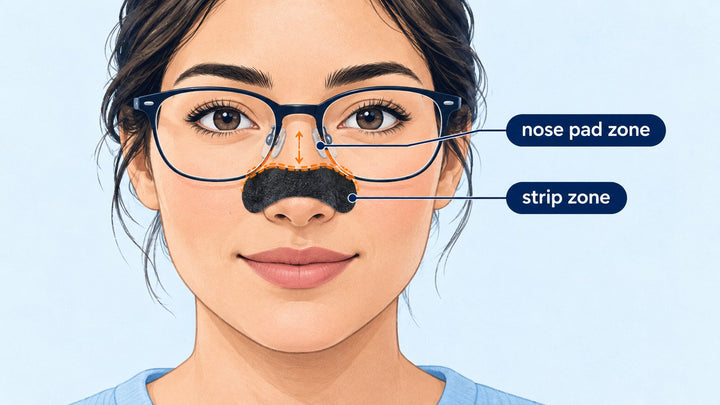
- Center the strip carefully. Position it symmetrically across the broadest part of the nose bridge, away from the nostrils and bony upper bridge. A strip that sits off-center pulls unevenly and concentrates tension on one side.
- Use warm water to remove. In the morning, dampen the strip with warm water for 20–30 seconds before peeling. Start at one edge and peel slowly toward the center. This reduces the pulling force against the skin significantly.
- Moisturize after removal. A gentle, fragrance-free moisturizer applied to the nose bridge after removal helps restore the skin barrier, especially with daily use.
- Give your skin a rest if redness persists. Skipping one or two nights when the bridge is still red lets the skin recover before the next application.
For people with sensitive skin, the adhesive formulation of the strip matters as much as the removal technique. Nelamant Air uses materials and is designed to peel off cleanly without leaving a sticky residue - the kind of detail worth looking for if ordinary strips have caused redness for you before. If sensitive skin is your main concern, the full guide to the best nasal strips for sensitive skin compares the available options in depth.
Is It Safe to Use Nasal Strips Every Night?
For adults with healthy, intact skin, using a nasal strip nightly is generally considered safe. The cumulative risk comes almost entirely from the adhesive and removal process rather than from the strip's mechanical action - and both are manageable with the technique described above.
Daily use does raise the practical question of skin tolerance over time and whether a specific product keeps performing reliably night after night. Whether it is safe and practical to use nasal strips every night covers those questions in full, including what to watch for with extended use. The short version: watch the skin on your nose bridge, vary placement slightly if one spot becomes irritated, and take a break if redness does not clear between uses.
Nelamant Air Nasal Strips - Extra-Hold Adhesive
$14.99 for 30 strips · 30-day returns
Shop Nelamant Air
When to See a Doctor
Nasal strips handle a narrow problem: mechanical narrowing of the nasal passage. Several situations call for a clinician rather than a strip.
- Persistent skin reaction. If redness, swelling, itching, or a rash around the nose bridge does not resolve within 24–48 hours of stopping strip use, see a dermatologist. A patch test can identify whether a specific adhesive component is responsible.
- Congestion that does not improve. Strips open the nasal valve area; they do not clear inflamed tissue, polyps, or a significantly deviated septum. If congestion is ongoing regardless of strip use, a structural or inflammatory cause may need evaluation. Knowing when to see a doctor for nasal congestion helps you decide when self-care has gone as far as it can.
- Loud snoring or witnessed pauses in breathing. These can be signs of obstructive sleep apnea, which requires proper diagnosis. A nasal strip can support nasal comfort but cannot rule out or treat a sleep-disordered breathing condition.
- Any symptom that worries you. This article describes common patterns; it cannot account for your individual history.
Frequently Asked Questions
Can nasal strips cause skin damage if worn every night?
Healthy skin tolerates nightly use well when strips are applied to clean, dry skin and removed gently with warm water. The main risk with extended daily use is cumulative irritation from repeated adhesive contact and removal. Taking occasional rest nights when you notice redness and using a gentle moisturizer afterward keeps skin in good condition.
What causes the red mark nasal strips leave on your nose?
The red mark is usually a temporary skin reaction to adhesive contact and the brief mechanical stress of removal - not a sign of damage. It typically fades within an hour or two. If it lasts longer, try the warm-water removal method described above. Persistent or worsening redness after every use suggests your skin may be reacting to a specific adhesive component, and a switch to an adhesive is worth trying.
Are nasal strips safe during pregnancy?
Because nasal strips are drug-free and act only mechanically, they are generally considered low-risk during pregnancy. However, skin sensitivity often increases during pregnancy, so some people find they react to adhesives they previously tolerated. If you are pregnant and considering nasal strips for congestion or sleep, it is reasonable to mention it to your midwife or OB-GYN. A dedicated guide to the best nasal strips for pregnancy covers the specific considerations for that audience.
Can I use nasal strips if I have a latex sensitivity?
- if you have a confirmed latex allergy, check the product materials list before use or contact the manufacturer directly. Latex sensitivity ranges from mild contact reactions to severe systemic responses, so confirmation rather than assumption is the right approach.
Are nasal strips safe to use when I have a cold?
Yes, generally. Nasal strips do not interact with cold symptoms or medications - they simply hold the nasal passage open while your immune system handles the infection. They can make breathing more comfortable when congestion narrows the nasal valve area. Keep in mind that strips support the nasal opening; they do not decongest swollen mucosal tissue inside the nose, so severe congestion from a cold may not respond as noticeably as everyday narrowness does.
The Short Answer on Nasal Strip Safety
Are nasal strips safe? For most adults with healthy skin, yes - and the risk profile is narrow enough that understanding it takes only a few minutes. The mechanism is mechanical, the side effects are almost all skin-related and preventable, and the list of people who genuinely need to avoid them is specific and small. Apply to clean, dry skin. Remove slowly with warm water. Give irritated skin a rest. If something does not look right after a couple of days, get a clinician's opinion rather than pushing through.