Thomas Tiemann

No, nasal strips do not change your nose shape. They rest on the surface of your skin and lift the outer wall of the nostril outward - a temporary, mechanical action that reverses the moment you peel the strip off. Your underlying cartilage and bone are completely untouched.
- Nasal strips lift the skin at the side of the nose; they do not contact cartilage or bone.
- Any widening of the nostril opening is temporary and disappears when the strip is removed.
- Daily use does not accumulate into a permanent shape change.
- Skin irritation from improper removal is possible but structural nose damage is not.
- Strips change airflow, not anatomy.
How Nasal Strips Actually Work on Your Nose
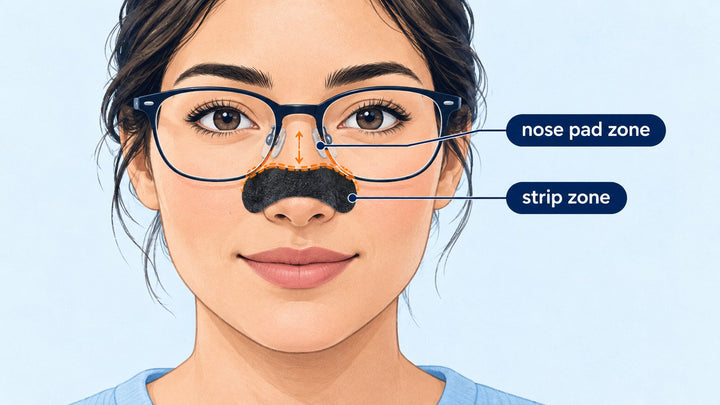
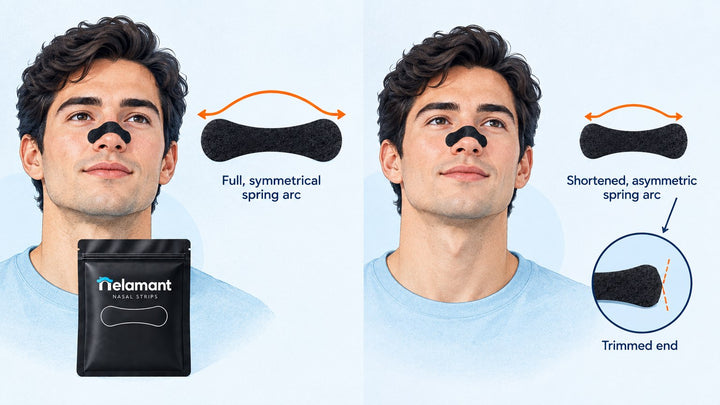
A nasal strip is a small, flexible band with a spring-like core. When you press it across the bridge of your nose, just above the nostril flare, the band tries to return to its flat shape. That outward spring force gently pulls the skin and soft tissue of the nasal sidewall away from the center, widening the nasal valve - the narrowest part of the airway inside the nose.
The strip acts entirely on the skin and the superficial soft tissue beneath it. It never reaches the cartilage that gives the nose its shape, and it has no contact with nasal bones. For a deeper look at the mechanics, see the full guide to how nasal strips work.
Because the force is applied to tissue that is elastic - skin and the fibro-fatty tissue of the alar sidewall - the effect is entirely reversible. Remove the strip and the tissue springs back.
Myth: Nasal Strips Can Widen Your Nose Permanently
This is one of the most common concerns people search for, and the answer is straightforward: nasal strips do not widen your nose permanently. The widening you notice while wearing a strip is purely functional - it is the nasal valve opening up to let more air through. It is not a change to the shape of your nose.
Why Cartilage Doesn't Remodel From Surface Pressure
Cartilage remodeling requires sustained, deep mechanical loading over long periods - the kind of force applied through orthodontic hardware, surgical implants or significant trauma. The outward pull of a nasal strip is gentle by design and acts on skin, not on the cartilaginous framework underneath. There is no plausible mechanism by which a strip worn on the skin surface could reshape nasal cartilage.
Bone, similarly, only remodels under far greater and more sustained compressive or tensile loads than any adhesive strip can generate. The nasal bones sit well above where a strip is applied, and a strip exerts no meaningful force on them at all.
What Happens When You Take the Strip Off
When the strip is removed, the spring tension disappears and the elastic skin and soft tissue return to their resting position. No stretch is retained, no deformation persists. Wearing a strip every night for months produces the same reversible result each time - an effect that ends with the strip.
If you have ever wondered whether nightly use accumulates into a gradual change, the answer is no. The tissue is not being permanently stretched or restructured; it is being temporarily displaced and then released. Daily use does not change that equation.
Myth: Nasal Strips Can Damage Your Nose or Skin
Structural damage to the nose itself - the cartilage, bone or internal anatomy - is not a realistic risk from a correctly used nasal strip. The concern worth taking seriously is skin irritation, and that is manageable.
Adhesive reactions are the most common issue. Some adhesives can cause redness, mild irritation or contact dermatitis in sensitive skin, particularly with repeated use in the same spot. Peeling a strip off too quickly, especially dry, can pull at skin and cause soreness. For a full rundown of safety considerations, see whether nasal strips are safe for regular use.
Any adhesive can cause skin irritation. If you notice persistent redness or irritation, stopping use is the sensible step. Beyond skin-level effects, the strips carry no risk of damaging the nose structurally.
Correct removal technique matters: wet the strip slightly with warm water first, then peel slowly from one end rather than pulling straight off. Gentle removal protects the skin and avoids the soreness that gives nasal strips an undeserved reputation for being harsh.
What Nasal Strips Do Change (Temporarily)
What strips genuinely change is airflow. By lifting the nasal sidewall outward, they reduce resistance at the nasal valve and allow more air through with each breath. That functional benefit - easier nose breathing - is the actual purpose of the product. Whether that translates to a meaningful difference for you depends on where your breathing resistance sits; if the nasal valve is part of the problem, strips can help. For the full evidence picture, see the guide on whether nasal strips actually work.
What they do not change, even temporarily in any lasting sense: nose shape, cartilage position, bone structure or the internal anatomy of the nasal passages. The cosmetic appearance of your nose while wearing a strip may look very slightly different to you in the mirror - the nostril opening widens - but that effect ends with the strip.

If you want a strip that removes easily without pulling at skin, Nelamant Air uses an acrylic resin adhesive designed for gentle removal - no sticky residue left behind. That matters for people who worry about repeated daily use irritating the same patch of skin.

Frequently Asked Questions
Do nasal strips permanently widen your nostrils?
No. The widening you see while wearing a strip is the nasal valve opening temporarily as the strip pulls the sidewall outward. Once you remove the strip, the tissue returns to its normal position. No permanent widening occurs regardless of how often you use them.
Can nasal strips damage your skin or nose over time?
Structural damage to the nose is not a realistic risk. Skin irritation from the adhesive or from pulling the strip off too quickly is possible, particularly on sensitive skin. Any adhesive can cause skin irritation. If redness or irritation develops, discontinue use.
Will a nasal strip change how my nose looks in photos?
Only while you are wearing it. The nostril opening appears slightly wider when a strip is pulling the sidewall out. That visual effect is gone as soon as the strip is off. There is no residual cosmetic change.
Is it safe to wear nasal strips every night without changing my nose shape?
Yes. Nightly use does not accumulate into a shape change because the mechanism - lifting elastic skin tissue - is fully reversible each time. The nose returns to its baseline when the strip is removed, and that does not change with repeated use. For more on daily use, see the full guide on nasal strip safety.
The Short Answer
Nasal strips do not change your nose shape - not temporarily in any lasting way, not permanently, and not with repeated use. They work by lifting skin at the nasal valve to improve airflow, which is a functional benefit with no structural consequence. The question of whether nasal strips change nose shape has a clear answer: they don't. What they do is help you breathe more easily through your nose, and that effect, while real, stops when the strip comes off.