Thomas Tiemann

The right nasal strip opens your passages and stays put all night or through a full workout. The wrong one peels off at 2 a.m., irritates your skin, or costs far more than it should. Knowing how to choose nasal strips before you buy saves you from trial-and-error packs that go straight in the bin.
- Eight criteria separate a strip that works from one that wastes your money: lift design, sizing, adhesive strength, skin compatibility, use-case fit, removal ease, cost per strip, and single-use vs. reusable format.
- A wider lift distributes tension more evenly than a narrow single-pull strip.
- Adhesive that resists sweat and oil is non-negotiable for workouts or warm sleepers.
- Hypoallergenic materials matter most if you plan on nightly use - skin sees every strip you wear.
- Cost per strip is more useful than pack price when comparing brands.
Try Nelamant Air - built around every point on this checklist
$14.99 for 30 strips · 30-day returns
Shop Nelamant AirWhat to Look for in Nasal Strips: The 8-Point Checklist
Nasal strips look simple - a flexible band with adhesive - but small differences in design, materials, and construction determine whether a strip actually solves your problem. Before you reach for the nearest pack, walk through these eight criteria. Each one maps to a real-world outcome: whether the strip opens your nose, stays on, and comes off without drama.
If you want a deeper look at why design matters at a mechanical level, the full guide to how nasal strips work explains the spring-action lift in detail.
1. Lift Mechanism and Design
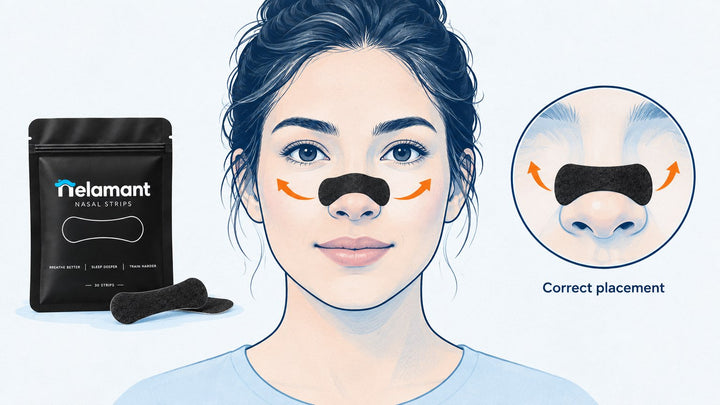
A nasal strip works by pressing a spring-band against the outside of your nose. When the band tries to return to its flat shape, it pulls the sides of your nose outward, widening the nasal valve and reducing airflow resistance. That much is standard across every brand.
What differs is where that tension is concentrated. A narrow or single-crease design focuses the pull at one point - often the tip of the nose - which can feel tight and may not open the passages evenly. A wider design distributes the lift across more of the nasal bridge, creating a more balanced opening with less pressure on any single spot.
When you're comparing strips, look at the band width and check whether the manufacturer describes the lift as centralized or distributed. This single factor has more impact on how well the strip works than adhesive strength or brand name.
2. Strip Width and Sizing
A strip sized for a narrow bridge won't cover enough surface area on a wider nose to create the intended lift - and a strip that's too wide can buckle or lift at the edges. Most brands offer a standard size and a large; some offer small or extra-large.
The general rule: the adhesive section should reach from just below the bony part of the bridge to the flare of each nostril without overhang. If the strip falls short of your nostril flares, look for a larger size. If it extends past them, the edges won't adhere flat and the strip will peel sooner.
For a full breakdown of how sizes map to nose width and what happens when you get it wrong, see the guide to nasal strip sizes.
3. Adhesive Strength
Adhesive is what keeps the band in contact with your nose long enough to do its job. Weak adhesive is the most common reason nasal strips fail - the band lifts off the skin before morning, or slides during a run, and the lift is lost entirely.
Look for these qualities when evaluating adhesive:
- Sweat resistance: critical for athletes, warm sleepers, and anyone in a humid climate.
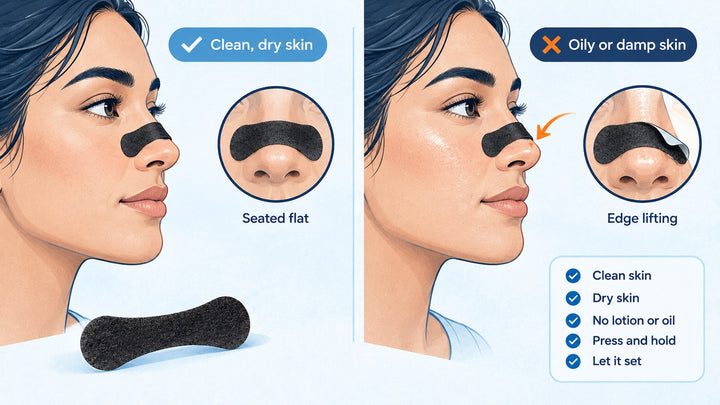
- Oil resistance: skin oils - especially on the nose - are the main reason strips lose grip mid-wear. If your skin tends to be oily, this is the most important adhesive property to prioritize.
- Bond-on-contact: a strip that needs long pressing to adhere may lose grip earlier than one that bonds quickly and firmly.
- Duration: look for strips rated for 8–12 hours if you're using them overnight; shorter-rated strips may underperform.
Standard adhesive formulations handle dry skin in a temperate room well. If you sweat, work out, or run hot, seek an explicitly labeled "extra hold" or sport formulation.
4. Skin Compatibility and Hypoallergenic Materials
Your nose is one of the more sensitive areas of your face. A strip worn nightly means roughly 30 adhesive applications per pack - that's significant cumulative exposure for your skin. Low-quality adhesives or materials with common irritants can cause redness, itching, or a persistent raw patch at the adhesion points.
Hypoallergenic labeling indicates the product is formulated to minimize common sensitizers. It does not mean no one can ever react - any adhesive can irritate individual skin - but it meaningfully reduces the risk compared to unlabeled strips. If you have a history of skin sensitivity or currently use any topical treatments near your nose, hypoallergenic is the baseline to require, not a premium upgrade.
Also check whether the backing material (the part that sits against skin between the adhesive edges) is breathable. A non-breathable material traps moisture, which can itself cause mild irritation over an 8-hour wear.
For a focused look at options for reactive or sensitive skin, the guide to best nasal strips for sensitive skin covers the specific features that matter most.
5. Breathability and Comfort for Your Use Case
Nasal strips serve at least three distinct situations: sleep, exercise, and daytime congestion relief. The best choice differs by use case.
- Sleep: prioritize adhesive longevity (8+ hours), gentle materials, and low-profile design that won't feel bulky when your face is against a pillow.
- Exercise: prioritize sweat-resistant adhesive above everything else, followed by a secure fit that doesn't shift during head movement. A firmer spring-tension strip may be appropriate here.
- Congestion or allergy relief: you may need a strip that works even when your nose is slightly damp from congestion - check that the adhesive is rated for moist-skin application, or make sure you dry the area thoroughly before applying.
A strip optimized for sleep may underperform on a run. A sport-formula strip may feel stiffer than you want for sleep. If you use strips in both contexts, consider keeping two types on hand rather than settling for a compromise product.
6. Ease of Removal
A strip that adheres strongly but removes painfully is a problem for nightly users. Aggressive adhesive can pull fine hairs, leave a sticky residue, or cause minor skin abrasion - especially near the nostril area where skin is delicate.
Signs of a well-designed removal experience:
- Clean peel with no visible adhesive left on skin
- No tearing or stretching of the strip during removal
- No redness or rawness after removal
- Removal possible without a solvent or warm-water soak
Extra-hold strips don't have to be painful to remove. The adhesive type - not just its strength - determines whether it releases cleanly. Look for brands that specifically describe a "clean peel" or "gentle removal," and treat any brand that only markets hold strength without mentioning removal as a caution flag.
7. Cost Per Strip and Pack Value
Pack price is almost meaningless without knowing how many strips are inside. A $10 pack of 10 strips costs twice as much per use as a $15 pack of 30. Always convert to cost per strip before comparing brands.
A few common structures:
- Single pack: highest per-strip cost, useful for trying a new product
- Multi-pack bundles: typically reduce cost per strip by 10–25%
- Subscription: some brands offer auto-ship discounts - check cancellation terms before committing
If you're a nightly user, a month of use means 30 strips. A strip that costs $0.75 per use adds up to roughly $270 per year; one at $0.50 per use costs around $180. The difference in annual spend is significant for what is ultimately a single-use consumable.
For a full look at price ranges across the major brands, see how much nasal strips cost.
8. Single-Use vs. Reusable Format
The majority of nasal strips are single-use adhesive strips - apply, wear, discard. A smaller category of nasal dilators are reusable internal or external devices made from silicone or rigid plastic. These are a different product type with different tradeoffs.
For adhesive strips specifically, reuse is not recommended. Adhesive that has been on skin loses its bond strength, and the spring-band may lose tension or hold skin oils and bacteria from the first wear. A strip used twice is likely to stay on for fewer hours than one fresh from the pack - and the hygiene case for single-use is strong for something worn on your face every night.
If you're weighing reusable dilators against adhesive strips as a category, that comparison gets its own full treatment - but adhesive strips remain the most accessible format for most people.
Quick-Reference Comparison: What Each Criterion Tells You
| Criterion | Why It Matters | What to Look For |
|---|---|---|
| Lift mechanism | Determines how well passages open | Wide, balanced lift over narrow pull-point |
| Sizing | Affects coverage and adhesion | Strip reaches nostril flares without overhang |
| Adhesive strength | Keeps strip on through sleep or sweat | Sweat- and oil-resistant; 8+ hr rating |
| Skin compatibility | Prevents irritation from nightly use | Hypoallergenic materials, breathable backing |
| Use-case fit | Sleep vs. sport needs differ | Match strip type to your primary use |
| Removal ease | Protects skin over repeated use | Clean peel, no residue, no rawness |
| Cost per strip | Real value benchmark | Calculate strips ÷ price, compare bundles |
| Single-use format | Hygiene and consistent performance | Fresh strip each use; no reuse of adhesive strips |
How Nelamant Air Measures Up Against This Checklist
Running Nelamant Air through each of the eight criteria gives a clear picture of what it's designed for and who it suits best.

Lift mechanism: Nelamant Air uses a wider band designed to distribute lift more evenly across the nasal bridge rather than concentrating tension at a single pull point. This broader, more balanced lift is the central design argument for it - you get more of the nasal valve opened with less localized pressure.
Sizing: The strip is designed to cover a broad range of nose widths.
Adhesive: Nelamant Air uses an extra-hold adhesive formulated to resist sweat and oil - the two main causes of premature peeling. This makes it appropriate for both overnight use and exercise.
Skin compatibility: The materials are hypoallergenic and designed to peel off cleanly without sticky residue. Hypoallergenic does not guarantee no reaction for every individual, but it reduces the risk significantly for nightly use.
Use-case fit: Nelamant Air is built for sleep, workouts, and congestion relief - all three. The combination of sweat-resistant adhesive and softer materials means it's not a trade-off product that optimizes for one context at the cost of another.
Removal: Described as peeling off cleanly with no sticky residue - a meaningful quality for anyone applying a strip every night for a month.
Cost per strip: At $14.99 for 30 strips, the per-strip cost is $0.50 - one month of nightly use per pack. Two-pack and three-pack bundles reduce that further. See the Nelamant Air design comparison for a side-by-side look at how it compares to alternatives on specific design features.
Format: Single-use, drug-free, mechanical action only. No medication, no prescription required.
Which Type of Nasal Strip Is Right for Your Situation?
Once you know what to look for, the next question is which specific product fits your use case. The considerations shift depending on whether you're primarily dealing with snoring, congestion, exercise performance, or sensitive skin - and the overlaps between those situations.
- General use / first-time buyer: Start with a standard 30-strip pack from a brand with clear hypoallergenic and hold-strength claims. Test for a week before buying in bulk.
- Snoring or sleep quality: Prioritize overnight adhesion and comfortable materials. Remember that nasal strips help with nose-based snoring specifically - they support the nasal opening, and are not a treatment for all causes of snoring or for sleep apnea.
- Exercise: Sweat-resistant adhesive is the non-negotiable criterion. Everything else is secondary.
- Sensitive or reactive skin: Hypoallergenic is baseline; look also for clean-removal claims and breathable backing.
- Value-focused buyer: Calculate cost per strip across bundle sizes; a higher per-pack price with more strips often delivers better value than a cheaper small pack.
For a fully curated look at which products perform best in each of these categories, the guide to best nasal strips covers the full landscape with audience-specific recommendations.

Frequently Asked Questions
What size nasal strip should I use?
The strip's adhesive section should span from just below the bony bridge to the outer edge of each nostril without overhanging. If the strip is too short to reach your nostril flares, go up a size; if it extends past them, edges won't bond flat and the strip will peel sooner. When in doubt between sizes, larger tends to work better for most adults than smaller. See the nasal strip sizes guide for a more detailed fit reference.
Do more expensive nasal strips work better?
Not automatically. Price reflects materials, adhesive quality, and brand margin - not always performance. A mid-range strip with a wide lift design and sweat-resistant adhesive will outperform an expensive strip with a poor lift mechanism. Use the eight criteria above as your filter rather than price alone. That said, the cheapest options often cut corners on adhesive quality or material safety, so the very bottom of the price range carries more risk. For context on where prices land across the market, see how much nasal strips cost.
What should I look for in nasal strips if I have sensitive skin?
Hypoallergenic labeling is the starting point, but also look for strips that describe clean, residue-free removal - adhesive residue left on skin is a common irritation trigger. Breathable backing material reduces moisture buildup during wear. If you have a history of adhesive reactions, test a single strip on a less sensitive area of skin before committing to a full pack. The best nasal strips for sensitive skin guide covers specific options in detail.
Can I use the same nasal strip for sleeping and workouts?
A strip with extra-hold, sweat-resistant adhesive - designed for workouts - will also perform well overnight. The reverse isn't always true: a strip optimized for sleep comfort may not bond strongly enough to survive an hour of heavy sweating. If you only want one product for both uses, lean toward the sport-grade adhesive version and accept that it may feel slightly firmer than a sleep-specific strip.
How do I know if a nasal strip's adhesive is strong enough?
Check for explicit "extra hold," "sport," or "sweat-resistant" labeling. If a brand only lists hold duration without describing what conditions it's rated for, assume it's tested under dry, room-temperature conditions - which may not match your use case. Reading return or exchange policies can also be telling: brands confident in their adhesive tend to offer more generous trial terms.
Are there nasal strips that don't leave residue?
Yes. Strips formulated with clean-peel adhesives are designed to lift off without leaving a sticky film. Look for this described explicitly in product materials rather than inferring it from hypoallergenic claims - the two properties are related but not the same. Hypoallergenic means fewer irritating ingredients; clean peel means the adhesive bond releases fully on removal. Nelamant Air describes both properties. If residue has been a problem with strips you've tried before, it's a sign the adhesive type - not just the brand - needs to change.
The Bottom Line on How to Choose Nasal Strips
Choosing nasal strips comes down to eight practical criteria: lift design, sizing, adhesive strength, skin compatibility, use-case fit, removal ease, cost per strip, and single-use hygiene. Run any strip you're considering through that list and the right choice becomes obvious quickly. A wider lift, sweat-resistant adhesive, and hypoallergenic materials cover the needs of most adults using strips for sleep or exercise - and paying attention to cost per strip rather than pack price keeps your annual spend where it should be.
When you know how to choose nasal strips, you stop replacing packs that peel off at 3 a.m. and start getting a consistent result every night.