Thomas Tiemann

Most nasal strips cost between $0.25 and $1.50 per strip, depending on the brand, adhesive quality, and how many you buy at once. A standard 30-strip box from a mid-range brand runs roughly $10–$15, while store-brand options can dip below $8 and premium strips can push past $20. Knowing how much do nasal strips cost per strip - not just per box - is the fastest way to compare value across brands.
- Per-strip cost typically ranges from about $0.25 (budget/store-brand) to $1.50+ (small premium packs).
- Buying larger packs almost always lowers your per-strip cost significantly.
- Adhesive strength, lift design, and skin compatibility vary noticeably across price tiers.
- At $14.99 for 30 strips, Nelamant Air works out to roughly $0.50 per strip - a month of nightly use.
- FSA eligibility can reduce your effective out-of-pocket cost; see whether nasal strips are FSA-eligible before you buy.
What Nasal Strips Typically Cost
Nasal strip pricing breaks cleanly into three tiers. Budget options are generally store-brand or generic strips sold at pharmacies and warehouse clubs. Mid-range strips include the major national brands and direct-to-consumer options like Nelamant Air. Premium refers to smaller specialty packs or strips marketed with extra features such as extended wear or scented variants.
The table below shows approximate retail price ranges by tier. Competitor prices change frequently - always check current listings before purchasing.
| Tier | Typical pack size | Approx. box price | Approx. cost per strip |
|---|---|---|---|
| Budget / store-brand | 30–50 strips | $6–$9 | ~$0.18–$0.30 |
| Mid-range (national / DTC brands) | 26–30 strips | $10–$16 | ~$0.40–$0.55 |
| Premium / small-batch specialty | 10–26 strips | $12–$22 | ~$0.80–$1.50+ |
| Nelamant Air | 30 strips | $14.99 | $0.50 |
Price-Per-Strip: Why the Math Matters
A box that looks cheap on the shelf can cost more per strip than a larger bundle. A 10-strip premium pack at $12 works out to $1.20 per strip - roughly six times the per-unit cost of buying 50 budget strips for $10. Before comparing boxes, divide the price by the strip count. That single step cuts through most of the pricing confusion.
What Drives the Price of Nasal Strips
Understanding how nasal strips work and why the lift design matters makes the price differences easier to evaluate. The main cost variables are:
- Adhesive formulation. Stronger, sweat-resistant adhesives that hold through the night cost more to manufacture than basic contact adhesives. Strips that peel off cleanly without leaving sticky residue typically use a more engineered adhesive layer.
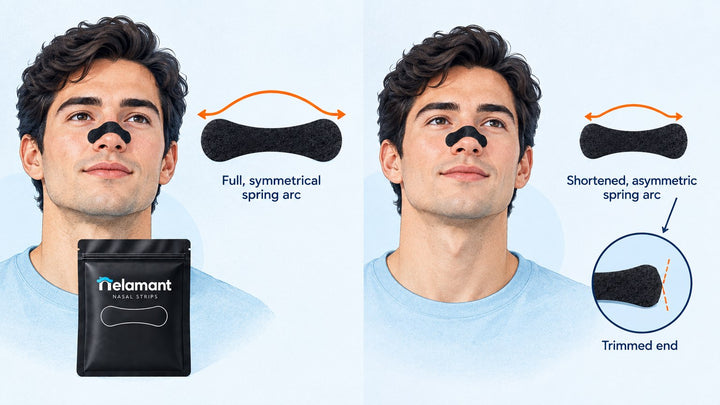
- Structural spring material. The rigid band inside the strip provides the lifting force. A wider, more balanced band distributes lift across the bridge of the nose more evenly than a narrow single-point spring - and that design takes more material and precision to produce.
- Skin-compatibility materials. backings and gentle release layers add to the bill of materials. Budget strips often skip these, which can matter if you have sensitive skin or wear a strip every night.
- Pack size and retail channel. Pharmacy end-cap pricing carries retail markup. Buying direct or in multi-packs lowers the per-strip cost considerably.
- Brand and marketing overhead. Large national brands carry significant advertising spend that gets priced into the product.
Budget Strips vs. Premium Strips - What You Actually Get
The honest difference between a $0.25 strip and a $0.50 strip is often not the lifting mechanism itself but the adhesive performance and materials. Budget strips may work adequately for occasional or daytime use. Where they tend to fall short:
- Adhesive that loosens overnight, especially if you sweat or have oily skin
- Narrower spring bands that create a single pull point rather than an even lift
- Backing materials that can leave residue or irritate skin used nightly
That gap matters more for a nightly user than for someone who wears a strip once during a cold. If you use a strip every night for a month, a strip that falls off at 3 a.m. delivers zero value - so the cheaper per-strip price is misleading.
For a ranked look at which budget options actually hold up, see the guide to best cheap nasal strips. If you shop primarily through Amazon, the guide to best nasal strips on Amazon covers the most widely available options with honest trade-offs.
How to Choose Nasal Strips Without Wasting Money
Price per strip is useful, but it's only one input. The right strip for your situation depends on a few practical questions:
- How often will you use them? Daily nightly use demands better adhesive and skin-friendly materials. Occasional use during congestion can tolerate a simpler strip.
- Do you have oily or sensitive skin? Oily skin reduces adhesion on any strip, so a stronger adhesive formulation saves you from wasted strips. Sensitive skin needs a clean-release backing.
- What's your nose bridge width? A wider spring provides a more even lift. If previous strips have felt like they tug at one point, the spring geometry is probably too narrow for your bridge.
- Will you wear it during exercise or sleep? Both involve movement and moisture. A strip designed for workouts or overnight wear needs a meaningfully stronger adhesive than one designed for a few hours of desk use.
For a full framework on matching strip features to your needs, the guide on how to choose nasal strips without wasting money walks through each factor in detail.
How Nelamant Air Fits the Value Equation
At $14.99 for 30 strips, Nelamant Air works out to exactly $0.50 per strip - a month's nightly supply in one box. The wider spring is designed to deliver a broader, more balanced lift across the bridge rather than a concentrated pull at a single point. The extra-hold adhesive is built to resist sweat, skin oil, and overnight movement, which means fewer strips lost partway through the night. The materials and clean-peel release are aimed at people who use a strip every single night and need their skin to hold up across weeks of use.
Two-pack and three-pack bundles bring the per-strip cost down further. If you use Nelamant Air nightly, bundling is the straightforward way to reduce cost without switching to a lower-quality strip.

Are Nasal Strips Worth It?
Whether nasal strips are worth it depends on what you're comparing them to. Against other drug-free nasal airflow options, the math is generally favorable:
| Option | Approx. cost per use | Drug-free? | Reusable? |
|---|---|---|---|
| Adhesive nasal strip (mid-range) | ~$0.40–$0.55 | Yes | No (single-use) |
| Nasal decongestant spray (OTC) | ~$0.30–$0.60 per dose | No | N/A |
| Internal nasal dilator (reusable) | Higher upfront; low per-use over time | Yes | Yes |
| Nasal corticosteroid spray (Rx) | Varies; insurance-dependent | No | N/A |
Adhesive nasal strips have no drug interactions, no rebound congestion risk, and no risk of overuse - you simply peel one off and go. For someone using them nightly for snoring or congestion-related sleep disruption, $15 a month is a low-friction, low-risk cost. For occasional use during a cold or workout, even a $0.50 strip used a few times a week costs well under $10 a month.
One thing worth checking before you buy: whether nasal strips are FSA-eligible at your plan. If they qualify, you're spending pre-tax dollars, which lowers the effective price by your marginal tax rate.

Frequently Asked Questions
How much does a box of nasal strips cost on average?
A standard 30-strip box of mid-range nasal strips typically retails for $10–$16. Budget or store-brand options in larger packs can bring the box price below $10, while smaller premium packs can exceed $20 for fewer strips.
What is the nasal strips price per strip for popular brands?
Per-strip cost varies widely. Budget/generic strips can run $0.18–$0.30 per strip in large packs. Major national brands typically fall in the $0.40–$0.65 range per strip. Nelamant Air is $0.50 per strip at the standard 30-pack price. Always divide the box price by strip count rather than comparing box prices directly - pack sizes differ enough to be misleading.
Are nasal strips worth it compared to nasal sprays or dilators?
For drug-free, nightly nasal airflow support, adhesive strips are competitively priced with most OTC alternatives and carry no medication-related risks. Reusable internal dilators cost more upfront but less per use over many months. Whether strips are worth it depends on whether the mechanical lift addresses your specific issue - strips support the nasal opening externally and work best when the bottleneck is the nasal valve or bridge, not deeper obstruction or inflammation.
Do nasal strips qualify as an FSA expense?
Nasal strips may be eligible under many Flexible Spending Account and Health Savings Account plans as an over-the-counter item, but eligibility depends on your specific plan administrator. Check with your FSA/HSA provider before purchasing. The full guide on whether nasal strips are FSA-eligible covers what to look for and how to check.
Does buying a larger pack save money on nasal strips?
Yes, consistently. Moving from a 10-strip pack to a 30-strip pack almost always reduces the per-strip cost substantially - depending on the current pack prices . Multi-pack bundles (two or three boxes) reduce it further. If you use strips nightly, buying in larger quantities is the single most effective way to lower your ongoing cost without changing brands.
Nasal strips sit in a straightforward price range: $0.25–$1.50 per strip, with most people paying $0.40–$0.55 for a reliable mid-range option. The key question when evaluating how much nasal strips cost isn't the box price - it's whether the adhesive and lift design justify the per-strip number for your actual use pattern. A strip that stays on all night and peels cleanly is worth more per unit than one that doesn't make it to morning. Buy the right pack size for your frequency, check FSA eligibility, and the cost works out to less than most people expect for a nightly habit.