Thomas Tiemann

This article is for general information, not medical advice.
Yes, alcohol does make you snore-and it can trigger snoring even in people who don't normally do it. Alcohol is a muscle relaxant, and the muscles that hold your airway open while you sleep are no exception. When they go slack, the soft tissue at the back of your throat vibrates with each breath, producing the sound you or your partner notices. If you already snore, drinking tends to make it louder and more frequent. The good news is that alcohol-related snoring is tied directly to how much you drink and when, which means it responds well to a few practical changes. For a broader look at managing the problem, the guide to how to stop snoring covers the full range of approaches.
- Alcohol relaxes the muscles that keep your upper airway open, narrowing the passage and increasing snoring.
- The effect is strongest in the first one to three hours of sleep, when blood alcohol is still elevated.
- Even moderate drinking can cause snoring in people who otherwise sleep quietly.
- Stopping or cutting back on alcohol typically reduces or eliminates alcohol-related snoring within a few nights.
- If snoring persists even on nights you haven't drunk, something else is driving it-and it's worth investigating.
How Alcohol Relaxes the Airway and Causes Snoring
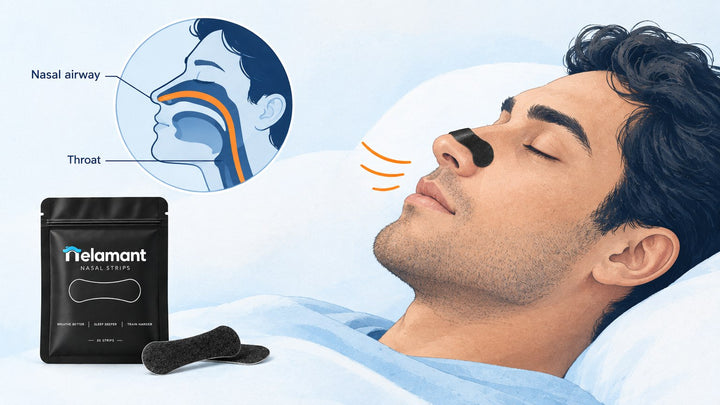
Your upper airway stays open during sleep because several small muscle groups-in the soft palate, the tongue, and the throat walls-maintain just enough tone to hold the passage clear. Alcohol suppresses the central nervous system signals that keep those muscles active. The result is a softer, floppier airway that collapses partially with each breath you take.
As air moves through the narrowed passage, it accelerates and causes the soft palate and uvula to flutter. That flutter is the snoring sound. The narrower the passage, the louder and more sustained the vibration. This is the same basic mechanism behind ordinary snoring-alcohol simply makes the conditions worse and more reliable. The full explanation of what causes snoring covers the other anatomical and lifestyle factors that contribute.
Why the Effect Peaks in the First One to Three Hours of Sleep
Alcohol is absorbed quickly and reaches peak blood concentration within thirty to ninety minutes of your last drink, depending on what you consumed and whether you ate. For most people, that window lands right at or shortly after they fall asleep. Muscle relaxation in the airway is most pronounced when blood alcohol is highest, so snoring is typically loudest in the first half of the night. As your body metabolizes the alcohol over the following hours, muscle tone gradually returns and snoring often eases-though sleep architecture disruption can carry through to morning regardless.

Why Snoring After Drinking Is Often Louder or Worse
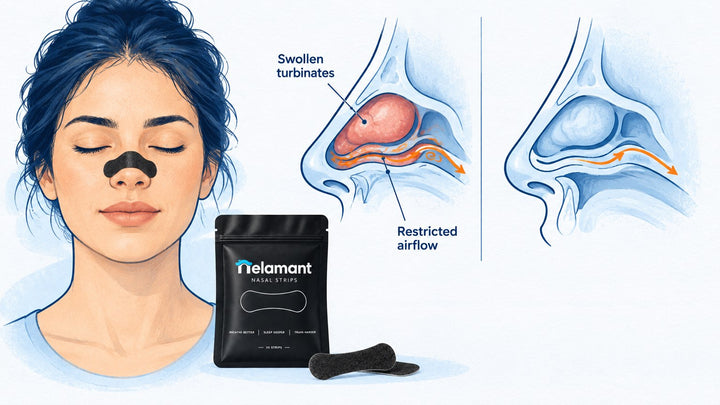
Beyond muscle relaxation, alcohol contributes to snoring in a second way: it causes mild nasal congestion in some people. Alcohol prompts histamine release and dilates blood vessels in the nasal lining, which can cause tissues to swell and restrict airflow through the nose. When nasal airflow is reduced, the body compensates by drawing more air through the mouth, routing it directly over the most vibration-prone throat structures.
This nasal component matters because opening the nasal passage can take some of the load off the throat. If alcohol-related nasal swelling is narrowing your airway, a nasal strip can help keep that passage open through the night. Nelamant Air nasal strips use a wider, balanced lift across the bridge to support the nasal opening without medication-which means there's nothing to interact with what you drank. They won't undo the muscle relaxation alcohol causes, but reducing the nasal contribution to the problem is a straightforward step you can take right now.
Does Alcohol Make Existing Snoring Worse?
If you already snore on most nights, adding alcohol to the picture amplifies the underlying problem rather than creating a separate one. The muscles that are already closer to their limit of tone get pushed further into relaxation, so the airway collapses more completely and the snoring becomes louder, longer, or more disruptive to your sleep quality.
Habitual snorers who drink regularly may find it hard to separate alcohol's contribution from everything else that's going on. If snoring started or noticeably worsened around the same time your drinking habits changed-or around other life changes like weight gain, a new medication, or aging-the guide to why you started snoring can help you work through the likely causes.
What You Can Do Tonight
Alcohol-driven snoring responds directly to behavioral changes. These steps address both the muscle-relaxation and nasal-congestion mechanisms:
- Set a cut-off time. Stopping drinking two to three hours before bed gives your body time to metabolize some of the alcohol before you fall asleep, reducing peak blood alcohol during the critical first sleep cycle. The longer the gap, the less pronounced the airway relaxation.
- Sleep on your side. Back sleeping lets the relaxed tongue and soft palate fall directly toward the airway by gravity. Side sleeping keeps them to one side and reduces the chance of complete obstruction. A body pillow or a rolled towel sewn into the back of a sleep shirt can help you stay on your side through the night.
- Stay hydrated. Alcohol is a diuretic. Dehydration thickens mucus and dries out the throat and nasal tissues, making vibration worse. Drinking water between alcoholic drinks and before bed reduces this effect.
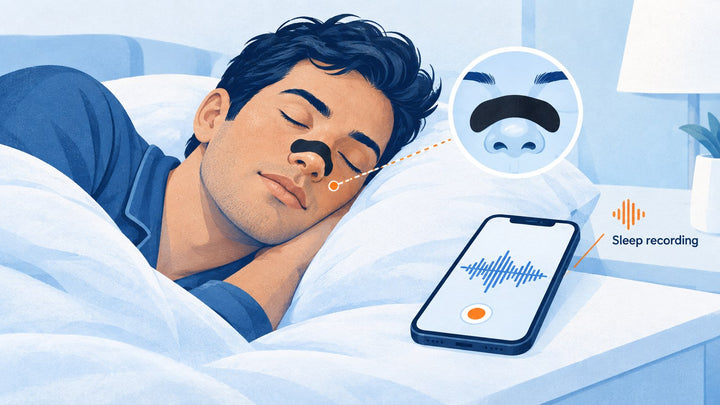
- Support your nasal passage. If nasal congestion is part of your alcohol response, applying a nasal strip at bedtime helps hold the nasal passage open so you can draw more air through your nose rather than your mouth and throat. This is a mechanical, drug-free step that works alongside any of the others above.
Nelamant Air Nasal Strips
Extra-hold adhesive, materials, wider balanced lift. Drug-free nasal support for sleep-including nights after drinking.
$14.99 for 30 strips · 30-day returns
Shop Nelamant Air
When to See a Doctor
Snoring that happens only or mostly after drinking is usually benign and responds to the steps above. You should speak with a doctor if:
- Snoring persists on nights you haven't drunk at all, especially if it's loud or frequent.
- You wake up gasping, choking, or with a racing heart.
- A bed partner notices you stop breathing during sleep.
- You're regularly exhausted during the day despite what feels like adequate sleep.
- Snoring has worsened alongside significant weight changes or new medications.
These patterns can point to obstructive sleep apnea, a separate condition that alcohol can unmask or worsen but cannot cause on its own. Nasal strips support the nasal passage only; they do not open an obstructed throat and are not a treatment for sleep apnea. The guide to snoring vs. sleep apnea explains how to tell the difference and when a sleep study makes sense.
Frequently Asked Questions
Does alcohol cause snoring even if I don't normally snore?
Yes. Alcohol relaxes airway muscles enough to produce snoring in people whose baseline muscle tone is sufficient to keep the airway clear when sober. For occasional drinkers or people with naturally good airway muscle tone, snoring may only appear after drinking and disappear once alcohol is metabolized.
How long after drinking does the snoring effect last?
The effect depends partly on how much you drink and how close to bedtime you drink it. As your liver metabolizes the alcohol-at a rate that varies -muscle tone gradually returns. Snoring may ease during the second half of the night even if you drank a moderate amount.
Does red wine cause more snoring than other types of alcohol?
Red wine contains histamine, which can contribute to nasal symptoms in sensitive individuals. If you notice worse snoring specifically after red wine, that nasal component may be a bigger factor for you than for someone whose snoring is purely muscle-relaxation driven. The effect of alcohol overall, however, applies regardless of type.
Can a nasal strip help with snoring after drinking?
A nasal strip can help if nasal congestion is part of why you snore after drinking-it physically holds the nasal passage open so more air passes through the nose rather than the mouth and throat. It won't reverse the muscle relaxation that alcohol causes throughout the airway, so it works best as one part of a broader approach (cut-off time, side sleeping, hydration) rather than as a standalone fix.
The Bottom Line
Does alcohol make you snore? Consistently, yes-through muscle relaxation, nasal congestion, and disrupted sleep architecture. The effect is dose-dependent and timing-dependent, which means cutting back, drinking earlier in the evening, and sleeping on your side can each make a measurable difference. If the snoring only happens after you drink, it's almost certainly alcohol-driven and worth addressing at the source. If it persists on sober nights too, there's something else going on-and that's worth a closer look.