Thomas Tiemann

Nose snoring and mouth snoring come from different places in your airway, and the fix for one rarely works for the other. Nose snoring happens when airflow through your nasal passages is restricted; mouth snoring happens when you sleep with your mouth open and the soft tissues at the back of your throat vibrate. Knowing which type you have is the fastest way to stop wasting money on the wrong solution.
- Nose snoring originates in the nasal passages; mouth snoring originates in the throat and soft palate.
- A simple close-your-mouth test takes about 30 seconds and gives you a strong first signal of which type you have.
- Nasal strips are well-matched to nose snoring; they do not address the throat vibration behind mouth snoring.
- Many people have elements of both types - mixed snoring is common and may need more than one approach.
- If snoring is loud, choking, or paired with daytime fatigue, get evaluated for sleep apnea.
For a broader look at what drives snoring and how to approach it, see the full guide to how to stop snoring.
What Actually Causes Snoring - Nose or Mouth?
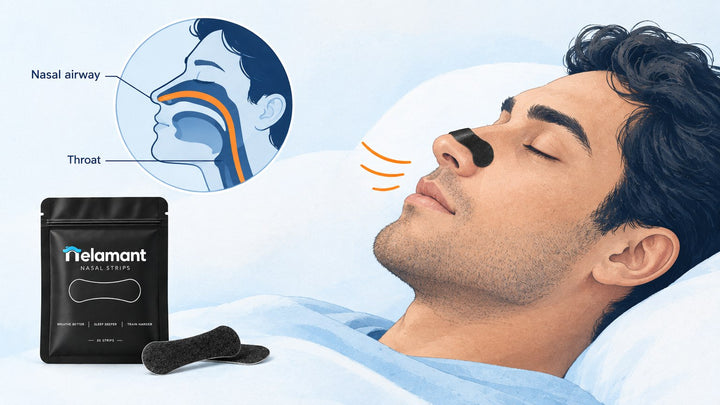
Snoring is the sound of soft tissue vibrating when partially obstructed airflow creates turbulence. Where that obstruction sits determines the type. The two most common sites are the nasal passages and the oropharynx - the area at the back of the mouth and upper throat - and they produce snoring for entirely different mechanical reasons.
How Nose Snoring Happens
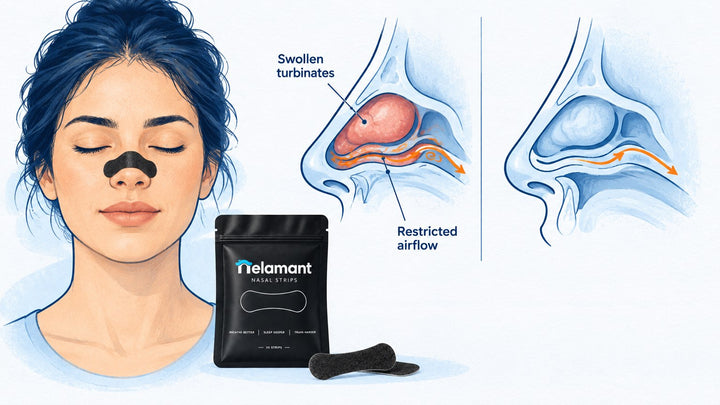
When your nasal passages are narrowed - by congestion, inflammation, structural narrowing, or simply the way your nasal valves sit - air has to push through a smaller opening. That faster, more turbulent flow vibrates the soft tissues of the nasal cavity and nasopharynx, producing a sound that is often higher-pitched or whistling in quality. Snoring through the nose tends to happen whether your mouth is open or closed, and it gets noticeably worse during allergy season or a cold.
How Mouth Snoring Happens
Mouth snoring happens when you sleep with your mouth open. The jaw drops back, the tongue falls toward the throat, and the soft palate and uvula sag. Airflow moving across those loose, relaxed tissues causes the lower-pitched, rumbling vibration most people picture when they think of snoring. Alcohol, muscle relaxants, sleeping on your back, and nasal blockage that forces mouth breathing are all common triggers. The defining feature: the noise stops or drops sharply when the mouth is closed.
The Snoring Test: How to Tell Which Type You Have
You can get a strong directional answer in under two minutes with two simple tests. Neither replaces a clinical evaluation, but both give you enough information to start targeting the right solution. If you are not sure whether you snore at all, the guide to how to tell if you snore covers recording methods and partner cues in detail.
The Close-Your-Mouth Test
This is the fastest first screen. The idea is to recreate your snoring sound while awake - which is easier than it sounds.
- Sit quietly and breathe normally through your nose for a few seconds.
- Try to produce a snoring sound while keeping your mouth firmly closed. Some people find making a low humming vibration at the back of the throat helps.
- Now open your mouth and try to produce the same sound with your mouth open.
- Notice which version is easier or louder for you.
What the result suggests: If you can reproduce a snoring sound easily with your mouth closed, your snoring is likely nose-dominant. If it only works - or works much more easily - with your mouth open, mouth snoring is the more likely culprit. If both are roughly equal, you may be dealing with a mixed pattern.
The Close-One-Nostril Test
This test checks for asymmetric nasal restriction, which is common with a deviated septum or inflammation on one side.
- Press one nostril closed with your finger and breathe in slowly through the open one.
- Notice whether airflow feels significantly restricted or causes vibration.
- Repeat on the other side.
- Then try breathing through both nostrils together and compare the effort.
What the result suggests: If breathing through one or both nostrils feels noticeably constricted or produces a whistling sensation, nasal restriction is likely contributing to your snoring. If both nostrils feel open and easy, the source is probably further back in the mouth or throat.

Recording Yourself or Asking a Partner
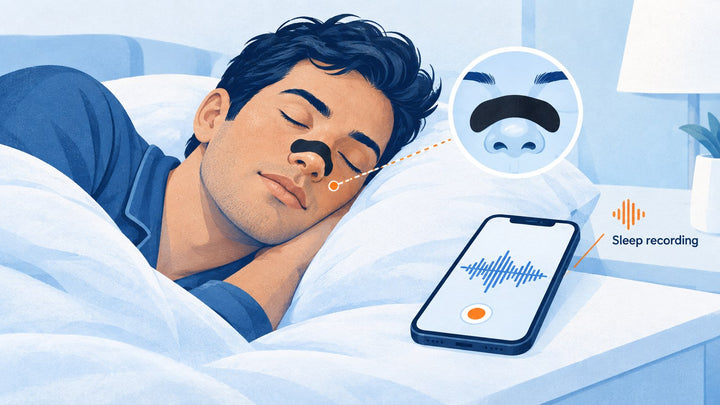
A short recording - even a smartphone left on your nightstand - can tell you a lot. Nose snoring tends to be higher in pitch, sometimes with a nasal or wheezing quality. Mouth snoring tends to be lower, louder, and more of a classic rumbling rattle. A partner may also have noticed whether your mouth is open or closed when you snore, which is one of the clearest real-world signals of all. If your partner reports that your snoring is very loud, punctuated by pauses or gasps, or that you seem to stop breathing momentarily, that pattern warrants a conversation with a doctor rather than a self-test.
Signs You're Snoring Through Your Nose
Beyond the tests above, a few consistent patterns point toward nose-dominant snoring:
- You wake up with your mouth closed but you or a partner still heard snoring.
- Snoring gets worse when you're congested. A cold, allergies, or a dry environment all narrow the nasal passages and intensify nose snoring.
- You notice one side is harder to breathe through than the other, especially at night.
- The sound is higher-pitched or whistling rather than a deep rumble.
- You don't wake up with a notably dry mouth - a sign that your mouth stayed closed overnight.
- Snoring changes with your nose. Blowing your nose before bed, using a saline rinse, or sleeping in a more humid room makes a noticeable difference.

Signs You're Snoring Through Your Mouth
Mouth snoring has its own recognizable fingerprint:
- Dry mouth or a sore throat on waking - a strong signal that you breathed through your mouth for most of the night.
- A partner or recording confirms your mouth is open when you snore.
- The sound is a low, rattling rumble rather than a whistle or whine.
- Snoring is worst when you sleep on your back, because the jaw and tongue fall furthest back in that position.
- It's worse after alcohol or a heavy meal, both of which relax the muscles that keep the jaw and tongue forward.
- Your nose feels clear, so nasal restriction doesn't seem to explain it.
What to Do About Nose Snoring
Once you've identified the nose as the source, the solutions focus on opening the nasal passages rather than on the throat or jaw. Most approaches work by improving airflow before it reaches the back of the throat, reducing the turbulence that causes vibration.
Nasal Strips and External Dilators
External nasal strips are one of the most direct tools for nose snoring. They attach across the bridge of the nose and gently spring the sides of the nasal passages open, widening the nasal valve and reducing airflow resistance. For a detailed look at how that mechanism works and when strips are likely to help, see the full guide to whether nasal strips help snoring.
Nelamant Air nasal strips use a wider, more balanced lift across the bridge - a broader contact area rather than a single pull point - which supports the nasal opening more evenly. The extra-hold adhesive is designed to stay in place through the night, including through movement and mild sweating. If nasal restriction is your primary snoring driver, a drug-free mechanical strip worn consistently is a reasonable first step before trying more involved interventions.
Other options for nose snoring include saline nasal rinses before bed, adjusting sleep position (side-sleeping reduces nasal congestion compared to back-sleeping), managing allergens in the bedroom, and using a humidifier if dry air is contributing. If structural issues like a deviated septum are involved, those may need clinical attention that strips alone cannot address.
What to Do About Mouth Snoring
Mouth snoring solutions aim to keep the mouth closed or to keep the tongue and jaw positioned forward so they don't obstruct the airway. Common approaches include:
- Positional changes: Side-sleeping reduces the degree to which the jaw and tongue fall back. A body pillow or positional device can help maintain the position through the night.
- Chin straps: Hold the jaw closed during sleep, which can reduce mouth breathing and the associated soft-palate vibration.
- Mandibular advancement devices (MADs): Fitted mouthguards that hold the lower jaw slightly forward, keeping the airway more open. These require a proper fit and are not one-size devices.
- Addressing nasal blockage: Sometimes mouth snoring is secondary - the mouth is open because the nose is blocked. Clearing the nose can allow the mouth to stay closed naturally.
Nasal strips are not the primary tool for mouth snoring. They open the nasal passages; they do not hold the jaw in position or prevent soft-palate collapse. That said, if nasal congestion is what's forcing your mouth open, clearing it with a strip may reduce mouth breathing enough to matter.
For the specific question of how to address snoring that originates in the nasal passages - including lifestyle changes, positional strategies, and when to escalate - the sibling guide to how to stop snoring through your nose covers that in full. If you're working through the broader picture of what's driving your snoring, the main how to stop snoring guide is the right starting point.
When the Type Is Mixed or Unclear
Most people do not fall cleanly into one category. Nasal restriction can force mouth breathing, which then creates throat snoring on top of the original nasal problem. Sleeping position changes how much each pathway contributes. And factors like alcohol, congestion, weight, and fatigue shift the balance night to night.
If both tests above produced ambiguous results, or if you clearly snore in both positions, a combined approach makes sense - addressing nasal airflow and mouth position together. The how to stop snoring guide covers the full range of causes and layered solutions if you need a broader framework.
When snoring is severe, accompanied by witnessed pauses in breathing, or paired with significant daytime sleepiness, the snoring type question becomes secondary. Those patterns can indicate sleep apnea, which needs a clinical evaluation - not a self-test. No nasal strip or positional fix substitutes for that assessment.
Frequently Asked Questions
Can you snore through your nose and mouth at the same time?
Yes. Mixed snoring - where both nasal restriction and mouth-open breathing contribute - is common. It often develops when a partially blocked nose forces the mouth open, adding throat vibration on top of the original nasal source. Addressing the nasal component first sometimes resolves enough of the problem to make the remaining snoring manageable.
Is nose snoring or mouth snoring worse for sleep quality?
Neither type is automatically more disruptive. What matters more is how much the snoring interrupts your breathing, how it affects your sleep partner, and whether any airway obstruction is significant enough to reduce oxygen flow. Loud mouth snoring is often more audible to a partner, but persistent nose snoring can indicate ongoing nasal restriction that affects how rested you feel. Both deserve attention if they're affecting sleep.
What does nose snoring sound like compared to mouth snoring?
Nose snoring tends to be higher-pitched - sometimes a whistle, whine, or nasal buzz. Mouth snoring tends to be the lower, classic rumbling rattle that most people associate with snoring. These are generalizations; individual anatomy varies, and a recording is more reliable than trying to recall a sound while half-awake.
Will nasal strips stop all snoring?
No. Nasal strips support the nasal passages and are best matched to snoring that originates from nasal restriction. They do not address soft-palate vibration, tongue position, or jaw drop - the mechanisms behind mouth snoring. For a detailed breakdown of when strips help and when they don't, see the guide to whether nasal strips help snoring.
How do I do the snoring test if I live alone?
The close-your-mouth and close-one-nostril tests are both self-administered and don't require a partner. For confirmation, a smartphone recording app left on your nightstand can capture both the sound and (with some apps) the timing of snoring events. The guide to how to tell if you snore covers solo recording methods in more detail.
The Bottom Line
Nose snoring vs mouth snoring is not just a semantic distinction - it determines which tools are actually useful for you. Nose snoring responds well to anything that opens the nasal passages: strips, congestion management, positional changes. Mouth snoring needs solutions that keep the mouth closed or the airway propped open from a different angle. Run the two-step self-test tonight, note whether you wake up with a dry mouth, and use that information to choose your first fix rather than guessing. If the picture is mixed or the snoring is severe, start with the full how to stop snoring guide and work from there.