Thomas Tiemann

This article is for general information, not medical advice.
Women snore for many of the same structural reasons men do, but hormonal shifts across a woman's life-pregnancy, perimenopause, menopause-raise the risk significantly. If you've started snoring or noticed it getting louder, your body's hormone levels are a credible and often overlooked reason why do women snore is such a common search.
- Snoring is not a "male problem"-women snore too, and rates rise sharply during pregnancy and after menopause.
- Hormonal changes reduce the muscle tone that keeps the upper airway open during sleep.
- Pregnancy adds nasal congestion and increased blood volume on top of the mechanical pressure of weight gain.
- Estrogen decline after menopause loosens throat tissue, narrowing the airway.
- Nasal congestion is a major driver that can often be addressed tonight; persistent or loud snoring warrants a doctor visit.
Why Women Snore-The Basic Mechanics
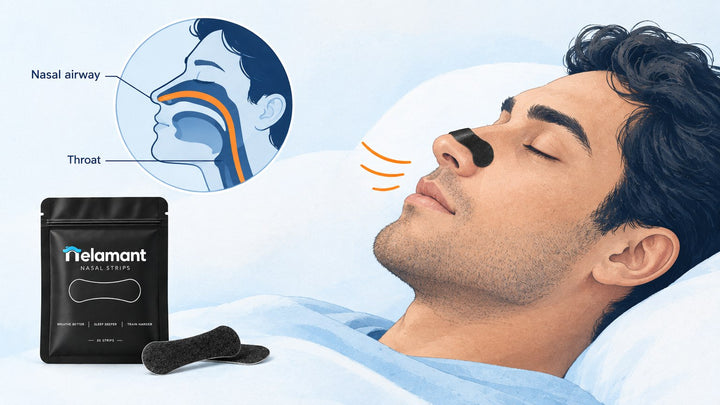
Snoring happens when airflow through the nose or throat is restricted enough to make the surrounding soft tissue vibrate. The narrower the passage, the more turbulent the airflow, and the louder the sound. Any factor that reduces the diameter of that passage-relaxed muscles, swollen tissue, excess weight, or congestion-raises the odds of snoring.
Women are not immune to any of those factors. The widespread idea that snoring is mostly a male issue comes partly from the fact that men, on average, have shorter, wider necks and tend to snore more loudly and more often. But the gap narrows considerably after midlife. For a broader look at what drives snoring across all its causes, the guide to how to stop snoring covers the full picture.
How a Narrowed Airway Produces Sound
During sleep, all the muscles in your body relax, including the muscles that hold your throat and nasal passages open. When those muscles lose enough tone, the airway walls move toward each other with each breath, and the resulting flutter is what you hear as a snore. Almost anything that further reduces muscle tone-alcohol, sedatives, fatigue, hormone shifts-makes this more likely.
How Hormones Affect Snoring in Women
Hormones shape the upper airway in ways that are easy to underestimate. During the reproductive years, women generally have a lower rate of snoring than men of the same age and body weight-and hormones are a significant part of why.
Estrogen, Progesterone, and Upper-Airway Muscle Tone
Progesterone is thought to act as a mild respiratory stimulant, helping keep the muscles of the upper airway more active during sleep. Higher progesterone levels during the luteal phase of the menstrual cycle are associated with more stable breathing at night. When progesterone drops-whether at the end of a cycle, after delivery, or through menopause-that protective effect fades.
Estrogen contributes to maintaining the structural integrity of mucous membranes and connective tissue throughout the airway. As estrogen declines, tissue can become looser and more prone to collapsing inward during inhalation. This is why the hormonal explanation for female snoring is not just theoretical; it tracks closely with the life stages when women's snoring rates climb.
Snoring During Pregnancy
Snoring during pregnancy is common, and it often comes as a surprise to women who never snored before. Several overlapping changes are responsible.
Congestion and Blood-Volume Changes
Blood volume increases substantially during pregnancy. That increased circulation causes the mucous membranes lining the nose to swell-a condition called pregnancy rhinitis that can persist throughout the second and third trimesters. The result is a partially blocked nose that forces breathing through the mouth at night, which is noisier and drier than nasal breathing. For a detailed explanation of this mechanism, see the full article on pregnancy rhinitis.
Hormonal shifts compound the congestion. Rising estrogen and progesterone during pregnancy both influence nasal tissue, and the combination can make the nasal passages feel consistently stuffy even when there is no cold or allergy involved.
Weight Distribution and Airway Pressure
Weight gained during a healthy pregnancy can increase soft tissue around the neck and throat, adding external pressure on the airway. Lying on the back also becomes more common in later pregnancy when side-sleeping is uncomfortable, and the supine position allows the tongue and soft palate to fall backward-narrowing the throat further. If you're looking for nasal strips specifically chosen for use during pregnancy, the guide to best nasal strips for pregnancy covers what to consider.
Snoring that develops during pregnancy and involves gasping, choking, or very frequent waking warrants a conversation with your obstetrician or midwife-gestational sleep-disordered breathing carries its own set of considerations.
Menopause Snoring-Why It Often Gets Worse After 50
Menopause represents the single largest hormonal shift in a woman's adult life, and snoring rates reflect that. Studies suggest that postmenopausal women snore at rates approaching those of men in the same age group, compared with noticeably lower rates in premenopausal women.
Declining Estrogen and Throat-Tissue Laxity
As estrogen levels fall during and after menopause, collagen and connective tissue throughout the body-including the pharynx and soft palate-lose some of their firmness. Looser tissue vibrates more easily. At the same time, women tend to gain weight around the abdomen and neck during this transition, which adds the same mechanical pressure on the airway that contributes to snoring in men with larger necks.
Reduced estrogen also affects nasal tissue, sometimes making the nose feel drier or more congested, which pushes breathing toward the mouth during sleep.
Perimenopause: The Transition Period
Snoring often starts or worsens during perimenopause, the years before periods stop entirely, because hormone levels fluctuate unpredictably rather than declining smoothly. Some nights offer more protection; others do not. Women in their mid-40s who suddenly notice they are snoring-or whose partners first raise the issue-are often in perimenopause even if their cycles appear normal.
Other Contributing Factors Specific to Women
Hormones are not the only story. Several other factors are worth checking if you're trying to understand your own snoring:
- Allergies and seasonal congestion narrow nasal passages and push breathing through the mouth at night. This is covered in detail separately.
- Hypothyroidism, which is more common in women, can cause weight gain and tissue swelling that affects the airway.
- Sleep position matters-back-sleeping promotes tongue-fall and louder snoring regardless of hormone status.
- Alcohol and sedating medications relax throat muscles further; even a small amount has a measurable effect on airway tone during sleep.
- Fatigue deepens sleep and reduces the muscle activity that keeps the airway partially open.
What You Can Do About It
Understanding the cause points toward the right approach. Not every solution works for every type of snoring, but there are practical starting points for most women.
Lifestyle Adjustments
Side-sleeping reduces the gravitational pull on throat tissue. Avoiding alcohol within two to three hours of bed preserves some muscle tone. Treating allergies or congestion before it becomes nighttime obstruction-whether through an antihistamine, a saline rinse, or keeping the bedroom free of allergens-can make a noticeable difference on its own.
Opening the Nasal Passage Mechanically
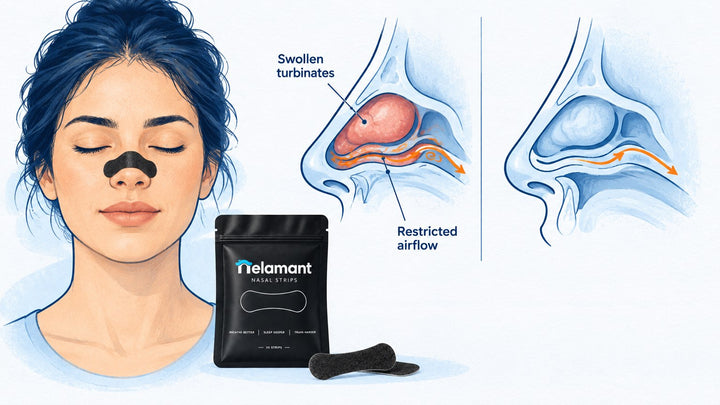
If your snoring is driven mainly by nasal congestion or narrowing-common in pregnancy and menopause-mechanically widening the nasal passage can help reduce the airway resistance that starts the whole cycle. Nelamant Air Nasal Strips use a wider, more balanced lift across the bridge of the nose rather than a single pull point, which helps open both sides of the nasal passage more evenly. The extra-hold adhesive is designed to stay in place through the night, and the materials peel off cleanly without residue-useful if you're dealing with already-sensitive skin during pregnancy or the hormonal shifts of menopause. Nasal strips address the nasal component of snoring; they do not affect throat or mouth snoring.


When to See a Doctor
Some snoring is a sign of something that needs medical attention, not just a lifestyle fix. See your doctor if you or your partner notice any of the following:
- Gasping, choking, or pauses in breathing during sleep
- Snoring that is loud enough to disturb others in another room
- Waking repeatedly or feeling unrefreshed regardless of hours slept
- Snoring that develops suddenly during pregnancy alongside headaches or swelling
- New or rapidly worsening snoring after menopause
These patterns can indicate obstructive sleep apnea, which is underdiagnosed in women partly because its symptoms present differently than in men. The article on snoring vs sleep apnea explains the key differences to look for. If persistent nasal congestion is driving your nighttime breathing difficulties, the guide on when to see a doctor for nasal congestion outlines the specific signs that warrant a clinical evaluation.
Frequently Asked Questions
Is it normal for women to snore?
Yes. Snoring is common across all sexes. Women tend to snore less than men during their reproductive years, but the gap narrows significantly during pregnancy and after menopause. If you've recently started snoring, it is worth identifying whether a hormonal, structural, or lifestyle factor is behind it rather than assuming it will resolve on its own.
Does snoring during pregnancy harm the baby?
Mild snoring linked to pregnancy rhinitis and congestion is very common and is not itself harmful. However, snoring that involves gasping, breath-holding, or severe sleep disruption has been associated with complications in some research. If you are pregnant and snoring significantly, discuss it with your obstetrician rather than managing it entirely on your own.
Does menopause make snoring worse?
For many women, yes. Declining estrogen and progesterone reduce the hormonal protection that kept airway muscle tone higher during the reproductive years. The tissue changes and weight redistribution that accompany menopause compound that effect..
Can nasal strips help with snoring caused by congestion?
Nasal strips can help when nasal congestion or narrowing is contributing to the snoring. They work by gently lifting the sides of the nose to reduce airway resistance at the nasal valve. They do not address snoring that originates in the throat, mouth, or from obstructive sleep apnea. For snoring with a clear nasal component-as is often the case in pregnancy rhinitis or menopausal nasal dryness-they are a reasonable first step.
When does pregnancy snoring stop?
For most women, snoring related to pregnancy rhinitis and increased blood volume improves after delivery as circulation normalizes and nasal swelling subsides. This typically happens within a few weeks postpartum, though timelines vary. If snoring continues well after delivery at the same intensity, it is worth raising with a doctor in case there is another contributing cause.
How do I know if my snoring is sleep apnea?
The clearest warning signs are pauses or gasps during sleep, waking frequently, feeling exhausted after a full night's sleep, and morning headaches. Snoring alone does not confirm sleep apnea, but snoring combined with those symptoms-especially in a postmenopausal woman-is a strong reason to get a sleep evaluation. The detailed breakdown is in the guide to snoring vs sleep apnea.
The Bottom Line
Why do women snore? Because hormones, anatomy, pregnancy, and midlife changes all interact with the same basic airway mechanics that cause snoring in anyone. Understanding which factor is driving your snoring-congestion, tissue laxity, sleep position, or something that needs clinical attention-points you toward the right response. If nasal congestion or narrowing is part of the picture, addressing that directly is a practical, drug-free starting point. For anything beyond congestion, a conversation with your doctor is the right next move.