Thomas Tiemann

You can train yourself to breathe through your nose by combining three things: clearing any physical resistance that makes nose breathing feel hard, building daytime awareness habits that gradually replace the mouth-breathing reflex, and setting up the right conditions at night. Most people notice the transition becoming easier within a few weeks of consistent practice. The primary challenge is not anatomy-it is habit and, often, a partially blocked airway that makes mouth breathing feel like the easier option.
- Mouth breathing is usually a habit reinforced by congestion or posture, not a fixed trait.
- Daytime retraining-awareness cues, upright posture, slowing your breath-builds the foundation for nose breathing at night.
- Clearing nasal resistance (congestion, dryness, restricted nasal passages) makes the habit far easier to maintain.
- Nasal breathing exercises accelerate the transition; dedicated practice on top of daily habits compounds progress.
- Realistic timelines vary; most people see meaningful change in two to four weeks with daily effort.
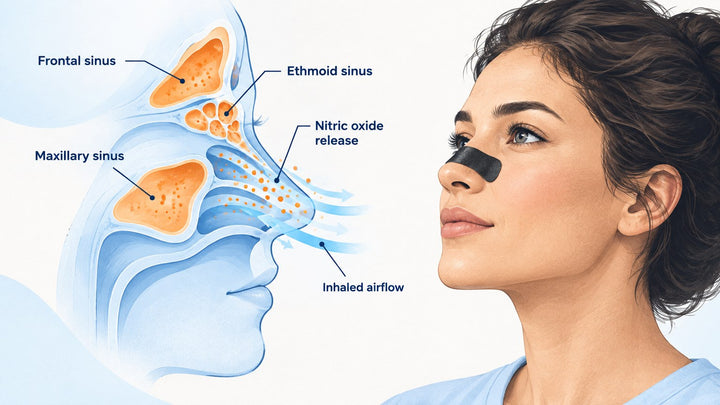
To understand why nose breathing is worth retraining for, read the full guide to the benefits of nasal breathing-it covers what your nose does for air temperature, filtration, and nitric oxide production that your mouth simply cannot replicate.
Why Your Body Defaults to Mouth Breathing
Mouth breathing usually starts as a functional response-congestion during a cold, seasonal allergies, or a deviated septum makes nasal airflow feel effortful, so you switch to your mouth. The problem is that the switch becomes automatic. Your nervous system learns that mouth breathing is the path of least resistance, and it keeps choosing it even after the original congestion clears.
Other common drivers include chronic low-grade nasal swelling (from allergens, dry air, or irritants), poor posture that naturally drops the jaw open, habitual open-mouth posture during screen time, and stress responses that trigger faster, shallower breathing through the mouth. Sleep compounds all of these: muscle tone drops, jaw slack opens, and any existing nasal restriction feels more pronounced when you are lying down.
Understanding your own trigger matters because the fix is different depending on the cause. If it is primarily habit, awareness exercises do most of the work. If it is resistance in the nasal passages, you need to address that first before habit work can stick. Most people are dealing with both at once.
The downstream effects of long-term mouth breathing go well beyond minor inconvenience. Learn about the effects of mouth breathing on oral health, sleep quality, and facial structure to understand what consistent retraining is working against.
How to Retrain Yourself to Nose-Breathe During the Day
Daytime retraining is where the real habit shift happens. Your waking hours give you conscious access to your breathing pattern in a way that sleep does not, and the awareness you build during the day begins to carry over into rest.
The core method is simple: notice, close, breathe. Catch yourself breathing through your mouth, close it, and take three slow nasal breaths before returning to whatever you were doing. Do this every time you notice, without judgment. At first you may need to set a reminder-a recurring phone alarm every thirty minutes works well. Over one to two weeks, the checking becomes automatic.
Posture plays a bigger role than most people expect. A forward head position and rounded shoulders tilt the jaw downward and naturally encourage mouth breathing. Sitting upright with your ears over your shoulders and your lips lightly touching (not pressed together) is the simplest physical cue you can maintain. If you work at a desk, a monitor at eye level reduces the forward-head tendency that drops your jaw open.
Nasal breathing feels more effortful at first because your nose has a higher resistance to airflow than your mouth-that resistance is intentional and beneficial, but it takes some adjustment. Slowing your breath rate is the easiest way to make nasal breathing feel comfortable. Aim for a relaxed rhythm of about five to six seconds in and five to six seconds out through the nose during low-intensity activity. You do not need to count precisely; the goal is simply slower than your current default.
Start with Light Activity, Not Hard Exercise
Do not start your nasal breathing practice during a run or a hard workout. High-intensity exercise demands ventilation rates that nasal breathing genuinely cannot always match in early training, and forcing it creates frustration and hypoxic discomfort that makes you associate nose breathing with struggle.
Start at rest: sitting, reading, walking slowly. Once nasal breathing at rest feels effortless, move to light walking, then moderate-paced walking, then easy cardio. The goal is to keep adding intensity in small steps, only progressing when the current level feels genuinely comfortable. For more on nose breathing during physical activity, see the full guide on how to breathe through your nose while sleeping and exercising.
Build a Simple Daily Practice
Habit cues are more reliable than motivation. Attach your nasal breathing check to things you already do: brewing coffee in the morning, sitting down at your desk, stopping at a red light, picking up your phone. Each of these becomes a trigger to close your mouth and take three conscious nasal breaths.
A written or phone-based tally of how many times you caught yourself mouth breathing-and corrected it-gives you a concrete measure of progress. Most people find the number drops noticeably within ten days. For structured techniques that build on this foundation, explore dedicated nasal breathing exercises that strengthen your breathing pattern over time.
How to Nose-Breathe at Night
Nighttime is where most people feel the habit slip. You cannot consciously correct yourself while you are asleep, so the strategy shifts from awareness to setup: create conditions where nasal breathing is the easier option than mouth breathing before you fall asleep.
Sleep position. Side sleeping generally keeps nasal airflow more open than back sleeping for most people. Back sleeping allows the jaw to drop fully and can increase airway resistance. If you are a back sleeper, a medium-firm pillow that keeps your head neutral rather than tilted back or forward helps maintain better airway alignment.
Clear your passages before bed. A saline nasal rinse before sleep reduces nasal swelling and clears irritants that narrow the airway at night. A humidifier in a dry bedroom environment can also reduce the dryness that makes nasal breathing feel stuffy overnight. Clean and maintain any humidifier regularly to prevent mold and bacteria growth.
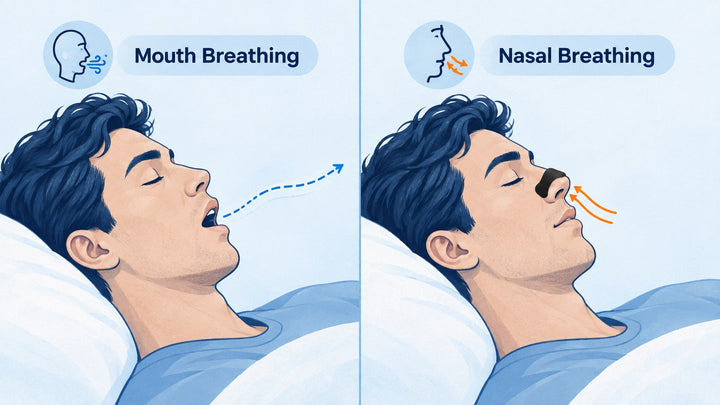
Address nasal resistance mechanically. If your nose feels physically narrow or tends to collapse inward on inhalation, a nasal strip on the outside of your nose gently lifts the nasal walls and widens the opening without any medication. This is the category where Nelamant Air is most useful: the extra-hold adhesive keeps it secure overnight, and the broader lift profile spreads support across the nasal bridge rather than pulling from a single point. If nighttime nasal resistance is what breaks your nose-breathing habit, a strip removes that friction so the habit can form.
For a detailed walkthrough of the sleep-specific side of this transition, the guide on how to breathe through your nose while sleeping covers positioning, environment, and tools in full.
Clear the Path: Addressing Congestion and Resistance
No amount of habit work overrides a physically blocked nose. Before you can retrain your breathing pattern, you need the nasal airway to be open enough that nose breathing is genuinely possible at rest. If it is not, mouth breathing is not a habit failure-it is a mechanical necessity.
Common sources of nasal resistance worth addressing before or alongside habit training:
- Nasal congestion from allergies or irritants. Reducing allergen exposure (bedding covers, air filtration, keeping pets out of the bedroom) can make a meaningful difference in overnight nasal patency.
- Dry air. Low humidity dries and inflames nasal membranes, making the passage feel narrower. A bedroom humidity level around 40–50% is generally comfortable.
- Nasal valve narrowing. Some people have nasal walls that naturally collapse inward under the reduced pressure of a deep inhalation. External nasal strips provide mechanical support at that point without any drug interaction.
- Chronic nasal swelling. If congestion is persistent and does not respond to basic environmental changes, a clinician can assess for structural or inflammatory causes worth treating directly.
If congestion is the main obstacle, combining a saline rinse, appropriate humidity, and a nasal strip for the hours when the habit matters most-sleep and exercise-addresses the resistance while you build the habit in parallel.
Nelamant Air Nasal Strips
Extra-hold adhesive. Broader nasal lift. Drug-free support for nose breathing-night or day.
$14.99 for 30 strips · 30-day returns
Shop Nelamant AirNasal Breathing Exercises That Speed Up the Transition
Habit awareness gets you most of the way there, but targeted exercises address the underlying mechanics: breathing rate, carbon dioxide tolerance, and the nasal reflex that determines how open your passages stay. A few worth adding to your daily routine:
- Alternate nostril breathing. Close one nostril with a finger, breathe in slowly through the other, then switch and exhale. Repeat for two to three minutes. This builds comfort with the slightly higher resistance of single-nostril airflow.
- Seated breathing awareness. Sit down, breathe normally through your nose if it feels easy, and avoid forcing a breath-hold. This is an awareness exercise, not a proven way to raise CO2 tolerance or exercise performance.
- Slow nasal breathing at rest. Five minutes of deliberate 5–6 second nasal inhale, 5–6 second nasal exhale before sleep or first thing in the morning resets your resting breathing rate and reinforces the nasal pattern.
These exercises work better as a complement to daily habit correction than as a replacement for it. Read the full guide to nasal breathing exercises for a structured progression, technique details, and guidance on how to sequence them.

How Long Does It Take to Become a Nose Breather?
There is no single timeline, and anyone giving you a precise number is guessing. That said, whether nasal breathing starts to feel natural depends on the habit and whether obstruction is present. Full habituation, where you stop reverting to mouth breathing during stress or distraction, typically takes longer: there is no established one-to-three-month timetable for adults.
Progress is faster when nasal resistance is low. If you clear congestion, sleep on your side, and use a nasal strip at night, the overnight hours stop working against you. If you also do daily exercises and catch yourself mouth breathing during the day, you are stacking conditions in your favor across all twenty-four hours.
A practical marker of progress: track how often you wake up with a dry mouth or dry throat. That is a reliable proxy for nighttime mouth breathing. As nasal breathing improves during sleep, that morning dryness tends to decrease.

When Nose Breathing Still Feels Hard
If you have been working on the habit consistently for three to four weeks and nasal breathing still feels like a significant effort-particularly at rest-it is worth looking more carefully at what is physically happening in the airway. The most common culprits are nasal valve narrowing, enlarged turbinates, a deviated septum, or persistent allergic inflammation. These are structural or inflammatory issues that habit work and strips can partially compensate for, but cannot fix on their own.
Nasal strips provide external support at the nasal valve, which helps a collapsing wall stay open. They do not move a deviated septum or reduce turbinate swelling. If resistance feels internal-deep in the nose rather than at the outer wall-that distinction matters.
The longer-term effects of mouth breathing are worth understanding as context for why the retraining effort is worthwhile. The guide on mouth breathing effects covers what prolonged mouth breathing does to sleep, oral health, and overall airway function in more detail.
Frequently Asked Questions
How long does it take to retrain yourself to breathe through your nose?
Most people feel nasal breathing becoming noticeably more natural within two to four weeks of consistent daily habit correction. Full habituation-where the reflex holds even under stress or distraction-typically takes one to three months. Progress is faster when nasal resistance is also addressed with environmental changes or a nasal strip at night.
Can you train yourself to nose-breathe while sleeping?
You cannot consciously correct yourself during sleep, so night training is about setup: sleeping on your side, clearing congestion before bed, keeping the bedroom humidified, and using an external nasal strip to keep passages open mechanically. Daytime habit work carries over into rest as it becomes more ingrained. The guide on how to breathe through your nose while sleeping covers the full setup in detail.
What is the easiest way to become a nose breather during the day?
Awareness cues attached to existing habits are the most practical starting point. Pick three to five things you do every day-sitting down, checking your phone, making a drink-and use each one as a trigger to close your mouth and take three slow nasal breaths. Over one to two weeks, checking your breathing pattern becomes automatic rather than effortful.
Does mouth breathing become permanent if left untreated?
In adults, mouth breathing is sometimes habitual and sometimes linked to nasal obstruction, and it responds to consistent retraining. That said, persistent obstruction needs assessment rather than habit training alone. Addressing it earlier rather than later is generally better. See the full guide on mouth breathing effects for context on the downstream consequences.
Can a nasal strip help me transition to nose breathing at night?
Yes, for the specific case where nighttime nasal resistance is what breaks the habit. If your nose feels narrow on inhalation, or if you wake with congestion that was not there when you went to sleep, a nasal strip provides mechanical support at the outer nasal wall. It keeps the passage open without medication, which makes nasal breathing the easier option rather than the effortful one. Nelamant Air's extra-hold adhesive is designed to stay in place through the night. The overview of nasal breathing benefits explains why keeping that airway open overnight matters beyond just habit formation.
Make Nose Breathing the Default, Not the Exception
Learning how to train yourself to breathe through your nose is fundamentally about stacking small, consistent actions: catching mouth breathing during the day and correcting it, setting up your sleep environment to remove physical resistance, and doing targeted exercises that make the nasal pattern feel easier over time. None of these steps is complicated on its own. The challenge is doing them together, consistently, long enough for the new pattern to become the reflex.
Start with what is most practical for your situation. If congestion is the barrier, address that first. If it is pure habit during the day, start with the awareness cue method. If nights are the problem, adjust your sleep setup and consider a nasal strip to hold the airway open while the habit solidifies. For a structured set of techniques to build on this foundation, nasal breathing exercises offer the next layer of practice.