Thomas Tiemann

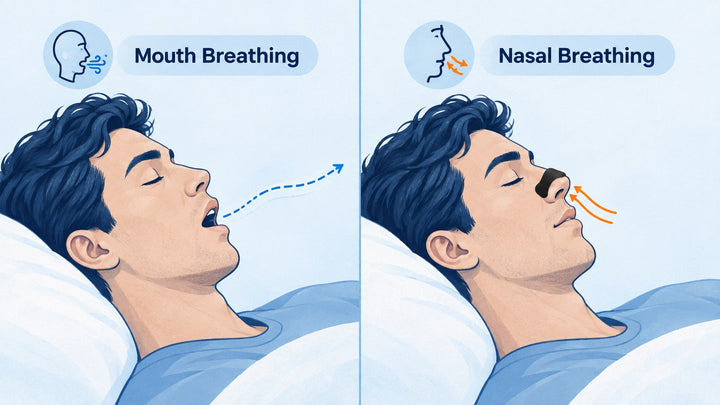
Nasal breathing exercises train the muscles and habits involved in nose breathing, making it easier to breathe through your nose consistently - during sleep, exercise, and daily life. Most techniques take under ten minutes, require no equipment, and produce noticeable changes in how open and comfortable your nose feels within a few sessions. Understanding the benefits of nasal breathing makes it clear why building this habit is worth the effort.
- Eight distinct techniques cover everything from breath-hold drills to paced walking patterns - you don't need to master all of them.
- Consistent daily practice of even one or two exercises helps retrain the reflex to breathe through your nose rather than your mouth.
- Techniques like alternate nostril breathing and humming exhales can reduce perceived nasal resistance quickly.
- If structural narrowing (not just muscle habit) is the problem, physical support at the nasal passages may be needed alongside exercises.
- Some exercises draw on Buteyko and yoga traditions; the steps here are practical starting points, not clinical protocols.
Why Nasal Breathing Exercises Work
Your nose is not a fixed tube. The soft tissues lining the nasal passages - including the turbinates and the muscles around the nostrils - respond to use patterns. When you habitually breathe through your mouth, the nasal pathway becomes the path of least resistance only when you consciously choose it. Nasal breathing exercises work by repeatedly directing airflow through the nose under controlled conditions, reinforcing the neuromuscular habit of keeping the nostrils as the primary air entry point.
Several techniques also directly reduce nasal resistance. Controlled breath holds trigger a mild increase in carbon dioxide, which causes nasal blood vessels to constrict slightly and can produce a brief but real sensation of greater airflow. Alternate nostril work clears and balances airflow across both sides. Diaphragmatic patterns reduce the mouth-breathing compensation that develops when the diaphragm is underused.
If you want a broader strategy for making nose breathing your default - not just during drills - how to train yourself to breathe through your nose covers the habit-building side in detail. The exercises below are the practical toolkit that supports that shift.

The 8 Nasal Breathing Exercises
These eight techniques range from simple diaphragm awareness to more structured breath-hold drills. Start with one or two that feel accessible, then add others over time. Specific guidance on building a weekly practice is in the progression table further below.
1. Diaphragmatic Nasal Breathing
This is the foundation. It replaces the shallow upper-chest mouth breathing that many people default to, and re-establishes the diaphragm as the primary breathing muscle - with the nose as the air route.
- Sit upright or lie flat on your back with one hand on your chest and the other on your belly.
- Close your mouth gently. Breathe in slowly through your nose for a count of four, directing the breath so your belly rises while your chest stays relatively still.
- Exhale through your nose for a count of four to six, letting your belly fall.
- Repeat for five minutes. Keep your jaw relaxed and lips lightly closed throughout.
What to notice: Within a few breaths, the nose often feels less obstructed as you slow the airflow and engage the diaphragm fully.
2. Alternate Nostril Breathing (Nadi Shodhana)
A classic yoga pranayama technique that actively routes air through each nostril in sequence, clearing resistance and balancing airflow across both sides.
- Sit comfortably. Rest your left hand on your knee. Bring your right hand to your face: index and middle finger resting between your eyebrows, thumb beside your right nostril, ring finger beside your left nostril.
- Close your right nostril with your thumb. Inhale slowly through your left nostril for four counts.
- Close both nostrils briefly. Hold for two counts.
- Release your thumb; close your left nostril with your ring finger. Exhale through your right nostril for four counts.
- Inhale through your right nostril for four counts. Close both briefly. Exhale through your left nostril.
- That is one full cycle. Repeat for five to ten cycles.
What to notice: If one nostril is noticeably more blocked than the other, this exercise often equalizes airflow within a few cycles.
3. Slow Nasal Inhale / Pursed-Lip Exhale
This technique pairs a deliberate nasal inhale with a slightly resistive exhale, which slows breathing rate and reduces the sensation of nasal tightness.
- Sit or stand. Close your mouth and inhale slowly through your nose for four to five counts, filling your lungs fully from the bottom up.
- Exhale slowly through pursed lips - as if fogging a mirror very gently - for six to eight counts. Do not exhale through the nose on this technique; the pursed-lip resistance is the point.
- Rest for two counts. Repeat for six to eight cycles.
What to notice: The slow exhale rate keeps small airways open longer and reduces the urgency to gulp air through the mouth on the next inhale.
4. Extended Exhale Pattern (4-6 or 4-8)
Lengthening the exhale relative to the inhale activates the parasympathetic nervous system and reduces respiratory drive - the perceived "need" for more air that often pushes people toward mouth breathing.
- Inhale through your nose for four counts.
- Exhale through your nose for six counts (beginners) or eight counts (more experienced).
- Keep both phases entirely nasal. If you feel you cannot exhale for six counts without straining, reduce to a 3-5 ratio and build up.
- Practice for five minutes. You can do this lying down before sleep.
What to notice: After three to four minutes, breathing often feels slower and less effortful, and the pull toward mouth breathing decreases.
5. Nasal Breath Holds (Buteyko-Influenced)
Brief, controlled breath holds after an exhale are central to the Buteyko method. They raise carbon dioxide slightly, which signals nasal blood vessels to contract and can open the nose noticeably within seconds.
- Take a small, quiet nasal breath in. Let it out gently through your nose - do not force the exhale.
- Pinch your nose closed with your fingers at the natural end of the exhale.
- Hold until you feel the first clear urge to breathe - not discomfort, just a definite signal. This might be five seconds for beginners or fifteen to twenty seconds with practice.
- Release your nose and breathe in calmly through your nose, not a gasp. If you need to open your mouth, the hold was too long.
- Rest with normal nasal breathing for thirty seconds. Repeat four to five times.
This technique forms the basis of the Buteyko method's control pause drill. For a full explanation of that system and how it is used to reduce chronic over-breathing, see the complete guide to Buteyko breathing.
What to notice: The nose frequently feels more open in the seconds immediately after releasing the hold.
6. Humming Exhale
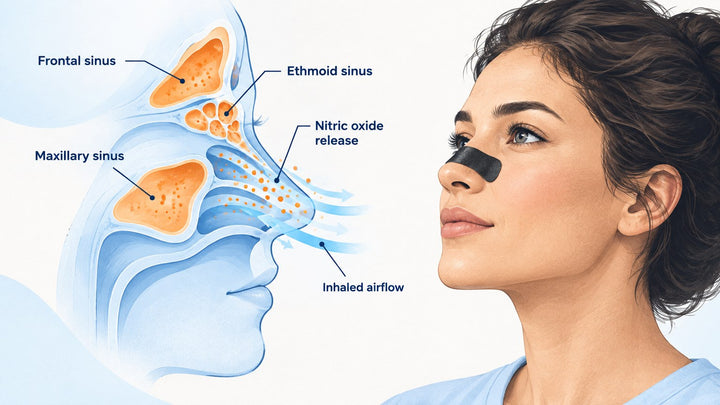
Humming during exhalation significantly increases nasal nitric oxide production compared to silent breathing. Nitric oxide is a vasodilator produced in the paranasal sinuses; it helps keep nasal passages open and supports oxygen uptake. For more on this mechanism, the article on nasal breathing and nitric oxide covers it in depth.
- Inhale slowly through your nose for four counts.
- As you exhale through your nose, produce a gentle, steady hum at a comfortable pitch. Keep your lips closed; the sound resonates in your sinuses.
- Exhale fully - the hum should last the entire exhale, roughly five to eight seconds.
- Breathe in quietly and repeat for ten cycles.
What to notice: The vibration can feel clearing in the sinuses and may reduce mild congestion or stuffiness within a few minutes.
7. Nose-Opening Facial Stretch
This technique manually widens the nostrils to reduce airway resistance at the nasal valve - the narrowest part of the nasal passage - while practicing breathing through the stretch.
- Place the tips of your index fingers lightly on each side of your nose, just below the widest part of the bridge.
- Gently draw the skin outward and slightly upward - enough to feel the nostrils open wider, not enough to distort the nose significantly.
- With nostrils held open, inhale slowly and deeply through your nose for four counts.
- Release and exhale through your nose for four counts.
- Repeat for six to eight breaths, then try breathing without the manual stretch and notice whether the openness persists briefly.
What to notice: If breathing feels substantially easier with your fingers in place, this is a useful signal that nasal valve narrowing may be a factor in your breathing. Physical support - covered in the next section - addresses exactly this.
8. Paced Walking Breath (Cadence Breathing)
Taking nasal breathing into movement is the most practical way to make it automatic. Cadence breathing ties your inhale and exhale to your footsteps, which forces a slower, controlled rhythm and makes mouth breathing genuinely difficult to sustain.
- Start walking at a comfortable, moderate pace - not a stroll, but not a speed walk.
- Inhale through your nose for three steps. Exhale through your nose for three steps.
- Once that ratio is comfortable over two to three minutes, extend to inhale for three steps, exhale for four or five steps.
- If you feel an urge to open your mouth, slow your pace rather than switching to mouth breathing. The goal is to keep pace within the range your nose can handle.
- Aim for ten to fifteen minutes of cadence walking at least three times a week.
This exercise directly connects to athletic nasal breathing practice. The full guide to nasal breathing during exercise explains how athletes extend this principle to running, cycling, and weight training.
What to notice: Over several sessions, the pace at which you can comfortably sustain nasal breathing typically increases.
How to Build a Practice: Simple Progression
You do not need to do all eight exercises every day. The table below shows a simple three-stage progression based on how comfortable you currently are with nose breathing.
| Stage | Who it suits | Exercises to focus on | Daily time |
|---|---|---|---|
| Beginner | Chronic mouth breather; nose often feels blocked | 1 (Diaphragmatic), 3 (Slow Inhale / Pursed-Lip), 7 (Nose-Opening Stretch) | 8–10 min |
| Intermediate | Can nose-breathe at rest; struggles during activity or sleep | 2 (Alternate Nostril), 4 (Extended Exhale), 5 (Breath Holds), 8 (Cadence Walking) | 10–15 min |
| Daily habit | Building consistency; wants to extend nasal breathing into exercise | 6 (Humming Exhale) as a morning reset + 8 (Cadence Walking) as workout warm-up; rotate others as needed | 5 min + movement session |
When Exercises Aren't Enough: Physical Airway Resistance
Nasal breathing exercises work primarily on habit and soft-tissue responsiveness. If the narrowing in your nose comes from structural factors - a particularly narrow nasal valve, collapsed alar cartilage, or significant turbinate enlargement - exercises alone may not produce the airflow improvement you're looking for. In those cases, the resistance is mechanical, not behavioral.
Gentle external support at the nasal bridge can make a meaningful difference. Nelamant Air Nasal Strips use a spring-band design that provides a wider, more balanced lift across the bridge, opening the nasal valve area rather than creating a single pull point. The extra-hold adhesive is designed to stay in place through the night or a workout, and the materials peel off cleanly. If you find that exercise 7 (the nose-opening finger stretch) makes breathing noticeably easier, a nasal strip addresses the same mechanical issue with a hands-free, all-night solution.
Drug-free nasal support for sleep, workouts, and everyday breathing.
$14.99 for 30 strips · 30-day returns
Shop Nelamant Air
How These Exercises Relate to Snoring and Sleep
Snoring that originates in the nose - from narrowed passages or congestion reducing airflow and increasing turbulence - can respond well to nasal breathing exercises, particularly the breath-hold and diaphragmatic techniques practiced before bed. Strengthening the pattern of breathing through the nose during the day also makes nighttime nose breathing more natural and less likely to revert to mouth breathing once you're asleep.
For a broader set of approaches aimed specifically at snoring, including throat and tongue exercises that address soft-tissue vibration further back in the airway, the guide to exercises to stop snoring covers the full picture alongside nasal techniques.
- Nasal exercises reduce resistance at the nose itself.
- Throat and myofunctional exercises address the soft palate and tongue.
- Sleep position changes reduce gravitational collapse of soft tissue.
- Physical nasal support (strips) handles structural narrowing mechanically.
- Combining approaches is typically more effective than any single technique.
Frequently Asked Questions
How often should I do nasal breathing exercises?
Daily practice produces the fastest results. Even five to ten minutes of deliberate nasal breathing exercises once a day - particularly before bed or first thing in the morning - is enough to reinforce the habit. Cadence walking can double as your practice session on days when you exercise.
Can nasal breathing exercises open a blocked nose right away?
Some techniques, especially the breath-hold method (Exercise 5) and the humming exhale (Exercise 6), can produce a noticeably more open nose within a few minutes. They work by temporarily reducing nasal blood vessel engorgement rather than clearing mucus, so the effect is real but shorter-lived than decongestant medication. If your nose is blocked from active congestion or illness, exercises will be less effective until the underlying cause settles.
Are these exercises safe if I have a deviated septum or nasal valve collapse?
The exercises themselves are generally safe for adults with structural nasal issues, because they work with airflow and soft tissue rather than putting pressure on cartilage. That said, they will not fix a deviated septum or collapsed nasal valve structurally. Exercise 7 (the nose-opening stretch) gives you a useful sense of how much of your nasal resistance is at the valve. For guidance on those specific conditions, see the articles on deviated septum and nasal valve collapse.
What is the easiest nasal breathing exercise for beginners?
Diaphragmatic nasal breathing (Exercise 1) is the best starting point. It requires no special technique, no breath holds, and no specific hand positions - just slowing your breath and directing it through your nose while your belly rises. Most people feel a difference in perceived nasal resistance within two or three minutes of practicing it.
Do nasal breathing exercises help with snoring?
They can, specifically when the snoring originates from nasal narrowing or congestion rather than from the throat or soft palate. Exercises that reduce nasal resistance and reinforce nighttime nose breathing address the nose-based component. They are one piece of a larger picture - for a full breakdown of approaches that target different snoring causes, the guide to exercises to stop snoring is the right next read.
Start with One Technique
You do not need a full program to benefit from nasal breathing exercises. Pick one technique from the list above - diaphragmatic breathing if you're starting from scratch, a breath hold if you want an immediate sensation of a more open nose, or cadence walking if you'd rather build the habit during movement - and practice it consistently for a week before adding another. The goal is a more automatic, effortless nose-breathing pattern, and that builds through repetition, not complexity.