Thomas Tiemann

This article is for general information, not medical advice.
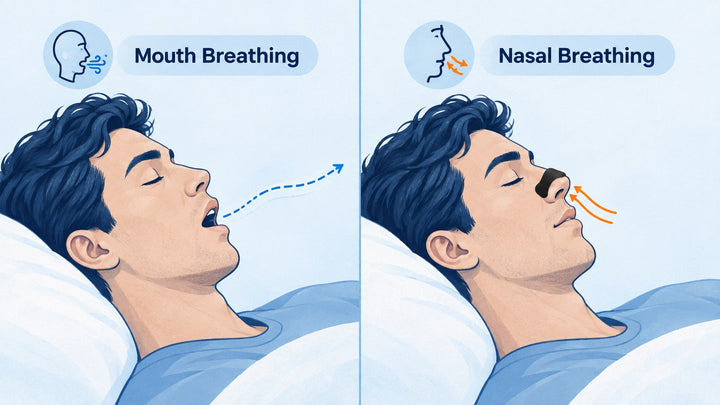
Mouth breathing is common, but the nose is your body's default airway - and bypassing it carries real consequences. The effects of mouth breathing range from dry mouth and disrupted sleep to longer-term changes in oral health and facial development. Switching back to nasal breathing, even part of the time, removes most of those downstream problems.
- The nose filters, humidifies, and warms incoming air - the mouth does none of those things.
- Common mouth breathing side effects include dry mouth, bad breath, sore throat, poor sleep quality, and increased snoring.
- Long-term habitual mouth breathing can affect dental health and, in children especially, facial structure.
- Most causes of mouth breathing come down to nasal obstruction or habit - both are addressable.
- Opening nasal airflow mechanically at night is one of the fastest practical steps you can take.
For a grounding look at what your nose does that your mouth cannot, see the full guide to the benefits of nasal breathing.
Is Mouth Breathing Bad? The Short Answer
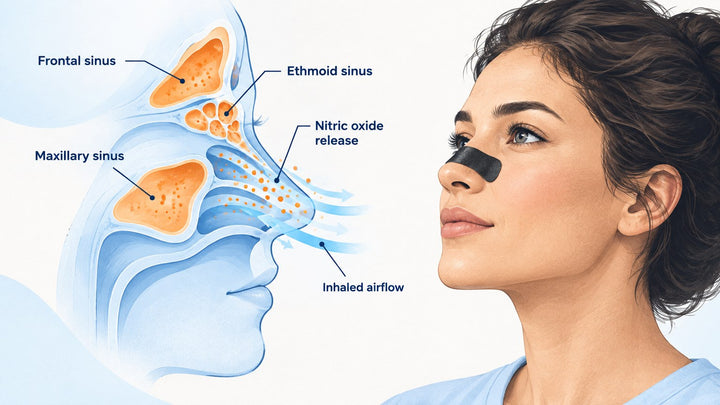
Yes - not because mouth breathing is toxic, but because the nose performs several functions that the mouth simply cannot replicate. When air enters through your nose, tiny hairs and mucous membranes trap particles and pathogens, the turbinates add warmth and moisture, and the nasal passages produce nitric oxide, a molecule that helps dilate the airways and supports oxygen uptake.
When you breathe through your mouth, you skip every one of those steps. The air arriving at your lungs is cooler, drier, and less filtered. Over a single night that creates irritation; over months and years it can compound into more significant health patterns.
That said, "bad" depends on context. Mouth breathing during a hard sprint, a head cold, or while speaking is normal and harmless. The concern is when it becomes the default route - particularly during sleep, when your body spends hours in the same breathing pattern without any conscious override.
Mouth Breathing Side Effects: What Happens to Your Body
Dry Mouth, Throat Irritation, and Dental Problems
Saliva is your mouth's first line of defense against bacteria and acid. When airflow passes through an open mouth for hours, saliva evaporates faster than it is produced. The result is dry mouth - and dry mouth creates conditions that bacteria thrive in.
The downstream effects are well documented clinically: higher rates of tooth decay, gum inflammation, and halitosis. The bad breath angle deserves its own attention. When oral bacteria multiply in a dry environment, they produce volatile sulfur compounds - the primary source of the stale, unpleasant odor that mouth breathers often notice in the morning.
For a closer look at this specific effect, the guide to mouth breathing and bad breath covers why it happens and what reduces it.
Disrupted Sleep and Snoring
Breathing through the mouth during sleep raises the likelihood of snoring. The tongue and soft palate are in a less supported position when the jaw is open, which narrows the pharyngeal space and increases airway vibration.
Beyond snoring, mouth breathing during sleep tends to produce lighter, more fragmented sleep cycles. The drier, cooler air triggers micro-arousals; the body registers the dryness and irritation even when you are not fully conscious. Many people who report waking unrefreshed turn out to be habitual mouth breathers without realizing it.
If you are not sure why you breathe through your mouth specifically at night, the article on why you breathe through your mouth when you sleep walks through the most common reasons. And if your snoring is significant or comes with gasping or choking episodes, the comparison of snoring versus sleep apnea explains what separates the two and when a clinical evaluation is warranted.
Reduced Nitric Oxide and Airway Efficiency
The nasal sinuses produce nitric oxide continuously. When you inhale through your nose, that nitric oxide travels into your lungs, where it acts as a vasodilator - relaxing smooth muscle and widening airways and blood vessels, which supports more efficient oxygen transfer. Mouth breathing effectively shuts off that supply.
This is not a dramatic acute event, but over time it likely contributes to the subjective sense that mouth breathers describe as never feeling like they get quite enough air. The nasal breathing and nitric oxide connection is covered in depth in the cluster article on nasal breathing and nitric oxide.
Long-Term Mouth Breathing Effects on Facial Structure
Habitual open-mouth posture changes the mechanical forces acting on the developing skull and jaw. In children, whose bones are still adapting, the effects can be pronounced: a narrower palate, more vertical facial growth, crowded teeth, and changes to chin projection are all associated with chronic mouth breathing in pediatric populations.
In adults, structural change is slower and less dramatic - the bones have largely set - but soft-tissue posture, jaw muscle tone, and dental alignment can still shift over time with persistent open-mouth habits.
This topic has its own full treatment. For the detail on appearance-related changes and what the evidence actually shows, see the guide to mouth breathing face - including what is and is not reversible in adults.
What Causes Mouth Breathing?
People breathe through their mouths for a reason, and understanding the cause is the most direct path to fixing the habit. The most common drivers:
- Nasal congestion - from a cold, allergies, or a structural issue like a deviated septum or enlarged turbinates, the nose simply feels blocked and the mouth becomes the path of least resistance.
- Nasal valve narrowing - the narrowest part of the nasal passage can collapse inward on inhalation, reducing airflow even when congestion is not the issue.
- Sleep posture - sleeping on your back allows the jaw to drop open. If your nasal passages are even mildly restricted, this posture can push you into mouth breathing without your awareness.
- Ingrained habit - for some people, especially those who had untreated nasal obstruction in childhood, mouth breathing has simply become the default pattern even after the original cause resolved.
- Anxiety and overbreathing - fast, shallow breathing often defaults to the mouth and can become a reinforcing cycle.
Persistent nasal obstruction that does not resolve with basic measures - saline rinse, antihistamine for allergies, avoiding known irritants - warrants a medical review. The guide to when to see a doctor for nasal congestion outlines the red flags worth acting on.
How to Stop Mouth Breathing: Practical Steps
Most people can meaningfully reduce mouth breathing by addressing the underlying restriction and then reinforcing the nasal habit. These steps are ordered to build on each other.
Step 1 - Clear the Nasal Obstruction First
No breathing habit or overnight aid will work well if your nose is genuinely blocked. Start here:
- Saline rinse - a nasal rinse once or twice a day clears mucus and reduces inflammation. Use sterile, distilled, or boiled-and-cooled water in your rinse device; never tap water directly.
- Manage allergens - if allergies are the cause, reducing exposure (air purifier, washing bedding weekly, keeping pets out of the bedroom) takes consistent pressure off the mucosa.
- Elevate the head of your bed slightly - congestion often worsens when you lie flat because fluid redistributes toward the nasal tissues. Even a small incline helps.
- Avoid alcohol close to bedtime - alcohol relaxes the soft tissues of the upper airway and can exacerbate both nasal congestion and mouth breathing at night.
If decongestant sprays have been part of your routine for more than a few days, be aware of rebound congestion - the nose can become dependent on them. Follow the label duration guidance and discuss longer-term options with a clinician.
Step 2 - Build the Nasal Breathing Habit During the Day
The mouth breathing pattern does not reverse itself automatically once the nose is clear. You have to deliberately retrain it, and daytime practice transfers to nighttime behavior over time.
- Lip seal awareness - periodically check whether your lips are apart at rest. The resting position for the mouth should be gently closed, with teeth lightly apart and the tongue resting on the roof of the mouth.
- Breathe through your nose during light to moderate exercise - it feels harder at first, but the threshold rises quickly as your CO₂ tolerance adapts. Start with walking before applying it to a run.
- Slow, deliberate nasal breathing before sleep - a few minutes of conscious nasal breathing signals the nervous system toward a calmer state and can help establish the pattern as you drift off.
For a structured approach to this, the article on how to train yourself to breathe through your nose covers habit-building exercises and realistic timelines.
Step 3 - Support Airflow at Night
Even when habit and congestion are addressed, the mechanics of nighttime breathing can still fight against you - especially if the nasal passages narrow slightly under the negative pressure of inhalation. This is where physical support of the nasal opening makes a practical difference.
Nasal strips work by gently lifting the sides of the nose outward, widening the nasal valve area without any drug or chemical action. Nelamant Air nasal strips use a wider, more balanced lift across the bridge of the nose rather than a single pull point, and an extra-hold adhesive that resists sweat and movement overnight. The material peels off cleanly in the morning. For anyone finding that mouth breathing creeps back in specifically during sleep - and whose nose is the bottleneck - a strip is one of the simplest mechanical aids available.

Try Nelamant Air for Easier Nose Breathing Tonight
$14.99 for 30 strips · 30-day returns
Shop Nelamant Air
When to See a Doctor
Most mouth breathing is habit or congestion - addressable at home. See a clinician if:
- Your nose feels persistently blocked even when you are not sick and have no known allergies.
- You wake with headaches, significant morning fatigue, or a partner reports loud snoring with gasping or stopping episodes - these patterns can indicate sleep apnea rather than simple snoring, which needs a formal assessment.
- Mouth breathing is accompanied by facial pain, pressure, or discolored nasal discharge that has lasted more than 10 days.
- Children are mouth breathing consistently - earlier intervention has a larger structural benefit than waiting. The guide on when to see a doctor for nasal congestion covers indicators for adults; for children, their pediatrician is the right first contact.
Frequently Asked Questions
Is mouth breathing bad for you long-term?
Yes, consistently. Short-term or situational mouth breathing - during exercise, illness, or speech - is normal. But using the mouth as your default airway over months and years bypasses nasal filtration, humidification, and nitric oxide production, and is associated with higher rates of dental decay, gum disease, poor sleep quality, and structural changes in the jaw and palate, particularly in children. Shifting back to habitual nasal breathing removes most of these risks.
What are the most common mouth breathing side effects in adults?
The most frequently reported mouth breathing side effects in adults are dry mouth on waking, bad breath, sore throat, increased frequency of snoring, and morning fatigue from fragmented sleep. Dental effects - a higher cavity rate and gum irritation - tend to develop more gradually. Adults rarely see the craniofacial changes associated with childhood mouth breathing, but soft-tissue and dental alignment effects can still occur over time.
Can mouth breathing cause bad breath?
Yes, and it is one of the most direct effects. Saliva normally washes away bacteria and neutralizes oral acids; open-mouth airflow dries the mouth out and lets anaerobic bacteria multiply. Those bacteria produce volatile sulfur compounds - the main source of halitosis. The full explanation and practical remedies are in the guide to mouth breathing and bad breath.
Does mouth breathing affect sleep quality?
It does. Open-mouth posture during sleep repositions the tongue and soft palate in a way that narrows the throat and increases the likelihood of snoring and airway vibration. Repeated awakenings can fragment sleep even when you do not remember them. Many people who feel unrefreshed in the morning without an obvious reason are habitual nighttime mouth breathers.
How do I know if I'm mouth breathing at night?
Common signs include waking with a dry mouth or sore throat, noticeably bad morning breath, a slightly hoarse voice in the morning, or a partner reporting that you sleep with your mouth open. You can also do a simple morning check: if your lips feel dry and your tongue feels like it is lying on the floor of your mouth rather than lightly touching the roof, you likely spent most of the night mouth breathing. If you are unsure of the cause, the article on why you breathe through your mouth when you sleep covers the most common explanations.
Pulling It Together
The mouth breathing effects that matter most - dry mouth, disrupted sleep, dental risk, reduced airway efficiency - all stem from the same root cause: the nose is the organ built for breathing, and the mouth is not. Addressing the physical obstruction, reinforcing the nasal habit during the day, and supporting the nasal opening at night covers the practical range of what most people need to shift the pattern. Where the problem persists despite those steps, a clinician can identify whether something structural is driving it. The nose is worth the effort.