Thomas Tiemann

This article is for general information, not medical advice.
Yes - chronic mouth breathing, especially when it starts in childhood, is associated with measurable changes in facial structure, jaw alignment, and palate width. The effect on adults is more limited, but habitual open-mouth posture still has real consequences for oral health, sleep, and jaw muscle tone. Whether the changes are reversible depends largely on age and how long the pattern has been established.
- Chronic mouth breathing during childhood is linked to a longer, narrower face, a higher palate arch, and changes in jaw and tooth alignment - a pattern sometimes called "long face syndrome" or "adenoid face."
- In adults, the bony skeleton is largely fixed, but mouth breathing still affects jaw muscle tone, gum health, and sleep quality.
- The jawline can appear softer or less defined with habitual mouth breathing because of changes in tongue resting position and the way muscles develop.
- Switching to nasal breathing - especially early - is the most important step; some structural effects in children can improve with treatment.
- If you or your child snores, breathes through the mouth during sleep, or has persistent nasal obstruction, a doctor can assess whether a structural or allergy-related cause is treatable.
What Is "Mouth Breathing Face" and Where Does the Idea Come From?
The phrase "mouth breathing face" circulates widely online, sometimes used dismissively, but the underlying clinical concept is real and has been studied for decades. Orthodontists and ear, nose, and throat specialists have long observed that children who breathe habitually through their mouths tend to develop a recognizable set of facial characteristics over time. The formal term in the clinical literature is long face syndrome or, when enlarged adenoids are the cause, adenoid facies.
The idea is not that mouth breathing alone sculpts the face like a chisel. Rather, chronic open-mouth posture changes where the tongue rests, how the jaw muscles develop, and what forces act on the teeth and palate during the years when bones are still growing and highly responsive to mechanical pressure. Remove or reduce those normal shaping forces - the tongue pressing upward against the palate, the lips providing light forward pressure on the teeth - and the growth pattern shifts.
Understanding the broader picture of mouth breathing effects on the body helps put the facial angle in context: the face is one part of a wider set of changes that can follow from years of breathing through the mouth. For a grounding in why nasal breathing matters as a baseline, see the guide to why nose breathing matters more than most people realize.
Does Mouth Breathing Change Your Face? What the Evidence Shows
The short answer is: yes, during growth, and the evidence is reasonably consistent on this. In adults, structural bone change is unlikely, but the softer-tissue and functional effects are still meaningful.
During Childhood and Adolescence
The growing face is highly plastic. Bones develop in response to the forces placed on them, which is why orthodontists can reshape jaw arches with appliances and why posture matters during childhood in a way it simply does not in a 40-year-old. When a child breathes through the mouth habitually:
- The tongue drops to the floor of the mouth instead of resting against the palate. The palate loses the constant gentle upward pressure of the tongue and tends to grow narrower and higher-arched - a vaulted palate.
- The lower jaw tends to drop and rotate downward and backward, contributing to a longer, narrower lower face.
- The upper front teeth can flare forward ("overjet") because the lips no longer provide their normal inward pressure when the mouth stays open.
- The midface can appear elongated - more vertical height, less horizontal width - which is the characteristic appearance described as long face syndrome.
Several orthodontic and pediatric ENT studies have measured these differences in children referred for mouth breathing compared with nasal-breathing controls, and the pattern is consistent across populations.
The duration and severity matter. A child who mouth-breathes for a few weeks during a bad cold is not going to develop long face syndrome. The concern is chronic, habitual mouth breathing - typically defined as breathing predominantly through the mouth for most of the day and during sleep over months or years. For a closer look at what drives this pattern in younger patients and what can be done, the guide to mouth breathing in children covers causes, signs, and when to involve a specialist.
In Adults: What (and What Doesn't) Change
Once the skeleton is mature - roughly after the late teenage years - the bones themselves are no longer being shaped by soft-tissue forces in the same way. An adult who develops a new habit of mouth breathing is not going to grow a longer face because of it. That window has closed.
What does continue to matter in adults:
- Jaw and neck muscle tone. Habitual open-mouth posture keeps certain muscles in a lengthened, under-loaded position, which can affect how the lower face looks and how the jaw feels over time.
- Gum and dental health. Mouth breathing dries out the mouth, reduces protective saliva flow, and increases the risk of gum inflammation, cavities, and bad breath.
- Sleep quality. Open-mouth breathing during sleep is associated with louder snoring, a drier airway, and poorer sleep architecture.
- Facial appearance. Chronic mouth breathing can make the face look more tired or less toned around the jaw and lips - not a structural change, but a real functional one that some adults notice.
If you are an adult wondering whether your current breathing pattern has permanently changed your face: if significant facial changes were going to happen, they almost certainly happened during childhood. The goal now is stopping further downstream effects and improving how you breathe and sleep going forward.
Mouth Breathing and the Jawline
The jawline question is the one most adults ask about, often after reading about jaw aesthetics online. The connection is real, but it works differently depending on age.
In children, the lower jaw's growth trajectory is influenced by how it is held at rest. When the mouth stays open, the mandible tends to rotate downward and backward rather than forward and upward. This produces a longer vertical face with a less prominent chin and a less defined jawline angle.
In adults, the same rotation is not happening in bone, but there are still functional differences. The masseter muscles - the thick muscles you can feel when you clench your jaw - are less consistently activated when the mouth rests open. Some people find that correcting their resting mouth posture (lips together, teeth lightly apart, tongue on the palate) over time affects jaw muscle tone. Whether this produces a visible change in jawline definition depends on the individual and is not something that can be predicted reliably.
There is also a posture component. Mouth breathing is often associated with a forward head posture, which changes how the neck and jaw appear from the outside. This is a postural and muscular effect, not a skeletal one, and it is more amenable to change in adults than bone structure is.
What the jawline angle is not: a fixed fate determined purely by breathing. Genetics, overall build, body composition, and sleep quality all contribute. Mouth breathing is one factor among several.
Other Physical Effects of Chronic Mouth Breathing
Facial structure is the most visually striking concern, but it sits alongside a set of other effects worth knowing about:
- Dry mouth and dental decay. Saliva protects tooth enamel and neutralizes acids. Mouth breathing reduces salivary flow, especially overnight.
- Gum inflammation. The gum tissue around the upper front teeth is disproportionately exposed when the lips stay open. Chronic dryness and bacterial changes increase gum disease risk.
- Disrupted sleep. Open-mouth breathing is associated with more frequent snoring and fragmented sleep. The relationship between the broader effects of mouth breathing and sleep quality is covered in detail in that guide.
- Nasal deconditioning. The nose thrives on being used. When mouth breathing becomes habitual, the turbinates - the bony ridges inside the nose that warm and filter air - can become less responsive, making nasal breathing feel harder than it actually needs to be.
- Bad breath. Dry oral conditions and altered bacteria are a major driver of bad breath in chronic mouth breathers.
Can You Reverse Mouth Breathing Face Changes?
This depends almost entirely on age at the time of intervention.
In children, early treatment of the underlying cause - enlarged adenoids or tonsils, allergic rhinitis, a deviated septum, or other nasal obstruction - can address obstruction while facial growth is still occurring. Orthodontic appliances such as palatal expanders are designed specifically to take advantage of the growth period. The appropriate treatment and timing depend on the child's airway and orthodontic assessment.
In adolescents, there is still some plasticity, particularly before growth plates close, but the window is narrowing. Orthodontic and ENT input is still valuable.
In adults, bony changes from childhood cannot be reversed by breathing habit alone. Jaw surgery (orthognathic surgery) can address severe structural malocclusions, but that is a specialist surgical decision - not something breathing exercises will replicate. What can improve in adults: jaw muscle tone, oral health, sleep quality, and the postural components that contribute to how the face and neck look.
The consistent message from orthodontists and pediatric ENTs is that removing the obstruction that drives mouth breathing - whether that is allergies, enlarged tonsils, or nasal valve problems - is the first and most important step. Treating the cause gives the body the best chance to self-correct during growth, and improves outcomes at any age. If snoring is part of the picture, it is worth understanding how snoring differs from sleep apnea - the guide to snoring vs. sleep apnea explains when symptoms warrant further evaluation.
Supporting Nasal Breathing: What Actually Helps
Switching from mouth to nasal breathing is straightforward in principle and harder in practice, especially if nasal obstruction is making it genuinely difficult to breathe through the nose. The steps below address the most common barriers:
- Identify and treat the underlying obstruction. Allergic rhinitis, chronic congestion, a deviated septum, or enlarged turbinates all make nasal breathing physically harder. Treating these - with antihistamines, nasal corticosteroids, or, where appropriate, surgery - removes the primary driver of mouth breathing.
- Address nighttime nasal resistance. Even with a normal nose, lying down shifts blood flow and can make the nasal passages feel more congested. Side sleeping, elevating the head of the bed slightly, and avoiding alcohol before bed can all help. See the guide to why nose breathing matters more than most people realize for the full physiology behind this.
- Practice conscious resting posture. Lips together, teeth lightly apart, tongue resting gently on the upper palate. This is the anatomically neutral resting position. It feels effortful at first if mouth breathing has become habitual, but it becomes automatic with consistency.
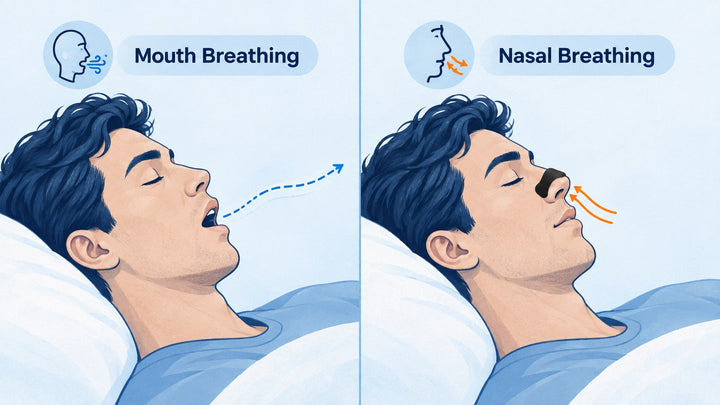
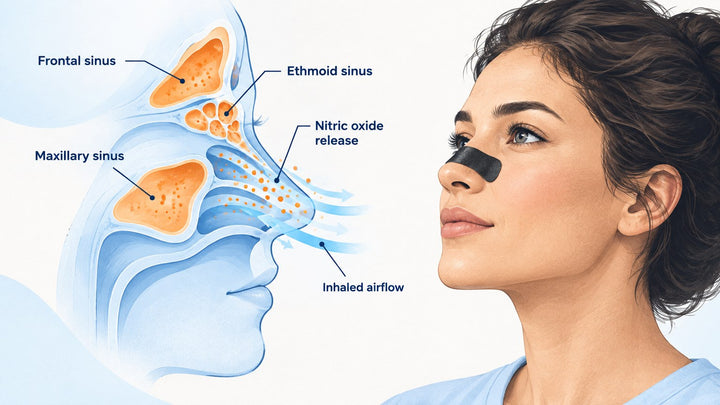
- Use mechanical support where nasal resistance is the limiting factor. If mild nasal congestion or narrowing at the nasal valve is making it hard to sustain nasal breathing at night or during exercise, an external nasal strip can widen the passage mechanically without any drugs. Nelamant Air nasal strips are designed with a broader, more balanced lift across the bridge of the nose, so the opening force is distributed evenly rather than pulling from a single point - which matters if you are trying to wear one comfortably through the night or a workout. For adults working on re-establishing nasal breathing after years of mouth breathing, a strip that stays on through sweat and movement and peels off cleanly in the morning removes one practical barrier.
- Be consistent. Nasal breathing during sleep is habit-forming in both directions - the more consistently you nose-breathe, the easier it becomes. Daytime posture practice reinforces the nighttime pattern.

When to See a Doctor
See a doctor or dentist if you notice any of the following:
- A child who breathes through the mouth most of the time, especially during sleep, or who snores regularly - early assessment by a pediatric ENT or orthodontist can make a meaningful difference to facial development outcomes.
- Persistent nasal obstruction that does not respond to over-the-counter allergy treatment or decongestants - a structural cause such as a deviated septum or nasal valve collapse may need specialist evaluation. The guide to when to see a doctor for nasal congestion covers the main red flags in detail.
- Snoring accompanied by observed breathing pauses, waking gasping, or significant daytime sleepiness - these can be signs of sleep apnea, which requires proper diagnosis and is not addressable with breathing posture changes alone.
- Jaw pain, tooth grinding, or unexplained dental wear - these can be downstream effects of chronic mouth breathing and open-mouth sleep posture that a dentist or orthodontist should assess.

Frequently Asked Questions
Does mouth breathing actually change your face shape?
During childhood and adolescence, yes - the growing face responds to the forces acting on it, and chronic mouth breathing removes the normal shaping pressure of the tongue on the palate and the lips on the teeth. This is associated with a longer, narrower face, higher palate arch, and changes in jaw alignment. In adults, the bony skeleton is fixed, so new mouth-breathing habits do not reshape the face structurally, though muscle tone and oral health are still affected.
Can mouth breathing affect my jawline as an adult?
Directly reshaping bone is no longer possible in adults. However, habitual open-mouth resting posture keeps jaw muscles in a less-loaded position, which some people find affects how defined the jaw looks and feels over time. Forward head posture associated with mouth breathing can also change the apparent jaw and neck profile. Correcting resting posture and treating nasal obstruction are the most practical steps for adults.
Is "adenoid face" a real condition?
Yes, it is a recognized clinical pattern - formally called adenoid facies - seen in children with chronically enlarged adenoids that block nasal breathing. The characteristic features include an elongated face, open-mouth resting posture, a high-arched palate, and sometimes dental crowding. Addressing the adenoid enlargement, ideally early, gives the developing face the best opportunity to grow in a different direction.
How long does it take for mouth breathing to affect facial development?
There is no single threshold - the effect is cumulative and depends on how consistently the child breathes through the mouth, their age, and their individual growth rate. Clinicians generally consider chronic, habitual mouth breathing over months to years to be the meaningful exposure, rather than temporary mouth breathing during a cold or allergy season. Duration alone does not predict a child's facial development.
Can switching to nasal breathing reverse the changes?
In children, removing the cause of mouth breathing and allowing normal nasal airflow can meaningfully redirect facial growth, particularly when combined with orthodontic intervention during the growth period. In adults, bone structure from childhood cannot be changed by breathing habits alone. What improves at any age: oral health, jaw muscle tone, sleep quality, and the postural effects that influence how the face looks and feels day to day.
Putting It Together
The mouth breathing face question has a real answer rooted in how the growing skeleton responds to soft-tissue forces. Chronic mouth breathing during childhood is one of the clearer examples of how a functional habit shapes anatomy over time - not dramatically, not overnight, but consistently and measurably. For adults, the structural window has closed, but the downstream effects on jaw tone, oral health, and sleep quality are still worth addressing.
The most useful thing you can do, at any age, is make nasal breathing as easy as possible - by treating the obstruction that is driving the habit, practicing consistent closed-lip resting posture, and supporting the nasal airway during sleep and exercise. Everything about why that matters physiologically is in the guide to why nose breathing matters more than most people realize. If children are the concern, the dedicated guide to mouth breathing in children covers causes, warning signs, and the right specialists to involve.