Thomas Tiemann

Disclosure: Nelamant makes Nelamant Air, our top pick in this guide.
The best anti-snoring device for you depends on where your snoring starts-your nose, your jaw, or both. Nasal strips work well when a narrowed or congested nasal passage is the cause; mouthguards target jaw-based airway collapse; mouth tape and nasal dilators each fill a different role. This guide breaks down five real anti-snoring products by type, design, and the snoring cause each one addresses, so you can match the device to your situation.
- No single anti-snoring device works for every cause of snoring.
- Nasal strips and dilators target nose-based snoring; mouthguards target jaw and throat collapse.
- Mouth tape redirects breathing through the nose but requires an open nasal airway to be safe.
- Identifying your snoring type first saves money and frustration.
- Nelamant Air is our top pick for nasal snoring: broader lift, extra-hold adhesive, materials.
What Makes a Snoring Aid Actually Work
Snoring happens when soft tissue in the upper airway vibrates during sleep. The location of that vibration determines which device can help. Nose-based snoring occurs when narrow nasal passages force air through at higher velocity, creating turbulence at the nasal valve or soft tissue just inside the nose. Jaw-based or throat-based snoring happens when the tongue or soft palate falls back, narrowing the throat itself.
This distinction matters because reducing snoring starts with understanding its cause-a nasal strip placed on the outside of the nose cannot reposition the jaw or stiffen the soft palate. Equally, a mouthguard that protrudes the jaw does nothing to open a congested or structurally narrow nostril. Matching device to cause is the single most important step before buying anything.
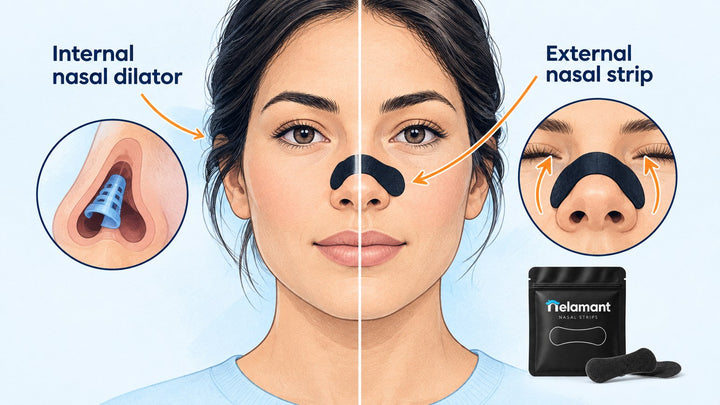
External nasal strips work by mechanically lifting the sides of the nose outward, widening the nasal valve opening so air flows with less resistance. Internal dilators achieve a similar result from inside the nostril. Mouth tape gently holds the lips closed, encouraging nasal breathing rather than mouth breathing. Mandibular advancement mouthguards move the lower jaw slightly forward to reduce throat tissue collapse.
The 5 Anti-Snoring Devices Compared
The table below covers each device type by design approach, the snoring cause it addresses, and practical notes.
| Product | Type | Snoring Cause Targeted | Drug-Free | Price (per unit/pack) |
|---|---|---|---|---|
| Nelamant Air Nasal Strips | External adhesive strip | Nasal passage narrowing | Yes | $14.99 / 30 strips |
| Breathe Right Extra Strength | External adhesive strip | Nasal passage narrowing | Yes | Check current product details |
| ZQuiet Anti-Snoring Mouthguard | Mandibular advancement device | Jaw/throat tissue collapse | Yes | Not specified |
| Somnifix Sleep Strips | Mouth tape | Mouth breathing / jaw drop | Yes | Not specified |
| Mute Nasal Dilator by Rhinomed | Internal nasal dilator | Nasal passage narrowing | Yes | Not specified |
Our Top Pick: Nelamant Air Nasal Strips
Best for: nasal snoring, stuffy nose at night, sensitive skin, regular nightly use.
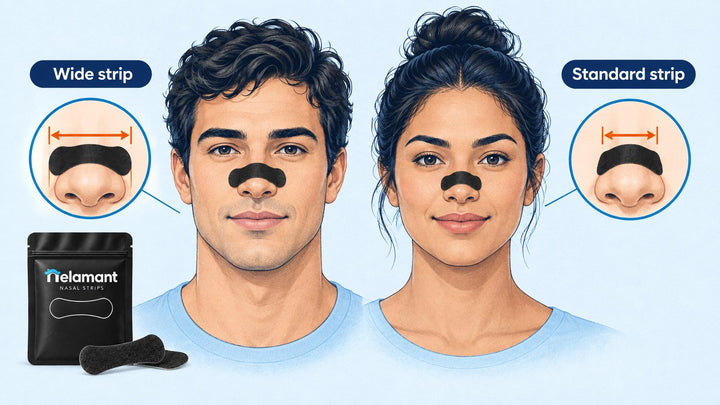
- Broader, more balanced lift across the nasal bridge-no single sharp pull point
- Extra-hold adhesive resists sweat, oil and overnight movement
- materials; peels off cleanly with no sticky residue
- Drug-free, mechanical action-no medications, no adjustments
- 30 strips per pack; 2-pack and 3-pack bundles available
$14.99 for 30 strips · 30-day returns
Shop Nelamant Air →Nelamant Air targets the most common mechanical cause of snoring: reduced airflow through a narrow or congested nasal passage. The strip's wider footprint distributes lifting force evenly across the bridge rather than concentrating tension at one point, which helps the nasal valve stay open through the night. The extra-hold adhesive formula is designed to stay put through sweat and natural skin oils, so the strip is as effective at 6 a.m. as it was when you applied it at 10 p.m.
Because the action is entirely mechanical and drug-free, it is suitable for nightly use without concerns about rebound congestion or medication interactions. Any adhesive can cause skin irritation. For a deeper look at how this strip compares with others across the full snoring-focused category, see our guide to the best nasal strips for snoring.
Honest limitation: Nelamant Air opens the nasal passages. It does not reposition the jaw, stiffen the soft palate, or address throat-based airway collapse. If your snoring comes primarily from your throat, a different device category will serve you better.
#2 Breathe Right Extra Strength Nasal Strips
Breathe Right is the most widely recognized name in external nasal strips. The Extra Strength version uses a stronger spring-band tension than the original, intended for users who find standard strips insufficient. The adhesive is aggressive enough for most skin types but some users report more residue on removal compared with strips designed specifically for sensitive skin.
Pros: widely available; well-known format; multiple sizes; drug-free.
Cons: single central spring produces a more concentrated lift point rather than an even bridge lift; adhesive may leave residue on sensitive or dry skin; no specific overnight-hold formulation claim.
Best for: users who want a familiar, pharmacy-shelf option and have already confirmed nasal strips help their snoring.
For a direct head-to-head on design and fit, see the full best nasal strips comparison, which covers how strip design affects lift quality.
#3 ZQuiet Anti-Snoring Mouthguard
ZQuiet is a mandibular advancement device (MAD)-a soft mouthguard worn over the teeth that holds the lower jaw slightly forward during sleep. By moving the jaw forward, the device increases the space at the back of the throat, reducing how much the tongue and soft palate can fall back and vibrate.
Pros: addresses throat-source snoring that nasal strips cannot reach; drug-free mechanical action; soft material for some users.
Cons: requires fitting and adjustment; may cause jaw soreness, tooth discomfort or excess saliva, particularly during the break-in period; not suitable for users with dental work such as crowns, bridges or loose teeth without professional guidance; higher upfront cost; does nothing for nasal congestion.
Best for: confirmed mouth or throat snorers where nasal interventions have already been ruled out as the primary cause.
For a thorough breakdown of how these two device types compare on mechanism, comfort and use cases, read the full guide to nasal strips vs mouthguard for snoring.
#4 Somnifix Sleep Strips
Somnifix is a mouth tape designed to hold the lips closed during sleep, encouraging nasal breathing rather than open-mouth breathing. The strip uses a porous center section that allows some air exchange if the mouth opens. The premise is that mouth breathing bypasses the nose's natural humidification and filtration and can worsen snoring caused by a dry, vibrating soft palate.
Pros: lightweight, minimal, drug-free; may reduce dry mouth associated with mouth breathing; inexpensive per night.
Cons: requires a fully patent nasal airway-mouth tape should not be used when nasal breathing is obstructed; does not address nasal narrowing or jaw-based airway collapse; some users find lip adhesive uncomfortable.
Best for: mouth breathers whose nose is already open and unobstructed, who want a simple nudge toward nasal breathing.
For the full comparison of mechanisms, safety notes and which situations suit each, see nasal strips vs mouth tape.
#5 Mute Nasal Dilator by Rhinomed
Mute is an internal nasal dilator-a small, soft device worn inside the nostrils that braces the nasal walls open from within. Unlike an adhesive external strip, there is no adhesive on skin; the device sits inside the nostril and is held in place by its own shape and tension. It is reusable for a stated number of nights.
Pros: no adhesive on the skin; reusable so lower per-night cost over time; discrete appearance during wear; drug-free.
Cons: requires correct sizing to stay in place; some users find an internal device uncomfortable during the adjustment period; no benefit for throat or jaw snoring; must be cleaned regularly.
Best for: nasal snorers who prefer no adhesive on the skin, or who have sensitive skin reactions to adhesive strips.
For a clear breakdown of how internal and external nasal devices compare on fit, stability and use case, read the guide to nasal strips vs nasal dilators.
How We Chose These Snoring Aids
This is a manufacturer-authored guide. Nelamant selected these five products as representative of the main anti-snoring device categories available to a consumer shopping for snoring aids. Selection was based on device type diversity (external strip, internal dilator, mandibular device, mouth tape), category recognition, and the ability to compare mechanical design and stated purpose.
No independent laboratory testing, clinical trials, consumer rating aggregation or third-party review scores were used in this comparison. Design and specification comparisons are based on publicly available product descriptions.

Buyer's Guide: Matching the Device to Your Snoring Type

The fastest way to narrow down the best anti-snoring products for your situation is to identify where the snoring is coming from. Below are three practical profiles.
Nasal Snoring
You likely snore through your nose if your snoring is louder when you have a cold or allergies, if pressing a finger gently against one nostril reduces the sound, or if you notice your nostrils pulling inward when you inhale hard. Nasal strips and internal dilators are the most relevant device category here. They work by physically widening the nasal opening so air flows with less turbulence.
Nelamant Air's broader lift profile is designed specifically for this problem: a wider contact area across the nasal bridge applies even outward pressure rather than a single-point tug. For a full review of strip options matched to different nasal snoring profiles, see the guide to best nasal strips for snoring.
Mouth Snoring or Jaw Drop
If your snoring is loudest when you sleep on your back, if a bed partner notices your mouth falling open, or if you wake with a dry mouth and sore throat, jaw or soft-palate vibration is a more likely cause. A mandibular advancement mouthguard is the primary over-the-counter device in this category. Mouth tape can help if the root issue is simply that the mouth opens during sleep and the nasal airway is clear-but it does not address jaw or throat anatomy.
If you are unsure whether your snoring has a more serious cause like sleep apnea, review the differences between the two before choosing any device.
Combo or Unknown Cause
Many people snore from a combination of nasal narrowing and some degree of soft-palate involvement. In that case, a nasal strip may reduce but not eliminate snoring. Starting with a nasal strip is a low-cost, zero-risk-of-discomfort first step: if it makes a meaningful difference, nasal airflow was at least a significant contributor. If it helps partially, layering in another approach-such as positional adjustment or addressing congestion-may close the gap. For a broader look at strategies, how to stop snoring covers the full range of behavioral, positional and device-based options.
Frequently Asked Questions
What is the most effective anti-snoring device?
There is no single most effective device because effectiveness depends on the cause of your snoring. For nasal snoring-where a narrowed or congested nasal passage is the driver-an external nasal strip with a good adhesive and broad lift profile, such as Nelamant Air, is a strong starting point. For jaw or throat snoring, a mandibular advancement mouthguard addresses the mechanism that strips cannot.
Do anti-snoring nasal strips actually work for snoring?
Nasal strips can reduce or eliminate snoring when nasal airflow restriction is a primary cause. They open the nasal valve mechanically, which reduces airflow turbulence and the vibration that produces snoring sound. They do not affect the soft palate, uvula, or throat tissue, so they are less useful when those structures are the main vibration source.
What's the difference between a nasal dilator and a nasal strip?
Both target the same problem-narrow nasal passages-but from opposite directions. An external nasal strip adheres to the outside of the nose and pulls the nasal walls outward. An internal dilator sits inside the nostrils and braces the walls open from within. The practical differences are adhesive on skin versus no adhesive, single-use versus reusable, and comfort preferences that vary by person. For a full breakdown, see the guide to nasal strips vs nasal dilators.
Can I use mouth tape and a nasal strip together?
Yes, and for some people the combination works better than either alone. A nasal strip opens the nasal passage so breathing resistance is lower; mouth tape keeps the mouth closed so breathing is channeled through that open nasal passage. The key condition is that your nasal airway must be patent enough to breathe through before using mouth tape. Do not use mouth tape if you have significant nasal obstruction. More detail is in the full comparison of nasal strips vs mouth tape.
Are mouthguards better than nasal strips for snoring?
Neither is categorically better-they address different anatomy. A mouthguard is better for jaw-related and throat-tissue snoring. A nasal strip is better for nasal-passage snoring. If your snoring originates in the nose, a mouthguard will not help. If it originates in the throat, a nasal strip will not help. The comparison of nasal strips vs mouthguard for snoring walks through the mechanisms in detail so you can identify which fits your pattern.
How do I know if my snoring is coming from my nose or my throat?
A practical self-test: breathe in sharply through your nose with your mouth closed and notice whether your nostrils collapse inward or feel restricted. If so, nasal anatomy is likely a contributor. Also consider whether your snoring is louder when congested (nasal cause) or mainly when sleeping on your back (throat/positional cause). A bed partner's description of the sound-a lower rumble vs. a higher nasal buzz-can also help distinguish the two. For more on underlying snoring causes and how to identify yours, see the full guide on how to stop snoring.
$14.99 for 30 strips · 30-day returns
Shop Nelamant Air →The Right Device Starts With the Right Diagnosis
The best anti-snoring devices work when they are matched to the right cause. Nasal strips-and Nelamant Air in particular-are a reliable, drug-free, low-commitment starting point when nasal airflow is the issue. Mouthguards, mouth tape and internal dilators each fill a distinct role that the others cannot. If you have already confirmed that your nose is the bottleneck, Nelamant Air's broader lift and overnight-hold adhesive make it a practical first choice. If you are still narrowing down the cause, the broader guide to best nasal strips and the snoring-cause overview at how to stop snoring are good next reads.