Thomas Tiemann

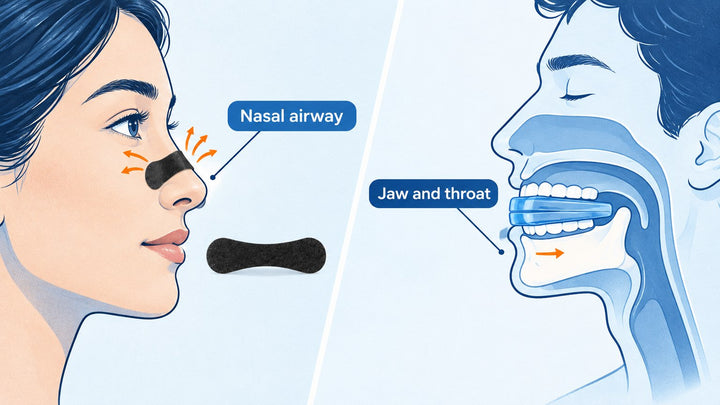
Nasal strips open your nose from the outside; mouth tape encourages your lips to stay closed. They work on different parts of your airway, and the one you need depends on where your breathing breaks down. In short: if air isn't moving freely through your nostrils, start with nasal strips. If your nose is clear but your mouth falls open anyway, mouth tape addresses that habit directly.
- Nasal strips are a mechanical lift - they widen your nasal opening so air flows more easily through your nose.
- Mouth tape is a behavioral prompt - it keeps your lips together to discourage open-mouth breathing during sleep.
- They target different problems and can be used at the same time when both issues are present.
- If your nose is blocked or congested, mouth tape alone is not safe - clear the airway first.
- Neither tool treats sleep apnea or replaces a diagnosis from a doctor.
For a broader look at how adhesive strips compare to other breathing products, see the full nasal strip reviews and comparisons guide.
What Each Tool Actually Does
These two products are often mentioned in the same breath - sometimes even in the same product listing - but their mechanisms have almost nothing in common. Understanding what each one physically does makes the choice straightforward.
How Nasal Strips Work
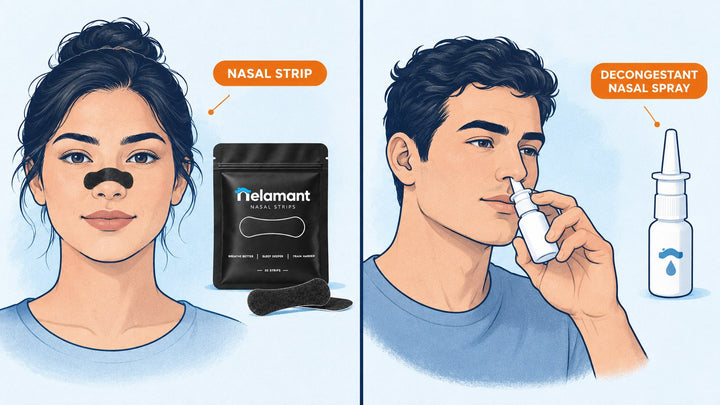
A nasal strip is a small, spring-loaded adhesive band you press across the bridge of your nose. The band's natural tendency to straighten creates an outward lift on the sides of the nostrils - the part of the airway most likely to narrow under the negative pressure of breathing in. That wider opening means less resistance with every breath. The action is purely mechanical: no drugs, no chemicals doing anything inside your body. The strip works whether you breathe through your nose or your mouth; it simply makes nasal airflow easier if you choose - or manage - to use it.
How Mouth Tape Works
Mouth tape is a strip of gentle adhesive placed horizontally across the lips before sleep. It doesn't open anything; it holds something shut. The logic is that if your lips stay together, you're more likely to breathe through your nose by default. Some people sleep with their mouths open out of ingrained habit even when their nasal passage is completely clear. For them, a light prompt at the lips can redirect airflow back through the nose. Mouth tape does nothing to reduce nasal resistance - if your nose is congested or structurally narrow, taping your mouth closed adds effort to every breath without fixing the underlying restriction.
Quick-Answer Comparison
| Feature | Nasal Strips | Mouth Tape |
|---|---|---|
| Mechanism | Lifts nasal walls outward; reduces airway resistance | Holds lips together; redirects breathing to the nose |
| Primary problem solved | Narrow or congested nasal passage | Open-mouth breathing habit during sleep |
| Where it's worn | Across the nose bridge | Across the lips |
| Requires clear nasal passage? | Helps even when mildly congested | Yes - unsafe to tape if nose is blocked |
| Best suited for | Nasal resistance, nighttime congestion, snoring from the nose | Habitual mouth breathers with an open nasal airway |
| Can be used together? | Yes - strip opens the nose; tape keeps the mouth closed | Yes - effective combination when both issues coexist |
Choose Nasal Strips If…
Nasal strips are the right starting point when the restriction is in your nose itself - not just the habit of breathing through your mouth.
- Your nose feels narrow or partially blocked at night. Lying down shifts fluid toward the head and can cause the nasal passage to swell or tighten. A strip's outward lift counteracts that narrowing without any medication.
- You snore with your mouth closed, or through your nose. If the vibration originates from nasal turbulence rather than a dropped jaw, widening the nostril opening addresses the actual source. Mouth tape wouldn't help here at all - there's nothing wrong with the lip position.
- You wake up with a dry mouth despite trying to sleep with lips together. That often means your nose isn't giving air a clear enough route, so your body defaults to mouth breathing involuntarily. Opening the nasal passage first may resolve the mouth-breathing downstream.
- You have congestion from allergies, a cold, or exercise. Nasal strips can support easier breathing during or after physical activity, or overnight when allergen exposure peaks.
- You want a drug-free option. There's no decongestant, no spray, nothing absorbed through the skin - just a lift.
Nelamant Air uses a broader lift design that distributes the opening force evenly across the nose bridge rather than pulling from a single point. The extra-hold adhesive is designed to resist sweat and overnight movement, which matters if you tend to shift position during sleep. See the Nelamant Air product page for pack sizes and current pricing.
Choose Mouth Tape If…
Mouth tape makes sense only when the nasal route is genuinely open and the problem is purely one of lip position during sleep. Before reaching for tape, take a moment to breathe through your nose right now, comfortably, through both nostrils. If that's easy, mouth taping is a reasonable thing to try. If it feels effortful, address the nasal side first.
- You wake up with a dry or sore throat every morning despite no congestion. An open mouth all night dries the throat and oral tissues. If your nose is clear, a tape prompt may be all you need.
- You know you're a habitual mouth breather but your nose checks out fine. Some people default to mouth breathing from years of habit, not anatomy. A physical reminder at the lips can help retrain that pattern over time.
- Your partner confirms your mouth falls open. If the jaw drops and the mouth opens rather than any nasal turbulence producing the snore, closing the lips may reduce the sound.
For a dedicated look at what the evidence says about taping and snoring specifically, see does mouth tape stop snoring.
Where Nasal Strips Fit - and Where They Don't
Nasal strips work on the outer nasal valve - the widening at the entrance to the nostrils. They're effective when that's where resistance is occurring. They don't move the septum, they don't reduce swelling deep inside the nasal cavity, and they don't affect anything below the nose: the throat, the soft palate, the tongue position. If your snoring or breathing difficulty originates lower in the airway, a nasal strip won't resolve it on its own.
Similarly, neither nasal strips nor mouth tape is a treatment for sleep apnea, which involves the throat collapsing during sleep. If you suspect apnea - loud snoring, gasping, unrefreshing sleep - that needs a proper evaluation, not a strip or tape.
Can You Use Nasal Strips and Mouth Tape Together?
Yes, and for some people the combination addresses both sides of the problem at once: the strip opens the nose so nasal breathing is easy, and the tape keeps the mouth closed so the body actually uses that open route. The two products don't interfere with each other physically - one is on the nose, the other is on the lips.
The important condition is the same one that applies to mouth tape alone: your nasal passage must be sufficiently open before you seal your lips. If you're congested from a cold or your nose is structurally narrow, applying mouth tape on top of that restriction forces your body to work harder to breathe through an inadequate opening. Use the strip first, check that breathing through your nose feels manageable, then add the tape if you want to.
For practical guidance on the combined approach, read the full guide to using mouth tape and nasal strips together. If you're new to mouth taping and want to understand the risks before starting, the is mouth taping safe guide covers the key considerations.

Safety Considerations for Each

Nasal strips are low-risk for most adults. Any adhesive can cause skin irritation. Apply to clean, dry skin and remove gently, following the grain of the skin rather than pulling sharply.
Mouth tape carries more conditions. Do not tape your mouth closed if:
- Your nose is blocked by congestion, structural narrowing, or any condition that makes nasal breathing difficult.
- You have been diagnosed with sleep apnea and are not on prescribed therapy - tape does not treat apnea and should not replace CPAP or other prescribed care.
- You have significant lip or skin sensitivity, or broken skin at the lips.
- You've been drinking alcohol - muscle relaxation from alcohol increases airway risk and makes taping inadvisable.
If you're unsure whether your nasal passage is open enough for mouth taping to be safe, starting with a nasal strip alone is always the more conservative choice.
Try Nelamant Air Nasal Strips
Broader lift, extra-hold adhesive, materials - drug-free nasal support for sleep, workouts, or congestion.
$14.99 for 30 strips · 30-day returns
Shop Nelamant AirFrequently Asked Questions
Is mouth tape or nasal strips better for snoring?
It depends on where the snoring comes from. If it originates from nasal turbulence - a narrow or partially blocked nostril - nasal strips address the source directly. If snoring happens because the jaw drops and the mouth falls open with a clear nasal passage, mouth tape may help by keeping the lips together. Many people have both issues, which is why combining the two is a practical option. Neither works well for snoring caused by throat obstruction or sleep apnea.
Can I wear mouth tape if my nose is congested?
No - that's the one situation where mouth taping is not appropriate. When your nose is blocked, your mouth becomes your primary airway. Sealing it forces you to work much harder for each breath, or disrupts your sleep as your body breaks the seal to breathe. If you're congested and want nasal support, a nasal strip is the right tool: it helps open the nostril without restricting the mouth.
Do nasal strips keep your mouth closed the way tape does?
No. A nasal strip acts on the nose only - it widens the airway so nasal breathing is easier, but it puts no constraint on the lips or jaw. If your mouth falls open during sleep, a strip won't prevent that. That's exactly the gap mouth tape is designed to fill. The two products solve adjacent but separate problems, which is why some people use both.
Is mouth taping safe to try at home?
For most healthy adults with a clear nasal passage, light mouth tape applied across the lips is considered low-risk. The key safeguard is confirming that nasal breathing is comfortable before you tape. If you have any diagnosis affecting your upper airway, including sleep apnea, check with a clinician before trying mouth tape. For a fuller breakdown, read the dedicated guide on whether mouth taping is safe.
The Short Version
Nasal strips and mouth tape are not competing products - they solve different problems. When your nose is the bottleneck, nasal strips are the direct answer. When the nose is clear but the mouth keeps falling open, tape addresses the habit at the source. When both are true, using them together is reasonable, provided the nasal route is genuinely open first. The nasal strips vs mouth tape decision comes down to one question: where is your breathing actually breaking down? Answer that, and the right tool is obvious.