Thomas Tiemann

This article is for general information, not medical advice.
Knowing how to sleep with a stuffy nose starts with one simple fact: lying flat makes congestion worse. When you recline, blood pools more easily in the nasal tissues and mucus has nowhere to drain, turning a manageable daytime stuffiness into a night of mouth-breathing and restless sleep. The good news is that a handful of practical steps - elevating your head, rinsing with saline, managing your bedroom environment and opening your nasal passages - can meaningfully improve how you breathe and how well you sleep. If the bigger picture of breathing through your nose while sleeping is something you want to improve long-term, that guide covers the full picture. This article focuses on the twelve most useful things you can do tonight and going forward.
Key Takeaways
- Elevate your head and shoulders - not just your head - to reduce nasal tissue congestion.
- A saline rinse before bed flushes allergens and loosens mucus; always use sterile or distilled water.
- A clean humidifier at 30–50% relative humidity keeps nasal passages from drying out overnight.
- Reduce bedroom allergen triggers: weekly sheet washing, pets out of the room, windows closed during high pollen periods.
- A nasal strip can help open your nasal passages when the blockage involves external valve narrowing.
- Persistent symptoms, one-sided discharge, facial swelling or signs of sleep apnea are reasons to see a doctor.
Why Your Nose Gets More Blocked at Night
Several forces converge after dark to make your nose feel worse than it did all day. Gravity is the first: when you lie down, blood redistributes toward your head, increasing pressure in the small vessels lining the nasal passages and causing the tissue to swell. Mucus that drains freely when you are upright can pool and sit in the back of the nose and throat when you are horizontal. On top of that, bedrooms concentrate allergens - dust mites thrive in mattresses and pillows, and if a pet sleeps nearby, dander accumulates through the night. Acid reflux, which tends to worsen after lying down following a meal, can also trigger nasal inflammation. The result is that a nose that felt passable in the evening can feel fully blocked by the time you want to sleep.
Understanding the cause matters because the fix differs. For a look at the full range of reasons congestion builds up, how to unblock your nose covers the underlying mechanisms and targeted approaches in detail.
12 Tips for Sleeping With a Stuffy Nose
1. Elevate Your Head and Shoulders
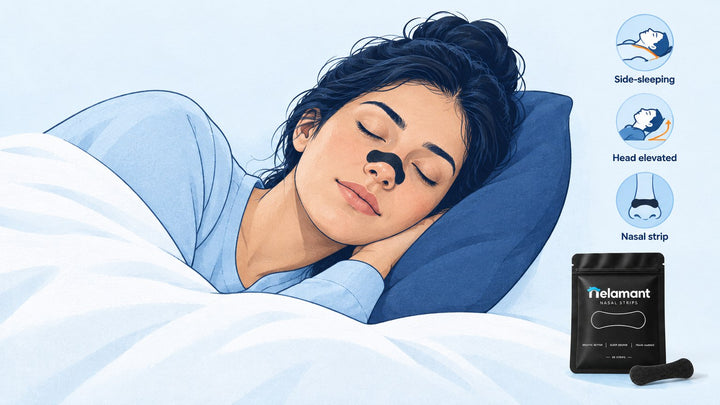
Raising your head alone - with a single extra pillow crammed under your neck - can actually create tension and make breathing harder. The more effective approach is to elevate your entire head and upper back together, using a wedge pillow or two to three pillows arranged so your torso rises gently from the mattress. This position uses gravity in your favor: it reduces blood pooling in nasal tissue, encourages mucus to drain toward the back of the throat and stomach rather than sitting in the nasal cavity, and reduces the sensation of pressure that makes lying flat so uncomfortable when you are congested. For a full breakdown of body positions and their effect on nighttime breathing, see the guide to the best sleeping position for breathing.
2. Do a Saline Rinse or Spray Before Bed
Saline irrigation physically flushes allergens, irritants and loosened mucus from the nasal passages before you settle in for the night. A saline spray, while less thorough, moisturizes the nasal lining and can relieve dryness. Both are drug-free options with a strong practical track record FDA guidance on safe sinus rinsing. The critical safety point: if you use a nasal rinse device such as a neti pot or squeeze bottle, always use sterile, distilled, or previously boiled and cooled water - never untreated tap water, which can carry microorganisms that are dangerous when introduced directly into the sinuses FDA guidance on safe sinus rinsing. Wash and dry your rinse device thoroughly between uses. A saline spray from a sealed commercial bottle does not carry this water-source risk.
3. Run a Clean Humidifier
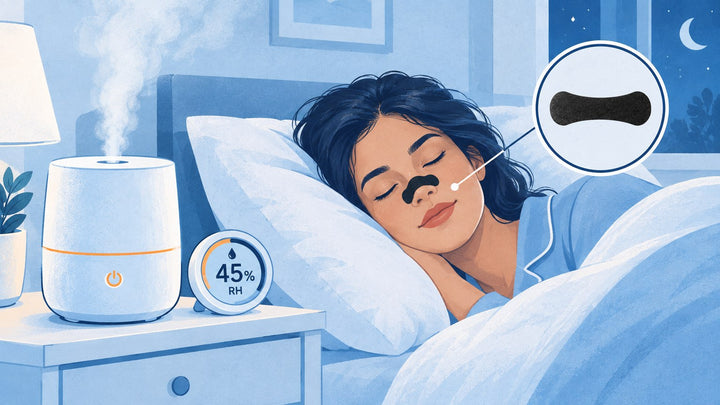
Dry indoor air - common in winter when heating runs continuously - pulls moisture from the nasal lining, causing it to dry out, crack and become more easily irritated. A humidifier adds that moisture back. The Mayo Clinic recommends targeting indoor relative humidity between 30% and 50%; levels above 50% can encourage dust mites, mold and other allergens that may worsen congestion in susceptible people Mayo Clinic humidifier guidance. Use a hygrometer to keep track. The most important maintenance step: clean your humidifier regularly following the manufacturer's directions. A dirty tank can harbor bacteria and mold and distribute them into the air you are trying to breathe. Avoid hot-steam vaporizers near sleeping areas due to burn risk, particularly if there are children present Mayo Clinic humidifier guidance.
4. Shower Before Bed
Throughout the day, pollen, pet dander, dust and other airborne particles settle on your hair and skin. Taking a shower before bed washes those triggers away before you press your face into a pillow for eight hours Cleveland Clinic nighttime allergy tips. The steam from a warm shower can also provide brief, temporary relief by loosening mucus, though the effect does not last long. If a full shower is not practical every night, at minimum rinsing your face and rinsing or blowing your nose before lying down reduces the allergen load you bring to bed.
5. Reduce Bedroom Allergen Triggers
Your bedroom environment is a significant driver of stuffy nose at night for people with allergies or sensitivities. Dust mites concentrate in mattresses, pillows and bedding; washing sheets weekly in hot water keeps populations down. If you have a pet, keeping them out of the bedroom entirely - not just off the bed - makes a meaningful difference over time, since dander settles on every surface. Keep windows closed during high pollen seasons and consider a HEPA air purifier if outdoor allergens are a regular trigger. These changes are cumulative: none of them work overnight, but together they lower the baseline inflammation that makes nighttime breathing difficult.
6. Stay Well Hydrated Through the Day
Adequate hydration keeps the mucous membranes throughout your upper airway moist and helps thin mucus so it moves more freely rather than sitting thick and sticky in your nasal passages Cleveland Clinic nighttime nasal congestion. There is no magic number of glasses; individual needs vary by body size, activity and climate. What is consistently helpful is avoiding dehydration in the hours before bed - and being mindful of alcohol, which is a diuretic and can dry out mucosal tissue. Alcohol also relaxes the muscles of the upper airway, which can worsen both congestion and snoring. A glass of water in the evening is a simple habit worth keeping.
7. Use a Nasal Strip to Help Open Your Nasal Passages
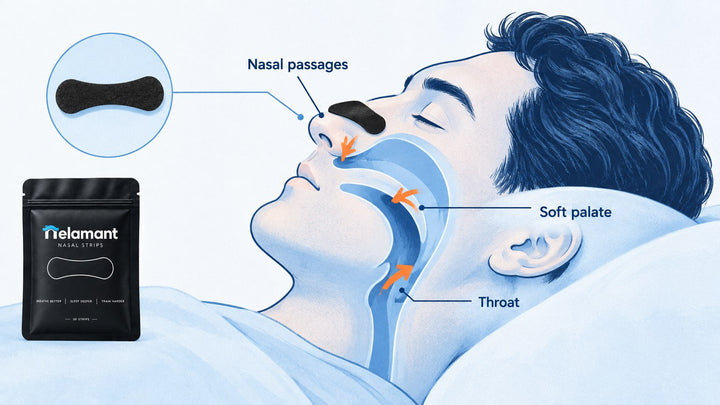
If you find you can't breathe through your nose when lying down even when mucus is not the main issue, the problem may partly be that the sides of the nose collapse inward against the reduced airflow of horizontal breathing. Nasal strips work from the outside: they spring gently outward across the bridge of the nose, helping open your nasal passages so air moves more freely. They are drug-free and work mechanically, with no absorption or systemic effect.
Nelamant Air is designed with a broader, more balanced lift across the nasal bridge - a wider, more even opening action rather than a single sharp pull point. The extra-hold adhesive is formulated to resist sweat, oil and overnight movement, and the materials are intended to peel off cleanly without sticky residue. One pack covers a month of nightly use. Worth noting: nasal strips support the outer nasal wall and help where external valve narrowing is a factor. They are not a treatment for swollen nasal tissue from a cold or allergy, and they do not clear mucus - they are most useful when the structural opening of the nose is part of what is limiting airflow.
For a full look at how strips perform specifically during congestion, see whether nasal strips help with congestion and our guide to the best nasal strips for congestion.

8. Use Decongestant Nasal Sprays Carefully and Per Label
Decongestant nasal sprays (those containing ingredients such as oxymetazoline) work by constricting the blood vessels lining the nasal passages, rapidly reducing swelling and opening airflow. They can provide genuine short-term relief when congestion is severe. The important caveat: overuse can cause rebound congestion - a cycle in which the nose becomes more blocked between doses, requiring the spray more and more frequently NHS decongestant guidance. Always read and follow the duration instructions on your specific product's label; guidelines vary and US product labels may differ from UK guidance. If you have other medical conditions, are pregnant or are taking other medications, check suitability with a pharmacist or doctor before using. Steroid nasal sprays and plain saline sprays are distinct products with different mechanisms and different guidance.
9. Try Gentle Nasal Massage or Acupressure
Applying light finger pressure along the sides of the nose and across the sinus points of the face is a commonly described self-care technique for temporary congestion relief. The mechanism is not fully established, but some people find that gentle massage of the nasal bridge and the soft tissue beside each nostril briefly eases the sense of pressure. It costs nothing; avoid pressure on painful, injured, or recently operated tissue. It is not a substitute for treating the underlying cause, but as a short-term measure before sleep - combined with a rinse or positional change - it can be part of a practical routine.
10. Keep Your Bedroom Cool
Overly warm, dry air can irritate and inflame the nasal lining, while a cooler room temperature tends to be less irritating to the upper airway. Most sleep research points to a slightly cool bedroom - broadly in the 65–68°F (18–20°C) range - as supportive of quality sleep generally, and it may also reduce the kind of nasal tissue irritation that warm, stale indoor air can cause. Pairing a cooler room with the humidifier tip above gives you the benefits of moisture without the stuffiness of a warm, humid space.
11. Avoid Late-Night Heavy Meals and Alcohol
Lying down shortly after a large meal increases the chance of acid reflux, and stomach acid that reaches the back of the throat can irritate nasal tissue and worsen congestion - a connection that is especially relevant if your stuffiness tends to be worse when you have eaten late Cleveland Clinic nighttime nasal congestion. Alcohol compounds this: it increases reflux risk, relaxes the upper airway muscles, and dries out mucosal tissue. Keeping your last meal light and finishing eating two to three hours before bed, and moderating or avoiding alcohol in the evening, addresses two contributors to nighttime nasal problems at once.
12. Identify and Address the Underlying Cause
The tips above give you practical relief, but if your nose is consistently blocked at night, the most durable fix is understanding why. A seasonal pattern points toward allergies. Congestion that never really clears may suggest a structural issue such as a deviated septum or enlarged turbinates. Congestion that comes with heartburn and worsens after eating is more likely reflux-related. Pregnancy rhinitis is a distinct hormonal cause. Congestion tied to a cold or virus is temporary but benefits from specific management. Knowing your pattern helps you choose the right combination of approaches - and tells you when it is time to see a doctor rather than continuing to self-manage.
Common Causes of a Blocked Nose at Night - Quick Reference
| Cause | Why It Often Worsens at Night | Practical First Step |
|---|---|---|
| Cold or viral illness | Lying flat pools mucus; inflammation peaks in the evening | Head elevation, saline rinse, hydration |
| Allergies (dust mites, pet dander, pollen) | Allergen concentration builds in bedroom overnight | Weekly sheet washing, pets out, HEPA filter |
| Acid reflux (GERD) | Lying down allows acid to reach the back of the throat and trigger inflammation | Avoid late meals, elevate upper body |
| Dry indoor air | Heating systems strip humidity; nasal lining dries and swells | Clean humidifier at 30–50% humidity |
| Structural narrowing (nasal valve) | Reduced airflow when lying down causes more noticeable collapse | Nasal strip to support external valve opening |
| Pregnancy rhinitis | Hormonal changes increase nasal tissue swelling throughout pregnancy | Saline spray, elevation; discuss options with your midwife or doctor |

Why Is My Nose Blocked at Night? When to See a Doctor
Most nighttime congestion responds well to the measures above and clears on its own or with treatment of an identifiable cause. Certain signs, however, warrant a medical evaluation rather than continued self-management.
Seek prompt care if you notice any of the following:
- Swelling of the eye area, forehead or face alongside congestion
- Vision changes accompanying facial pressure or congestion
- Foul-smelling discharge from one nostril only
- Clear discharge that started after a head injury
- High fever alongside nasal symptoms
- Congestion that has persisted for more than ten days without improvement
For a detailed guide on what symptoms cross the threshold for medical attention, when to see a doctor for nasal congestion lays out the key red flags clearly.
If your partner has noticed that you stop breathing during sleep, if you snore loudly and habitually, or if you regularly wake gasping or feel unrefreshed despite a full night in bed, those are warning signs of sleep apnea - a condition that requires medical assessment and possibly a sleep study NHLBI sleep apnea symptoms. Understanding the difference between ordinary snoring and something more serious is covered in the guide to snoring vs. sleep apnea. Nasal strips do not treat sleep apnea and are not a substitute for CPAP or any other prescribed therapy NHLBI sleep apnea treatment.
Frequently Asked Questions
Why is my nose blocked at night even when it's clear during the day?
When you lie down, blood redistributes toward your upper body and head, increasing pressure in the small vessels of the nasal lining and causing the tissue to swell. Allergens also accumulate in the bedroom environment - in bedding, carpet and from pets - and exposure builds through the night. The result is that symptoms you barely noticed while upright can feel significant by the time you want to sleep. Identifying whether allergens, dry air or positional changes are the main driver helps you choose the right combination of fixes.
I can't breathe through my nose when lying down - is that normal?
It is common, though not something you simply have to accept. When you recline, the nasal passages receive more blood flow and may swell slightly; at the same time, reduced airflow through the nose can allow the sides of the nasal passages to collapse inward more easily. If this happens consistently regardless of whether you have active congestion, a structural factor - such as a narrow external nasal valve - may be contributing, and that is exactly the situation where a nasal strip can help open your nasal passages. If the problem is severe, persistent or accompanied by other symptoms, a doctor can assess whether something structural warrants attention.
Do nasal strips actually help when you have a stuffy nose?
It depends on what is causing the stuffiness. Nasal strips work mechanically: they spring outward across the nose to widen the external nasal passage, which is useful when the physical opening of the nose is part of the limitation. They do not reduce swollen nasal tissue, thin mucus or address the inflammation that comes with allergies or a cold - so they are most helpful as a complement to other measures rather than a standalone fix for heavily congested nights. For a full look at the evidence and realistic expectations, the guide on whether nasal strips help with congestion goes into detail.
How do I sleep with a stuffy nose when decongestant sprays stop working?
If you have been using a decongestant nasal spray frequently and find it is no longer providing relief - or that your congestion bounces back worse between doses - you may be experiencing rebound congestion from overuse NHS decongestant guidance. Stopping the spray (sometimes gradually under a doctor's guidance) and replacing it with saline rinses, head elevation, a humidifier and allergen reduction can help the nasal lining recover. If this is an ongoing cycle, a pharmacist or doctor can advise on the best way to step down and address the root cause.
Should I use a humidifier or a saline spray - or both?
They serve different purposes and work well together. A humidifier adjusts the moisture level of the room air so your nasal lining does not dry out through the night - target 30–50% relative humidity and keep the device clean Mayo Clinic humidifier guidance. A saline spray moisturizes the nasal lining directly and can be used as needed, including right before bed. A saline rinse goes further, physically flushing out allergens and mucus - just be sure to use sterile or distilled water, not untreated tap water FDA guidance on safe sinus rinsing. Using all three on a bad night is perfectly reasonable.
Is it safe to use mouth tape if my nose is blocked?
No. Mouth tape should not be used if your nasal breathing is obstructed. If your nose is significantly blocked and you tape your mouth shut, you restrict your primary available airway. This is an important safety boundary: mouth taping is only appropriate when nasal breathing is unobstructed and sufficient to meet your ventilation needs. If you are congested, focus on clearing or opening the nose first through the methods described above before considering any technique that redirects breathing.
Getting Better Sleep Starts With Your Nose
Figuring out how to sleep with a stuffy nose rarely comes down to a single fix. The most practical approach combines a few complementary steps: elevate your position to use gravity, clear and moisturize the nasal passages before bed, reduce the allergen load in your bedroom, and address the underlying cause if symptoms are recurring. A nasal strip can be a useful addition when structural opening is part of what is limiting airflow. For anything that does not respond to these measures - or that comes with the warning signs listed above - a conversation with a doctor is the right next step. Better nights are possible; it often just takes a bit of systematic troubleshooting to find the combination that works for you.