Thomas Tiemann

This article is for general information, not medical advice.
When you have a cold, swollen nasal tissue and mucus block the passages you normally breathe through, so your body switches to mouth breathing - and that switch is almost always what starts the snoring. Snoring when sick is your airway responding to congestion, not a sign that something is permanently wrong. For most people it clears up once the cold does.
- A cold inflames nasal tissue and narrows the airway, forcing you to breathe through your mouth.
- Mouth breathing lets soft tissue at the back of the throat vibrate - that vibration is snoring.
- Congestion snoring is usually temporary and resolves as the cold clears.
- Head elevation, saline rinse, humidity and side sleeping can all reduce it.
- A nasal strip can help keep the nasal opening wider when congestion is partial, not total.
- Snoring that outlasts the cold by more than a week or two is worth discussing with a doctor.
Why Being Sick Makes You Snore
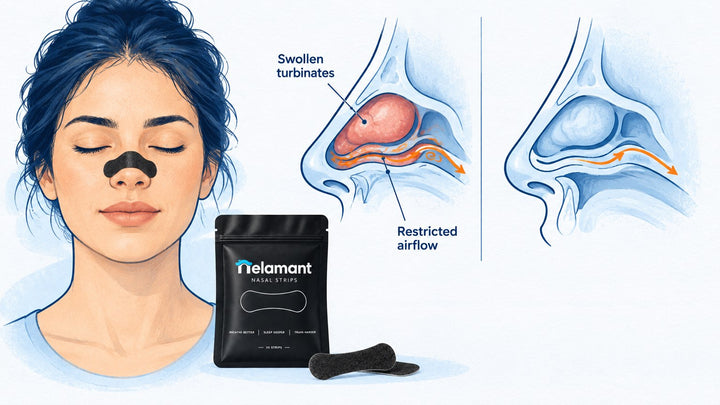
The core explanation is straightforward: a cold virus triggers inflammation in the nasal lining. That inflammation swells the turbinates (the scroll-shaped bones inside your nose), and mucus production increases on top of that. Together they narrow - and sometimes effectively close - the nasal passages. Your body still needs air, so it routes breathing through the mouth instead.
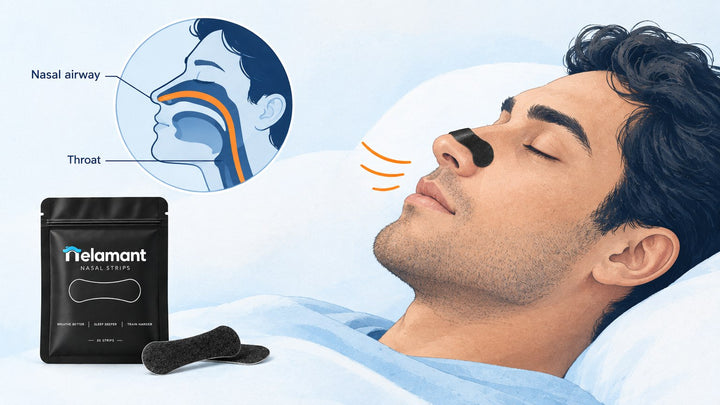
Mouth breathing bypasses the firm structure of the nose and pulls air through the softer tissues of the throat and soft palate. At the back of the mouth, that soft tissue can flutter and vibrate against itself - producing the snoring sound. The narrower and more relaxed those tissues are, the louder the vibration.
This is a well-understood mechanical chain: congestion → airway resistance → mouth breathing → soft-tissue vibration → snoring. Understanding that chain is useful because each step suggests a way to interrupt it. For a broader look at snoring triggers and long-term fixes, see the full guide on how to stop snoring.
How a Cold Inflames Your Nasal Passages
When your immune system detects a virus, it sends blood flow and immune cells to the nasal mucosa, causing it to swell. The turbinates, already the narrowest structures in the airway, can swell enough to nearly obstruct one or both nostrils. Mucus accumulates and may drain toward the throat (postnasal drip), adding another layer of tissue irritation that makes the throat more prone to vibration during sleep.
Why You Switch to Mouth Breathing When Congested
Breathing through a blocked nose requires more effort, and your sleeping brain takes the path of least resistance. Once your mouth falls open, air moves faster across a less rigid surface. That increased airflow speed against relaxed soft-palate tissue is what produces the snoring vibration. Worth noting: the vibration here originates in the throat, not the nose itself - which means clearing nasal congestion is the lever to pull, not trying to physically prevent throat vibration while the blockage is still there.
Is Snoring with a Cold Different from Regular Snoring?
Yes - and the most important difference is duration. Snoring with a cold is driven by temporary mucosal swelling that typically peaks around day two or three and then gradually resolves. Most adults find their snoring goes back to baseline within a week to ten days of the cold clearing.
Regular, ongoing snoring has different drivers: soft-tissue laxity, anatomy, weight, sleep position habits, or alcohol use. It doesn't come and go with illness. If your snoring started during a cold but hasn't stopped two or more weeks after you've recovered, that's worth taking seriously rather than attributing to the lingering illness.
A separate question is whether snoring - sick or not - is masking something like obstructive sleep apnea. If you're waking gasping, someone reports pauses in your breathing, or you're persistently exhausted despite enough hours in bed, the guide on snoring vs. sleep apnea covers what to watch for.
How to Reduce Congestion Snoring at Night
None of these steps cure a cold, but they can reduce nasal resistance enough to let you breathe more through your nose - or at least make the snoring less disruptive. For a full breakdown of congestion-clearing strategies, see how to relieve congestion from a cold.
Sleeping Position and Elevation
Lying flat lets mucus pool in the nasal passages and throat, worsening both congestion and snoring. Elevating your head 30–45 degrees - an extra pillow or a wedge pillow under the mattress head - encourages drainage and reduces how much the soft palate collapses toward the airway. Side sleeping tends to keep one nostril clearer than the other and reduces the degree to which the tongue and soft palate fall back.
Saline Rinse and Humidity
A saline nasal rinse (neti pot or squeeze bottle) can flush excess mucus from the nasal passages before bed, temporarily reducing resistance. Always use sterile, distilled, or boiled-and-cooled water - never tap water directly. A clean humidifier in the bedroom adds moisture to the air, which helps keep the nasal lining from drying and crusting overnight. Keep the humidifier clean according to the manufacturer's instructions to avoid introducing mold or bacteria into the air.
Over-the-Counter Decongestants
Oral decongestants (such as pseudoephedrine or phenylephrine) and topical nasal decongestant sprays can meaningfully reduce swelling. Follow label directions and duration guidance carefully - topical sprays in particular carry a rebound congestion risk if used for more than the recommended number of consecutive days, which can leave your nose more blocked than before. Do not exceed label-recommended durations. If you have a health condition or take other medications, check with a pharmacist before using decongestants.
Can a Nasal Strip Help You Sleep When You're Sick?
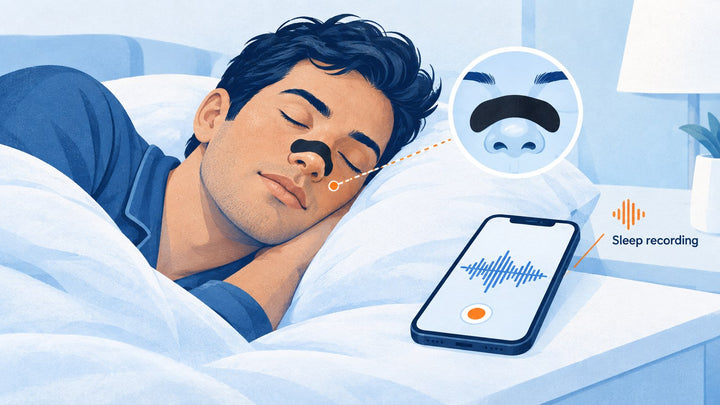
A nasal strip works by gently lifting the sides of the nose outward, widening the nasal valve - the narrowest part of the nasal airway - to support easier nose breathing. When a cold has partially congested your nasal passages but not blocked them completely, keeping that valve open as wide as possible gives you a better chance of breathing nasally through the night rather than defaulting to mouth breathing.
Nelamant Air uses a wider, more balanced lift across the bridge of the nose - a broad, even spring action rather than a single pull point - with an extra-hold adhesive designed to stay on through the movement and perspiration of a restless sick night. Check the listed materials and adhesive before regular use.
The honest limit: if your nose is nearly or fully blocked, a strip can't push through mucus or shrink swollen tissue. Think of it as widening the door frame - it can't remove what's blocking the doorway. It works best alongside the congestion-relief steps above, not instead of them.


How to Sleep with a Stuffy Nose
If your congestion is making sleep itself the challenge - beyond just the snoring - there's a more detailed breakdown of the full strategy in the guide on how to sleep with a stuffy nose. A few key points:
- Shower before bed: steam loosens mucus and clears passages temporarily.
- Keep the bedroom cool and well-humidified - warm, dry air worsens nasal dryness and crust.
- Avoid alcohol and antihistamines that cause drowsiness while congested - they relax throat tissue further and can worsen snoring.
- A warm compress over the sinuses for a few minutes before lying down can relieve pressure.
When to See a Doctor
Snoring during a cold is expected. See a doctor if:
- Nasal congestion lasts more than 10 days without improvement, or gets worse after initially improving - this can signal a secondary bacterial sinus infection.
- You develop a fever above 103 °F (39.4 °C), severe facial pain, or significant vision changes alongside congestion.
- Snoring continues at the same intensity for two or more weeks after the cold has otherwise resolved.
- You or a partner notice you stopping breathing during sleep, gasping, or waking repeatedly - these are not cold symptoms and should be evaluated for sleep apnea regardless of whether you are currently sick.
For congestion that doesn't resolve, when to see a doctor for nasal congestion covers the warning signs and what to expect at an appointment. For questions about persistent snoring and whether it might indicate something more than a cold, the comparison of snoring vs. sleep apnea is a useful starting point before speaking to a physician.
Frequently Asked Questions
Why do I snore more when I have a cold but not normally?
A cold causes temporary inflammation and mucus buildup in the nasal passages that forces you to breathe through your mouth during sleep. Mouth breathing creates airflow over the relaxed soft palate and throat tissue, causing the vibration you hear as snoring. When your passages are clear, nasal breathing keeps that tissue more stable and the snoring disappears.
How long does snoring from a cold last?
For most adults, congestion snoring tracks with the cold itself - typically peaking in the first few days and fading over a week to ten days. If nasal congestion or snoring persists noticeably longer than two weeks after other cold symptoms have resolved, it's worth mentioning to a doctor rather than continuing to assume it's still the cold.
Does blowing my nose before bed help reduce snoring?
Yes, partially. Clearing as much mucus as possible before lying down reduces nasal resistance, which gives you a better chance of nose breathing through the early part of the night. Pairing this with a saline rinse is more effective than blowing alone, because the rinse flushes the passages more thoroughly. The benefit is temporary - mucus can re-accumulate - so elevation and humidity help maintain it through the night.
Do nasal strips help with snoring when sick?
They can, when congestion is partial rather than complete. A nasal strip supports the nasal valve open, reducing the resistance that drives you toward mouth breathing. When your nose is mostly blocked, that benefit is limited. For more on the relationship between strips and snoring generally, see the full guide on whether nasal strips help with snoring.
Can a chest cold or sore throat cause snoring too?
A sore or inflamed throat adds localized swelling to the upper airway, which can make snoring more pronounced even when nasal congestion is moderate. Postnasal drip - mucus draining from the nose into the throat - also irritates throat tissue and contributes. A chest cold by itself (bronchitis, lower respiratory symptoms) is less directly linked to snoring, but the throat inflammation and general congestion pattern that often accompanies it can play a role.
Snoring when sick is one of the more predictable effects of a cold, and for most people it's entirely temporary. Reduce the nasal congestion, support open nasal passages, sleep on your side with your head slightly elevated, and give the cold time to clear. If the snoring outlasts the illness, that's the moment to look a little deeper.