Thomas Tiemann

This article is for general information, not medical advice.
Nasal congestion happens when the tissue lining your nasal passages becomes swollen and inflamed, narrowing the space air has to travel through. The most common causes are viral infections, allergies, structural issues like a deviated septum or enlarged turbinates, and non-allergic irritants - and the fix depends entirely on which one is driving your stuffiness. Understanding what causes nasal congestion in your specific case is the fastest way to find relief that actually works.
- Congestion is almost always swollen nasal tissue, excess mucus, or both - not the same problem, not the same fix.
- Acute stuffiness (colds, infections) usually clears on its own; chronic stuffiness needs a cause-specific approach.
- Allergies, enlarged turbinates, a deviated septum, and vasomotor rhinitis are the leading reasons your nose is always stuffy without a cold.
- Nighttime congestion has a positional component - lying flat shifts blood flow toward the nasal lining.
- Mechanical nasal strips can support airflow when swelling narrows the nasal opening; they do not replace treatment for an underlying cause.
- See a doctor if congestion persists longer than 10–14 days, is one-sided, or comes with pain, fever, or changes in smell.
How Congestion Actually Works
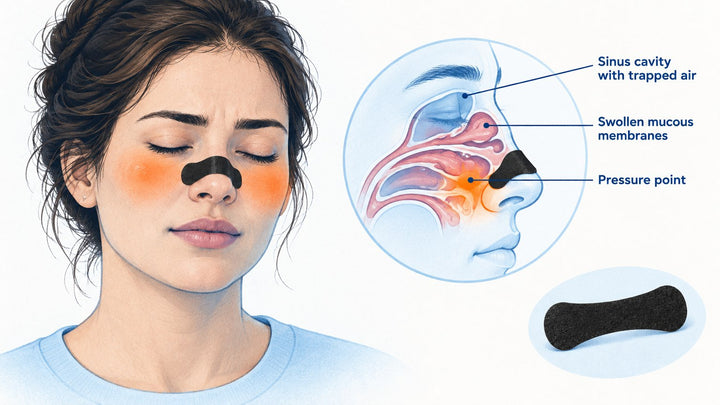
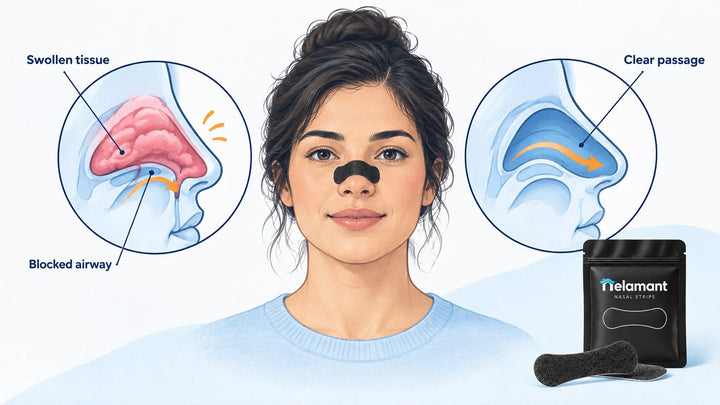
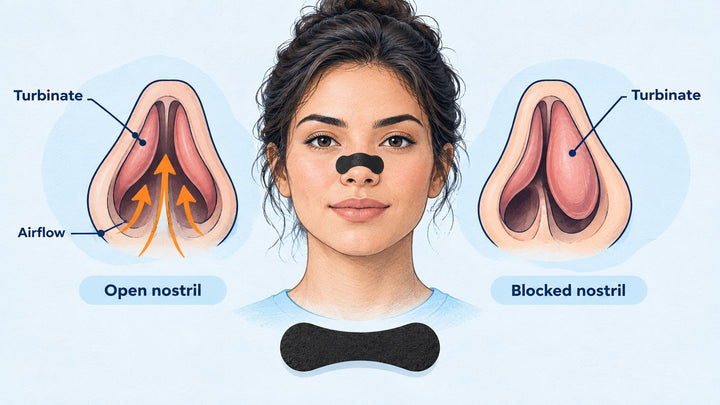
Your nasal passages are lined with a layer of highly vascular mucosa - tissue that can swell rapidly in response to infection, irritants, or allergic triggers. The turbinates, three bony shelves running along each nasal wall, are covered in this same tissue and are the primary site of that swelling. When the turbinate mucosa engorges with blood, the airway narrows and breathing feels labored even if there is no mucus at all.
Mucus production is a separate but related mechanism. The same inflammatory signals that swell the tissue also ramp up secretion from the mucous glands, which is why a head cold produces both a blocked feeling and a runny nose simultaneously. For practical relief, it helps to know which problem is dominant - a decongestant targets the vascular swelling, while a saline rinse targets excess mucus. Most of the time, both are present.
For a full guide to clearing a blocked nose - including step-by-step methods and when each one works - see how to unblock your nose.
Swollen Tissue vs. Mucus: Two Different Problems
If your nose feels blocked but you are not producing much visible discharge, the culprit is more likely engorgement of the mucosal lining than mucus. If you are constantly blowing your nose but still feel stuffed up, you are probably dealing with both. Pinpointing this distinction steers you toward the right remedy faster and avoids using treatments that address only half of the problem.
The Most Common Causes of a Stuffy Nose
Most congestion falls into one of six categories. The table below maps each cause to its mechanism and the pattern you would typically notice:
| Cause | Mechanism | Typical Pattern |
|---|---|---|
| Cold / viral infection | Viral inflammation, mucosal swelling, excess mucus | Acute; typically resolves within 7–10 days |
| Allergies (allergic rhinitis) | Histamine-driven engorgement and mucus secretion | Seasonal or year-round; tied to specific triggers |
| Enlarged turbinates | Chronic mucosal hypertrophy narrows the airway | Persistent; often worse at night or lying down |
| Deviated septum | Structural asymmetry physically narrows one side | Constant; usually worse on one side |
| Vasomotor (non-allergic) rhinitis | Nerve and vascular overreaction without allergen | Triggered by temperature, smoke, strong smells |
| Rebound congestion | Overuse of topical decongestant sprays | Worsens as each spray dose wears off |
Colds and Respiratory Infections
A cold or flu virus triggers an immune response in the nasal lining: blood vessels dilate, fluid leaks into surrounding tissue, and mucus production spikes. This is protective - the swelling and secretions help trap and flush the pathogen - but it makes breathing through your nose miserable in the process. The good news is that virus-driven congestion is self-limiting. Most people see the worst of it in days two through four, with steady improvement through day ten.
Bacterial sinus infections can follow a cold if the blocked sinuses allow secondary colonization. If your symptoms are worsening after a week rather than improving, that is worth a medical visit.
Allergies and Hay Fever
Allergic rhinitis is one of the most common reasons for a persistently stuffy nose in otherwise healthy adults. When you inhale an allergen - pollen, dust mite debris, pet dander - mast cells in the nasal lining release histamine and other mediators that dilate local blood vessels and stimulate mucus glands almost instantly. The result is the classic combination of stuffiness, sneezing, and a watery or itchy nose.
Allergic congestion tends to be worst at predictable times: spring and fall for outdoor pollen, and year-round but often worse overnight for dust mites. If your nose is regularly more blocked at night and in the early morning, nighttime allergies may be the specific driver - that guide covers bedroom triggers and how to reduce exposure.
Enlarged or Swollen Turbinates
The turbinates naturally cycle between sides - one side swells slightly while the other opens, a normal process called the nasal cycle. When turbinates become chronically enlarged due to repeated inflammation (from allergies, infections, or irritants), both sides can feel blocked for much of the day. Treatment ranges from steroid nasal sprays to, in refractory cases, a minor outpatient procedure. For a detailed look at this condition, see the guide to enlarged turbinates.
Deviated Septum
The nasal septum is the cartilage and bone wall dividing your two nostrils. A deviation - a bend or displacement to one side - is extremely common and often causes no symptoms at all. When the deviation is significant enough to narrow one nasal passage meaningfully, breathing on that side becomes chronically difficult, and the opposite side may compensate until it too becomes over-stressed. Nasal strips support the outer nasal wall but do not correct a septal deviation; surgical correction (septoplasty) is the only way to fix the underlying structure. For more detail, see the full guide to deviated septum symptoms, diagnosis, and options.
Why Is My Nose Always Stuffy? Chronic Causes
If your nose is always stuffy and you have ruled out an active infection, the cause is almost certainly one of these persistent, non-infectious conditions. Chronic nasal congestion - stuffiness lasting more than 12 weeks - is common and often undertreated because people assume it is just how their nose works.
Non-Allergic (Vasomotor) Rhinitis
Vasomotor rhinitis produces the same stuffiness and runny-nose symptoms as allergic rhinitis but without an identifiable allergen. The nasal blood vessels overreact to environmental triggers: sudden temperature changes (stepping from warm indoor air into cold outside air), strong perfumes, cigarette smoke, spicy food, or even emotional stress. Allergy testing comes back negative, which leaves many people confused about why their nose is always reacting.
Management focuses on identifying and avoiding personal triggers. Ipratropium nasal spray and certain nasal steroid sprays can help; antihistamines are typically less effective than they are for true allergic rhinitis because histamine is not the main driver.
Rebound Congestion from Nasal Sprays
Topical decongestant sprays (oxymetazoline is the most common ingredient) work quickly but are labeled for short-term use - typically no more than three consecutive days. Using them beyond that duration can produce rebound congestion: the nasal lining swells more severely as each dose wears off, creating a cycle where the spray feels necessary but is actually perpetuating the problem. Always follow the label duration; tapering off under medical supervision may be needed if dependence has developed. Do not stop a prescribed treatment without speaking to your doctor first.
Hormonal Changes: Pregnancy Rhinitis and Others
Estrogen and progesterone increase nasal mucosal blood flow, which is why many pregnant people develop persistent stuffiness - a condition called pregnancy rhinitis - even with no infection or allergy. It typically appears in the second trimester and resolves within two weeks of delivery. Similar hormonal effects have been reported around menstrual cycles and during hormonal therapy, though the evidence is less consistent.
Environmental and Occupational Irritants
Chronic low-level exposure to dry air, dust, chemical fumes, or air pollution can maintain a low-grade inflammatory state in the nasal lining. Woodworkers, painters, hairdressers, and people in poorly ventilated buildings are disproportionately affected. A humidifier set to 40–50% relative humidity can reduce dryness-related congestion; a well-fitted mask or improved ventilation addresses occupational sources. Keep humidifiers clean - stagnant water promotes mold and bacterial growth that would worsen symptoms.
Nighttime Congestion: Why It Gets Worse When You Lie Down
Many people notice their nose is significantly more blocked at night even if they were breathing reasonably well during the day. Two things drive this pattern. First, when you lie flat, gravity no longer assists venous drainage from the nasal mucosa, so blood pools in the tissue and it swells. Second, lying in a bedroom brings you into closer contact with allergens concentrated in bedding - dust mites, pet dander, and mold spores are all bedroom-environment triggers that are covered in the guide to allergies at night.
The nasal cycle also plays a role. At any given time, one nostril is naturally more open than the other; when the naturally more-closed nostril faces down in a side-lying position, it receives less stimulation to open and can feel fully blocked.
Elevating the head of your bed by a few inches, addressing allergen sources in the bedroom, and keeping the room humidified all reduce positional congestion. A mechanical nasal strip can help keep the nasal passage open during those hours without any drug interaction - Nelamant Air's wider lift spreads support across the nose bridge rather than pulling from a single point, which makes it easier to stay comfortable through the night. It supports easier nose breathing mechanically; it does not treat the swelling underneath, so pairing it with the appropriate cause-specific treatment gives better results than either alone.
Structural Causes That Don't Go Away on Their Own
Structural problems are a distinct category of congestion because no medication or lifestyle change fixes the underlying anatomy. Besides a deviated septum, two other structural issues come up regularly.
Nasal valve narrowing refers to collapse or constriction of the internal or external nasal valve - the narrowest functional point of the nasal airway. When this area is too narrow or collapses on inhalation, airflow is restricted even with healthy, non-swollen mucosa. External nasal strips work by pulling this area gently open, which is why some people with nasal valve issues get meaningful relief from strips when decongestants do not help much.
Nasal polyps are soft, benign growths in the lining of the sinuses or nasal passages. They develop from chronic inflammation and can grow large enough to block airflow significantly. Steroid sprays can reduce smaller polyps; surgery is sometimes required for larger ones.
If your nose consistently feels blocked but you produce little or no mucus, the cause is more likely structural or vascular than infectious. The guide to a nose that feels blocked but has no mucus covers this scenario in detail.

What Helps: Matching the Remedy to the Cause
The most common mistake in treating a stuffy nose is reaching for the same remedy regardless of what is causing it. Here is a practical approach organized by cause:
- Infection (cold, flu): Saline rinse to flush mucus - use only sterile, distilled, or water that has been boiled and fully cooled; avoid tap water directly in nasal rinses. Rest, hydration, and an oral decongestant if needed. Do not use topical decongestant sprays for more than three days.
- Allergies: Identify and reduce exposure to the trigger. A non-drowsy antihistamine and/or a daily nasal steroid spray is the standard first-line approach. Allergen immunotherapy is an option for persistent cases - ask your doctor.
- Enlarged turbinates: Nasal steroid sprays reduce mucosal swelling over weeks of use. If they fail, a referral to an ENT specialist is appropriate.
- Vasomotor rhinitis: Trigger avoidance first. Humidifying your home to 40–50% relative humidity helps with dry-air triggers; an ipratropium nasal spray targets the secretory component.
- Rebound congestion: Taper the decongestant spray with medical guidance; nasal steroid sprays can help bridge the transition.
- Structural causes: A medical assessment is the starting point. Strips and dilators can improve airflow mechanically while you pursue a longer-term plan.
For a comprehensive list of immediate and longer-term relief methods across all these causes, the pillar guide on how to unblock your nose is the most useful next read. If you want to know specifically whether strips can help in your situation, see whether nasal strips help congestion.

When to See a Doctor for Nasal Congestion
Most congestion is benign and self-resolving or manageable without medical care. See a doctor if any of the following apply:
- Stuffiness that has lasted more than 10–14 days without improvement
- Congestion that is clearly worse or present only on one side
- Facial pain or pressure, especially around the eyes, cheeks, or forehead
- Fever alongside worsening nasal symptoms after an apparent improvement
- Changes in or loss of your sense of smell
- Bloody nasal discharge or nasal discharge that is dark or foul-smelling
- Congestion in a child under three months old
- Any concern that your symptoms may relate to a breathing disorder during sleep
For guidance on what warrants medical attention and how to prepare for that visit, see when to see a doctor for nasal congestion. If nighttime stuffiness is accompanied by loud snoring or interrupted breathing, that combination may need evaluation - the article on snoring vs. sleep apnea explains how to tell the difference and when a sleep study becomes relevant.
Frequently Asked Questions
What is the most common cause of nasal congestion?
For short-term stuffiness, viral upper respiratory infections - colds - are the most frequent culprit. For ongoing or recurring congestion, allergic rhinitis (hay fever) is one possible explanation. In people who test negative for allergies, vasomotor rhinitis and enlarged turbinates are other possible explanations.
Why is my nose always stuffy even when I'm not sick?
Persistent stuffiness without an active infection almost always has one of four explanations: allergic rhinitis, non-allergic (vasomotor) rhinitis, enlarged turbinates, or a structural issue like a deviated septum or nasal valve narrowing. Many people have more than one factor at work simultaneously, which is why congestion that fails to respond to antihistamines may need a fuller ENT assessment to untangle all the contributing causes.
Can chronic nasal congestion be a sign of something serious?
Chronic nasal congestion is usually benign, but certain features warrant prompt medical attention: one-sided blockage, loss of smell, blood in the discharge, visible nasal growths, or symptoms that progress rather than plateau. These can occasionally point to nasal polyps, a structural lesion, or - rarely - something that requires imaging to evaluate. If in doubt, a doctor visit is straightforward and reassuring for the vast majority of people.
Does lying down make congestion worse?
Yes, and for a direct physiological reason. When you lie flat, gravity stops assisting venous drainage from the nasal lining, so blood pools in the turbinate mucosa and the tissue swells. Elevating your head even slightly (a wedge pillow or raising the head of your bed) reduces this effect. Side-lying also means one nostril faces down and receives less airflow, which compounds the sensation of blockage.
Do nasal strips help with congestion caused by swollen tissue?
External nasal strips work mechanically - they pull the outer nasal wall gently outward, widening the nasal passage and reducing resistance to airflow. They do not reduce mucosal swelling or treat the underlying cause, but they can meaningfully improve how much air gets through while the tissue is inflamed. This makes them a useful complement to cause-specific treatments rather than a standalone fix. They are most effective when narrowing of the nasal opening (not deep structural obstruction) is the limiting factor.
Understanding What's Behind Your Stuffy Nose
Nasal congestion is one of the most common complaints in medicine precisely because so many different things can cause it. Knowing what causes nasal congestion in your specific case - whether that is an infection working its way out, an allergen you encounter every night, a turbinate that has been chronically inflamed, or a structural feature that will not change without intervention - makes every treatment decision cleaner and faster. Start with the pattern: when it happens, how long it lasts, whether it is one-sided or both, and whether position makes it worse. Those clues almost always point toward the category of cause, which points toward the right solution.