Thomas Tiemann

No, you cannot reuse nasal strips. Every adhesive nasal strip is a single-use product: once you peel it off, the adhesive that holds it against your skin and the spring that creates lift are both spent. Trying to reuse one gives you a strip that won't stay on and won't open your nasal passages the way it did the first time.
- Adhesive nasal strips are designed and manufactured for one use only.
- The pressure-sensitive adhesive loses its tack the moment it contacts skin oil and moisture; it cannot be reactivated.
- The flexible spring tab also deforms with wear, reducing the lift on a second attempt.
- Reusable alternatives exist-internal and external dilators-but they work differently from adhesive strips.
Why Nasal Strips Are Designed for Single Use
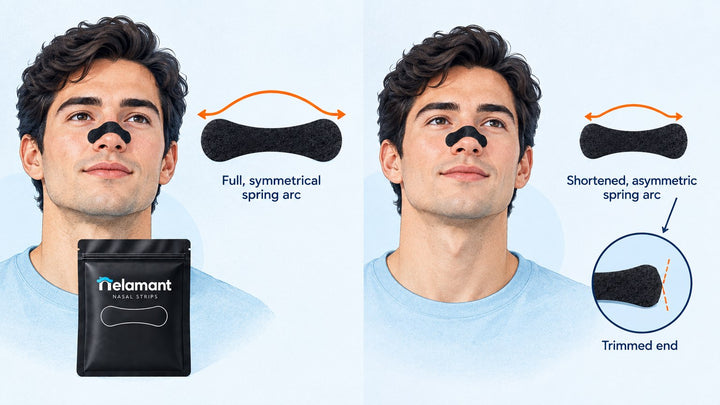
To understand why reuse fails, it helps to know what a nasal strip actually does. A strip works through a stiff but springy band laminated into a flexible backing. When you press it across the bridge of your nose, that band tries to return to its flat shape, which gently lifts the sides of the nose outward and widens the nasal valve opening. The adhesive layer is what anchors that mechanical tension against your skin throughout the night. For a fuller explanation of the mechanism, see how nasal strips work and why the design matters.
What the adhesive actually does
The adhesive used in nasal strips is a pressure-sensitive formulation-it bonds on contact with a clean, dry surface without any heat or solvent. That bond is strong enough for its purpose, but it is not a renewable resource. The moment the strip meets your skin, the adhesive begins picking up oils, dead skin cells, and moisture. When you peel the strip off, those contaminants stay in the adhesive matrix, and the bond surface is physically disrupted. Pressing it back onto your nose produces a fraction of the original holding strength, if any grip at all.
What Happens When You Try to Reuse One
Loss of lift and fit
The spring band inside a strip is calibrated for a single deployment. After one night of wear, it has conformed slightly to the curve of your nose and relaxed under sustained tension. On a second application it simply lies flat rather than exerting outward force. The result is a strip that feels stuck on but contributes little or no widening effect-exactly the job it is supposed to do.
Hygiene considerations
A used strip has spent several hours against warm, moist skin. Skin bacteria, sweat, and sebum are embedded in the adhesive surface. Re-applying that material puts those contaminants back in direct contact with your nose. There is no practical way to clean a used strip without destroying what little adhesive tack remains, so hygiene is a second independent reason to discard after one use, not just a secondary concern.
Are Any Nasal Strips Reusable?
No adhesive nasal strip on the market is designed or rated for reuse. The category itself is defined by single-use adhesive application. What does exist as a genuinely reusable category is nasal dilators-devices that sit inside or clip onto the outside of the nostrils and can be washed and worn again. A few key distinctions:
- Internal nasal dilators - small silicone cones or rings inserted into each nostril to hold the nasal valve open from the inside.
- External clip dilators - hinged or magnetic clips that sit across the outside of the nostrils without adhesive.
- Both types can be cleaned and reused over days or weeks, but they involve a different form factor, fit differently, and suit different preferences.
- Neither replaces an adhesive strip for everyone; comfort and effectiveness vary by nose anatomy and activity.
If reusability is your main priority, the guide to the best nasal dilators covers the internal and external options worth considering.
Getting the Most Out of Each Strip
Since each strip is a single use, the goal shifts to making that use as effective as possible. How long a strip stays on and how well it works comes down almost entirely to what you do in the two minutes before you apply it. For a full breakdown of wear time and overnight performance, see how long you can wear a nasal strip.
- Wash and dry your nose bridge. Soap removes the skin oils that prevent adhesion. Pat completely dry-any moisture weakens the bond immediately.
- Skip moisturizer or sunscreen on that area. Even a thin residue of lotion acts as a release layer between the adhesive and your skin.
- Warm the strip briefly between your palms before peeling the liner. Slight warmth makes pressure-sensitive adhesive more pliable and improves initial contact.
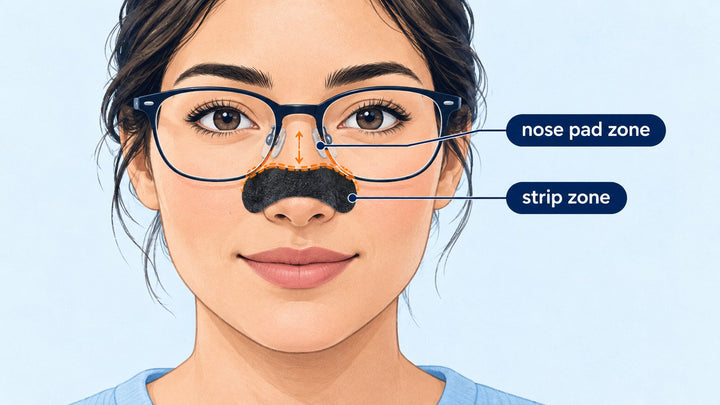
- Press and hold firmly for ten seconds after placing it, smoothing from the center outward to eliminate air pockets.
Nelamant Air strips use an extra-hold adhesive formulated to resist sweat, skin oil, and overnight movement-which matters most after the first hour when skin temperature rises. The backing also peels off cleanly the next morning, so you are not trading a stronger bond for skin irritation.

The Real Cost of Single-Use Strips

A pack of 30 strips used nightly costs you one strip per night-roughly the price of a cup of coffee spread across a month. The temptation to reuse comes from wanting to stretch that value, but a strip that falls off at 2 a.m. or provides no lift is not saving anything; it is just a bad night's sleep. For a full comparison of what different strips cost per night and per pack, the nasal strips cost guide breaks down the numbers across brands and pack sizes.
Frequently Asked Questions
Can you reuse a nasal strip if it still looks okay?
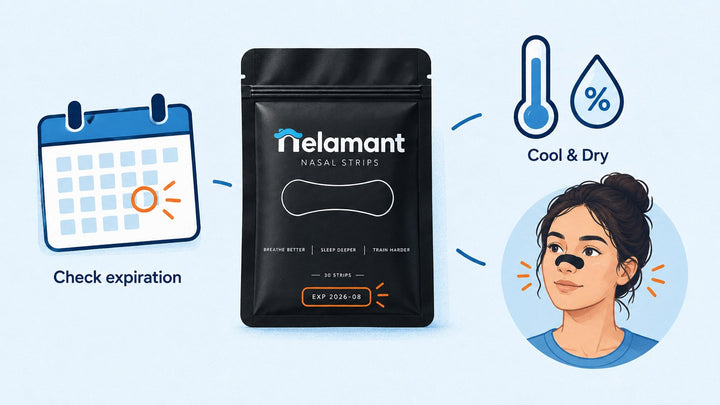
Appearance is not a reliable guide. A strip can look intact while the adhesive has already lost most of its tack and the spring band has relaxed. The physical changes that make reuse ineffective happen at a structural level that is not visible to the eye. Discard it after one use regardless of how it looks.
Why does my nasal strip fall off before morning even on the first use?
The most common cause is skin oil or moisture on the nose bridge at the time of application. Washing with soap, drying thoroughly, and avoiding any lotion in that area solves the problem for most people. If strips still won't stay put overnight, the guide to how long you can wear a nasal strip covers additional causes and fixes in detail.
Do reusable nasal dilators work as well as adhesive strips?
They work differently. Dilators-both internal and external-hold the nostrils open mechanically without adhesive, and many users find them effective. Whether one approach works better than another depends on nose anatomy, the specific cause of congestion or airflow restriction, and personal comfort with wearing something inside the nostril. Neither type is universally superior.
How do I make a nasal strip last a full night without reusing it?
Clean and dry skin before application is the single biggest factor. Beyond that, pressing and holding the strip firmly for ten seconds after placement and making sure you have the right size for your nose bridge both matter. If sizing is an issue, it is worth reading up on how nasal strips work to confirm you are positioning the strip in the correct location across the spring band.
The Short Answer
You cannot reuse nasal strips and get the same result-or often any result at all. The adhesive degrades on first contact with skin and cannot be restored, and the spring band that creates lift loses its tension after one deployment. Each strip is built to do one job well. If cost per use is a concern, the most efficient approach is proper skin prep so that every strip you use lasts the full intended wear time-not attempting to stretch a single strip across multiple nights.