Thomas Tiemann

Not all nasal strips are the same product in different packaging. The main types of nasal strips - standard, extra strength, clear, and magnetic - differ in how much lift they provide, what they're made of, and how they attach to your nose. Knowing which type fits your situation saves you money and gets you better results from night one.
- Standard strips suit most people for everyday nasal congestion and light snoring.
- Extra strength strips deliver more lift - useful for heavier congestion or when standard strips don't stay put.
- Clear strips use a low-profile design with a translucent backing - same mechanism, less visible.
- Magnetic strips are a different category entirely: they clip onto the septum rather than sticking to the skin.
- All adhesive nasal strips are drug-free and mechanical; none treat the underlying cause of congestion.
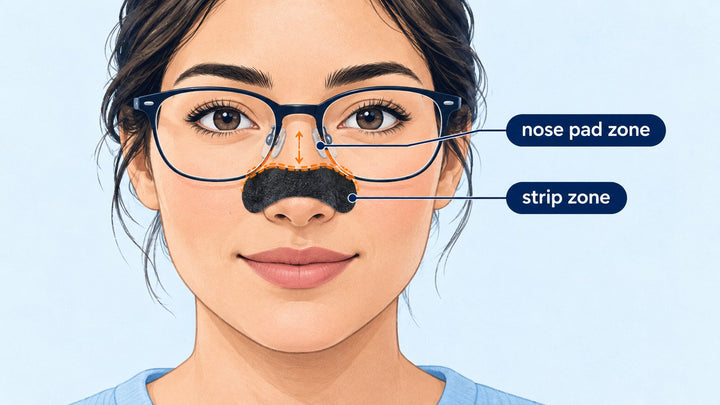
- Size matters as much as type - the strip needs to span your nasal valve to work.
How Nasal Strips Work - The Shared Mechanism
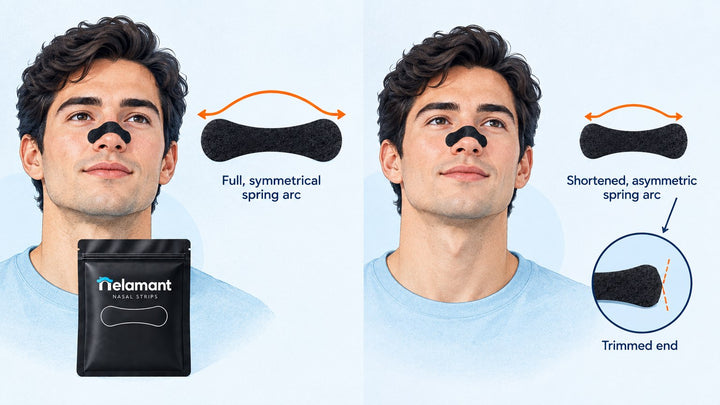
Every adhesive nasal strip uses the same core principle: a semi-rigid band bonded to an adhesive backing sits across the bridge of your nose. When it tries to return to its flat shape, it gently lifts the sides of your nostrils outward, widening the nasal passage just above the nostril opening. That wider opening reduces airflow resistance so breathing through your nose takes less effort.
The differences between strip types come down to how much spring tension the band carries, what the backing material looks like, and how the adhesive is formulated. For a deeper look at the mechanics, see how nasal strips work and why the design matters.
Standard Nasal Strips
Standard nasal strips are the baseline product that most brands lead with. They carry moderate spring tension - enough lift to make a noticeable difference for mild nasal narrowing, light nighttime congestion, or someone trying nose breathing for the first time. The adhesive is designed for typical dry-to-normal skin, and the backing is usually a solid tan or flesh-toned color.
Because the lift force is moderate, standard strips are forgiving - less likely to feel uncomfortable on sensitive skin, easier to remove in the morning, and generally kinder to the nose bridge after repeated nightly use. Most people find them sufficient for run-of-the-mill stuffiness or the mild nasal restriction that comes with allergies or a dry-air environment.
Who Standard Strips Suit
- First-time nasal strip users who want to test the concept before committing to a stronger version.
- People with mild to moderate congestion from seasonal allergies or dry air.
- Anyone whose primary goal is better nose breathing rather than keeping a loud snore in check.
- Those with normal to dry skin where a standard-hold adhesive holds reliably through the night.
Extra Strength Nasal Strips
Extra strength strips carry a stiffer spring band and, in most cases, a stronger adhesive formulation. The increased tension means more outward lift on the nasal wall - which translates to a larger increase in nasal passage area for people whose congestion or nasal anatomy needs more mechanical help. The tradeoff is a firmer feel on the nose and, with some brands, a more aggressive pull during removal.
Extra strength strips also tend to grip better on oily or combination skin, where a standard adhesive can start to peel away before morning. If you've used standard strips and found they either didn't open your nose enough or peeled off overnight, extra strength is the logical next step rather than switching brands entirely.
If you're specifically comparing the strongest options across brands, the full breakdown is in the guide to the strongest nasal strips and what sets them apart.
Who Extra Strength Suits
- People with heavier nasal congestion - from a cold, chronic allergies, or larger nasal anatomy.
- Anyone whose standard strips consistently lose adhesion before morning.
- Those who snore and suspect nasal obstruction is a contributing factor, and who haven't seen results with standard strips.
- Athletes who sweat through standard adhesives during workouts or training runs.
Clear Nasal Strips
Clear nasal strips use a translucent or skin-toned flexible backing rather than the more visible beige or tan band of a standard strip. The lifting mechanism is identical - a spring band tries to return to flat, lifting the nasal walls as it does - but the lower visual profile makes clear strips a popular choice for daytime wear, video calls, or anyone self-conscious about wearing a strip in public.
Some clear strips are thinner than their standard counterparts, which can slightly reduce the spring force. Others maintain comparable tension while simply changing the material color. If you're considering clear strips primarily for appearance reasons, it's worth checking the spring rating or "strength" designation on the packaging, since "clear" describes the look, not the lift level. A clear extra-strength strip exists as a separate product from a clear standard-strength strip.
Who Clear Strips Suit
- Daytime users who want nasal support during work, travel, or social situations without a prominent strip showing.
- Athletes who compete or train in visible settings and find standard-color strips distracting.
- Anyone who has found the appearance of standard strips a barrier to consistent use.
Magnetic Nasal Strips - A Different Category Entirely
Magnetic nasal strips are frequently grouped with adhesive strips in search results and retail listings, but they work on a fundamentally different principle. Rather than bonding to the skin and lifting from the outside, magnetic strips use two small magnetized clips that attach to either side of the nasal septum - the dividing wall inside the nose - drawing the nostrils apart from within through magnetic attraction.
Because they don't use adhesive, they can be repositioned and reused, and they leave no residue on the skin. However, they require a comfortable fit inside the nostril and some users find internal wear less comfortable than an external adhesive strip, particularly for sleeping. They are not a replacement for external adhesive strips in most clinical contexts - they are a separate product designed for a different preference set.
How Magnetic Strips Differ from Adhesive Strips
- Attachment point: External adhesive strips lift from the outer skin of the nose; magnetic strips clip internally at the septum.
- Reusability: Magnetic versions are reusable; adhesive strips are single-use.
- Skin contact: Magnetic strips don't touch the nose's outer skin, so skin sensitivity is not a factor - but internal comfort is.
- Lift type: Adhesive strips widen the nasal passage by pulling the nasal walls outward; magnetic strips draw the nostrils inward from the interior cartilage.
The full comparison of mechanisms, adhesion, and who each style suits best is in the guide to magnetic vs adhesive nasal strips.
Drug-Free Nasal Strips vs Medicated Options
All adhesive and magnetic nasal strips - regardless of type - are drug-free. They open the nasal passage mechanically without delivering any active pharmaceutical ingredient to the tissue. This is one of the main reasons people reach for them: they can be used every night without tolerance, rebound congestion, or the restrictions that come with decongestant sprays and tablets.
Medicated nasal products - oxymetazoline sprays, steroid nasal sprays, antihistamine sprays - address the tissue or chemistry causing congestion and can be highly effective, but they come with usage guidelines and potential side effects that mechanical strips don't share. A nasal strip and a prescribed or over-the-counter spray can often be used together; the strip handles airflow resistance while the medication addresses the underlying inflammation. Always follow the instructions on any medicated product's label.
The practical takeaway: if you see a product labelled "nasal strip" or "nasal dilator strip," it's drug-free. The "type" variation is about design and materials, not pharmaceutical content.
Does Size and Shape Vary Across Types?
Yes - and for most people, size is at least as important as type. A strip that's too narrow won't span your nasal valve; one that's too wide may not adhere correctly to the bridge's contour. Most manufacturers offer a small/medium and large size at minimum, with some adding an extra-large option for wider nose bridges.
Clear strips tend to come in fewer size options because they're often marketed as a lifestyle or daytime product rather than a heavy-duty congestion solution, but this varies by brand. Extra strength strips usually mirror the size range of standard strips from the same manufacturer.
The full guide to nasal strip sizes and how to measure for the right fit covers how to measure your bridge width and choose accordingly - worth reading before you buy, since the wrong size is one of the most common reasons strips underperform.
Nasal Strips vs Nasal Dilators - Knowing the Difference
Nasal dilators are a separate product category from nasal strips, though they share the same goal of opening the nasal passage. External nasal dilators - including adhesive strips - work from outside the nose. Internal dilators are small flexible inserts that sit just inside the nostrils and gently prop them open from within. They're reusable, leave no adhesive residue, and suit people who prefer not to apply anything to their skin.
Key distinctions at a glance:
- Adhesive nasal strips: external, single-use, work by skin-mounted spring tension.
- Internal nasal dilators: inserted into nostrils, reusable, work by gentle internal propping.
- Magnetic nasal strips: internally clipped at the septum, reusable, work by magnetic draw.
Neither strips nor dilators treat structural issues like a deviated septum, and neither opens an obstructed throat. For the full comparison of mechanisms, costs, and ideal users, see the guide to nasal strips vs nasal dilators.

Which Type of Nasal Strip Should You Choose?
The table below maps the most common use cases to the type most likely to serve them. It's a starting point - your skin type, anatomy, and how you've responded to strips before will shape the final call.
| Strip Type | Best For | Adhesive? | Visible? | Single-Use? |
|---|---|---|---|---|
| Standard | Mild congestion, first-time users, normal/dry skin | Yes | Yes (tan/flesh) | Yes |
| Extra Strength | Heavy congestion, oily skin, standard strips that don't hold | Yes (stronger) | Yes (tan/flesh) | Yes |
| Clear | Daytime wear, social settings, appearance-conscious users | Yes | Low profile | Yes |
| Magnetic | No-adhesive preference, reusable option, internal-wear comfort | No | Minimal | No (reusable) |

If you're still weighing options across brands and products, the broader guide to how nasal strips work and why the design matters gives the full context for evaluating any strip's spec sheet.
Where Nelamant Air Fits In
Nelamant Air is an adhesive external nasal strip. Its distinguishing design feature is a wider, more evenly distributed lift across the nose bridge - a broader span rather than a single concentrated pull point - which is intended to open the nasal passage more symmetrically. The adhesive is formulated to resist sweat, oil, and overnight movement, which puts it in the same territory as extra-strength strips for staying power, while using materials designed to peel off cleanly with no sticky residue.
It's drug-free and single-use, suitable for sleep, exercise, and daytime congestion. Thirty strips per pack covers a month of nightly use. If the type breakdown above has you leaning toward an adhesive strip that holds reliably and removes gently, it's worth a look.
Frequently Asked Questions
What is the difference between standard and extra strength nasal strips?
The spring band in an extra strength strip is stiffer, so it exerts more outward force on the nasal wall when it sits flat against your nose. The adhesive is also typically stronger to match that increased tension. Standard strips use a lighter spring and moderate adhesive. For most mild congestion, standard works fine; if you need more lift or your strips peel off overnight, extra strength is the upgrade to try.
Are clear nasal strips as effective as regular ones?
"Clear" refers to the color and translucency of the backing material, not the lifting force. A clear standard-strength strip and a tan standard-strength strip from the same manufacturer deliver comparable performance. Where clear strips sometimes differ is in thickness - some clear designs are thinner and carry slightly less spring force - so check the strength designation on the label rather than assuming color indicates performance.
Are nasal strips drug-free?
Yes. All adhesive and magnetic nasal strips are drug-free by design. They work mechanically - the spring band opens the nasal passage physically - without delivering any medication to nasal tissue. This is why they can be used nightly without the tolerance or rebound concerns associated with decongestant sprays. If you're looking for a product that's specifically labeled drug-free, any nasal strip qualifies.
Do magnetic nasal strips work as well as adhesive ones?
They work differently rather than better or worse in absolute terms. Magnetic strips draw the nostrils inward from the septum; adhesive strips push the nasal walls outward from the skin surface. Studies directly comparing the two mechanisms in large populations are limited, so the honest answer is that both can reduce nasal airflow resistance and which works better for a given person depends on anatomy and personal comfort. Many people who dislike adhesive residue prefer magnetic versions; many who find internal clips uncomfortable prefer adhesive strips.
How do I know what size or type of nasal strip to buy?
Start with your nose bridge width - a strip that doesn't span your nasal valve won't deliver its full lift. Most manufacturers size by bridge width, and the guide to nasal strip sizes and how to find the right fit walks through the measurement. Once you have the size, choose the type based on congestion severity (standard vs extra strength), visibility preference (clear vs standard color), and whether you want an adhesive or non-adhesive option (adhesive strip vs magnetic). If you're unsure, standard strength in your correct size is the lowest-risk starting point.
The Short Version
The four main types of nasal strips cover a practical range of needs, but they all share one mechanism: widening your nasal passage to make breathing easier. Standard strips handle most everyday situations. Extra strength delivers more lift and grip. Clear strips trade visibility for the same basic function. Magnetic strips remove adhesive from the equation entirely but work from the inside rather than the outside. Match the type to your specific situation - congestion severity, skin type, and when you plan to wear the strip - and you're most of the way to choosing correctly. If the type comparison above points you toward an adhesive strip with reliable hold and gentle removal, take a look at Nelamant Air as one well-designed option in that category.