Thomas Tiemann

This article is for general information, not medical advice.
Yes, you can use mouth tape and nasal strips together - they target different parts of the same problem. A nasal strip opens the nasal passages from the outside; mouth tape encourages your lips to stay closed so air routes through your nose instead of your mouth. Used together, they address both sides of the nose-breathing equation at once.
- Nasal strips and mouth tape work on different mechanisms and do not interfere with each other when applied correctly.
- Apply the nasal strip first, then the mouth tape.
- Do not use mouth tape if your nasal breathing is significantly obstructed - you need a clear airway before taping your lips.
- The combination is best suited to habitual mouth breathers whose nasal airflow is merely restricted, not blocked.
- Persistent snoring or suspected sleep apnea warrants a clinical evaluation, not more tape.
What Each Tool Actually Does
Understanding the mechanism of each tool makes it clear why they can work together without conflict.
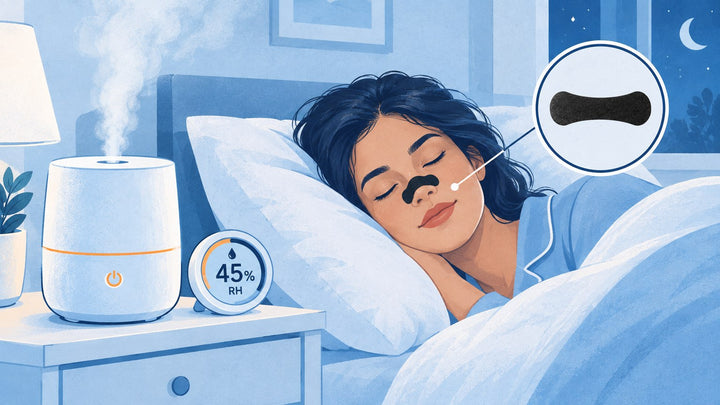
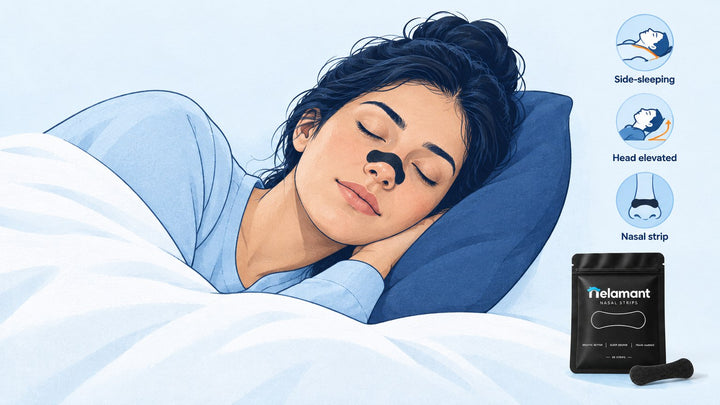
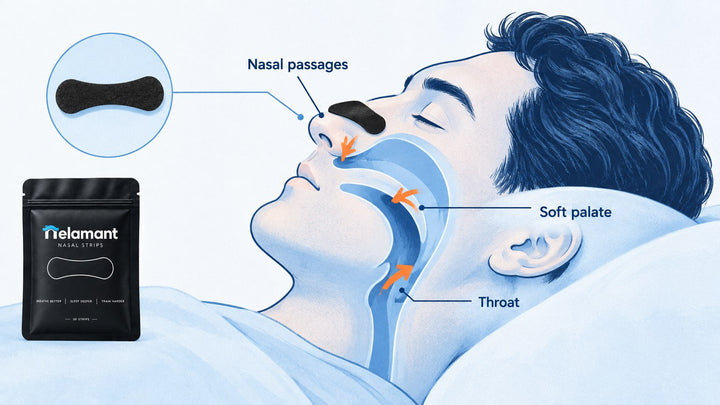
A nasal strip is a spring-loaded adhesive band placed on the outside of the nose bridge. It gently lifts the soft walls of the nasal passage outward, widening the opening so air flows in with less resistance. It acts mechanically - no drugs, no ingested ingredients. It does nothing to keep your mouth closed.
Mouth tape is a strip of porous adhesive placed across closed lips at bedtime. Its sole job is to discourage the jaw and lips from falling open, nudging you to breathe through your nose instead. It does nothing to widen the nasal passage itself.
The two tools solve adjacent but distinct problems, which is exactly why combining them makes sense for the right person. For a fuller breakdown of how the two compare as standalone options, see this guide to nasal strips vs mouth tape.
Why People Use Mouth Tape and Nasal Strips Together
Many habitual mouth breathers open their mouths at night not because they prefer it but because nasal airflow feels insufficient. The nose feels slightly restricted, so the body takes the path of least resistance and the mouth falls open. This pattern means mouth tape alone can feel uncomfortable - you're sealing the mouth while the bottleneck is still there in the nose.
Adding a nasal strip to the equation reduces that nasal resistance first. With a wider nasal opening, breathing through a closed mouth becomes easier and less effortful, so the mouth tape causes less disruption to sleep. The combination addresses both the route (nose, not mouth) and the resistance (a wider nasal passage).
If you're working on training yourself to nose-breathe through the night more broadly, the full guide to how to breathe through your nose while sleeping covers the wider picture, including sleep position, nasal hygiene, and lifestyle factors that feed into the habit.

How to Use Mouth Tape with Nasal Strips: Step-by-Step
Sequence matters here. Follow these steps to get the cleanest adhesion from both products and the most comfortable removal in the morning.
Step 1 - Prep: Clean and Dry Your Skin First
Wash your face and pat it completely dry. Any residual moisturizer, facial oil, or sweat will undermine the adhesive on both the nasal strip and the mouth tape. If you use a nighttime moisturizer, apply it after placing both strips, not before.

Step 2 - Apply the Nasal Strip First, Then the Mouth Tape
Place the nasal strip across the bridge of your nose before touching your lips. Peel the backing, center the strip over the flared part of the nose bridge - not the bony upper bridge - and press firmly along its length for a few seconds. You should feel a gentle outward lift immediately.
Once the nasal strip is secure, close your lips naturally and apply the mouth tape. Most mouth tapes are designed to sit horizontally across the center of closed lips; follow the specific product's instructions for placement.
Nelamant Air nasal strips are designed with a wider, more evenly balanced lift across the nose bridge - rather than a single sharp pull point - and an extra-hold adhesive that resists overnight movement and sweat. That combination makes them a practical choice for the nasal-strip half of this routine, since a strip that peels off at 2 a.m. defeats the purpose.
Step 3 - Removal: Nasal Strip First or Tape First?
Either order works, but many people find it easier to remove the mouth tape first thing, while sitting up, then peel the nasal strip slowly using a damp fingertip to soften the adhesive. Pulling either strip off quickly on dry skin - especially sensitive skin - is the main cause of morning redness. Take your time, pull back along the skin rather than away from it, and the removal is straightforward.
Who Is This Combination Best For?
The nasal strip plus mouth tape pairing suits people who:
- Are habitual mouth breathers who have confirmed they can breathe comfortably through their nose when awake
- Wake up with a dry mouth or sore throat, suggesting nighttime mouth breathing
- Snore mildly, where the snoring appears linked to nasal restriction or mouth breathing rather than throat anatomy
- Want a drug-free, non-invasive first step before exploring other interventions
Mouth tape alone can feel restrictive if nasal airflow is already limited. If you've tried mouth tape and found it uncomfortable or anxiety-inducing, a nasal strip worn alongside it often resolves that feeling by making nose breathing noticeably easier. For more on what mouth tape can and cannot do for snoring specifically, see the guide on whether mouth tape stops snoring.
When You Should NOT Use Mouth Tape
This is the most important safety point in this article: do not use mouth tape if your nasal breathing is significantly obstructed. Taping the mouth when the nose is blocked or severely restricted creates a situation where neither airway is fully usable. This applies to:
- Active colds, flu, or respiratory illness with heavy nasal congestion
- Severe allergic rhinitis causing near-complete nasal blockage
- Structural obstruction (such as significant septal deviation or nasal valve collapse) that has not been evaluated by a clinician
- Anyone who snores loudly or gasps during sleep, which may indicate sleep apnea - mouth tape is not appropriate and strips are not a treatment for sleep apnea
A nasal strip supports the nasal opening from the outside; it does not fix an obstructed septum, clear swollen turbinates, or open a blocked throat. If you have any doubt about whether your nose is clear enough to breathe through all night with lips taped, do a simple test first: close your mouth deliberately and breathe only through your nose for two to three minutes while sitting still. If that feels effortful or uncomfortable, resolve the nasal issue before adding mouth tape.
For a thorough look at who mouth taping is and is not appropriate for, the dedicated guide on whether mouth taping is safe covers the evidence, contraindications, and practical precautions in full detail.
When to See a Doctor
Mouth tape and nasal strips are lifestyle tools, not treatments. See a doctor if:
- You or a bed partner notice loud snoring, gasping, choking sounds, or pauses in breathing during sleep - these are possible signs of sleep apnea, which requires clinical evaluation. The guide on snoring vs sleep apnea explains the key differences to look out for.
- Nasal congestion is persistent (lasting more than ten days), one-sided, or accompanied by pain, facial pressure, or changes in smell - see the guide on when to see a doctor for nasal congestion for a checklist of warning signs.
- You feel anxious or panicked when you try mouth tape, even after confirming your nose is clear.
- Sleep quality is not improving despite consistent use of both tools.
No adhesive product on your face will address a structural or sleep-disorder cause of breathing problems. Get the right diagnosis first.
Frequently Asked Questions
Can you use mouth tape and nasal strips at the same time, or will they interfere with each other?
They don't interfere. Each product adheres to a different area - the nose bridge versus the lips - and they serve different mechanical functions. Applying the nasal strip first and allowing it to seat fully before adding the mouth tape gives both the best chance of staying put through the night.
How do you use mouth tape with nasal strips - which goes on first?
The nasal strip goes on first. It needs to sit flat and fully adhere to the nose bridge before anything else disturbs your face. Once you can feel the outward lift and the strip is secure, close your lips and apply the mouth tape. Reversing the order isn't harmful but the mouth tape can shift your facial skin slightly and make it harder to position the nasal strip precisely.
Is it safe to use mouth tape if your nose is only partially blocked?
Mild restriction - the kind a nasal strip comfortably addresses - is generally compatible with mouth tape. If wearing the nasal strip alone makes nose breathing feel easy, adding mouth tape is reasonable. If the nose still feels significantly obstructed even with a strip in place, hold off on mouth tape until the underlying congestion improves. Never use mouth tape with a heavily blocked or completely stuffed nose.
Will combining both tools do more for snoring than using one alone?
Possibly, for a specific type of snoring. If your snoring is driven partly by narrow nasal passages and partly by the mouth falling open, addressing both factors simultaneously can reduce the overall noise. However, snoring has many causes - throat anatomy, tongue position, sleep stage, and others - that neither strips nor tape affect. The combination is not a snoring treatment in the clinical sense.
What type of mouth tape works best alongside a nasal strip?
Porous or perforated tapes designed specifically for overnight lip use are the most comfortable and the least likely to cause skin irritation. Avoid repurposing hardware or medical tapes not designed for facial skin. Always check that whatever tape you choose is gentle enough to peel off cleanly in the morning.
Putting It Together
Using mouth tape and nasal strips together is a straightforward, drug-free way to support nose breathing at night - provided your nose is clear enough to breathe through. Apply the nasal strip first to widen the nasal opening, then close your lips and apply the mouth tape. Remove both slowly in the morning. The combination works best for habitual mouth breathers with mild nasal restriction, not for people with significant obstruction or suspected sleep apnea. If nights are still rough after a few consistent weeks, that's a conversation for a clinician, not a reason to add more tape.