Thomas Tiemann

This article is for general information, not medical advice.
Mouth taping is not dangerous for most healthy adults with an open nasal airway, but it carries real risks for anyone whose nose is partially or fully blocked. Whether it is safe for you depends almost entirely on how well you can breathe through your nose - and that is the question to answer before you try it.
If you are already working on how to breathe through your nose while sleeping, mouth taping often comes up as a tool to encourage that habit. This guide lays out what the evidence and the risks actually look like.
Key Takeaways
- Mouth taping is generally low-risk for healthy adults with a clear nasal airway.
- It becomes dangerous when the nose is blocked - leaving no safe breathing route.
- People with suspected or diagnosed sleep apnea should not use mouth tape without medical guidance.
- Claimed mouth taping benefits are mostly related to encouraging nasal breathing; strong clinical evidence is limited.
- Nasal strips open the nasal passages from outside, giving you an airway before you consider adding tape.
What Is Mouth Taping?
Mouth taping means applying a small piece of tape - typically a porous, skin-safe medical or purpose-made sleep tape - over the lips at night to keep the mouth closed during sleep. The idea is that a closed mouth nudges you toward nasal breathing, which some people find reduces snoring, dry mouth, and poor sleep quality.
Mouth tape is not a medical device and is not a treatment for any diagnosed condition. It does not mechanically open your nasal passages, treat the throat, or address the underlying cause of most snoring. It is simply a physical prompt to keep your lips together.
Products sold for this purpose range from narrow horizontal strips to H-shaped patches. Regular adhesive tape - especially anything not rated for skin contact - is not appropriate and can cause irritation or injury.
Mouth Taping Benefits
The potential mouth taping benefits most often discussed are encouraging nasal breathing, reducing open-mouth snoring, and limiting the dryness that comes from breathing through your mouth all night. It is worth being specific about what each of these means in practice.
Encouraging Nasal Breathing During Sleep
Nasal breathing filters, warms, and humidifies air before it reaches your lungs. The nose also produces nitric oxide, which plays a role in airway function. When you sleep with your mouth open, you skip all of that. Mouth tape can act as a simple physical prompt that keeps the mouth closed long enough for nasal breathing to become the default - particularly for people who have developed a habit of mouth breathing despite having a reasonably clear airway.
This benefit is real but conditional: it only applies if your nose can handle the full breathing load. If your nasal passages are congested or structurally narrow, keeping the mouth shut does not help - it just removes your backup route.
Potential Effect on Snoring
Open-mouth snoring - where the sound originates from the soft palate or throat with the mouth open - may be reduced by keeping the mouth closed. For a detailed look at how this works and how well it actually holds up, see the full guide to whether mouth tape stops snoring. The short version: it can help for mouth-based snoring, but it does nothing for snoring driven by nasal obstruction, throat anatomy, or obstructive sleep apnea.
Mouth Tape Dangers and Risks
The mouth tape dangers that matter most are not about the adhesive - they are about what happens when your mouth is sealed and your nose cannot do the job alone.
The Obstructed Airway Problem
This is the central risk. If your nasal passages are blocked - by congestion from a cold, allergies, a deviated septum, nasal valve narrowing, or swollen turbinates - and your mouth is taped shut, you have no clear airway. That is a genuine safety hazard, not a theoretical one. Even partial obstruction that is tolerable while awake can become more significant when airway muscles relax during sleep.
Before taping your mouth at night, you need to be confident that you can breathe freely and comfortably through your nose alone while lying down. If you cannot do that easily while awake, do not tape your mouth at night until the nasal issue is addressed.
Sleep Apnea and Obstructive Airway Events
This is the most serious contraindication. Obstructive sleep apnea (OSA) causes the upper airway to collapse repeatedly during sleep, causing breathing to stop. Mouth breathing during these events is not the cause - it is often the body's partial compensation. Taping the mouth shut in someone with undiagnosed or untreated OSA could suppress that compensation and worsen apnea severity. If you snore loudly, wake gasping, or feel unrefreshed after sleep, read the comparison of snoring vs. sleep apnea and speak with a doctor before trying mouth tape. This is not a scenario where self-experimenting is appropriate.
Skin and Adhesive Reactions
Lower-stakes but worth knowing: the lip and surrounding skin is sensitive. Standard office tape, duct tape, or any non-skin-rated adhesive can cause irritation, redness, or small tears when removed. Even purpose-made sleep tapes occasionally cause reactions in people with sensitive skin. Starting with a small test patch on the inner arm before applying to the face is a reasonable step.
Anxiety is also a real factor for some people. Waking up with your mouth taped - even with tape that peels off easily - can feel distressing. If that reaction is strong or persistent, mouth taping is not the right tool for you.
Who Should Not Use Mouth Tape
The following people should not use mouth tape, or should consult a doctor before doing so:
- Anyone with nasal obstruction - chronic congestion, a significantly deviated septum, nasal valve collapse, or enlarged turbinates that prevent comfortable nose breathing while lying down.
- Anyone with suspected or diagnosed sleep apnea - obstructive or central. Mouth tape does not treat apnea and may mask signals the body uses to compensate.
- Anyone currently ill with a cold, flu, or sinus infection - temporary nasal blockage makes the basic safety condition unmet.
- Anyone who experiences nausea at night or has a condition associated with acid reflux or vomiting - having the mouth taped in those situations poses an aspiration risk.
- Children - there is no established guidance supporting mouth taping in children, and the airway safety margin is smaller.
- Anyone who has not been evaluated for sleep apnea and has significant snoring - get screened first.
How to Try Mouth Taping More Safely (If You Decide To)
If you have confirmed you can breathe freely through your nose while lying down, do not have sleep apnea, and want to try mouth taping, these steps reduce the risk of problems:
- Do a nasal breathing check first. Lie down in your usual sleep position and breathe only through your nose for five to ten minutes. If that is uncomfortable or forces you to switch to mouth breathing, stop here and address the nasal issue before proceeding.
- Use purpose-made sleep tape or porous medical tape. Avoid anything not rated for skin contact. Look for tape specifically designed to be gentle on lip skin and easy to remove.
- Apply a small test patch to your inner arm 24 hours before first use. This checks for adhesive sensitivity before you put anything on your face.
- Start with a vertical strip, not a full horizontal seal. A small vertical piece over the center of the lips allows you to open your mouth easily if needed while still encouraging closure. Some people find this less anxiety-inducing as a starting point.
- Try it for a short period while still awake before using it overnight, so you know how the removal feels.
- Remove immediately if you feel any breathing difficulty. Purpose-made sleep tape is designed to release with minimal force.
Many people combine mouth tape with a nasal strip to make sure the nasal route is as open as possible before closing the mouth. For a practical look at how the two work together, see using mouth tape and nasal strips together.

Nasal Strips as an Alternative or Complement
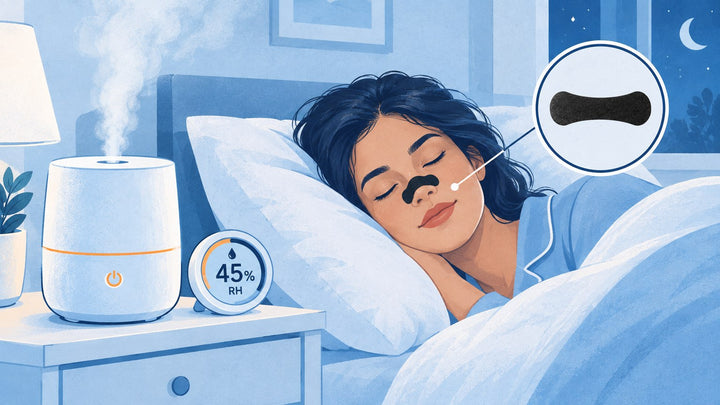
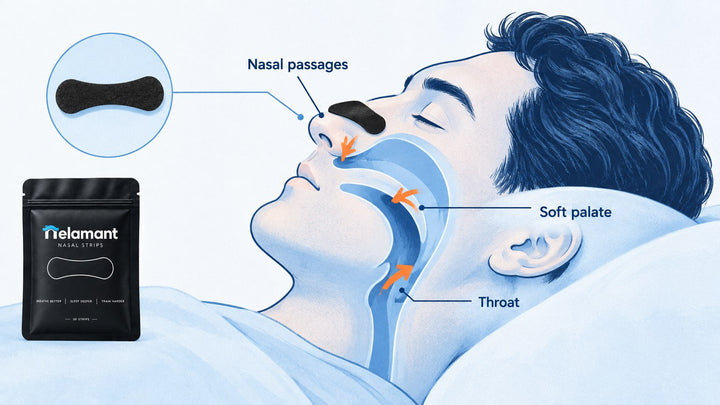
If the goal is better nasal breathing during sleep, a nasal strip addresses the problem from a different direction: it opens the nasal passage wider rather than forcing the mouth shut. This matters because the core safety concern with mouth tape is an inadequate nasal airway - and a nasal strip works directly on that.
The comparison between the two approaches is worth understanding in full. The guide on nasal strips vs. mouth tape covers how each one works, what each is best suited to, and where they overlap.
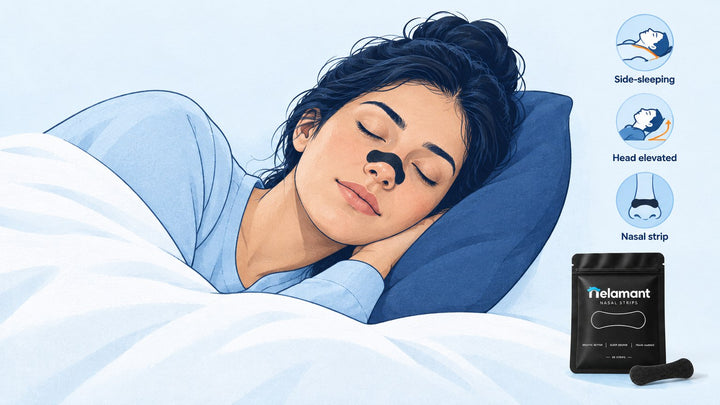
Nelamant Air Nasal Strips use a wider, more balanced lift across the bridge of the nose to help open your nasal passages, so more air can move through with less resistance. Because the strip works mechanically from outside the nose - no drugs, no sealing the mouth - there is no airway-blockage risk associated with wearing one. If you are finding nasal resistance is the reason you default to mouth breathing at night, starting there is the more direct fix.

Try a Nasal Strip Before You Tape Your Mouth
$14.99 for 30 strips · 30-day returns
Shop Nelamant AirWhen to See a Doctor
Some situations call for a clinical evaluation rather than a home experiment with tape:
- You snore loudly and regularly, especially if a bed partner has noticed you stop breathing or gasp. These are hallmark signs of sleep apnea - see the guide on snoring vs. sleep apnea for what distinguishes the two.
- You have persistent nasal obstruction that does not clear with standard remedies. Structural causes like a deviated septum or nasal valve narrowing need assessment. For guidance on when nasal congestion warrants a medical visit, see when to see a doctor for nasal congestion.
- You wake frequently, feel unrefreshed, or have daytime sleepiness you cannot explain - these can indicate a sleep-disordered breathing condition that mouth tape will not address and could worsen.
- You have any cardiovascular, respiratory, or neurological condition that affects breathing.
A doctor or sleep specialist can assess whether your airway is safe for mouth taping, screen for sleep apnea, and suggest appropriate treatment if something structural is involved.
Frequently Asked Questions
Is mouth taping safe for most people to try at home?
For healthy adults who can breathe freely through their nose while lying down and who do not have sleep apnea or significant nasal obstruction, mouth taping is generally considered low-risk. The safety condition is a clear nasal airway - without that, taping the mouth shut is not safe.
What are the main mouth taping benefits for sleep?
The most consistently cited mouth taping benefits are encouraging nasal breathing, which may reduce dry mouth and throat irritation on waking, and potentially reducing open-mouth snoring. These benefits are real in theory but depend heavily on individual anatomy and airway patency. Robust clinical evidence supporting widespread use is limited.
What are the biggest mouth tape dangers I should know about?
The most serious mouth tape danger is sealing the mouth when the nasal airway is inadequate - this removes your backup breathing route. Sleep apnea risk is the second major concern. Skin irritation from adhesives is a minor but common issue. Using tape not designed for skin contact is also a practical hazard to avoid.
Can mouth tape make sleep apnea worse?
It can. Open-mouth breathing in someone with obstructive sleep apnea is sometimes a compensatory response to partial airway closure. Preventing mouth opening with tape could suppress that response and allow more severe apnea events. Anyone with known or suspected sleep apnea should not use mouth tape without first discussing it with the clinician managing their care.
Should I use mouth tape, a nasal strip, or both?
If nasal resistance is why you mouth-breathe at night, a nasal strip addresses the root cause directly without any airway-sealing risk. Mouth tape keeps the mouth closed but does not help if the nose cannot handle the full breathing load. Some people use both together once they have confirmed adequate nasal airflow - the full comparison of approaches is in the guide on mouth tape and nasal strips together. For the differences in how each tool works, see nasal strips vs. mouth tape.
The Bottom Line on Whether Mouth Taping Is Safe
Is mouth taping safe? For a healthy adult with a genuinely clear nasal airway and no sleep apnea, the risks are modest and manageable. For anyone whose nose is blocked, who snores heavily, or who has not been screened for sleep apnea, the answer is no - not until those issues are sorted out.
The most practical first step for most people is not the tape but the nasal airway: get that open first, confirm you can breathe through your nose comfortably while lying down, and then decide whether keeping the mouth closed adds anything useful. The full guide to breathing through your nose while sleeping is a good place to build from there.