Thomas Tiemann

Yes, a humidifier for stuffy nose relief can genuinely help - especially at night when dry bedroom air thickens mucus, irritates the nasal lining, and makes congestion feel worse. Adding moisture to the air helps keep nasal passages from drying out, which can make breathing feel easier and sleep more comfortable. It is not a cure for whatever is causing the congestion, but as one part of your nighttime routine it earns its place on the nightstand.
If you are also working on how to breathe through your nose while sleeping, managing bedroom humidity is one of the most practical environmental changes you can make.
- Dry air dries out the nasal mucosa, which can worsen swelling and congestion - a humidifier addresses that directly.
- The best humidity for sleeping is generally 40–50% relative humidity (RH).
- Cool-mist and warm-mist humidifiers both add moisture; cool-mist is more widely recommended for bedrooms, especially where children are present.
- A dirty humidifier tank can release mold and bacteria into the air - regular cleaning is non-negotiable.
- A humidifier works on the environment; a nasal strip works on the nasal opening itself. They address different parts of the same problem and can be used together.
How Dry Air Makes a Stuffy Nose Worse
Your nasal passages are lined with a thin layer of mucus that traps particles, moistens incoming air, and keeps the tissue underneath from drying out. When the air in your bedroom drops below about 30% relative humidity - common in winter, or year-round in air-conditioned rooms - that mucus layer thins and dries faster than the body can replenish it.
Dried-out nasal tissue becomes irritated and swollen. The body's response to that irritation is more inflammation, not less, which is why you can wake up feeling more congested than when you went to bed even without a cold or allergy flare. Low humidity also thickens the mucus that is there, making it harder to drain naturally and easier for it to block airflow.
What a humidifier actually does in the airway
A humidifier raises the moisture content of the room air you are inhaling. Moister air means the nasal mucosa loses water more slowly, the mucus layer stays thinner and more fluid, and cilia - the tiny hair-like structures that move mucus toward the throat - can do their job more effectively. The result is a nasal environment that is less likely to feel raw, swollen, or blocked from dryness alone. This is a mechanical and environmental effect, not a drug effect.
Does a Humidifier Help Congestion? What the Evidence Says
The case for humidity is strongest when the congestion has a dryness component - heated winter air, air conditioning, or living in a low-humidity climate. In those situations, raising room humidity to the 40–50% range addresses the environmental trigger directly.
For congestion driven by a viral cold, the picture is more mixed. Some people report meaningful relief; others notice little difference in the underlying swelling. What a humidifier reliably does in a cold is reduce the secondary dryness and irritation that sit on top of viral inflammation - that alone can make breathing feel noticeably easier overnight.
For allergy-related congestion, humidity management cuts both ways: enough moisture keeps the mucosa from drying out, but too much (above 50–55% RH) encourages dust mites and mold growth, both common allergens. Hitting the middle range matters more here than anywhere else.
Best Humidity for Sleeping - and How to Hit It
A practical bedroom target is 40–50% relative humidity, within the EPA's preferred 30–50% range. Below 30% and the drying effects described above kick in. Above 55–60% and you are creating conditions that favor mold on walls, mildew in bedding, and higher dust mite populations.
A hygrometer - an inexpensive device that reads relative humidity - is the only reliable way to know where your bedroom actually sits. Built-in displays on many modern humidifiers are a reasonable starting point, but a standalone hygrometer gives you an independent check.
| Humidity Level | Effect on Nasal Passages | Sleep Comfort | Other Risks |
|---|---|---|---|
| Below 30% (very dry) | Mucosa dries out, swells, crusting possible | Waking with dry mouth, sore throat, blocked nose | Static electricity, dry skin |
| 30–39% (low-normal) | Mild drying; noticeable if already congested | Acceptable for most people without sinus issues | Low |
| 40–50% (ideal) | Mucosa stays hydrated, mucus flows freely | Best range for comfortable nose breathing overnight | Minimal when maintained consistently |
| 51–59% (elevated) | No dryness; feel is fine | Can feel clammy in warmer months | Beginning of dust mite and mold risk zone |
| 60%+ (high) | May worsen allergy congestion via mold/mite growth | Uncomfortable, sticky; can disturb sleep | Mold, mildew, structural moisture damage |
Choosing and Using a Humidifier Safely
Two main types dominate the bedroom market: cool-mist (ultrasonic or evaporative) and warm-mist (steam vaporizer). Both raise room humidity effectively. The practical differences come down to safety, maintenance, and noise.
- Cool-mist ultrasonic - quiet, energy-efficient, no hot water risk. Most popular for bedrooms. The main watch-out: ultrasonic units can disperse mineral dust from tap water into the air, which is why distilled water is recommended.
- Cool-mist evaporative - uses a wick filter to evaporate water; naturally self-regulating (output slows as humidity rises). Slightly louder fan noise. Filters need regular replacement.
- Warm-mist / steam vaporizer - boils water before releasing steam, which kills waterborne microbes before dispersal. Burns are a risk if the unit is near children or knocked over. The steam is cooled somewhat by the time it reaches room air but the unit itself gets hot.
For most adults using a humidifier for stuffy nose relief at night, a cool-mist ultrasonic unit with distilled or boiled-and-cooled water is a practical, low-maintenance choice.
How to get the most from your humidifier tonight
- Fill with distilled or boiled-and-cooled water. Tap water contains minerals and, in some areas, microorganisms. Distilled water reduces mineral buildup inside the unit and limits what gets dispersed into your breathing air.
- Position it at least three feet from your bed. You want the mist to disperse into room air before it settles, not blow directly onto your face, pillow, or bedding - wet surfaces grow mold.
- Set a target of 40–50% RH. If your unit has a built-in humidistat, use it. If not, use a separate hygrometer to monitor and adjust output manually.
- Clean the tank every one to two days. Stagnant water is a breeding ground for bacteria and mold. Empty, rinse, and wipe down the reservoir before each refill. A deeper clean with white vinegar or a manufacturer-approved solution once a week prevents buildup. Follow the manufacturer's cleaning instructions for your specific model.
- Replace filters on schedule. Evaporative units especially - a clogged or moldy wick defeats the purpose.

Other Ways to Relieve a Stuffy Nose at Night
A humidifier tackles the air around you. The full picture of getting comfortable sleep with congestion involves a few more tools. For a complete step-by-step approach - head position, saline, timing your medications, and more - see the guide to how to sleep with a stuffy nose.
If dryness and irritation inside the nose itself are part of your problem rather than just the surrounding air, the dry nose remedies guide covers saline sprays, gels, and other targeted options that work at the source rather than the room level.
A few quick wins worth stacking alongside humidity control:
- Rinse with saline before bed to clear the nasal passages of allergens and dried mucus.
- Elevate your head slightly - even a small angle helps drainage and reduces the pooling effect that worsens overnight congestion.
- Keep bedroom surfaces clean to reduce dust and allergen load, especially if allergy congestion is a factor.
- Shower before bed - steam loosens mucus temporarily and removes surface allergens from hair and skin.
When nasal strips can help alongside a humidifier
A humidifier addresses the environment. A nasal strip addresses the nasal opening itself. They work on different parts of the same problem, so using both on a congested night makes practical sense.
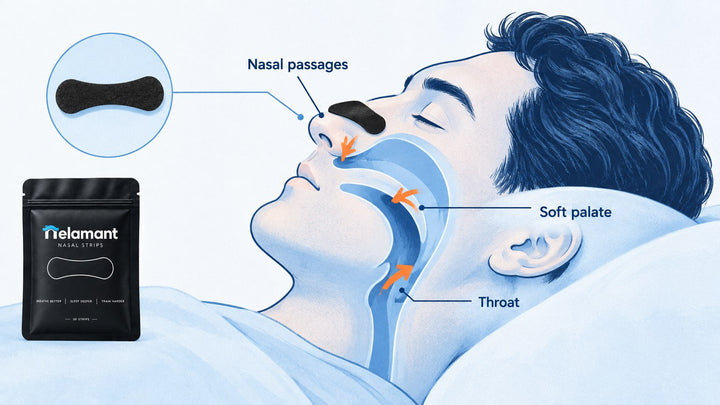
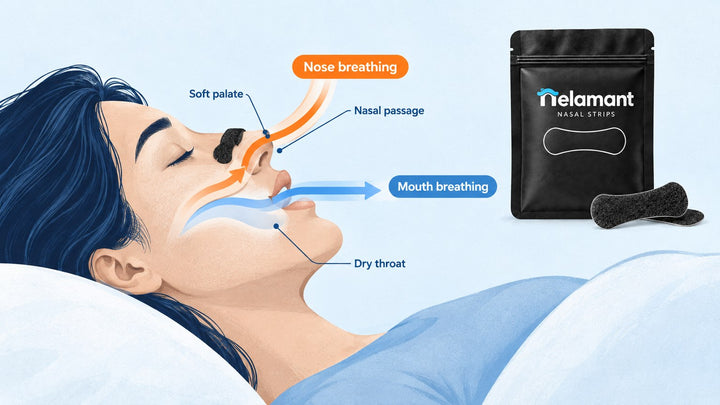
Nasal strips work by gently springing the sides of the nose outward, widening the nasal valve - the narrowest point of the nasal airway - to support easier airflow. They do not add moisture or reduce inflammation, but if swollen tissue is narrowing your nasal passage, even well-humidified air meets resistance at that pinch point.
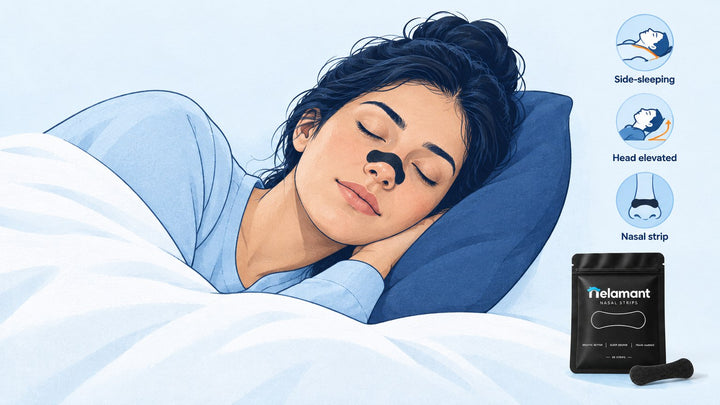
Nelamant Air nasal strips use a wider lift design that distributes the opening force evenly across the bridge rather than at a single pull point, and the extra-hold adhesive is made to stay put through a full night of sleep. They are drug-free and peel off cleanly in the morning. For more on building a full nighttime nose-breathing routine, see how to breathe through your nose while sleeping.

Frequently Asked Questions
What is the best humidity level for a stuffy nose at night?
The 40–50% relative humidity range is the most widely recommended target for both nasal comfort and general bedroom air quality. Below 30% and the nasal mucosa dries out, which worsens congestion. Above 55% and you risk encouraging mold and dust mites. A hygrometer lets you monitor and dial in your room accurately.
Does a humidifier help congestion from a cold or allergies?
For a cold, a humidifier helps most with the dryness and irritation layered on top of viral inflammation - it will not speed viral recovery but can make breathing feel easier overnight. For allergies, the key is staying in the 40–50% range. Too much humidity feeds dust mites and mold, which are common allergy triggers, so more is not always better.
Cool-mist or warm-mist humidifier - which is better for a blocked nose?
Both types add moisture to the room effectively. Cool-mist ultrasonic units are quieter, safer around children, and more energy-efficient; they work well for most bedroom situations. Warm-mist units kill waterborne microbes before dispersal but present a burn risk if knocked over. Use distilled or boiled-and-cooled water in either type to limit what gets dispersed into the air.
Can a humidifier make congestion worse?
Yes, if the humidity climbs above about 55–60%. High humidity encourages the growth of mold, mildew, and dust mites - all of which are common congestion triggers, particularly for people with allergies or asthma. A dirty humidifier tank can also release bacteria and mold spores directly into the air you breathe. Staying in the 40–50% range and cleaning the unit regularly prevents both problems.
How often should I clean my bedroom humidifier?
Rinse and wipe down the water tank every one to two days, and do a deeper clean - with white vinegar or the manufacturer's recommended solution - at least once a week. Always empty the tank if you are not using the unit for an extended period. Follow your specific model's cleaning instructions; different designs have different access points and material tolerances.
The Bottom Line
A humidifier for stuffy nose relief works best when dryness is part of the problem - and in most heated or air-conditioned bedrooms, it is. Keep your room between 40 and 50% relative humidity, use clean water, and maintain the unit regularly. Pair it with position changes, saline rinsing, and - when your nasal opening itself needs support - a nasal strip, and you give yourself a genuinely better shot at a clear, comfortable night's sleep.