Thomas Tiemann

This article is for general information, not medical advice.
Waking up gasping for air usually means something briefly interrupted your breathing during sleep - your brain triggered an arousal reflex to restore airflow. The most talked-about cause is obstructive sleep apnea, but nasal congestion, acid reflux, anxiety, and upper airway resistance can all produce the same jolt awake. Identifying which pattern fits your situation is the first step toward doing something about it.
- Several conditions cause you to wake up gasping for air - sleep apnea is one, but not the only one.
- The specific pattern of your symptoms (choking sensation, heartburn, stuffy nose, chest tightness) helps point toward the likely cause.
- Obstructive sleep apnea requires professional evaluation; a nasal strip is not a treatment for it.
- When nasal congestion is the contributing factor, opening the nasal passages before bed can reduce the number of disrupted arousals.
- Frequent or severe episodes warrant a doctor visit - see the When to See a Doctor section below.
For a broader look at nighttime nose breathing, see the full guide to how to breathe through your nose while sleeping.
What Happens in Your Body When You Wake Up Gasping
During sleep your muscles relax, including those that keep your upper airway open and your lower esophageal sphincter closed. When airflow drops too low - or when stomach acid reaches the throat, or when anxiety peaks - your nervous system fires a protective arousal response. You lurch awake, sometimes sitting upright, heart pounding, taking a sharp breath.
That response is the same regardless of the underlying trigger. The sensation of waking up gasping for air is the result of the reflex, not a diagnosis in itself. Looking at what else accompanies it - snoring, heartburn, a racing heart, or a blocked nose - is what separates the causes from each other.
Common Causes of Waking Up Choking at Night
The causes below are not mutually exclusive. Some people have two or more overlapping factors, which is one reason episodes can be hard to attribute from symptoms alone.
Obstructive Sleep Apnea
Obstructive sleep apnea (OSA) happens when the soft tissue at the back of the throat collapses and fully or partially blocks the airway during sleep. The classic picture is loud snoring interrupted by silent pauses, then a gasp or snort as breathing resumes. Partners often notice this before the sleeper does.
OSA requires evaluation and, when confirmed, treatment - commonly CPAP therapy or an oral appliance prescribed by a clinician. A nasal strip supports the nasal opening and can improve nasal airflow comfort, but it does not treat airway collapse in the throat and is not a substitute for prescribed OSA care. For a clear breakdown of how snoring and sleep apnea differ, see the guide to snoring vs. sleep apnea.
Upper Airway Resistance Syndrome (UARS)
Upper airway resistance syndrome sits on the spectrum between simple snoring and OSA. The airway narrows enough to create high resistance and frequent sleep-disrupting arousals, but breathing may not stop completely - so standard sleep studies sometimes miss it.
- Arousals are frequent and fragmented; daytime fatigue is often prominent.
- The gasp on waking tends to be less dramatic than in OSA but still disruptive.
- It is more common in leaner individuals and women than OSA is.
- Diagnosis requires a sleep specialist; treatment varies.
For a detailed explanation of the condition, see the full guide to upper airway resistance syndrome.
Acid Reflux and GERD
Gastroesophageal reflux disease (GERD) and its throat-level variant, laryngopharyngeal reflux (LPR), can send acid or stomach contents up toward the larynx during sleep. The throat's protective reflex can trigger a violent cough or choking sensation that jolts you awake. Typical accompanying signs include a sour taste, burning in the chest or throat, or a chronic cough that is worse in the morning. Lying flat and eating close to bedtime both make reflux more likely.
Nasal Congestion and Airflow Restriction
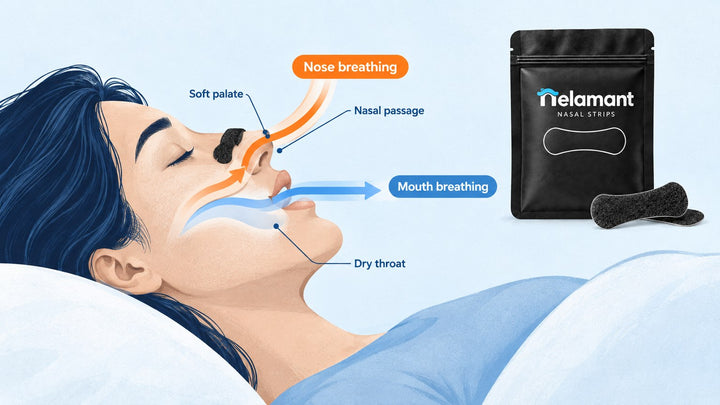
When the nasal passages are significantly blocked - by allergies, a cold, anatomical factors, or nighttime congestion - the body works harder to draw air in through a narrower channel. That increased effort can destabilize the upper airway, promote mouth breathing, and in some people trigger a brief arousal. The congestion itself does not always wake you with a gasp, but combined with other mild risk factors it can tip the balance.
Addressing nasal airflow before bed is a practical, low-barrier step for this group. Nelamant Air nasal strips gently widen the nasal passage using a wider, more balanced lift across the bridge - drug-free mechanical support that can help keep the nasal airway open through the night. They are relevant when congestion or nasal narrowing is a contributing factor; they are not a treatment for OSA or throat-level obstruction.
Anxiety and Sleep-Related Panic
Nocturnal panic attacks and sleep-related anxiety can produce a sudden arousal with a racing heart, feeling of breathlessness, and a gasping or hyperventilating response. Unlike OSA-related gasping, the breathing disturbance originates in the autonomic nervous system rather than a physical airway obstruction. People often report an overwhelming sense of dread alongside the breathing sensation. If episodes match this pattern, discuss both panic symptoms and possible sleep-related breathing problems with your clinician rather than assuming one rules out the other.
How to Tell Which Cause Applies to You
No self-assessment replaces a clinical evaluation, but the pattern of surrounding symptoms usually points in a useful direction.
| Cause | Hallmark accompanying signs | Who most commonly affected |
|---|---|---|
| Obstructive sleep apnea | Loud snoring, witnessed pauses, morning headache, daytime sleepiness | Adults with higher BMI, older age, male sex |
| UARS | Frequent arousals, unrefreshing sleep, fatigue; may not snore loudly | Leaner individuals, women, younger adults |
| Acid reflux / GERD | Sour or burning taste, cough, worse after eating late or lying flat | Any age; linked to diet, weight, certain medications |
| Nasal congestion | Blocked nose, mouth breathing, dry mouth on waking, snoring worsens when congested | Allergy sufferers, people with colds, those with anatomical narrowing |
| Anxiety / nocturnal panic | Racing heart, sense of dread, normal breathing when calm; no snoring pattern | People with anxiety disorders, high stress periods |
Keeping a brief log - what time episodes occur, what you ate, whether a bed partner observed snoring, how you feel on waking - gives a clinician far more to work with than a general description.
When to See a Doctor
Some episodes of waking up gasping for air are occasional and benign - a brief positional issue or a vivid dream. Others are a signal that something needs proper investigation. See a doctor promptly if you notice any of the following:
- Episodes happen several nights a week or are getting more frequent.
- A bed partner has witnessed you stop breathing during sleep.
- You feel consistently unrefreshed, foggy, or excessively sleepy during the day despite adequate time in bed.
- You wake with chest pain, palpitations, or a prolonged racing heart.
- There is a sour burning taste or persistent morning hoarseness suggesting reflux reaching the larynx.
- Episodes are accompanied by a sense of overwhelming panic or dread.
- You have known cardiovascular disease, hypertension, or diabetes - conditions that increase the health impact of untreated OSA.
A clinician may use a home sleep apnea test for selected adults with suspected OSA, but most home tests cannot capture sleep arousals. In-lab polysomnography is needed when arousal-related breathing events are suspected or a negative home test does not resolve the concern. Your doctor may also refer you for GI evaluation or mental health support depending on your symptom pattern. For guidance on distinguishing snoring from apnea before your appointment, see the full guide to snoring vs. sleep apnea. If ongoing nasal congestion is part of the picture, the guide on when to see a doctor for nasal congestion covers that specific decision.

What You Can Do Tonight
While you arrange a clinical evaluation - or while you work through a diagnosis - these practical steps address the most modifiable contributors to nighttime breathing disruptions.
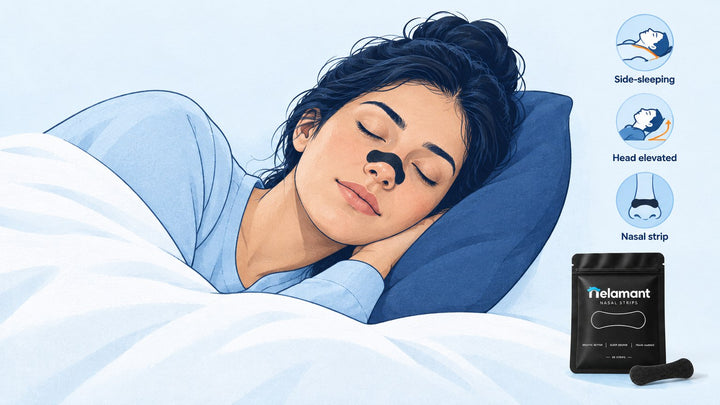
- Sleep on your side. Back sleeping allows gravity to pull soft tissue toward the back of the throat, narrowing the airway. A body pillow or tennis-ball-in-a-sock trick can discourage rolling onto your back.
- Finish eating at least two to three hours before bed. This reduces the likelihood that stomach contents will travel upward when you lie flat, particularly if reflux is suspected.
- Avoid alcohol in the four hours before sleep. Alcohol relaxes pharyngeal muscles and measurably increases upper airway collapsibility.
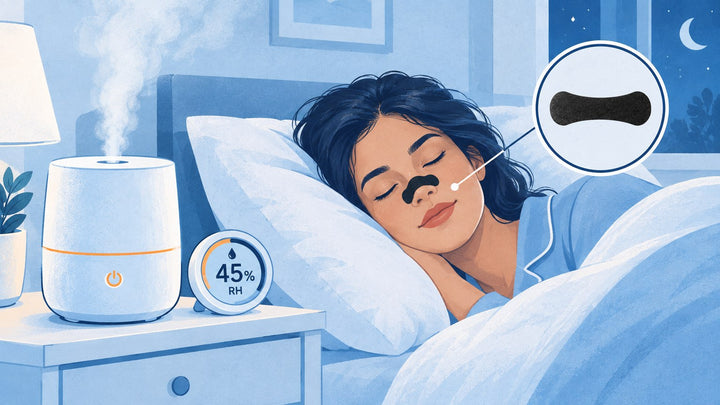
- Address nasal congestion before lying down. A saline rinse, staying hydrated, and keeping your bedroom humidity at a comfortable level can all help keep nasal passages clearer. If nasal narrowing or congestion is a known factor for you, a drug-free nasal strip is a straightforward addition - Nelamant Air's wider-lift design supports the nasal passage opening through the night, which can take some of the breathing workload off an already-strained upper airway.
- Log your episodes. Note the time, your sleeping position, what you ate, whether you had alcohol, and how the waking felt. Even a week of notes gives a clinician a useful baseline.
- Do not delay a sleep study if symptoms are frequent. The steps above can reduce contributing factors, but they do not diagnose or treat OSA, UARS, or GERD. Professional evaluation remains the priority.

Frequently Asked Questions
Is waking up gasping for air always a sign of sleep apnea?
No. Obstructive sleep apnea is the most commonly cited cause, but acid reflux, upper airway resistance syndrome, nasal congestion, and nocturnal anxiety can all produce a similar gasping arousal. The accompanying symptoms - snoring, heartburn, blocked nose, racing heart - help differentiate the causes. A sleep study is the only reliable way to confirm or rule out OSA.
What is the difference between waking up gasping and waking up choking at night?
The terms are often used interchangeably, but there is a practical distinction. Waking up gasping typically involves a sharp involuntary inhalation triggered by low oxygen or high airway resistance. Waking up choking at night more often describes a burning or gagging sensation - frequently linked to reflux reaching the throat - though both can accompany OSA. If the choking sensation comes with a sour taste or coughing, reflux is worth investigating alongside a sleep evaluation.
Can nasal congestion alone cause you to wake up gasping for air?
Severe nasal obstruction can increase upper airway resistance enough to disrupt sleep and occasionally trigger an arousal, especially in people who already have mild narrowing elsewhere in the airway. More often, congestion acts as a contributing factor that worsens an existing tendency rather than the sole cause. Relieving congestion through saline rinsing, humidity management, or a nasal strip can reduce that contribution, but if episodes are frequent it is still worth speaking with a doctor.
Should I go to the emergency room if I wake up gasping for air?
If an episode is accompanied by chest pain, severe palpitations, numbness, or you cannot catch your breath after waking, seek emergency care. A single brief episode in an otherwise healthy person without those features does not typically require emergency evaluation, but recurring episodes without a known explanation warrant a prompt appointment with your primary care physician or a sleep specialist.
Can anxiety cause you to wake up gasping at night?
Yes. Nocturnal panic attacks and heightened autonomic arousal during sleep can produce sudden waking with breathlessness, a pounding heart, and a gasping or hyperventilating response. The key distinction from OSA is that breathing is physiologically normal - the sensation comes from the autonomic nervous system, not a physical airway obstruction. If episodes feel more like panic than struggling to breathe, a mental health evaluation is the relevant next step alongside ruling out physical causes.
The Bottom Line
Waking up gasping for air is your body's protective response to something interrupting your breathing during sleep - and the cause matters for what you do next. Sleep apnea, upper airway resistance, acid reflux, nasal congestion, and anxiety each follow their own pattern and require different approaches. Track your symptoms, address obvious contributing factors tonight, and see a doctor if episodes are frequent, witnessed, or accompanied by daytime fatigue or other warning signs. Your sleep should leave you rested, not startled awake.