Thomas Tiemann

This article is for general information, not medical advice.
Yes, mouth breathing does affect sleep - and not in a small way. Breathing through your mouth at night bypasses your nose's natural filtering and humidifying functions, which can dry out your airways, fragment your sleep, and increase the likelihood of snoring. Understanding what happens while you sleep - and why your nose is the better route - gives you practical options to actually improve how you feel in the morning.
- Mouth breathing at night dries out the mouth, throat, and airway lining, which can cause soreness and increased snoring risk.
- Disrupted airflow during sleep is linked to lighter, more fragmented rest and morning fatigue.
- The most common triggers are nasal congestion, habit, and sleep position - all addressable.
- Clearing nasal obstruction is the first step; mechanical aids like nasal strips can support easier nose breathing once the passage is open.
- Persistent mouth breathing, loud snoring, or gasping at night warrants a conversation with a doctor.
For a broader look at how to shift to nose breathing during sleep, see the full guide to how to breathe through your nose while sleeping.
Why Your Body Prefers Nose Breathing at Night
Your nose does a remarkable amount of work before air ever reaches your lungs. It filters particles, warms and humidifies incoming air, and produces nitric oxide - a molecule that plays a role in regulating blood flow and oxygen delivery. None of that happens when you breathe through your mouth.
At night, those functions matter more than ever. You're in a horizontal position, often with a slightly relaxed jaw and throat, and you're not consciously monitoring your breathing. If your nose is congested or your body has defaulted to mouth breathing out of habit, dry, unfiltered air moves directly into your throat and lungs for six to eight hours straight.
The downstream effects of that pattern - on sleep structure, on your airways, and on how you feel the next day - are what make mouth breathing sleep quality such a genuinely important topic. For more on the broader consequences of habitual mouth breathing beyond sleep, the guide to mouth breathing effects covers what happens to your body over time.
What Actually Happens When You Mouth Breathe During Sleep
Mouth breathing during sleep sets off a chain of effects in your airways and sleep architecture. They tend to compound each other, which is why people who mouth breathe at night often feel worse than you'd expect from a seemingly minor habit.
Dry Mouth and Throat Irritation
This is the most immediate and noticeable effect. When you breathe through your mouth, saliva evaporates faster than your body can replenish it. Your mouth, tongue, and throat dry out. You may wake up feeling like you swallowed sand, with a scratchy throat or cracked lips. Over repeated nights, that dryness can cause low-grade throat irritation that lingers into the day. It also creates conditions where oral bacteria thrive more easily, which is one reason mouth breathing is associated with bad breath and dental problems.
Sleep Fragmentation and Arousal
Dry, irritated airways are more reactive. Your body may register discomfort as a mild arousal - a brief partial waking that pulls you out of deeper sleep stages without fully waking you. You won't remember these arousals, but they add up. The result is that you spend less time in restorative slow-wave and REM sleep, and more time in lighter stages. That pattern maps directly onto waking up feeling unrefreshed even after a full night in bed - a problem explored in more detail in the guide to why you wake up tired.
Increased Snoring Risk
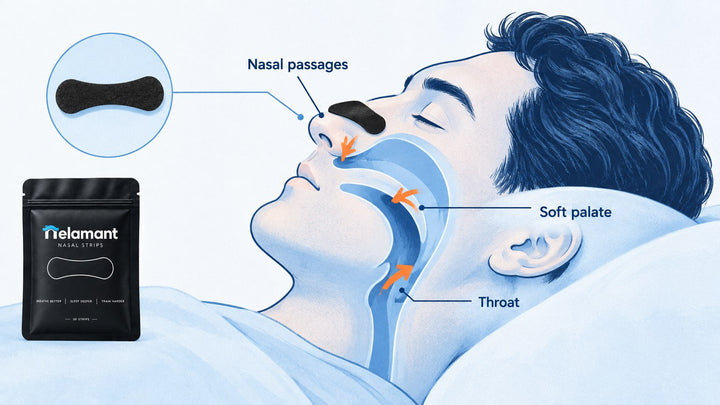
Mouth breathing changes the geometry of your airway. When your mouth is open, the soft palate and uvula have less stable support, and the back of the throat narrows. Air moving through that smaller, floppier space creates turbulence and vibration - which is snoring. Not all snoring comes from mouth breathing, and not all mouth breathers snore, but the two frequently travel together. If your snoring is connected to an open mouth and not to a deeper airway obstruction, addressing the mouth breathing can reduce the snoring alongside it.
Common Reasons People Mouth Breathe at Night
Mouth breathing at night isn't usually a choice - it's a response to something. Knowing the underlying cause matters because the fix is different depending on what's driving it. The full breakdown of causes is covered in the sibling article on why you breathe through your mouth when you sleep, but the main drivers fall into three categories.
Nasal Congestion or Blockage
This is the most common cause. When your nasal passages are partially or fully blocked - from allergies, a cold, a deviated septum, or swollen turbinates - your body takes the path of least resistance and opens your mouth. The congestion may be worse at night because lying down shifts fluid distribution and increases nasal tissue swelling. If you only mouth breathe when you're sick or during allergy season, congestion is likely the primary driver.
Habit and Sleep Position
Some people mouth breathe even when their nose is clear, because it has become their default pattern over years. Sleeping on your back tends to encourage jaw relaxation and mouth opening, which reinforces the habit. A shift to side sleeping can reduce it noticeably for some people without any other intervention.
Anatomy-Related Factors
Structural features like a deviated septum, nasal valve narrowing, or enlarged adenoids can make nose breathing genuinely difficult regardless of congestion. In these cases, the obstruction is physical rather than inflammatory, and it may require a clinical evaluation rather than a lifestyle adjustment alone.
How Mouth Breathing Affects Sleep Quality Over Time
A single night of mouth breathing tends to produce dry mouth and mild grogginess. Over weeks and months, the pattern can have more meaningful effects on how well you sleep and how you feel during the day.
Ongoing disruption of sleep architecture - even mild, sub-awakening disruptions - has been associated with reduced cognitive performance, mood changes, and daytime fatigue. Chronic drying of the oral mucosa is linked to higher rates of dental decay and gum disease. And if nasal congestion is the underlying driver that never gets addressed, the congestion itself adds its own burden: disrupted breathing, snoring, and difficulty cycling through sleep stages properly.
It's worth distinguishing habitual mouth breathing from obstructive sleep apnea. Both can involve open-mouth breathing and disturbed sleep, but sleep apnea involves repeated closure of the airway - not just a preference for the mouth route. Nasal strips and breathing adjustments are not treatments for sleep apnea. If you suspect something more than mouth breathing is going on, the guide to snoring versus sleep apnea explains the key differences and when each requires attention.
What You Can Do: Practical Steps to Shift to Nose Breathing
The goal is to make nose breathing the easier option at night. These steps work best in sequence: clear the obstruction first, then support the habit.
Address Nasal Congestion First
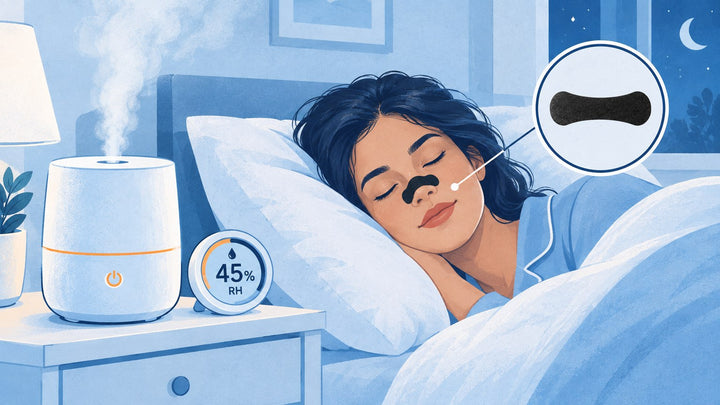
If your nose is blocked, no amount of behavioral change will make nose breathing comfortable. Short-term options include saline rinses, humidified air, and avoiding known allergens before bed. For congestion from allergies or a cold, managing the underlying trigger makes more difference than anything else. If your congestion is persistent, structural, or unresponsive to standard remedies, a doctor can help identify whether there's an anatomical issue involved. See the guide on when to see a doctor for nasal congestion for more guidance on that decision.
Sleep Position Adjustments
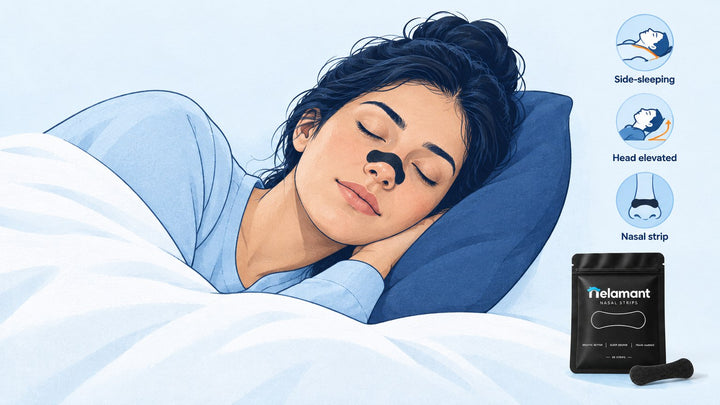
Side sleeping keeps the jaw in a more natural closed position than back sleeping for most people, and it reduces the tendency for the mouth to fall open. If you're a committed back sleeper, a slightly elevated head position can also reduce nasal congestion by helping fluid drain away from the nasal lining.
Nasal Strips as a Mechanical Aid
When nasal airflow is the bottleneck - when your passages are open but slightly restricted - a nasal strip can make a meaningful difference. Adhesive nasal strips work by gently lifting the sides of the nose outward, widening the nasal valve area and reducing resistance to airflow. When breathing through the nose feels easier, your body is less likely to default to the mouth route.
Nelamant Air Nasal Strips are designed with a broader lift across the bridge of the nose rather than a single pull point, which distributes the opening effect more evenly. The extra-hold adhesive is built to stay on through the night, even if you tend to sweat or move around. The material is peels off cleanly in the morning. They're a drug-free option that supports nose breathing mechanically - they don't treat congestion, but they reduce the resistance that makes mouth breathing feel like the easier path.

When to See a Doctor
Mouth breathing that clears up when your congestion resolves is generally not a concern on its own. But several patterns are worth discussing with a clinician:
- You consistently wake up exhausted despite sleeping a full night, even when you're not congested.
- A partner or roommate notices that you stop breathing, gasp, or make choking sounds during sleep.
- You have persistent nasal blockage that doesn't respond to standard remedies.
- You wake frequently in the night for no obvious reason.
- You have a child who is a habitual mouth breather - this warrants earlier evaluation, as it can affect development.
For anything involving persistent snoring or suspected sleep-disordered breathing, the article on snoring versus sleep apnea explains what distinguishes the two and when a sleep study becomes relevant. For nasal symptoms that aren't resolving, when to see a doctor for nasal congestion outlines the specific signs that point toward a clinical visit.

Frequently Asked Questions
Does mouth breathing affect sleep quality long-term?
Yes. Habitual mouth breathing can accompany congestion, snoring, and disrupted sleep. Over time, consistently lighter sleep is associated with daytime fatigue, reduced concentration, and mood effects. Addressing the root cause - whether congestion, habit, or anatomy - tends to improve sleep quality more reliably than any single intervention.
How do I know if I'm mouth breathing in my sleep?
The clearest signs are a dry or sticky mouth when you wake up, a sore or scratchy throat in the morning, lips that feel cracked or dry, and waking up feeling unrested. A partner may also notice that your mouth is open while you sleep or that you snore. Some people use a simple check: if you tape a small strip of paper vertically across your lips before sleep and it's dislodged in the morning, your mouth likely opened during the night - though this is informal and not diagnostic.
Can nasal strips help with mouth breathing at night?
They can, when the cause is reduced nasal airflow rather than full congestion or obstruction. By gently widening the nasal valve area, nasal strips lower the effort required to breathe through your nose, making it a more natural choice even during sleep. They work best when your nose is fundamentally open but slightly restricted - they won't help if your nose is completely blocked. For more on choosing the right strips, the guide to how to breathe through your nose while sleeping covers practical strategies including strip use.
Is mouth breathing during sleep a sign of sleep apnea?
Not necessarily, but there is overlap. Mouth breathing on its own doesn't confirm sleep apnea. Sleep apnea involves repeated complete or partial closure of the airway, causing oxygen drops and arousals - it goes well beyond how the mouth is positioned. That said, people with sleep apnea often do breathe through their mouth, and mouth breathing can be one piece of a larger picture. If you have other symptoms - gasping, witnessed pauses in breathing, or significant daytime sleepiness - read the full guide to snoring versus sleep apnea and speak with a doctor.
What's the quickest way to stop mouth breathing at night?
The fastest route is to clear whatever is blocking your nose. Saline rinse before bed, a humidifier in the room, and sleeping on your side rather than your back can all make an immediate difference for congestion-driven mouth breathing. If your nasal passages are open but restricted, a nasal strip worn at bedtime reduces airflow resistance and makes nose breathing easier from the first night. For a step-by-step approach to training your body back toward nasal breathing, the guide on how to breathe through your nose while sleeping is the right place to start.
The Bottom Line
Does mouth breathing affect sleep? Clearly and consistently. It dries your airways, increases snoring risk, and pulls you toward lighter, less restorative sleep - often without you being aware it's happening. The good news is that for most people, the triggers are identifiable and the fixes are practical: clear the congestion, adjust your sleep position, and if nasal airflow resistance is part of the problem, a well-designed nasal strip gives your nose the mechanical support it needs to stay the preferred breathing route through the night.