Thomas Tiemann

The fastest way to sleep next to someone who snores is to combine sound-masking (earplugs or white noise) with falling asleep before your partner does. Those two steps alone can make a significant difference tonight. For anything beyond short-term relief, the more lasting fix needs to come from the snorer's side - and the good news is there are straightforward things they can try.
- Earplugs combined with white noise or a fan cuts perceived snoring noise better than either alone.
- Falling asleep before your partner does is one of the simplest and most effective tactics available to you right now.
- Snoring caused by nasal congestion or a narrow nasal passage is often the most straightforward kind for a partner to address themselves.
- A calm, evidence-backed conversation - ideally with a phone recording - tends to go further than repeated complaints.
- Persistent, loud snoring with gasping or choking warrants a doctor visit before trying DIY fixes.
Quick Fixes You Can Use Tonight
These strategies focus on what you can control from your side of the bed. None of them require your partner to do anything differently.
Earplugs and White Noise
Foam earplugs rated at 30–33 dB NRR (noise reduction rating) take the edge off most snoring. They work better when layered with a continuous background sound - a fan, a white-noise machine, or a white/brown noise track through a speaker. The background sound fills the frequency range that earplugs leave partially open, which is usually where snoring sits. Experiment with the volume: you want it loud enough to mask snoring but low enough that it doesn't become its own irritant.
Adjust Your Own Sleep Position
Putting distance between your ear and your partner's airway helps more than people expect. If you normally sleep facing your partner, rolling to face away - and ideally toward a wall - can noticeably reduce how much sound reaches you. A firm pillow tucked against your exposed ear adds another layer of passive dampening.
Timing Your Sleep Onset
Most people snore more heavily during the first cycles of deep sleep. If you can fall asleep before your partner, you will sleep through the noisiest period rather than lying awake listening to it build. A consistent pre-sleep routine - lowering the room temperature, limiting screen time, going to bed 15–20 minutes earlier than your partner - makes this easier to achieve reliably.
What's Actually Causing Your Partner's Snoring
Snoring happens when airflow through the upper airway causes surrounding tissue to vibrate. The exact location and cause varies: it might be the nose, the soft palate, the tongue, or a combination. Understanding where your partner's snoring is coming from shapes which solutions are worth trying. Explore the full guide to how to stop snoring for a detailed breakdown of causes and the evidence behind each approach - that article is the right starting point for your partner to read.
The short version: nose-based snoring (often worse during colds, allergy season, or when sleeping flat) is typically the most straightforward to address with mechanical aids and simple changes. Mouth-based or throat-based snoring, and snoring accompanied by gasping, silence, or choking sounds, points toward causes that need more than a lifestyle tweak.
How to Talk to Your Partner About Snoring
Snoring is one of those topics that can feel personal even though it isn't intentional. How you raise it matters as much as what you say.
Framing It as a Shared Problem, Not a Complaint
Leading with your own sleep experience - "I haven't been sleeping well and I think it might be connected to the snoring" - lands differently than "your snoring is keeping me up." The first framing invites problem-solving together; the second puts your partner on the defensive before the conversation has started. Many people genuinely don't know they snore, so shock or disbelief is a normal first reaction. Patience in that first conversation tends to pay off over the following weeks.
If the topic has come up before without resolution, checking in about whether your partner has noticed their own symptoms - waking up with a headache, feeling tired despite a full night's sleep, a dry mouth in the morning - can shift the conversation from your inconvenience to their health.
Tracking and Evidence: Phone Recordings and Apps
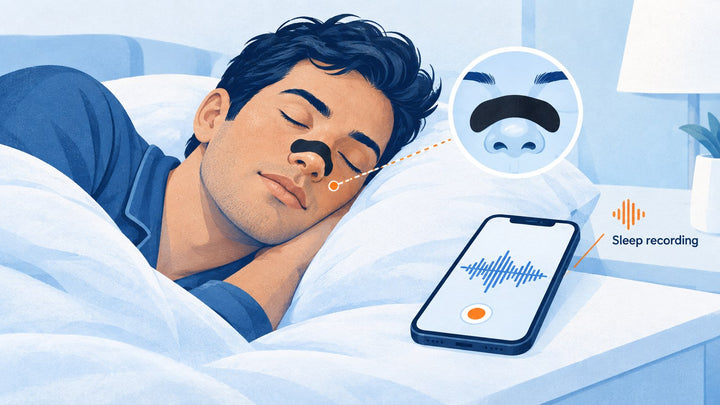
One of the most useful things you can do before the conversation is gather a short recording. Most smartphones have a voice recorder app; placing it on the nightstand for one night gives your partner something concrete to hear rather than having to take your word for it. Several apps designed for sleep tracking also detect and timestamp snoring events, which can show patterns - whether it's worse on nights with alcohol, on the back versus the side, or during certain seasons. That kind of data tends to move the conversation forward more effectively than a general complaint about husband snoring or a long-running argument about it.
Things Your Partner Can Try to Snore Less
Once your partner is on board, the most effective starting point depends on what seems to be driving their snoring. Here are the options most worth trying first, roughly in order of ease.
Sleep Position Changes
Sleeping on the back is strongly associated with louder, more frequent snoring because the tongue and soft palate fall rearward and partially obstruct the airway. Side sleeping reduces that obstruction for most people. The classic trick for encouraging back-sleepers to stay on their side is sewing a tennis ball into the back of a sleep shirt - uncomfortable enough to prompt rolling over, but not enough to wake them. Wedge pillows and positional sleep devices achieve the same thing with more comfort.

Nasal Strips for Nose-Based Snoring
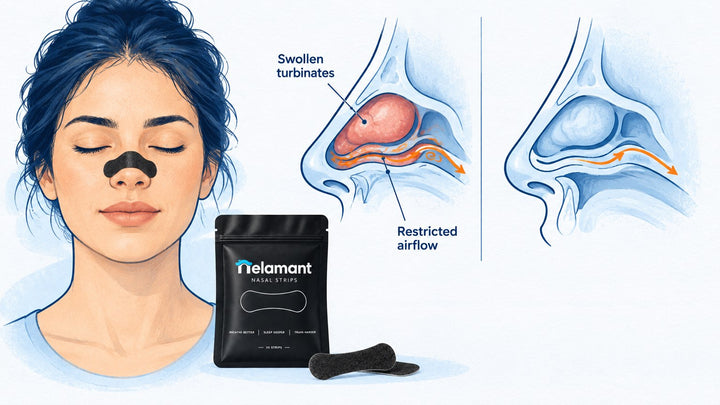
When snoring originates at the nose - often indicated by snoring that is quieter when the mouth is closed, or that worsens during congestion - a nasal strip can help by opening the nasal passages and reducing the resistance that forces the airway to work harder. See the guide to the best nasal strips for snoring for a full comparison of available options.
Nelamant Air nasal strips use a wider lift design intended to spread the opening force across the bridge of the nose rather than concentrating it at one point. The extra-hold adhesive is designed to stay in place through a full night's movement, and the materials are intended to peel off cleanly without leaving residue. They're drug-free and single-use - straightforward for a partner to try without any significant commitment.
For a broader look at all the mechanical and behavioral options available, including mouthguards and internal dilators, the best anti-snoring devices guide covers the full range alongside honest pros and cons for each type.
Lifestyle Adjustments
Alcohol in the hours before bed relaxes throat muscles and reliably worsens snoring for most people. A two-to-three hour gap between the last drink and bedtime is worth trying as a straightforward first experiment. Nasal congestion from allergies also amplifies snoring, so addressing seasonal allergies - through antihistamines, nasal rinses, or allergen reduction in the bedroom - can help considerably when that's the underlying driver.
Protecting Your Own Sleep Long Term
Quick fixes buy you a night's rest. If the snoring is ongoing and your partner's efforts help but don't resolve it, it's worth thinking about your sleep environment and arrangement more deliberately.

Sleep Environment Upgrades
Beyond earplugs and white noise, a few room-level changes accumulate meaningfully. Blackout curtains improve sleep depth independently of snoring, which makes you more resilient to disturbances. A cooler room temperature supports deeper sleep stages. If allergies drive your partner's snoring, an air purifier with a HEPA filter and encasements on pillows and mattresses can reduce the trigger load enough to make a noticeable difference.
Separate duvets - common in Scandinavian households - eliminate the sheet-pulling that often accompanies snoring-related waking and re-settling. It's a small change that reduces one irritant at no cost.
When Separate Sleeping Arrangements Make Sense
If snoring is chronically disrupting your sleep despite trying the above, sleeping apart part of the time is a practical option, not a relationship failure. The sleep divorce guide looks at what the research actually says about couples sleeping separately and how to approach the conversation without it becoming a bigger issue than it needs to be. Many couples find that sleeping separately a few nights a week, or one partner moving to another room when the snoring is particularly bad, preserves both people's rest and the relationship better than grinding through chronic sleep deprivation together.
When Snoring Signals Something More Serious
Not all snoring is the same. Snoring accompanied by gasping sounds, extended pauses in breathing, or your partner waking frequently and still feeling exhausted may point to obstructive sleep apnea - a condition that needs medical evaluation, not just a nasal strip or a positional change. The snoring vs. sleep apnea guide explains the key differences, the symptoms to watch for, and when a sleep study is the appropriate next step. DIY approaches are reasonable for garden-variety snoring; they're not a substitute for evaluation when the warning signs are present.
Frequently Asked Questions
Will earplugs fully block out snoring?
High-attenuation foam earplugs reduce but rarely eliminate snoring noise entirely. The most effective approach is layering earplugs with a continuous background sound - a fan or white-noise machine - so that what gets through is further masked. Some people find one method sufficient; most find the combination reliably more effective than either alone.
Is it normal to feel resentful about a partner's snoring?
Yes. Chronic sleep disruption is a genuine stressor, and it's common to feel frustration or even anger after enough nights of broken sleep - particularly when a partner doesn't believe they snore or isn't motivated to address it. Acknowledging the frustration to yourself and approaching the conversation as a practical problem to solve together tends to prevent it from becoming a larger relationship issue.
Can a nasal strip really reduce snoring?
For snoring that originates at the nose - caused by narrowed nasal passages, mild congestion, or structural narrowing at the nasal valve - a nasal strip can meaningfully reduce the noise by widening the nasal opening and lowering airflow resistance. It doesn't address snoring that comes from the soft palate or throat, which requires different approaches. The best nasal strips for snoring guide explains how to tell whether nasal-source snoring is likely and what to look for in a strip.
What is sleep divorce, and is it bad for a relationship?
Sleep divorce refers to a couple regularly sleeping in separate beds or rooms. Whether it works for you depends on both partners' sleep and preferences. The sleep divorce guide covers the topic in depth, including how to raise it without it feeling like a rejection.
How do I know if my partner's snoring is sleep apnea?
The clearest signs are pauses in breathing followed by gasping or choking sounds, snoring that is extremely loud and consistent regardless of position, and a partner who wakes unrefreshed despite a full night in bed. Daytime sleepiness severe enough to affect daily functioning is another indicator. These symptoms warrant a doctor's appointment and likely a sleep study. The snoring vs. sleep apnea guide walks through the distinctions in detail.
The Practical Path Forward
Sleeping next to someone who snores is easier when you separate the problem into two tracks: what you can do for yourself right now, and what your partner can do to address the snoring at its source. Earplugs, white noise, and sleep timing are available to you tonight. A calm conversation, a phone recording, a position change, and - where nasal snoring is the culprit - a nasal strip give your partner a genuinely low-barrier starting point. Neither track requires the other to work, and both together give you the best realistic chance of getting a full night's sleep next to each other.