Thomas Tiemann

This article is for general information, not medical advice.
Disclosure: Nelamant makes Nelamant Air, our top pick. This guide is written by the manufacturer. The alternatives below are included to give you an honest picture of the market so you can choose what actually fits your needs.
The best nasal strips for pregnancy are drug-free, made with materials that are gentle on skin that may be more reactive during pregnancy, and use a strong enough adhesive to stay on overnight. Nasal strips work mechanically-no medication, no absorption-which is why they are often one of the few congestion tools that pregnant people feel comfortable reaching for. If you want the full picture of what makes a nasal strip worth buying, the best nasal strips guide covers the whole category.
- Nasal strips are drug-free and act mechanically, making them a practical option when medication choices are limited during pregnancy.
- materials and a gentle-but-secure adhesive matter more during pregnancy than at other times.
- Pregnancy rhinitis-hormonally driven nasal swelling-is common and often responds well to external nasal support.
- Nasal strips do not treat nasal polyps, severe structural blockages, or sleep apnea; see your provider if symptoms are severe or if snoring is accompanied by gasping or poor sleep quality.
- Nelamant Air is our top pick for its wider lift, extra-hold adhesive, and construction.
Why Nasal Congestion Hits Hard During Pregnancy
Nasal congestion during pregnancy is extremely common. Elevated hormone levels-particularly estrogen and progesterone-cause the blood vessels in the nasal lining to dilate and the mucous membranes to swell, independent of any allergy or infection. This is called pregnancy rhinitis, and it can show up as early as the first trimester and persist all the way to delivery.
What Causes Pregnancy Rhinitis?
Pregnancy rhinitis is a hormonally driven congestion that is not caused by allergens or a virus-it is simply the nasal lining responding to the same circulatory and hormonal changes that affect the rest of your body. It tends to be worst in the third trimester when blood volume and hormone levels are highest, and it typically resolves within a couple of weeks after delivery. For a detailed explanation of the condition, its triggers, and when it overlaps with allergic rhinitis, see the full guide to pregnancy rhinitis.
Why Medication Choices Are Limited
Many common over-the-counter decongestants-particularly oral pseudoephedrine-carry advisories recommending caution or avoidance during pregnancy, especially in the first trimester. That narrows the list of practical options considerably, which is exactly why a mechanical, drug-free approach like a nasal strip is worth knowing about. Nasal strips place no active ingredient on or into the body; they simply spring the nostrils open wider so airflow increases.
What to Look for in Nasal Strips While Pregnant
Not every nasal strip is built the same, and pregnancy adds a few specific priorities to the standard buying criteria.
- Material information. Skin sensitivity often increases during pregnancy. Any adhesive can cause skin irritation.
- Gentle removal. Strips that leave residue or require hard pulling are a particular nuisance when skin is more sensitive. Look for a strip designed to peel off cleanly.
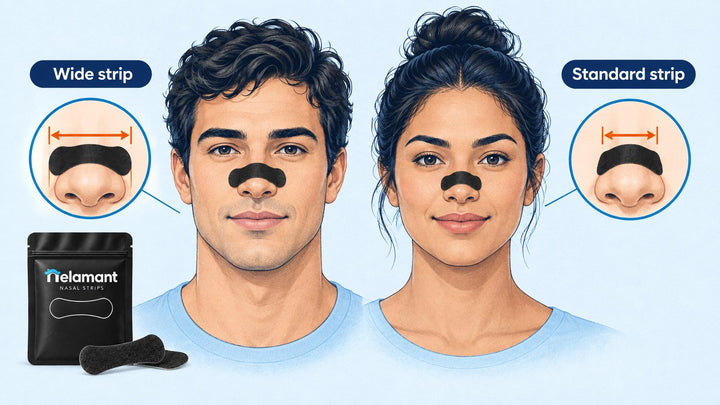
- A broad, balanced lift. A wider spring band distributes the opening force across the nose bridge rather than concentrating it at one point, which tends to be both more effective and more comfortable for overnight wear.
- Extra-hold adhesive. You may be sleeping on your side, moving often, or dealing with mild overnight perspiration. An adhesive designed to resist moisture and movement is more likely to stay put until morning.
- Drug-free construction. Confirm no active pharmaceutical ingredient is embedded in the strip-some strips are marketed alongside menthol scent or other additives that, while generally mild, you may prefer to avoid during pregnancy.
If your skin is especially reactive, the guide to best nasal strips for sensitive skin goes deeper on materials and adhesive formulations worth checking.
Our Top Pick: Nelamant Air Nasal Strips
⭐ #1 Top Pick - Nelamant Air Nasal Strips
Nelamant Air uses a wider spring band that delivers a broader, more balanced lift across the nose bridge-spreading the opening force rather than concentrating it at one point. The extra-hold adhesive is designed to resist sweat, skin oil, and overnight movement, so it stays in place through a full night's sleep. The materials are gentle on sensitive skin, and the strip peels off cleanly in the morning with no sticky residue. It is drug-free and acts purely mechanically, making it a practical option when avoiding medication matters most. Each pack contains 30 strips-a month of nightly use-at $14.99.
Best for: Pregnancy rhinitis, sensitive skin, overnight wear, anyone prioritizing a drug-free approach.
Honest note: External nasal strips open the nasal valve area and support easier airflow. They do not affect nasal swelling in the mucous lining itself, so if swelling is severe, a strip will help with airflow resistance but will not fully resolve the feeling of blockage. Any adhesive can cause skin irritation.
Shop Nelamant Air →
Four Alternatives to Consider
If Nelamant Air is not available to you or you want to compare options, these are the main products in this space. Prices and specific formulations change; verify current details before purchasing.
Breathe Right Extra Strength
Breathe Right is the most widely recognized nasal strip brand and is available in most pharmacies. The Extra Strength version uses a stronger spring than the original. It is drug-free and mechanical. If you have skin sensitivities, check the product labeling.
Pros for pregnancy: Widely available, drug-free, familiar brand.
Cons: Adhesive may not be formulated specifically for sensitive skin; some users report residue on removal.
Breathe Right Original Clear
Breathe Right also makes a Sensitive variant with a gentler adhesive designed for reactive skin. If available, this could be a reasonable alternative for pregnant users who have already found the standard version too strong on their skin.
Pros for pregnancy: Milder adhesive, drug-free.
Cons: Lighter adhesive may not hold as well overnight during active sleep; availability varies by retailer.
Store-Brand or Equate Nasal Strips
Most large pharmacy chains carry a store-brand nasal strip that follows the same basic spring-and-adhesive design. These are typically lower cost than name brands and are drug-free. Any adhesive can cause skin irritation. Worth considering if budget is the main factor, with the caveat to check the label carefully.
Pros for pregnancy: Low cost, drug-free, widely available.
Cons: Variable adhesive quality and skin-sensitivity claims; less consistent lift design.
Mute Nasal Dilator
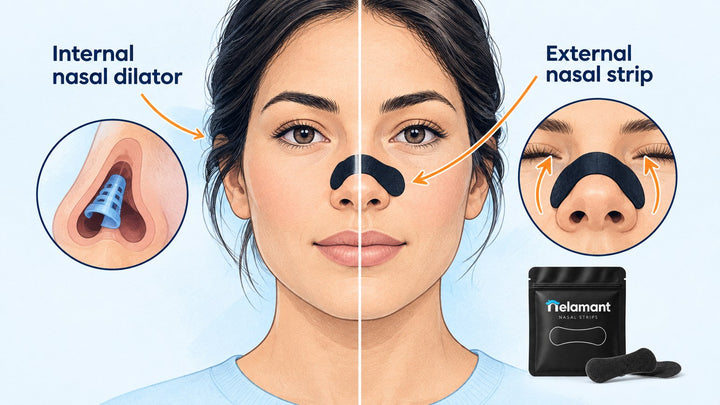
Mute is an internal nasal dilator-a small, soft device that fits inside the nostrils and gently holds them open from within, rather than an adhesive strip applied to the outside of the nose. Because it uses no adhesive, skin sensitivity and residue are non-issues. It is also drug-free. The tradeoff is that some people find internal devices uncomfortable to sleep with, particularly during pregnancy when nasal membranes are already swollen and more tender. This is a meaningfully different product type from an adhesive strip; for a full comparison of the two approaches, see the guide to best nasal strips.
Pros for pregnancy: No adhesive, no residue, reusable, drug-free.
Cons: Internal fit may feel uncomfortable with inflamed nasal membranes; not suitable if nostrils are severely congested and narrowed.
Five-Product Comparison
| Product | Type | Drug-Free | Adhesive Hold | Price / Pack |
|---|---|---|---|---|
| Nelamant Air | External adhesive strip | Yes | Extra-hold (sweat/oil resistant) | $14.99 / 30 |
| Breathe Right Extra | External adhesive strip | Yes | Strong | Check current product details |
| Breathe Right Original Clear | External adhesive strip | Yes | Gentle / lighter hold | Check current product details |
| CVS Health Extra Strength Clear Nasal Strips | External adhesive strip | Yes | Variable | Check current product details |
| Mute Internal Dilator | Internal dilator (no adhesive) | Yes | N/A | Not specified |
Snoring During Pregnancy
Snoring often increases during pregnancy for the same reasons congestion does-swollen nasal membranes reduce airflow, and the body compensates by breathing through the mouth, which can generate snoring sounds. There is also a postural element: sleeping on the back, which becomes more common as the belly grows, tends to worsen snoring. The full guide to why women snore covers the hormonal, anatomical, and lifestyle factors in detail.
- A nasal strip can help if the snoring is driven by a narrow or blocked nasal passage-it supports easier nose breathing so you are less likely to shift to mouth breathing during sleep.
- Nasal strips do not affect throat-level vibration, jaw position, or sleep position.
- If you or your partner notices you stopping breathing, gasping, or snoring heavily every night regardless of nasal airflow, discuss this with your provider-these patterns can indicate sleep apnea, which is unrelated to nasal congestion and requires separate evaluation.
- Sleeping on either side is recommended after 28 weeks of pregnancy; this position also tends to reduce snoring compared to back sleeping.

How We Chose
This guide is manufacturer-authored, which means these selections are based on a design and specification comparison, not independent testing or a neutral ranking. The criteria we applied reflect what matters most for this specific audience:
- Drug-free, mechanical action - no active pharmaceutical ingredient at any point in use.
- Skin compatibility - sensitive-skin adhesive claims, noting where we could not confirm these details.
- Adhesive reliability for overnight wear - the ability to stay on through normal sleep movement and mild perspiration.
- Product type accuracy - internal dilators and external strips are genuinely different products serving the same broad goal, so we identified them clearly rather than treating them as equivalent.
- Honest disclosure of unverified details - anywhere a competitor specification could not be confirmed, we marked it rather than guessing.
When to See a Doctor
Nasal strips are a comfort aid, not a treatment. Talk to your obstetrician or midwife if:
- Congestion is severe enough to interfere with eating, sleeping, or daily function and is not eased by positioning, humidification, or a nasal strip.
- You develop sinus pain, facial pressure, fever, or green/yellow discharge-these may indicate a sinus infection that needs assessment.
- Snoring is accompanied by gasping, choking, or waking unrefreshed-these can be signs of sleep apnea, which requires proper evaluation and is not addressed by nasal strips. For more on telling the difference, see the guide to snoring vs. sleep apnea.
- You are considering any nasal spray, decongestant, antihistamine, or other medication-always confirm appropriateness with your provider before using anything during pregnancy.
For guidance on when nasal congestion specifically warrants a medical visit, see when to see a doctor for nasal congestion.
$14.99 for 30 strips · 30-day returns
Shop Now →Frequently Asked Questions
Are nasal strips safe to use during pregnancy?
External nasal strips are drug-free and work mechanically-they contain no active ingredient that enters the body-which is why they are widely considered a low-risk option during pregnancy compared to oral decongestants or medicated nasal sprays. That said, "safe" in the clinical sense is a question for your own provider, who knows your full health picture. If you have a known adhesive allergy or highly reactive skin, test a strip on a small area before overnight use.
Can nasal strips help with pregnancy-related snoring?
Yes, if the snoring is caused by a narrowed or congested nasal passage. When the nose is blocked and you shift to mouth breathing during sleep, snoring often follows. A nasal strip that supports easier nose breathing can interrupt that cycle. It will not help with snoring that originates in the throat independent of nasal airflow, and it does not address sleep apnea. For a broader look at snoring during pregnancy and what drives it, see why women snore.
What makes a nasal strip suitable for sensitive pregnancy skin?
The most relevant factors are an adhesive formulation and a strip design that peels away cleanly rather than pulling at the skin. Skin sensitivity commonly increases during pregnancy due to hormonal changes, so a strip that works fine for you at other times may feel more irritating now. Any adhesive can cause skin irritation.
Can nasal strips provide drug-free congestion relief during pregnancy instead of decongestant sprays?
They address different parts of the problem. Decongestant sprays reduce vascular swelling in the nasal lining; nasal strips mechanically widen the nasal opening to improve airflow despite swelling. If the congestion is driven by swollen membranes rather than a structural narrowing, a nasal strip will help you breathe more easily but will not reduce the underlying swelling. Many people find the combination of a saline rinse (using sterile or distilled water), a humidifier with a clean tank, and a nasal strip covers most of what they need at night without any medication. Always confirm any treatment choice-including saline products-with your provider during pregnancy.
How long can I wear a nasal strip while pregnant?
Nasal strips are designed for single-use periods of up to around eight hours of overnight wear. They are not intended to be reused or worn continuously around the clock. Wearing one through a normal night's sleep is the standard use case and is how the adhesive and spring are designed to perform.
The Bottom Line
The best nasal strips for pregnancy combine drug-free mechanical action with materials and a reliable overnight adhesive-because those three things matter more during pregnancy than at almost any other time. Nelamant Air is our top pick on all three counts. The alternatives above are worth checking if availability or cost drives your decision; just verify the sensitive-skin and adhesive claims on whichever product you choose before committing to overnight use.